SUBSCRIBE TO OUR FREE NEWSLETTER
Daily news & progressive opinion—funded by the people, not the corporations—delivered straight to your inbox.
5
#000000
#FFFFFF
To donate by check, phone, or other method, see our More Ways to Give page.
Daily news & progressive opinion—funded by the people, not the corporations—delivered straight to your inbox.
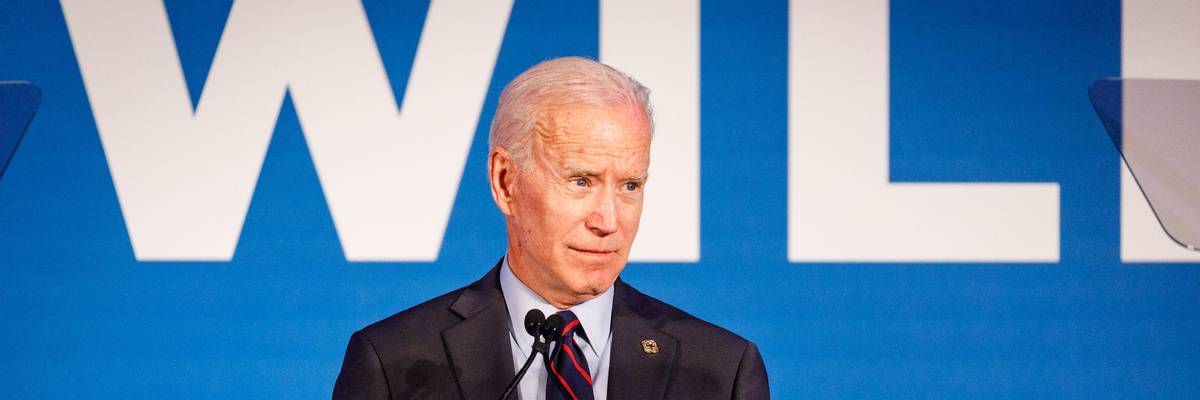
Then-presidential candidate Joe Biden speaks to a crowd at a Democratic National Committee event for it IWillVote program, aimed at registering voters, in Atlanta on June 6, 2019. (Photo: Dustin Chambers/Getty Images)
Progressive political observers on Monday said that beltway pundits should not be surprised by President Joe Biden's plummeting approval rating among voters under the age of 34, considering the Democratic Party's failure to pass anti-poverty measures or climate action, and address the student debt crisis after the president garnered significant support from young people in the 2020 election.
Polling by online survey company Civiqs showed Sunday that while only 36% of voters between the ages of 18 and 34 disapproved of Biden the day he was inaugurated in January 2021 and 48% approved, those numbers have now shifted significantly, with 55% of respondents saying they feel Biden is doing a poor job as president.
The survey results were posted four days after Gallup released polling showing that support for the president among voters aged 18-25 has fallen by 21 points since January 2021 and among voters aged 26-41 by 19 points.
Another poll released last Wednesday by Quinnipiac University showed only 21% of respondents aged 18-34 approving of Biden.
On Twitter Monday, Vox journalist Zack Beauchamp called Biden's collapse in support among younger voters "mysterious"--an assertion that unleashed a torrent of responses from progressives who pointed to young people's urgent calls for bold policy changes to mitigate the climate crisis and narrow the wealth gap in the United States, which have been largely ignored by the administration or obstructed by right-wing members of Biden's party.
"Compare the life a young person had in January 2021... to the life they have now and I think you'll get much of the answer," said Ryan Grim, Washington, D.C. bureau chief for The Intercept.
The recent polling follows the breakdown late last year of negotiations over the Build Back Better Act, the president's signature domestic spending bill which would have invested $1.75 trillion over 10 years to provide millions of families with monthly child tax credits; incentivize the use of renewable energy by utilities; offer free, universal pre-kindergarten to children, and take other steps to help middle- and lower-income households.
It also comes as economic justice advocates push the White House to take executive action to solve the student loan crisis by broadly canceling debt for more than 43 million Americans who owe an average of more than $37,000 for their education.
As Common Dreams reported in March, voters in their late teens, 20s, and 30s have been clear in their demands for bold climate action, calling on Biden to declare a National Climate Emergency--which would empower him to allocate federal resources specifically to the issue--and to create millions of sustainable jobs while addressing the climate crisis by passing a Green New Deal.
Biden, however, has responded by approving oil and gas drilling permits at a faster rate than former Republican President Donald Trump and refusing to ban crude oil exports.
Kate Aronoff of The Nation tweeted Monday there there is "probably a decent amount of young people not all that pleased to see the administration sucking up to fossil fuel executives as the Earth rapidly loses its capacities to maintain life."
Biden's plummeting support among young voters represents a significant loss of an age group that was instrumental in securing the White House for the Democratic Party, noted Jeet Heer, a columnist for The Nation.
According to Pew Research Center, Biden won a majority of voters under the age of 49, and his strongest support came from people under the age of 30.
Keeanga-Yamahtta Taylor, a professor of African-American studies at Princeton University and writer at The New Yorker, also noted that Biden took office less than a year after a national uprising over racial injustice and police brutality--only to disparage organizers of that movement in his State of the Union address earlier this year and propose more than $32 million in funding for police departments.
When the Democratic Party is confronted with demands for progressive policies, said Taylor, "it's always 'wait' which inevitably turns into 'never' and it's why young people and all workers are so fed up."
Dear Common Dreams reader, It’s been nearly 30 years since I co-founded Common Dreams with my late wife, Lina Newhouser. We had the radical notion that journalism should serve the public good, not corporate profits. It was clear to us from the outset what it would take to build such a project. No paid advertisements. No corporate sponsors. No millionaire publisher telling us what to think or do. Many people said we wouldn't last a year, but we proved those doubters wrong. Together with a tremendous team of journalists and dedicated staff, we built an independent media outlet free from the constraints of profits and corporate control. Our mission has always been simple: To inform. To inspire. To ignite change for the common good. Building Common Dreams was not easy. Our survival was never guaranteed. When you take on the most powerful forces—Wall Street greed, fossil fuel industry destruction, Big Tech lobbyists, and uber-rich oligarchs who have spent billions upon billions rigging the economy and democracy in their favor—the only bulwark you have is supporters who believe in your work. But here’s the urgent message from me today. It's never been this bad out there. And it's never been this hard to keep us going. At the very moment Common Dreams is most needed, the threats we face are intensifying. We need your support now more than ever. We don't accept corporate advertising and never will. We don't have a paywall because we don't think people should be blocked from critical news based on their ability to pay. Everything we do is funded by the donations of readers like you. When everyone does the little they can afford, we are strong. But if that support retreats or dries up, so do we. Will you donate now to make sure Common Dreams not only survives but thrives? —Craig Brown, Co-founder |
Progressive political observers on Monday said that beltway pundits should not be surprised by President Joe Biden's plummeting approval rating among voters under the age of 34, considering the Democratic Party's failure to pass anti-poverty measures or climate action, and address the student debt crisis after the president garnered significant support from young people in the 2020 election.
Polling by online survey company Civiqs showed Sunday that while only 36% of voters between the ages of 18 and 34 disapproved of Biden the day he was inaugurated in January 2021 and 48% approved, those numbers have now shifted significantly, with 55% of respondents saying they feel Biden is doing a poor job as president.
The survey results were posted four days after Gallup released polling showing that support for the president among voters aged 18-25 has fallen by 21 points since January 2021 and among voters aged 26-41 by 19 points.
Another poll released last Wednesday by Quinnipiac University showed only 21% of respondents aged 18-34 approving of Biden.
On Twitter Monday, Vox journalist Zack Beauchamp called Biden's collapse in support among younger voters "mysterious"--an assertion that unleashed a torrent of responses from progressives who pointed to young people's urgent calls for bold policy changes to mitigate the climate crisis and narrow the wealth gap in the United States, which have been largely ignored by the administration or obstructed by right-wing members of Biden's party.
"Compare the life a young person had in January 2021... to the life they have now and I think you'll get much of the answer," said Ryan Grim, Washington, D.C. bureau chief for The Intercept.
The recent polling follows the breakdown late last year of negotiations over the Build Back Better Act, the president's signature domestic spending bill which would have invested $1.75 trillion over 10 years to provide millions of families with monthly child tax credits; incentivize the use of renewable energy by utilities; offer free, universal pre-kindergarten to children, and take other steps to help middle- and lower-income households.
It also comes as economic justice advocates push the White House to take executive action to solve the student loan crisis by broadly canceling debt for more than 43 million Americans who owe an average of more than $37,000 for their education.
As Common Dreams reported in March, voters in their late teens, 20s, and 30s have been clear in their demands for bold climate action, calling on Biden to declare a National Climate Emergency--which would empower him to allocate federal resources specifically to the issue--and to create millions of sustainable jobs while addressing the climate crisis by passing a Green New Deal.
Biden, however, has responded by approving oil and gas drilling permits at a faster rate than former Republican President Donald Trump and refusing to ban crude oil exports.
Kate Aronoff of The Nation tweeted Monday there there is "probably a decent amount of young people not all that pleased to see the administration sucking up to fossil fuel executives as the Earth rapidly loses its capacities to maintain life."
Biden's plummeting support among young voters represents a significant loss of an age group that was instrumental in securing the White House for the Democratic Party, noted Jeet Heer, a columnist for The Nation.
According to Pew Research Center, Biden won a majority of voters under the age of 49, and his strongest support came from people under the age of 30.
Keeanga-Yamahtta Taylor, a professor of African-American studies at Princeton University and writer at The New Yorker, also noted that Biden took office less than a year after a national uprising over racial injustice and police brutality--only to disparage organizers of that movement in his State of the Union address earlier this year and propose more than $32 million in funding for police departments.
When the Democratic Party is confronted with demands for progressive policies, said Taylor, "it's always 'wait' which inevitably turns into 'never' and it's why young people and all workers are so fed up."
Progressive political observers on Monday said that beltway pundits should not be surprised by President Joe Biden's plummeting approval rating among voters under the age of 34, considering the Democratic Party's failure to pass anti-poverty measures or climate action, and address the student debt crisis after the president garnered significant support from young people in the 2020 election.
Polling by online survey company Civiqs showed Sunday that while only 36% of voters between the ages of 18 and 34 disapproved of Biden the day he was inaugurated in January 2021 and 48% approved, those numbers have now shifted significantly, with 55% of respondents saying they feel Biden is doing a poor job as president.
The survey results were posted four days after Gallup released polling showing that support for the president among voters aged 18-25 has fallen by 21 points since January 2021 and among voters aged 26-41 by 19 points.
Another poll released last Wednesday by Quinnipiac University showed only 21% of respondents aged 18-34 approving of Biden.
On Twitter Monday, Vox journalist Zack Beauchamp called Biden's collapse in support among younger voters "mysterious"--an assertion that unleashed a torrent of responses from progressives who pointed to young people's urgent calls for bold policy changes to mitigate the climate crisis and narrow the wealth gap in the United States, which have been largely ignored by the administration or obstructed by right-wing members of Biden's party.
"Compare the life a young person had in January 2021... to the life they have now and I think you'll get much of the answer," said Ryan Grim, Washington, D.C. bureau chief for The Intercept.
The recent polling follows the breakdown late last year of negotiations over the Build Back Better Act, the president's signature domestic spending bill which would have invested $1.75 trillion over 10 years to provide millions of families with monthly child tax credits; incentivize the use of renewable energy by utilities; offer free, universal pre-kindergarten to children, and take other steps to help middle- and lower-income households.
It also comes as economic justice advocates push the White House to take executive action to solve the student loan crisis by broadly canceling debt for more than 43 million Americans who owe an average of more than $37,000 for their education.
As Common Dreams reported in March, voters in their late teens, 20s, and 30s have been clear in their demands for bold climate action, calling on Biden to declare a National Climate Emergency--which would empower him to allocate federal resources specifically to the issue--and to create millions of sustainable jobs while addressing the climate crisis by passing a Green New Deal.
Biden, however, has responded by approving oil and gas drilling permits at a faster rate than former Republican President Donald Trump and refusing to ban crude oil exports.
Kate Aronoff of The Nation tweeted Monday there there is "probably a decent amount of young people not all that pleased to see the administration sucking up to fossil fuel executives as the Earth rapidly loses its capacities to maintain life."
Biden's plummeting support among young voters represents a significant loss of an age group that was instrumental in securing the White House for the Democratic Party, noted Jeet Heer, a columnist for The Nation.
According to Pew Research Center, Biden won a majority of voters under the age of 49, and his strongest support came from people under the age of 30.
Keeanga-Yamahtta Taylor, a professor of African-American studies at Princeton University and writer at The New Yorker, also noted that Biden took office less than a year after a national uprising over racial injustice and police brutality--only to disparage organizers of that movement in his State of the Union address earlier this year and propose more than $32 million in funding for police departments.
When the Democratic Party is confronted with demands for progressive policies, said Taylor, "it's always 'wait' which inevitably turns into 'never' and it's why young people and all workers are so fed up."