SUBSCRIBE TO OUR FREE NEWSLETTER
Daily news & progressive opinion—funded by the people, not the corporations—delivered straight to your inbox.
5
#000000
#FFFFFF
To donate by check, phone, or other method, see our More Ways to Give page.
Daily news & progressive opinion—funded by the people, not the corporations—delivered straight to your inbox.
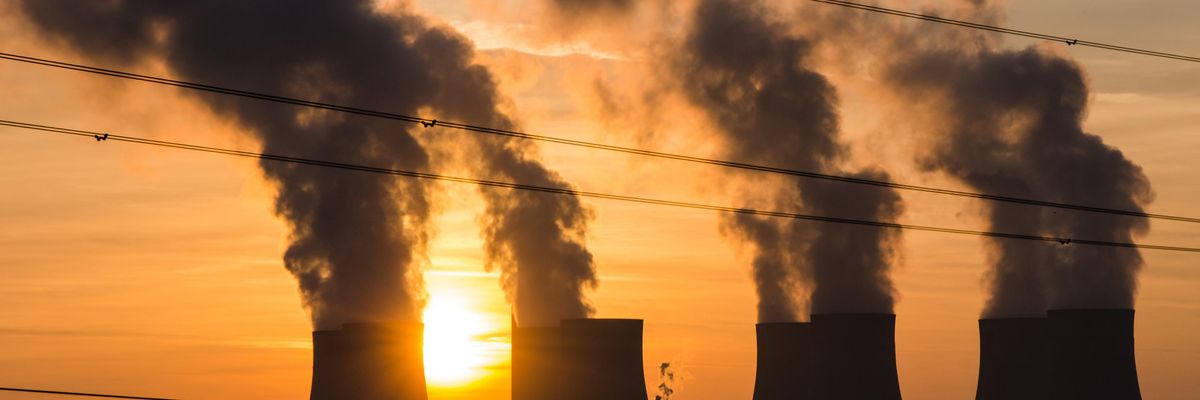
Over 700 groups shared an open letter on November 1, 2021 urging global governments to pursue "real" solutions to the climate emergency rather than making net-zero promises involving "techno-fixes, geoengineering, carbon markets, and accounting tricks." (Photo: Gerry Machen/Flickr/CC)
As world leaders gathered in Glasgow, Scotland on Monday for a United Nations climate summit, more than 700 organizations from nearly 100 countries took aim at net-zero pledges "premised on the notion of canceling out emissions in the atmosphere rather than eliminating their causes."
"We are concerned that rich countries and polluting corporations will push ahead with 'false solutions' at COP26."
The groups' case for "real climate solutions, not net-zero promises" came in an open letter to governments and international institutions arguing that "to address the current climate emergency, we need real plans, real solutions, real finance, and real zero for an urgent, just transition."
Net-zero schemes pushed by polluters "blithely rely on assumptions that carbon offsets, tree plantations, bioenergy, and dangerous distractions such as hydrogen and carbon capture and storage will somehow keep or take emissions out of the air after polluters have done their damage," explains the letter. "Unproven technologies that have repeatedly failed, have yet to be realized, and remain nonviable at scale are being imagined as supposed solutions for continued emissions."
"We don't want to read about your promises to supposedly balance the emissions budget by mid-century, using techno-fixes, geoengineering, carbon markets, and accounting tricks," the letter tells governments. "We want to know what you are doing today to eliminate the major sources of emissions--fossil fuel production and use, deforestation, and industrial agriculture--which are not only warming the planet, but also poisoning frontline and fenceline communities and polluting our collective environment."
"And we want to know what you will do from now on, tomorrow, and every year to come," the letter continues, "to strengthen resilience, center justice, and support communities in a just and equitable transition to a fossil-free future that secures human rights, livelihoods, work, and a safe, clean, healthy, and sustainable environment for present and future generations."
The letter contains 11 specific demands, beginning with: "Show us your climate plans, concrete steps, and specific programs that center just transitions, human rights, racial, gender, social, economic, and environmental justice, safety and secure livelihoods for workers, Indigenous peoples, local communities, peasants, women, youth, and vulnerable groups."
The groups urge governments to demonstrate how they will rapidly cut planet-heating emissions at source to meet the Paris climate agreement's 1.5degC temperature goal and how they will phase out polluting industries while investing in sustainable replacements.
The letter's signatories call on its targets to prove they "recognize that there is no future for fossil fuels in a climate-safe world" and share their plans to "protect and restore biodiverse ecosystems" as well as "ensure real food security and food sovereignty in the face of climate threats."
"Show us how you will support proven alternatives and practices pioneered by smallholder farmers, women, Indigenous peoples, and local communities, and respect and protect their rights," the letter says.
Governments should also detail actions they will take to hold longtime corporate polluters accountable and make clear they "understand that today's dominant growth-centered economic and development models are defunct," the letter adds.
The groups are also demanding that "countries most responsible for the historic and cumulative emissions heating our planet will do their equitable, fair share," which includes providing "climate finance that meets the scale of the climate crisis and supports mitigation, adaptation, and loss and damage--not through loans that plunge countries deeper into debt or the trickle-down of coins from speculative carbon markets."
"The only way to avoid climate catastrophe," the letter warns, "is to undertake these kinds of deep, systemic, and just transformations of our energy, food, transport, and industrial systems."
Nikki Reisch, director of the Climate & Energy Program at the Center for International Environmental Law (CIEL), said in a statement Monday that "the massive global support for this call to action is proof that the people see through the ploys to put off real change and prop up polluting industries in pursuit of a distant 'net-zero.'"
CIEL was one of the initial signatories. Representatives for other groups that helped organize the letter expressed concerns about the impacts of governments' emissions reduction plans, which U.N. analyses have found are inadequate to meet the Paris goals.
Dipti Bhatnagar, climate justice and energy coordinator for Friends of the Earth International in Mozambique, said that "we are concerned that rich countries and polluting corporations will push ahead with 'false solutions' at COP26," referring to the summit in Scotland.
"The names and terms keep evolving, but the basic, damaging principles remain the same," Bhatnagar added. "They strengthen corporate power, deflect responsibility from rich historical polluters, and prevent urgent and equitable action on climate change."
Teresa Anderson, climate policy coordinator for ActionAid International, warned that "net-zero targets are likely to drive devastating land grabs in the Global South, threatening the rights and food security of women, smallholder farmers, and Indigenous communities."
Four of the letter's more than two dozen initial signatories released a report last week detailing how "on the road to COP26, corporations are using 'net-zero' to block effective climate policy and greenwash their image while maintaining business-as-usual."
The quartet--Corporate Accountability, Corporate Europe Observatory, Friends of the Earth International, and Global Forest Coalition--specifically called out BlackRock, BP, Drax, the International Emissions Trading Association (IETA), Microsoft, and Shell.
"Big Polluters have pulled out all the stops promoting their flakey 'net-zero' plans on the road to COP26, from schmoozing decision-makers and sponsoring conferences to rubbing shoulders with the Queen of England," said Pascoe Sabido, a researcher with Corporate Europe Observatory, in a statement last week.
"But look behind their vague ambitions and you see a chilling future of climate chaos and continued planetary destruction," Sabido added. "These climate criminals should have no seat at the table while they continue to try and burn it down."
Dear Common Dreams reader, It’s been nearly 30 years since I co-founded Common Dreams with my late wife, Lina Newhouser. We had the radical notion that journalism should serve the public good, not corporate profits. It was clear to us from the outset what it would take to build such a project. No paid advertisements. No corporate sponsors. No millionaire publisher telling us what to think or do. Many people said we wouldn't last a year, but we proved those doubters wrong. Together with a tremendous team of journalists and dedicated staff, we built an independent media outlet free from the constraints of profits and corporate control. Our mission has always been simple: To inform. To inspire. To ignite change for the common good. Building Common Dreams was not easy. Our survival was never guaranteed. When you take on the most powerful forces—Wall Street greed, fossil fuel industry destruction, Big Tech lobbyists, and uber-rich oligarchs who have spent billions upon billions rigging the economy and democracy in their favor—the only bulwark you have is supporters who believe in your work. But here’s the urgent message from me today. It's never been this bad out there. And it's never been this hard to keep us going. At the very moment Common Dreams is most needed, the threats we face are intensifying. We need your support now more than ever. We don't accept corporate advertising and never will. We don't have a paywall because we don't think people should be blocked from critical news based on their ability to pay. Everything we do is funded by the donations of readers like you. When everyone does the little they can afford, we are strong. But if that support retreats or dries up, so do we. Will you donate now to make sure Common Dreams not only survives but thrives? —Craig Brown, Co-founder |
As world leaders gathered in Glasgow, Scotland on Monday for a United Nations climate summit, more than 700 organizations from nearly 100 countries took aim at net-zero pledges "premised on the notion of canceling out emissions in the atmosphere rather than eliminating their causes."
"We are concerned that rich countries and polluting corporations will push ahead with 'false solutions' at COP26."
The groups' case for "real climate solutions, not net-zero promises" came in an open letter to governments and international institutions arguing that "to address the current climate emergency, we need real plans, real solutions, real finance, and real zero for an urgent, just transition."
Net-zero schemes pushed by polluters "blithely rely on assumptions that carbon offsets, tree plantations, bioenergy, and dangerous distractions such as hydrogen and carbon capture and storage will somehow keep or take emissions out of the air after polluters have done their damage," explains the letter. "Unproven technologies that have repeatedly failed, have yet to be realized, and remain nonviable at scale are being imagined as supposed solutions for continued emissions."
"We don't want to read about your promises to supposedly balance the emissions budget by mid-century, using techno-fixes, geoengineering, carbon markets, and accounting tricks," the letter tells governments. "We want to know what you are doing today to eliminate the major sources of emissions--fossil fuel production and use, deforestation, and industrial agriculture--which are not only warming the planet, but also poisoning frontline and fenceline communities and polluting our collective environment."
"And we want to know what you will do from now on, tomorrow, and every year to come," the letter continues, "to strengthen resilience, center justice, and support communities in a just and equitable transition to a fossil-free future that secures human rights, livelihoods, work, and a safe, clean, healthy, and sustainable environment for present and future generations."
The letter contains 11 specific demands, beginning with: "Show us your climate plans, concrete steps, and specific programs that center just transitions, human rights, racial, gender, social, economic, and environmental justice, safety and secure livelihoods for workers, Indigenous peoples, local communities, peasants, women, youth, and vulnerable groups."
The groups urge governments to demonstrate how they will rapidly cut planet-heating emissions at source to meet the Paris climate agreement's 1.5degC temperature goal and how they will phase out polluting industries while investing in sustainable replacements.
The letter's signatories call on its targets to prove they "recognize that there is no future for fossil fuels in a climate-safe world" and share their plans to "protect and restore biodiverse ecosystems" as well as "ensure real food security and food sovereignty in the face of climate threats."
"Show us how you will support proven alternatives and practices pioneered by smallholder farmers, women, Indigenous peoples, and local communities, and respect and protect their rights," the letter says.
Governments should also detail actions they will take to hold longtime corporate polluters accountable and make clear they "understand that today's dominant growth-centered economic and development models are defunct," the letter adds.
The groups are also demanding that "countries most responsible for the historic and cumulative emissions heating our planet will do their equitable, fair share," which includes providing "climate finance that meets the scale of the climate crisis and supports mitigation, adaptation, and loss and damage--not through loans that plunge countries deeper into debt or the trickle-down of coins from speculative carbon markets."
"The only way to avoid climate catastrophe," the letter warns, "is to undertake these kinds of deep, systemic, and just transformations of our energy, food, transport, and industrial systems."
Nikki Reisch, director of the Climate & Energy Program at the Center for International Environmental Law (CIEL), said in a statement Monday that "the massive global support for this call to action is proof that the people see through the ploys to put off real change and prop up polluting industries in pursuit of a distant 'net-zero.'"
CIEL was one of the initial signatories. Representatives for other groups that helped organize the letter expressed concerns about the impacts of governments' emissions reduction plans, which U.N. analyses have found are inadequate to meet the Paris goals.
Dipti Bhatnagar, climate justice and energy coordinator for Friends of the Earth International in Mozambique, said that "we are concerned that rich countries and polluting corporations will push ahead with 'false solutions' at COP26," referring to the summit in Scotland.
"The names and terms keep evolving, but the basic, damaging principles remain the same," Bhatnagar added. "They strengthen corporate power, deflect responsibility from rich historical polluters, and prevent urgent and equitable action on climate change."
Teresa Anderson, climate policy coordinator for ActionAid International, warned that "net-zero targets are likely to drive devastating land grabs in the Global South, threatening the rights and food security of women, smallholder farmers, and Indigenous communities."
Four of the letter's more than two dozen initial signatories released a report last week detailing how "on the road to COP26, corporations are using 'net-zero' to block effective climate policy and greenwash their image while maintaining business-as-usual."
The quartet--Corporate Accountability, Corporate Europe Observatory, Friends of the Earth International, and Global Forest Coalition--specifically called out BlackRock, BP, Drax, the International Emissions Trading Association (IETA), Microsoft, and Shell.
"Big Polluters have pulled out all the stops promoting their flakey 'net-zero' plans on the road to COP26, from schmoozing decision-makers and sponsoring conferences to rubbing shoulders with the Queen of England," said Pascoe Sabido, a researcher with Corporate Europe Observatory, in a statement last week.
"But look behind their vague ambitions and you see a chilling future of climate chaos and continued planetary destruction," Sabido added. "These climate criminals should have no seat at the table while they continue to try and burn it down."
As world leaders gathered in Glasgow, Scotland on Monday for a United Nations climate summit, more than 700 organizations from nearly 100 countries took aim at net-zero pledges "premised on the notion of canceling out emissions in the atmosphere rather than eliminating their causes."
"We are concerned that rich countries and polluting corporations will push ahead with 'false solutions' at COP26."
The groups' case for "real climate solutions, not net-zero promises" came in an open letter to governments and international institutions arguing that "to address the current climate emergency, we need real plans, real solutions, real finance, and real zero for an urgent, just transition."
Net-zero schemes pushed by polluters "blithely rely on assumptions that carbon offsets, tree plantations, bioenergy, and dangerous distractions such as hydrogen and carbon capture and storage will somehow keep or take emissions out of the air after polluters have done their damage," explains the letter. "Unproven technologies that have repeatedly failed, have yet to be realized, and remain nonviable at scale are being imagined as supposed solutions for continued emissions."
"We don't want to read about your promises to supposedly balance the emissions budget by mid-century, using techno-fixes, geoengineering, carbon markets, and accounting tricks," the letter tells governments. "We want to know what you are doing today to eliminate the major sources of emissions--fossil fuel production and use, deforestation, and industrial agriculture--which are not only warming the planet, but also poisoning frontline and fenceline communities and polluting our collective environment."
"And we want to know what you will do from now on, tomorrow, and every year to come," the letter continues, "to strengthen resilience, center justice, and support communities in a just and equitable transition to a fossil-free future that secures human rights, livelihoods, work, and a safe, clean, healthy, and sustainable environment for present and future generations."
The letter contains 11 specific demands, beginning with: "Show us your climate plans, concrete steps, and specific programs that center just transitions, human rights, racial, gender, social, economic, and environmental justice, safety and secure livelihoods for workers, Indigenous peoples, local communities, peasants, women, youth, and vulnerable groups."
The groups urge governments to demonstrate how they will rapidly cut planet-heating emissions at source to meet the Paris climate agreement's 1.5degC temperature goal and how they will phase out polluting industries while investing in sustainable replacements.
The letter's signatories call on its targets to prove they "recognize that there is no future for fossil fuels in a climate-safe world" and share their plans to "protect and restore biodiverse ecosystems" as well as "ensure real food security and food sovereignty in the face of climate threats."
"Show us how you will support proven alternatives and practices pioneered by smallholder farmers, women, Indigenous peoples, and local communities, and respect and protect their rights," the letter says.
Governments should also detail actions they will take to hold longtime corporate polluters accountable and make clear they "understand that today's dominant growth-centered economic and development models are defunct," the letter adds.
The groups are also demanding that "countries most responsible for the historic and cumulative emissions heating our planet will do their equitable, fair share," which includes providing "climate finance that meets the scale of the climate crisis and supports mitigation, adaptation, and loss and damage--not through loans that plunge countries deeper into debt or the trickle-down of coins from speculative carbon markets."
"The only way to avoid climate catastrophe," the letter warns, "is to undertake these kinds of deep, systemic, and just transformations of our energy, food, transport, and industrial systems."
Nikki Reisch, director of the Climate & Energy Program at the Center for International Environmental Law (CIEL), said in a statement Monday that "the massive global support for this call to action is proof that the people see through the ploys to put off real change and prop up polluting industries in pursuit of a distant 'net-zero.'"
CIEL was one of the initial signatories. Representatives for other groups that helped organize the letter expressed concerns about the impacts of governments' emissions reduction plans, which U.N. analyses have found are inadequate to meet the Paris goals.
Dipti Bhatnagar, climate justice and energy coordinator for Friends of the Earth International in Mozambique, said that "we are concerned that rich countries and polluting corporations will push ahead with 'false solutions' at COP26," referring to the summit in Scotland.
"The names and terms keep evolving, but the basic, damaging principles remain the same," Bhatnagar added. "They strengthen corporate power, deflect responsibility from rich historical polluters, and prevent urgent and equitable action on climate change."
Teresa Anderson, climate policy coordinator for ActionAid International, warned that "net-zero targets are likely to drive devastating land grabs in the Global South, threatening the rights and food security of women, smallholder farmers, and Indigenous communities."
Four of the letter's more than two dozen initial signatories released a report last week detailing how "on the road to COP26, corporations are using 'net-zero' to block effective climate policy and greenwash their image while maintaining business-as-usual."
The quartet--Corporate Accountability, Corporate Europe Observatory, Friends of the Earth International, and Global Forest Coalition--specifically called out BlackRock, BP, Drax, the International Emissions Trading Association (IETA), Microsoft, and Shell.
"Big Polluters have pulled out all the stops promoting their flakey 'net-zero' plans on the road to COP26, from schmoozing decision-makers and sponsoring conferences to rubbing shoulders with the Queen of England," said Pascoe Sabido, a researcher with Corporate Europe Observatory, in a statement last week.
"But look behind their vague ambitions and you see a chilling future of climate chaos and continued planetary destruction," Sabido added. "These climate criminals should have no seat at the table while they continue to try and burn it down."