SUBSCRIBE TO OUR FREE NEWSLETTER
Daily news & progressive opinion—funded by the people, not the corporations—delivered straight to your inbox.
5
#000000
#FFFFFF
To donate by check, phone, or other method, see our More Ways to Give page.
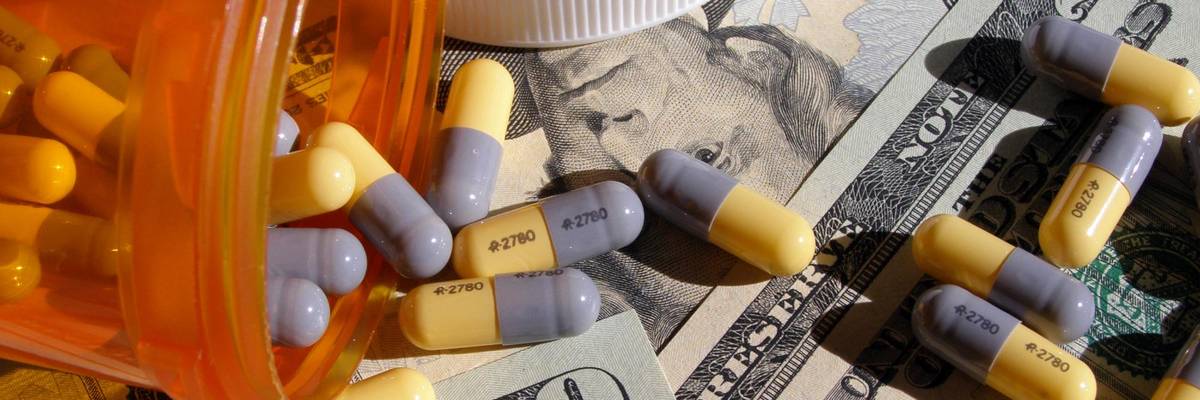
More than 60 civil society organizations from around the United States on Wednesday urged the Democratic Party's leaders to reject the attempts of a few caucus members bankrolled by Big Pharma to dilute the Build Back Better Act's provision to empower Medicare to reduce the nation's sky-high prescription drug prices.
"Drug price negotiation has repeatedly polled as one of and often the most popular single policy in the entire Build Back Better Act and Biden agenda."
"There are few issues of greater salience to people across this country than lowering drug prices, and few policies more commonsense and popular than Medicare drug price negotiation," Steve Knievel, an advocate for Public Citizen's Access to Medicines program, said in a statement.
Senate Majority Leader Chuck Schumer (D-N.Y.) and House Speaker Nancy Pelosi (D-Calif.) "know this, and it is why they have promised it for years," Knievel added. "Now it is time to deliver."
In a letter addressed to Schumer and Pelosi, the coalition of labor unions and progressive advocacy groups--including Be a Hero, Health Care Voices, National Nurses United, and Public Citizen--expresses its growing concern about recent reporting that "congressional leadership is considering excluding or significantly weakening drug price negotiation policy in the Build Back Better Act."
Although the legislative effort by congressional Democrats and President Joe Biden to strengthen the nation's relatively underdeveloped welfare state and fund climate action can be passed without GOP support through the filibuster-proof budget reconciliation process, it is currently being scaled back due to the intransigence of the Democratic Party's right-wingers--including Sens. Joe Manchin (W.Va.) and Kyrsten Sinema (Ariz.), as well as a few lawmakers in the House, described in the letter as "out of step with the needs and demands of the American people."
More than two dozen Arizona organizations sent a separate letter on Wednesday imploring Sinema to stop obstructing her party's proposed expansion of Medicare, including its authority to negotiate lower drug prices.
The letter urging Schumer and Pelosi to not "cave to Big Pharma" notes that "drug price negotiation has repeatedly polled as one of and often the most popular single policy in the entire Build Back Better Act and Biden agenda."
"That extraordinary support," the letter continues, "holds even after voters are presented with talking points from prescription drug corporations opposing price negotiations, including 95% of Democrats and more than 8-in-10 adults generally."
Related Content

While "Medicare drug price negotiation has been a long-standing priority" that many Democratic lawmakers campaigned on, the letter warns that "certain isolated members of Congress would rather leave your promises unfulfilled, prioritizing drug corporations' ongoing ability to price gouge and charge United States consumers 3-4 times prices paid in other wealthy countries for prescription drugs over staying true to commitments and helping patients who are struggling to afford medicines."
As Common Dreams has reported and the letter points out, corporate Democratic Reps. Kathleen Rice (N.Y.), Scott Peters (Calif.), and Kurt Schrader (Ore.) "have proposed changes that would render drug price negotiations virtually meaningless, by excluding patented drugs from negotiations and removing the excise tax penalty to enforce drug corporation engagement in negotiations."
"Patented, brand-name drugs account for most of the spending on prescription drugs in Medicare and in the United States overall," the letter states, citing research from Public Citizen. "Excluding such drugs from negotiations would purposely ignore the medicines for which drug corporation price gouging is most severe, and patients most deeply harmed" by such deadly profiteering.
"Without an aggressive enforcement mechanism to compel drug corporations to engage in direct government price negotiations," the letter adds, "the policy would no longer be 'negotiation'--it would instead become a highly structured process for the United States government to beg."
More than 60 civil society organizations from around the United States on Wednesday urged the Democratic Party's leaders to reject the attempts of a few caucus members bankrolled by Big Pharma to dilute the Build Back Better Act's provision to empower Medicare to reduce the nation's sky-high prescription drug prices.
"Drug price negotiation has repeatedly polled as one of and often the most popular single policy in the entire Build Back Better Act and Biden agenda."
"There are few issues of greater salience to people across this country than lowering drug prices, and few policies more commonsense and popular than Medicare drug price negotiation," Steve Knievel, an advocate for Public Citizen's Access to Medicines program, said in a statement.
Senate Majority Leader Chuck Schumer (D-N.Y.) and House Speaker Nancy Pelosi (D-Calif.) "know this, and it is why they have promised it for years," Knievel added. "Now it is time to deliver."
In a letter addressed to Schumer and Pelosi, the coalition of labor unions and progressive advocacy groups--including Be a Hero, Health Care Voices, National Nurses United, and Public Citizen--expresses its growing concern about recent reporting that "congressional leadership is considering excluding or significantly weakening drug price negotiation policy in the Build Back Better Act."
Although the legislative effort by congressional Democrats and President Joe Biden to strengthen the nation's relatively underdeveloped welfare state and fund climate action can be passed without GOP support through the filibuster-proof budget reconciliation process, it is currently being scaled back due to the intransigence of the Democratic Party's right-wingers--including Sens. Joe Manchin (W.Va.) and Kyrsten Sinema (Ariz.), as well as a few lawmakers in the House, described in the letter as "out of step with the needs and demands of the American people."
More than two dozen Arizona organizations sent a separate letter on Wednesday imploring Sinema to stop obstructing her party's proposed expansion of Medicare, including its authority to negotiate lower drug prices.
The letter urging Schumer and Pelosi to not "cave to Big Pharma" notes that "drug price negotiation has repeatedly polled as one of and often the most popular single policy in the entire Build Back Better Act and Biden agenda."
"That extraordinary support," the letter continues, "holds even after voters are presented with talking points from prescription drug corporations opposing price negotiations, including 95% of Democrats and more than 8-in-10 adults generally."
Related Content
While "Medicare drug price negotiation has been a long-standing priority" that many Democratic lawmakers campaigned on, the letter warns that "certain isolated members of Congress would rather leave your promises unfulfilled, prioritizing drug corporations' ongoing ability to price gouge and charge United States consumers 3-4 times prices paid in other wealthy countries for prescription drugs over staying true to commitments and helping patients who are struggling to afford medicines."
As Common Dreams has reported and the letter points out, corporate Democratic Reps. Kathleen Rice (N.Y.), Scott Peters (Calif.), and Kurt Schrader (Ore.) "have proposed changes that would render drug price negotiations virtually meaningless, by excluding patented drugs from negotiations and removing the excise tax penalty to enforce drug corporation engagement in negotiations."
"Patented, brand-name drugs account for most of the spending on prescription drugs in Medicare and in the United States overall," the letter states, citing research from Public Citizen. "Excluding such drugs from negotiations would purposely ignore the medicines for which drug corporation price gouging is most severe, and patients most deeply harmed" by such deadly profiteering.
"Without an aggressive enforcement mechanism to compel drug corporations to engage in direct government price negotiations," the letter adds, "the policy would no longer be 'negotiation'--it would instead become a highly structured process for the United States government to beg."
More than 60 civil society organizations from around the United States on Wednesday urged the Democratic Party's leaders to reject the attempts of a few caucus members bankrolled by Big Pharma to dilute the Build Back Better Act's provision to empower Medicare to reduce the nation's sky-high prescription drug prices.
"Drug price negotiation has repeatedly polled as one of and often the most popular single policy in the entire Build Back Better Act and Biden agenda."
"There are few issues of greater salience to people across this country than lowering drug prices, and few policies more commonsense and popular than Medicare drug price negotiation," Steve Knievel, an advocate for Public Citizen's Access to Medicines program, said in a statement.
Senate Majority Leader Chuck Schumer (D-N.Y.) and House Speaker Nancy Pelosi (D-Calif.) "know this, and it is why they have promised it for years," Knievel added. "Now it is time to deliver."
In a letter addressed to Schumer and Pelosi, the coalition of labor unions and progressive advocacy groups--including Be a Hero, Health Care Voices, National Nurses United, and Public Citizen--expresses its growing concern about recent reporting that "congressional leadership is considering excluding or significantly weakening drug price negotiation policy in the Build Back Better Act."
Although the legislative effort by congressional Democrats and President Joe Biden to strengthen the nation's relatively underdeveloped welfare state and fund climate action can be passed without GOP support through the filibuster-proof budget reconciliation process, it is currently being scaled back due to the intransigence of the Democratic Party's right-wingers--including Sens. Joe Manchin (W.Va.) and Kyrsten Sinema (Ariz.), as well as a few lawmakers in the House, described in the letter as "out of step with the needs and demands of the American people."
More than two dozen Arizona organizations sent a separate letter on Wednesday imploring Sinema to stop obstructing her party's proposed expansion of Medicare, including its authority to negotiate lower drug prices.
The letter urging Schumer and Pelosi to not "cave to Big Pharma" notes that "drug price negotiation has repeatedly polled as one of and often the most popular single policy in the entire Build Back Better Act and Biden agenda."
"That extraordinary support," the letter continues, "holds even after voters are presented with talking points from prescription drug corporations opposing price negotiations, including 95% of Democrats and more than 8-in-10 adults generally."
Related Content
While "Medicare drug price negotiation has been a long-standing priority" that many Democratic lawmakers campaigned on, the letter warns that "certain isolated members of Congress would rather leave your promises unfulfilled, prioritizing drug corporations' ongoing ability to price gouge and charge United States consumers 3-4 times prices paid in other wealthy countries for prescription drugs over staying true to commitments and helping patients who are struggling to afford medicines."
As Common Dreams has reported and the letter points out, corporate Democratic Reps. Kathleen Rice (N.Y.), Scott Peters (Calif.), and Kurt Schrader (Ore.) "have proposed changes that would render drug price negotiations virtually meaningless, by excluding patented drugs from negotiations and removing the excise tax penalty to enforce drug corporation engagement in negotiations."
"Patented, brand-name drugs account for most of the spending on prescription drugs in Medicare and in the United States overall," the letter states, citing research from Public Citizen. "Excluding such drugs from negotiations would purposely ignore the medicines for which drug corporation price gouging is most severe, and patients most deeply harmed" by such deadly profiteering.
"Without an aggressive enforcement mechanism to compel drug corporations to engage in direct government price negotiations," the letter adds, "the policy would no longer be 'negotiation'--it would instead become a highly structured process for the United States government to beg."