SUBSCRIBE TO OUR FREE NEWSLETTER
Daily news & progressive opinion—funded by the people, not the corporations—delivered straight to your inbox.
5
#000000
#FFFFFF
To donate by check, phone, or other method, see our More Ways to Give page.
Daily news & progressive opinion—funded by the people, not the corporations—delivered straight to your inbox.
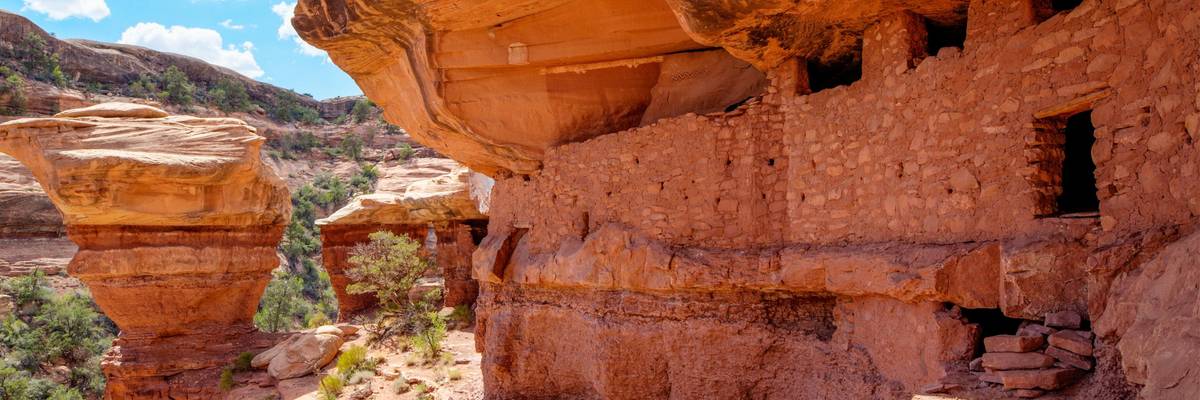
Bears Ears National Monument in Utah is home to more than 100,000 Native American archaeological and cultural sites. (Photo: Bob Wick/U.S. Bureau of Land Management/Flickr/cc)
Amid increasing frustration, leaders of two Native American tribes are calling on President Joe Biden to "take immediate action" to restore and enlarge Bears Ears National Monument in Utah, according to a letter published Tuesday by The Washington Post.
In the letter, Hopi Tribal Vice Chair Clark W. Tenakhongva and Navajo Nation representative Henry Stevens Jr. note that eight months have passed since Biden, on his first day in office, signed an executive order directing the U.S. Department of the Interior to conduct a comprehensive review of former President Donald Trump's 85% reduction of the 1.35 million-acre reserve, the result of a December 2017 presidential proclamation.
They also point out that it has been three months since Interior Secretary Deb Haaland submitted a report on the matter to the president.
"Each day that passes without national monument protection for numerous sacred sites and irreplaceable cultural resources risks desecration, looting, vandalism, and misinformed visitation that inspired the creation of the Antiquities Act," the tribal leaders write, referring to the 1906 law designed to prevent the theft of Indigenous artifacts from archaeological sites.
According to the Natural Resources Defense Council (NRDC), which followed tribes in suing the Trump administration over the reduction:
The ancestral homeland of several Native American tribes--the Navajo Nation, Hopi Tribe, Ute Indian Tribe, Ute Mountain Ute Tribe, and Pueblo of Zuni--Bears Ears National Monument encompasses thousands of sites, including dwellings, kivas, granaries, and rock art, that hold deep cultural and religious importance to the tribes today.
Bears Ears also represents one of the most pristine, road-free areas in the contiguous United States, featuring a rugged labyrinth of sandstone canyons, cliffs and rock arches, meadows, and desert mesas.
Trump's proclamation replaced Bears Ears with two smaller noncontiguous reserves while leaving the remainder of the former monument open to mining, fossil fuel extraction, road construction, and other harmful activities. A separate presidential proclamation issued at the same time slashed Grand Staircase-Escalante National Monument, also in Utah, by nearly half. Between the two monuments, nearly two million acres of formerly Indigenous federal public lands were stripped of legal protection.
In their letter, Tenakhongva and Stevens decry developments including "new water wells to expand opportunities for cattle grazing and an increase in permitting for motorized recreation and hardening and expansion of campgrounds" carried out without tribes "being collaboratively engaged."
"We have tried to be patient and respectful as we await your decision on restoration," the leaders write. "However, the longer action is not taken, real harm, much permanent, is occurring on this sacred landscape."
On her first official trip as interior chief, Haaland--the nation's first-ever Native American U.S. Cabinet secretary--met with Indigenous leaders, who told her they want the monument expanded to 1.9 million acres, not simply returned to its original size. Bears Ears was established as a 1.35 million-acre reserve by then-President Barack Obama in December 2016.
"This landscape is home to many historical and cultural sites, plants, water, traditional medicines, and teachings for our people," Navajo Nation President Jonathan Nez said at the time. "It also provided refuge for our people in times of conflict. Bears Ears is sacred and it deserves to be protected."
Dear Common Dreams reader, It’s been nearly 30 years since I co-founded Common Dreams with my late wife, Lina Newhouser. We had the radical notion that journalism should serve the public good, not corporate profits. It was clear to us from the outset what it would take to build such a project. No paid advertisements. No corporate sponsors. No millionaire publisher telling us what to think or do. Many people said we wouldn't last a year, but we proved those doubters wrong. Together with a tremendous team of journalists and dedicated staff, we built an independent media outlet free from the constraints of profits and corporate control. Our mission has always been simple: To inform. To inspire. To ignite change for the common good. Building Common Dreams was not easy. Our survival was never guaranteed. When you take on the most powerful forces—Wall Street greed, fossil fuel industry destruction, Big Tech lobbyists, and uber-rich oligarchs who have spent billions upon billions rigging the economy and democracy in their favor—the only bulwark you have is supporters who believe in your work. But here’s the urgent message from me today. It's never been this bad out there. And it's never been this hard to keep us going. At the very moment Common Dreams is most needed, the threats we face are intensifying. We need your support now more than ever. We don't accept corporate advertising and never will. We don't have a paywall because we don't think people should be blocked from critical news based on their ability to pay. Everything we do is funded by the donations of readers like you. When everyone does the little they can afford, we are strong. But if that support retreats or dries up, so do we. Will you donate now to make sure Common Dreams not only survives but thrives? —Craig Brown, Co-founder |
Amid increasing frustration, leaders of two Native American tribes are calling on President Joe Biden to "take immediate action" to restore and enlarge Bears Ears National Monument in Utah, according to a letter published Tuesday by The Washington Post.
In the letter, Hopi Tribal Vice Chair Clark W. Tenakhongva and Navajo Nation representative Henry Stevens Jr. note that eight months have passed since Biden, on his first day in office, signed an executive order directing the U.S. Department of the Interior to conduct a comprehensive review of former President Donald Trump's 85% reduction of the 1.35 million-acre reserve, the result of a December 2017 presidential proclamation.
They also point out that it has been three months since Interior Secretary Deb Haaland submitted a report on the matter to the president.
"Each day that passes without national monument protection for numerous sacred sites and irreplaceable cultural resources risks desecration, looting, vandalism, and misinformed visitation that inspired the creation of the Antiquities Act," the tribal leaders write, referring to the 1906 law designed to prevent the theft of Indigenous artifacts from archaeological sites.
According to the Natural Resources Defense Council (NRDC), which followed tribes in suing the Trump administration over the reduction:
The ancestral homeland of several Native American tribes--the Navajo Nation, Hopi Tribe, Ute Indian Tribe, Ute Mountain Ute Tribe, and Pueblo of Zuni--Bears Ears National Monument encompasses thousands of sites, including dwellings, kivas, granaries, and rock art, that hold deep cultural and religious importance to the tribes today.
Bears Ears also represents one of the most pristine, road-free areas in the contiguous United States, featuring a rugged labyrinth of sandstone canyons, cliffs and rock arches, meadows, and desert mesas.
Trump's proclamation replaced Bears Ears with two smaller noncontiguous reserves while leaving the remainder of the former monument open to mining, fossil fuel extraction, road construction, and other harmful activities. A separate presidential proclamation issued at the same time slashed Grand Staircase-Escalante National Monument, also in Utah, by nearly half. Between the two monuments, nearly two million acres of formerly Indigenous federal public lands were stripped of legal protection.
In their letter, Tenakhongva and Stevens decry developments including "new water wells to expand opportunities for cattle grazing and an increase in permitting for motorized recreation and hardening and expansion of campgrounds" carried out without tribes "being collaboratively engaged."
"We have tried to be patient and respectful as we await your decision on restoration," the leaders write. "However, the longer action is not taken, real harm, much permanent, is occurring on this sacred landscape."
On her first official trip as interior chief, Haaland--the nation's first-ever Native American U.S. Cabinet secretary--met with Indigenous leaders, who told her they want the monument expanded to 1.9 million acres, not simply returned to its original size. Bears Ears was established as a 1.35 million-acre reserve by then-President Barack Obama in December 2016.
"This landscape is home to many historical and cultural sites, plants, water, traditional medicines, and teachings for our people," Navajo Nation President Jonathan Nez said at the time. "It also provided refuge for our people in times of conflict. Bears Ears is sacred and it deserves to be protected."
Amid increasing frustration, leaders of two Native American tribes are calling on President Joe Biden to "take immediate action" to restore and enlarge Bears Ears National Monument in Utah, according to a letter published Tuesday by The Washington Post.
In the letter, Hopi Tribal Vice Chair Clark W. Tenakhongva and Navajo Nation representative Henry Stevens Jr. note that eight months have passed since Biden, on his first day in office, signed an executive order directing the U.S. Department of the Interior to conduct a comprehensive review of former President Donald Trump's 85% reduction of the 1.35 million-acre reserve, the result of a December 2017 presidential proclamation.
They also point out that it has been three months since Interior Secretary Deb Haaland submitted a report on the matter to the president.
"Each day that passes without national monument protection for numerous sacred sites and irreplaceable cultural resources risks desecration, looting, vandalism, and misinformed visitation that inspired the creation of the Antiquities Act," the tribal leaders write, referring to the 1906 law designed to prevent the theft of Indigenous artifacts from archaeological sites.
According to the Natural Resources Defense Council (NRDC), which followed tribes in suing the Trump administration over the reduction:
The ancestral homeland of several Native American tribes--the Navajo Nation, Hopi Tribe, Ute Indian Tribe, Ute Mountain Ute Tribe, and Pueblo of Zuni--Bears Ears National Monument encompasses thousands of sites, including dwellings, kivas, granaries, and rock art, that hold deep cultural and religious importance to the tribes today.
Bears Ears also represents one of the most pristine, road-free areas in the contiguous United States, featuring a rugged labyrinth of sandstone canyons, cliffs and rock arches, meadows, and desert mesas.
Trump's proclamation replaced Bears Ears with two smaller noncontiguous reserves while leaving the remainder of the former monument open to mining, fossil fuel extraction, road construction, and other harmful activities. A separate presidential proclamation issued at the same time slashed Grand Staircase-Escalante National Monument, also in Utah, by nearly half. Between the two monuments, nearly two million acres of formerly Indigenous federal public lands were stripped of legal protection.
In their letter, Tenakhongva and Stevens decry developments including "new water wells to expand opportunities for cattle grazing and an increase in permitting for motorized recreation and hardening and expansion of campgrounds" carried out without tribes "being collaboratively engaged."
"We have tried to be patient and respectful as we await your decision on restoration," the leaders write. "However, the longer action is not taken, real harm, much permanent, is occurring on this sacred landscape."
On her first official trip as interior chief, Haaland--the nation's first-ever Native American U.S. Cabinet secretary--met with Indigenous leaders, who told her they want the monument expanded to 1.9 million acres, not simply returned to its original size. Bears Ears was established as a 1.35 million-acre reserve by then-President Barack Obama in December 2016.
"This landscape is home to many historical and cultural sites, plants, water, traditional medicines, and teachings for our people," Navajo Nation President Jonathan Nez said at the time. "It also provided refuge for our people in times of conflict. Bears Ears is sacred and it deserves to be protected."