SUBSCRIBE TO OUR FREE NEWSLETTER
Daily news & progressive opinion—funded by the people, not the corporations—delivered straight to your inbox.
5
#000000
#FFFFFF
To donate by check, phone, or other method, see our More Ways to Give page.
Daily news & progressive opinion—funded by the people, not the corporations—delivered straight to your inbox.

Ajmal Ahmadi weeps alone in a room after members of his family were killed in a U.S. drone strike in Kabul, Afghanistan on August 29, 2021. (Photo: Marcus Yam/Los Angeles Times)
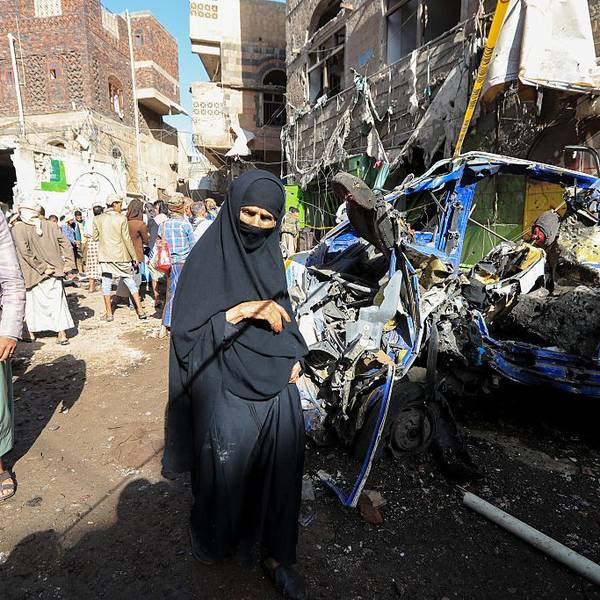
A U.S. drone strike purportedly targeting a suspected ISIS-K vehicle in a residential neighborhood of Kabul, Afghanistan killed at least 10 members of a single family--including six children--as they were getting out of their car on Sunday.
"Too many children have already died from U.S. drone strikes. We cannot accept one more, let alone six."
--CodePink
Relatives of the victims told the Washington Post that the strike--which was the second attack the U.S. carried out in Kabul over the weekend--"hit a nearby vehicle" that the Pentagon claims was an "imminent" threat.
The civilian victims of the U.S. strike were all "from a single extended family," the Post reported.
Samim Shahyad, a 25-year-old journalism student, told the New York Times that the U.S. attack killed his father, his two brothers, four of his young cousins, his niece, and his sister's fiance. Shahyad added that three of the victims were girls who were just two years old or younger.
"The American aircraft targeted us," said Shahyad. "I do not know what to say, they just cut my arms and broke my back, I cannot say anything more."
One neighbor at the scene of the attack said in an interview with CNN that "not much is left of their house and nothing can be recognized, they are in pieces." The person estimated that as many as 20 people may have been killed in the U.S. drone strike.
"Yet another reason why the U.S. must leave Afghanistan," said Trita Parsi, executive vice president of the Quincy Institute for Responsible Statecraft. "The military presence, and the civilian deaths it's brought, has become a key recruiting tool for terrorists."
Capt. Bill Urban, a spokesperson for the U.S. Central Command, acknowledged in a statement that "there were substantial and powerful subsequent explosions resulting from the destruction of the vehicle" that the U.S. military claimed to be targeting.
Urban suggested that "additional casualties" from the U.S. strike may have been due to "a large amount of explosive material inside" the targeted vehicle.
"It is unclear what may have happened," Urban added, "and we are investigating further."
Launched in the wake of a deadly ISIS-K attack on Kabul's international airport, the drone strike came just two days before the August 31 deadline for the withdrawal of U.S. troops from Afghanistan after two decades of devastating war and occupation.
Despite officials' claims that the drone assassination program is highly precise and targeted at militants, U.S. strikes have killed hundreds of Afghan civilians in recent years. According to documents leaked by former Air Force intelligence analyst Daniel Hale--who was sentenced to nearly four years in prison last month--nearly 90% of the people killed during one five-month period of a U.S. drone operation in Afghanistan were not the intended targets.
In 2019, the United Nations released a report accusing the U.S. of killing at least 30 Afghan civilians--including 14 children--and violating international humanitarian law with a series of drone strikes in May of that year.
"Maybe now would be a good time to retire phrases like 'targeted killing' and 'precision strike,' since these phrases have nothing at all to do with what we're actually doing," said Jameel Jaffer, director of the Knight First Amendment Institute at Columbia University.
Dear Common Dreams reader, It’s been nearly 30 years since I co-founded Common Dreams with my late wife, Lina Newhouser. We had the radical notion that journalism should serve the public good, not corporate profits. It was clear to us from the outset what it would take to build such a project. No paid advertisements. No corporate sponsors. No millionaire publisher telling us what to think or do. Many people said we wouldn't last a year, but we proved those doubters wrong. Together with a tremendous team of journalists and dedicated staff, we built an independent media outlet free from the constraints of profits and corporate control. Our mission has always been simple: To inform. To inspire. To ignite change for the common good. Building Common Dreams was not easy. Our survival was never guaranteed. When you take on the most powerful forces—Wall Street greed, fossil fuel industry destruction, Big Tech lobbyists, and uber-rich oligarchs who have spent billions upon billions rigging the economy and democracy in their favor—the only bulwark you have is supporters who believe in your work. But here’s the urgent message from me today. It's never been this bad out there. And it's never been this hard to keep us going. At the very moment Common Dreams is most needed, the threats we face are intensifying. We need your support now more than ever. We don't accept corporate advertising and never will. We don't have a paywall because we don't think people should be blocked from critical news based on their ability to pay. Everything we do is funded by the donations of readers like you. When everyone does the little they can afford, we are strong. But if that support retreats or dries up, so do we. Will you donate now to make sure Common Dreams not only survives but thrives? —Craig Brown, Co-founder |
A U.S. drone strike purportedly targeting a suspected ISIS-K vehicle in a residential neighborhood of Kabul, Afghanistan killed at least 10 members of a single family--including six children--as they were getting out of their car on Sunday.
"Too many children have already died from U.S. drone strikes. We cannot accept one more, let alone six."
--CodePink
Relatives of the victims told the Washington Post that the strike--which was the second attack the U.S. carried out in Kabul over the weekend--"hit a nearby vehicle" that the Pentagon claims was an "imminent" threat.
The civilian victims of the U.S. strike were all "from a single extended family," the Post reported.
Samim Shahyad, a 25-year-old journalism student, told the New York Times that the U.S. attack killed his father, his two brothers, four of his young cousins, his niece, and his sister's fiance. Shahyad added that three of the victims were girls who were just two years old or younger.
"The American aircraft targeted us," said Shahyad. "I do not know what to say, they just cut my arms and broke my back, I cannot say anything more."
One neighbor at the scene of the attack said in an interview with CNN that "not much is left of their house and nothing can be recognized, they are in pieces." The person estimated that as many as 20 people may have been killed in the U.S. drone strike.
"Yet another reason why the U.S. must leave Afghanistan," said Trita Parsi, executive vice president of the Quincy Institute for Responsible Statecraft. "The military presence, and the civilian deaths it's brought, has become a key recruiting tool for terrorists."
Capt. Bill Urban, a spokesperson for the U.S. Central Command, acknowledged in a statement that "there were substantial and powerful subsequent explosions resulting from the destruction of the vehicle" that the U.S. military claimed to be targeting.
Urban suggested that "additional casualties" from the U.S. strike may have been due to "a large amount of explosive material inside" the targeted vehicle.
"It is unclear what may have happened," Urban added, "and we are investigating further."
Launched in the wake of a deadly ISIS-K attack on Kabul's international airport, the drone strike came just two days before the August 31 deadline for the withdrawal of U.S. troops from Afghanistan after two decades of devastating war and occupation.
Despite officials' claims that the drone assassination program is highly precise and targeted at militants, U.S. strikes have killed hundreds of Afghan civilians in recent years. According to documents leaked by former Air Force intelligence analyst Daniel Hale--who was sentenced to nearly four years in prison last month--nearly 90% of the people killed during one five-month period of a U.S. drone operation in Afghanistan were not the intended targets.
In 2019, the United Nations released a report accusing the U.S. of killing at least 30 Afghan civilians--including 14 children--and violating international humanitarian law with a series of drone strikes in May of that year.
"Maybe now would be a good time to retire phrases like 'targeted killing' and 'precision strike,' since these phrases have nothing at all to do with what we're actually doing," said Jameel Jaffer, director of the Knight First Amendment Institute at Columbia University.
A U.S. drone strike purportedly targeting a suspected ISIS-K vehicle in a residential neighborhood of Kabul, Afghanistan killed at least 10 members of a single family--including six children--as they were getting out of their car on Sunday.
"Too many children have already died from U.S. drone strikes. We cannot accept one more, let alone six."
--CodePink
Relatives of the victims told the Washington Post that the strike--which was the second attack the U.S. carried out in Kabul over the weekend--"hit a nearby vehicle" that the Pentagon claims was an "imminent" threat.
The civilian victims of the U.S. strike were all "from a single extended family," the Post reported.
Samim Shahyad, a 25-year-old journalism student, told the New York Times that the U.S. attack killed his father, his two brothers, four of his young cousins, his niece, and his sister's fiance. Shahyad added that three of the victims were girls who were just two years old or younger.
"The American aircraft targeted us," said Shahyad. "I do not know what to say, they just cut my arms and broke my back, I cannot say anything more."
One neighbor at the scene of the attack said in an interview with CNN that "not much is left of their house and nothing can be recognized, they are in pieces." The person estimated that as many as 20 people may have been killed in the U.S. drone strike.
"Yet another reason why the U.S. must leave Afghanistan," said Trita Parsi, executive vice president of the Quincy Institute for Responsible Statecraft. "The military presence, and the civilian deaths it's brought, has become a key recruiting tool for terrorists."
Capt. Bill Urban, a spokesperson for the U.S. Central Command, acknowledged in a statement that "there were substantial and powerful subsequent explosions resulting from the destruction of the vehicle" that the U.S. military claimed to be targeting.
Urban suggested that "additional casualties" from the U.S. strike may have been due to "a large amount of explosive material inside" the targeted vehicle.
"It is unclear what may have happened," Urban added, "and we are investigating further."
Launched in the wake of a deadly ISIS-K attack on Kabul's international airport, the drone strike came just two days before the August 31 deadline for the withdrawal of U.S. troops from Afghanistan after two decades of devastating war and occupation.
Despite officials' claims that the drone assassination program is highly precise and targeted at militants, U.S. strikes have killed hundreds of Afghan civilians in recent years. According to documents leaked by former Air Force intelligence analyst Daniel Hale--who was sentenced to nearly four years in prison last month--nearly 90% of the people killed during one five-month period of a U.S. drone operation in Afghanistan were not the intended targets.
In 2019, the United Nations released a report accusing the U.S. of killing at least 30 Afghan civilians--including 14 children--and violating international humanitarian law with a series of drone strikes in May of that year.
"Maybe now would be a good time to retire phrases like 'targeted killing' and 'precision strike,' since these phrases have nothing at all to do with what we're actually doing," said Jameel Jaffer, director of the Knight First Amendment Institute at Columbia University.