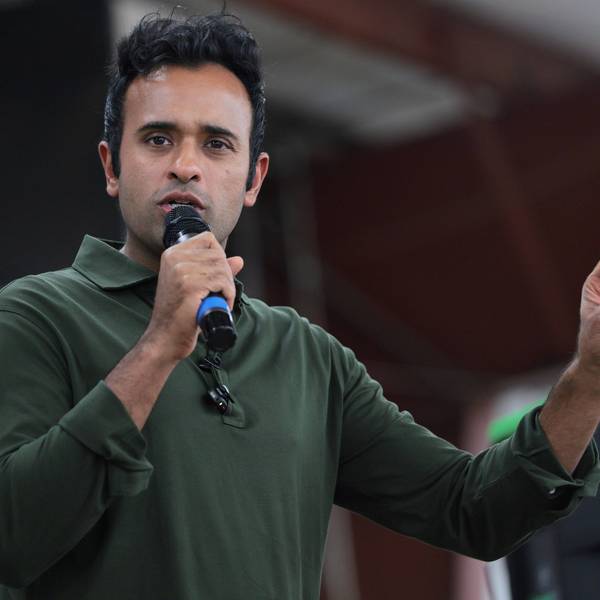


U.S. Sen. Bernie Sanders (I-Vt.) speaks to the media outside the West Wing of the White House in Washington, D.C. on July 12, 2021, after attending a meeting with President Joe Biden. (Photo: Saul Loeb/AFP via Getty Images)
With 'Future of Our Planet' at Stake, Sanders Says Democrats' $3.5 Trillion Package Must Pass
"Now is the time for the U.S. government to make certain that the planet we leave our children and future generations is healthy and habitable."
As Senate Majority Leader Chuck Schumer on Wednesday reiterated his commitment to advancing both major infrastructure packages before the August recess, Budget Committee Chair Bernie Sanders emphasized the importance of fighting for Democrats' reconciliation proposal.
"Tragically, many Republican leaders in Congress and around the country are just too busy continuing to lie about the 2020 presidential election, undermining democracy by suppressing voting rights, denying the reality of climate change, and casting doubts about the efficacy of the Covid-19 vaccines," Sanders (I-V.t.) wrote for The Guardian.
"That means that the 50 Democrats in the U.S. Senate, plus the vice president, will have to pass this most consequential piece of legislation alone," he added of the package the Democratic caucus plans to pass through the budget reconciliation process. "And that's what we will do. The future of working families is at stake. The future of our democracy is at stake. The future of our planet is at stake."
The budget reconciliation process--which allows Senate Democrats to avoid a GOP filibuster--involves (pdf) adopting a budget resolution with directives for congressional committees to develop legislation. The Budget Committee then packages the other panels' proposals and it is considered on the chamber floor; if necessary, the two chambers will resolve differences before the final measure is enacted into law or vetoed.
Though the $3.5 trillion spending framework Democrats announced last week falls far below what progressive activists and Sanders himself advocated, if passed it still "will be the most consequential piece of legislation for working people, the elderly, the children, the sick, and the poor since FDR and the New Deal of the 1930s," the budget chair noted.
"It will also put the U.S. in a global leadership position as we combat climate change," he continued. "Further, and importantly, this legislation will create millions of good-paying jobs as we address the long-neglected needs of working families and the planet."
While Sanders' opinion piece touches on several priorities for the Democrtic proposal--from policies on child care, universal pre-kindergarten, higher education costs, and family and medical leave to letting Medicare negotiate drug prices and providing a pathway to citizenship for undocumented immigrants--negotiations over the federal infrastructure, care, and jobs packages have happened in the midst of various extreme weather events.
Fires are raging in places from the U.S. West to Siberia and floods have devastated parts of Europe and China. Meanwhile, experts warn that planet-heating emissions are set to keep soaring.
"At a time of unprecedented heatwaves, drought, flooding, extreme weather disturbances, and the acidification of the oceans, now is the time for the U.S. government to make certain that the planet we leave our children and future generations is healthy and habitable," said Sanders. "We must stand up to the greed of the fossil fuel industry, transform our energy system, and lead the world in combating climate change."
Sanders explained how climate factors into the reconciliation package:
This effort will include a nationwide clean energy standard that moves our transportation system, electrical generation, buildings and housing, and agriculture sector toward clean energy.
Through a Civilian Climate Corps we will give hundreds of thousands of young people good-paying jobs and educational benefits as they help us combat climate change.
Sanders' piece comes a day after 84 Democrats across both chambers of Congress sent a letter (pdf) to Schumer (D-N.Y.) and House Speaker Nancy Pelosi (D-Calif.) to express their "strong support for funding a Civilian Climate Corps in the upcoming reconciliation package."
The letter--signed by Sen. Ed Markey (D-Mass.) and Rep. Alexandria Ocasio-Cortez, who proposed CCC legislation earlier this year--details lawmakers' desired goals, standards, and structure for the program while highlighting "the urgency of this moment."
Doubling down on his support for the program, Schumer said during a press conference Tuesday, "I will fight to get the biggest, boldest CCC possible."
The Senate majority leader addressed infrastructure efforts more broadly on the chamber's floor Wednesday, ahead of a procedural vote to get the legislative process started on a $579 billion bipartisan framework.
"I have every intention of passing both major infrastructure packages--the bipartisan infrastructure framework and a budget resolution with reconciliation instructions--before we leave for the August recess," Schumer said. "That's the schedule I laid out at the end of June. That's the schedule I intend to stick to."
With the vote widely expected to fail, HuffPost's Igor Bobic reported Wednesday that Sen. Susan Collins (R-Maine) said 11 Republican senators are sending Schumer a letter pushing to delay the vote to start debate.
"This vote should not be held today," Collins told reporters, according to CBS News. "We are making tremendous progress, and I hope that the majority leader will reconsider and just delay the vote until Monday."
We are at a crossroads
This country and this world are at a monumental crossroads. In a few short weeks, US voters will have an opportunity to beat back the forces of fascism and confront the billionaires who are rigging the economy, our media system, and our democracy, making it increasingly impossible for ordinary people to get by. We’re not just talking about the election. We’re talking about what must be done once these fascist elements are vanquished from power. We need a bolder set of solutions than what either major party has so far been willing to offer and a working-class movement ready to fight like hell for it. Trump didn't emerge from nowhere. The conditions that fueled MAGA authoritarianism were created by decades of radical neoliberal economic policies and a corrupt political system dominated by corporate interests. They slashed taxes on the super-rich, promising that the benefits would trickle down. They said giveaways to the corporate titans would make life more affordable for the rest of us. It was all bullshit. And when a bitter, betrayed populace searches for someone to blame, right-wing demagogues have little trouble finding scapegoats. People know when they're being lied to, but you won't hear any of this from the corporate media. Only independent journalism—powered and funded by people who believe in building a better world—can deliver truly trustworthy daily news. Our Fall Campaign is underway, and we need your help. To power our newsroom through the rest of the year, we need to raise $125,000 by midnight on October 31. So if you share our vision, please contribute whatever you can to sustain our work. |
As Senate Majority Leader Chuck Schumer on Wednesday reiterated his commitment to advancing both major infrastructure packages before the August recess, Budget Committee Chair Bernie Sanders emphasized the importance of fighting for Democrats' reconciliation proposal.
"Tragically, many Republican leaders in Congress and around the country are just too busy continuing to lie about the 2020 presidential election, undermining democracy by suppressing voting rights, denying the reality of climate change, and casting doubts about the efficacy of the Covid-19 vaccines," Sanders (I-V.t.) wrote for The Guardian.
"That means that the 50 Democrats in the U.S. Senate, plus the vice president, will have to pass this most consequential piece of legislation alone," he added of the package the Democratic caucus plans to pass through the budget reconciliation process. "And that's what we will do. The future of working families is at stake. The future of our democracy is at stake. The future of our planet is at stake."
The budget reconciliation process--which allows Senate Democrats to avoid a GOP filibuster--involves (pdf) adopting a budget resolution with directives for congressional committees to develop legislation. The Budget Committee then packages the other panels' proposals and it is considered on the chamber floor; if necessary, the two chambers will resolve differences before the final measure is enacted into law or vetoed.
Though the $3.5 trillion spending framework Democrats announced last week falls far below what progressive activists and Sanders himself advocated, if passed it still "will be the most consequential piece of legislation for working people, the elderly, the children, the sick, and the poor since FDR and the New Deal of the 1930s," the budget chair noted.
"It will also put the U.S. in a global leadership position as we combat climate change," he continued. "Further, and importantly, this legislation will create millions of good-paying jobs as we address the long-neglected needs of working families and the planet."
While Sanders' opinion piece touches on several priorities for the Democrtic proposal--from policies on child care, universal pre-kindergarten, higher education costs, and family and medical leave to letting Medicare negotiate drug prices and providing a pathway to citizenship for undocumented immigrants--negotiations over the federal infrastructure, care, and jobs packages have happened in the midst of various extreme weather events.
Fires are raging in places from the U.S. West to Siberia and floods have devastated parts of Europe and China. Meanwhile, experts warn that planet-heating emissions are set to keep soaring.
"At a time of unprecedented heatwaves, drought, flooding, extreme weather disturbances, and the acidification of the oceans, now is the time for the U.S. government to make certain that the planet we leave our children and future generations is healthy and habitable," said Sanders. "We must stand up to the greed of the fossil fuel industry, transform our energy system, and lead the world in combating climate change."
Sanders explained how climate factors into the reconciliation package:
This effort will include a nationwide clean energy standard that moves our transportation system, electrical generation, buildings and housing, and agriculture sector toward clean energy.
Through a Civilian Climate Corps we will give hundreds of thousands of young people good-paying jobs and educational benefits as they help us combat climate change.
Sanders' piece comes a day after 84 Democrats across both chambers of Congress sent a letter (pdf) to Schumer (D-N.Y.) and House Speaker Nancy Pelosi (D-Calif.) to express their "strong support for funding a Civilian Climate Corps in the upcoming reconciliation package."
The letter--signed by Sen. Ed Markey (D-Mass.) and Rep. Alexandria Ocasio-Cortez, who proposed CCC legislation earlier this year--details lawmakers' desired goals, standards, and structure for the program while highlighting "the urgency of this moment."
Doubling down on his support for the program, Schumer said during a press conference Tuesday, "I will fight to get the biggest, boldest CCC possible."
The Senate majority leader addressed infrastructure efforts more broadly on the chamber's floor Wednesday, ahead of a procedural vote to get the legislative process started on a $579 billion bipartisan framework.
"I have every intention of passing both major infrastructure packages--the bipartisan infrastructure framework and a budget resolution with reconciliation instructions--before we leave for the August recess," Schumer said. "That's the schedule I laid out at the end of June. That's the schedule I intend to stick to."
With the vote widely expected to fail, HuffPost's Igor Bobic reported Wednesday that Sen. Susan Collins (R-Maine) said 11 Republican senators are sending Schumer a letter pushing to delay the vote to start debate.
"This vote should not be held today," Collins told reporters, according to CBS News. "We are making tremendous progress, and I hope that the majority leader will reconsider and just delay the vote until Monday."