SUBSCRIBE TO OUR FREE NEWSLETTER
Daily news & progressive opinion—funded by the people, not the corporations—delivered straight to your inbox.
5
#000000
#FFFFFF
To donate by check, phone, or other method, see our More Ways to Give page.
Daily news & progressive opinion—funded by the people, not the corporations—delivered straight to your inbox.
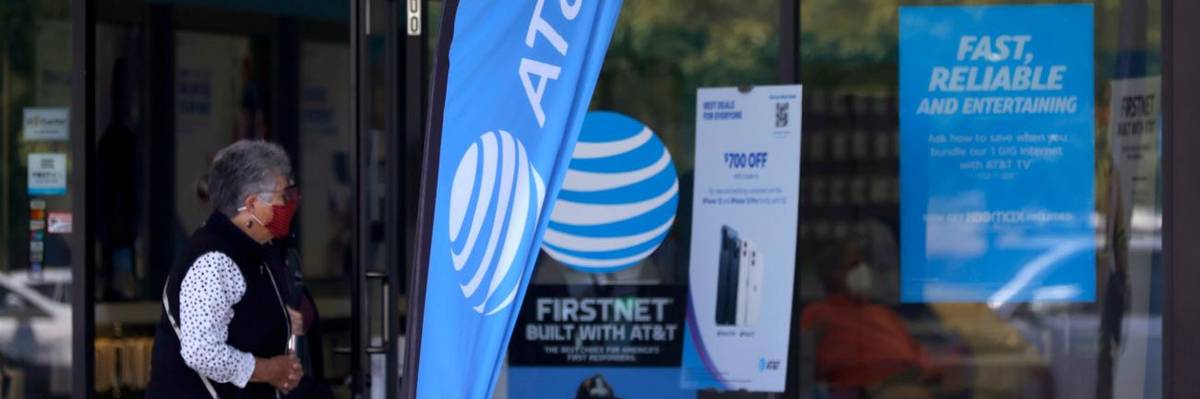
A pedestrian walks by an AT&T retail store on May 17, 2021 in San Rafael, California. AT&T, the world's largest telecommunications company, announced a deal with Discovery, Inc. which will spin off AT&T's WarnerMedia and be combined with Discovery to create a new standalone media company. (Photo: Justin Sullivan/Getty Images)
Public interest group Common Cause was among the critics denouncing telecom giant AT&T's latest merger on Monday as the company announced it had reached a $43 billion deal to consolidate the media company Discovery with WarnerMedia.
The deal is expected to be finalized in mid-2022 and will combine cable networks including CNN and HBO with Discovery's channels including HGTV and The Food Network as AT&T aims to compete with streaming services like Netflix.
"As usual the only folks who'll pay any real penalty for AT&T's expensive strategy incompetence will be its consumers and lower level employees."
--Karl Bode, journalist
The agreement comes three years after AT&T spent $85 billion to acquire the former media giant Time Warner and form WarnerMedia, a deal which drew skepticism from media experts and which AT&T spent millions of dollars and several months defending from challenges by government regulators.
The New York Times reported Monday that the decision to unwind the acquisition of Time Warner indicated "a failed acquisition strategy," and Common Cause accused AT&T of "seeking a bailout from a merger that should have never been approved."
"The AT&T/Time Warner merger has proven to be as disastrous as many of us predicted," said Michael Copps, special adviser to Common Cause and a former FCC commissioner. "After three years, millions of dollars of debt, and waves of layoffs, the deal has not only failed the public interest test but has not made any business sense either."
Since the Time Warner acquisition three years ago, AT&T has laid off about 45,000 workers. The company claimed it planned to create 7,000 new jobs as a result of former President Donald Trump's corporate tax cuts, which saved AT&T $42 billion, but it continued cutting jobs even after receiving the tax break, according to Ars Technica.
A report commissioned by California officials also found that AT&T allowed its copper phone networks in low-income areas to deteriorate in recent years even as it raised its prices by 152.6% over 12 years.
"While the deal is being touted as good for 'scale,' it will undoubtedly cost worker jobs, billions more in company debt, and consumer harms," said Copps of Monday's announcement. "The merger does not even begin to register on the scale of the public interest."
Tech journalist Karl Bode slammed the corporate media for its focus on the amount of money Discovery and AT&T shareholders stand to make from the deal, with little mention of the workers who will likely face job losses and the consumers who will likely be confronted with higher prices as a result of the merger.
"As usual the only folks who'll pay any real penalty for AT&T's expensive strategy incompetence will be its consumers and lower level employees," Bode said.
Sen. Richard Blumenthal (D-Conn.) spoke out about the merger, calling for regulators' "close scrutiny to protect consumers' pocket books instead of accelerating further concentration among corporate behemoths."
"Recent lax antitrust enforcement has allowed a dramatic consolidation in the media market that is driving up prices and limiting consumer choice," said Blumenthal. "I expect that antitrust enforcers will fully and fairly review this deal to protect consumers' interests."
Dear Common Dreams reader, It’s been nearly 30 years since I co-founded Common Dreams with my late wife, Lina Newhouser. We had the radical notion that journalism should serve the public good, not corporate profits. It was clear to us from the outset what it would take to build such a project. No paid advertisements. No corporate sponsors. No millionaire publisher telling us what to think or do. Many people said we wouldn't last a year, but we proved those doubters wrong. Together with a tremendous team of journalists and dedicated staff, we built an independent media outlet free from the constraints of profits and corporate control. Our mission has always been simple: To inform. To inspire. To ignite change for the common good. Building Common Dreams was not easy. Our survival was never guaranteed. When you take on the most powerful forces—Wall Street greed, fossil fuel industry destruction, Big Tech lobbyists, and uber-rich oligarchs who have spent billions upon billions rigging the economy and democracy in their favor—the only bulwark you have is supporters who believe in your work. But here’s the urgent message from me today. It's never been this bad out there. And it's never been this hard to keep us going. At the very moment Common Dreams is most needed, the threats we face are intensifying. We need your support now more than ever. We don't accept corporate advertising and never will. We don't have a paywall because we don't think people should be blocked from critical news based on their ability to pay. Everything we do is funded by the donations of readers like you. When everyone does the little they can afford, we are strong. But if that support retreats or dries up, so do we. Will you donate now to make sure Common Dreams not only survives but thrives? —Craig Brown, Co-founder |
Public interest group Common Cause was among the critics denouncing telecom giant AT&T's latest merger on Monday as the company announced it had reached a $43 billion deal to consolidate the media company Discovery with WarnerMedia.
The deal is expected to be finalized in mid-2022 and will combine cable networks including CNN and HBO with Discovery's channels including HGTV and The Food Network as AT&T aims to compete with streaming services like Netflix.
"As usual the only folks who'll pay any real penalty for AT&T's expensive strategy incompetence will be its consumers and lower level employees."
--Karl Bode, journalist
The agreement comes three years after AT&T spent $85 billion to acquire the former media giant Time Warner and form WarnerMedia, a deal which drew skepticism from media experts and which AT&T spent millions of dollars and several months defending from challenges by government regulators.
The New York Times reported Monday that the decision to unwind the acquisition of Time Warner indicated "a failed acquisition strategy," and Common Cause accused AT&T of "seeking a bailout from a merger that should have never been approved."
"The AT&T/Time Warner merger has proven to be as disastrous as many of us predicted," said Michael Copps, special adviser to Common Cause and a former FCC commissioner. "After three years, millions of dollars of debt, and waves of layoffs, the deal has not only failed the public interest test but has not made any business sense either."
Since the Time Warner acquisition three years ago, AT&T has laid off about 45,000 workers. The company claimed it planned to create 7,000 new jobs as a result of former President Donald Trump's corporate tax cuts, which saved AT&T $42 billion, but it continued cutting jobs even after receiving the tax break, according to Ars Technica.
A report commissioned by California officials also found that AT&T allowed its copper phone networks in low-income areas to deteriorate in recent years even as it raised its prices by 152.6% over 12 years.
"While the deal is being touted as good for 'scale,' it will undoubtedly cost worker jobs, billions more in company debt, and consumer harms," said Copps of Monday's announcement. "The merger does not even begin to register on the scale of the public interest."
Tech journalist Karl Bode slammed the corporate media for its focus on the amount of money Discovery and AT&T shareholders stand to make from the deal, with little mention of the workers who will likely face job losses and the consumers who will likely be confronted with higher prices as a result of the merger.
"As usual the only folks who'll pay any real penalty for AT&T's expensive strategy incompetence will be its consumers and lower level employees," Bode said.
Sen. Richard Blumenthal (D-Conn.) spoke out about the merger, calling for regulators' "close scrutiny to protect consumers' pocket books instead of accelerating further concentration among corporate behemoths."
"Recent lax antitrust enforcement has allowed a dramatic consolidation in the media market that is driving up prices and limiting consumer choice," said Blumenthal. "I expect that antitrust enforcers will fully and fairly review this deal to protect consumers' interests."
Public interest group Common Cause was among the critics denouncing telecom giant AT&T's latest merger on Monday as the company announced it had reached a $43 billion deal to consolidate the media company Discovery with WarnerMedia.
The deal is expected to be finalized in mid-2022 and will combine cable networks including CNN and HBO with Discovery's channels including HGTV and The Food Network as AT&T aims to compete with streaming services like Netflix.
"As usual the only folks who'll pay any real penalty for AT&T's expensive strategy incompetence will be its consumers and lower level employees."
--Karl Bode, journalist
The agreement comes three years after AT&T spent $85 billion to acquire the former media giant Time Warner and form WarnerMedia, a deal which drew skepticism from media experts and which AT&T spent millions of dollars and several months defending from challenges by government regulators.
The New York Times reported Monday that the decision to unwind the acquisition of Time Warner indicated "a failed acquisition strategy," and Common Cause accused AT&T of "seeking a bailout from a merger that should have never been approved."
"The AT&T/Time Warner merger has proven to be as disastrous as many of us predicted," said Michael Copps, special adviser to Common Cause and a former FCC commissioner. "After three years, millions of dollars of debt, and waves of layoffs, the deal has not only failed the public interest test but has not made any business sense either."
Since the Time Warner acquisition three years ago, AT&T has laid off about 45,000 workers. The company claimed it planned to create 7,000 new jobs as a result of former President Donald Trump's corporate tax cuts, which saved AT&T $42 billion, but it continued cutting jobs even after receiving the tax break, according to Ars Technica.
A report commissioned by California officials also found that AT&T allowed its copper phone networks in low-income areas to deteriorate in recent years even as it raised its prices by 152.6% over 12 years.
"While the deal is being touted as good for 'scale,' it will undoubtedly cost worker jobs, billions more in company debt, and consumer harms," said Copps of Monday's announcement. "The merger does not even begin to register on the scale of the public interest."
Tech journalist Karl Bode slammed the corporate media for its focus on the amount of money Discovery and AT&T shareholders stand to make from the deal, with little mention of the workers who will likely face job losses and the consumers who will likely be confronted with higher prices as a result of the merger.
"As usual the only folks who'll pay any real penalty for AT&T's expensive strategy incompetence will be its consumers and lower level employees," Bode said.
Sen. Richard Blumenthal (D-Conn.) spoke out about the merger, calling for regulators' "close scrutiny to protect consumers' pocket books instead of accelerating further concentration among corporate behemoths."
"Recent lax antitrust enforcement has allowed a dramatic consolidation in the media market that is driving up prices and limiting consumer choice," said Blumenthal. "I expect that antitrust enforcers will fully and fairly review this deal to protect consumers' interests."