SUBSCRIBE TO OUR FREE NEWSLETTER
Daily news & progressive opinion—funded by the people, not the corporations—delivered straight to your inbox.
5
#000000
#FFFFFF
To donate by check, phone, or other method, see our More Ways to Give page.
Daily news & progressive opinion—funded by the people, not the corporations—delivered straight to your inbox.
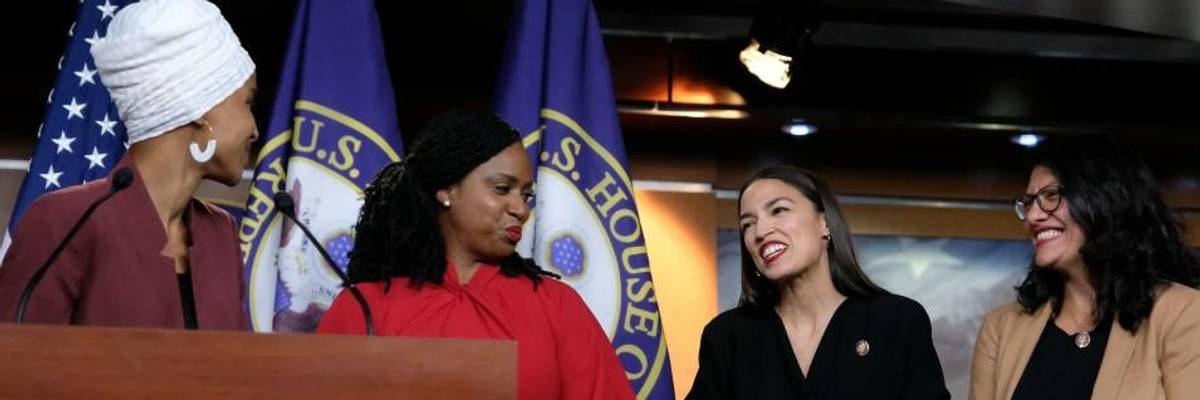
Progressive primary challengers including Rep. Alexandria Ocasio-Cortez (D-N.Y.; second from right) vehemently opposed the DCCC policy of denying funding for consultants seeking work on campaigns against Democratic House incumbents. (Photo: Alex Wroblewski/Getty Images)
Progressives on Tuesday cheered news that the Democratic Congressional Campaign Committee is officially lifting a controversial ban on political consultants or firms who worked for candidates mounting primary challenges against incumbent House lawmakers.
"We have primaries to make sure we have the best and the brightest in every party. So primaries should be unemcumbered by outside forces."
--Rep. Marie Newman (D-Ill.)
Politico reports DCCC chair Rep. Sean Patrick Maloney (D-N.Y.) pronounced the end of the ban Tuesday morning, fulfilling a promise he made while campaigning for the position. The policy, which was implemented in 2019, prohibited the DCCC from hiring or even recommending contractors offering services to primary candidates running against Democratic House incumbents.
Progressives seethed at the proscription, which they said unfairly targeted them. Rep. Ro Khanna (D-Calif.), then vice-chair of the Congressional Progressive Caucus, called the policy "an unprecedented grab of power" and "a slap in the face of Democratic voters."
Despite concerns that the policy could continue unofficially, leftist lawmakers applauded the shift. "It's an enormous win," Rep. Alexandria Ocasio-Cortez (D-N.Y.) told Politico. "The escalation and aggression against the progressive wing of the party with an explicit forward-facing 'blacklist' created a lot of dissuasion against candidates even considering grassroots organizing firms."
Ocasio-Cortez--who got to Congress by defeating a 10-term Democratic incumbent in 2018--added that the ban's end would open "a door for our party to leverage strength from all parts of it."
Rep. Marie Newman (D-Ill.), whose successful 2020 campaign against conservative Democratic incumbent Rep. Dan Lipinksi was beset by consultant cancellations due to the ban, also welcomed its demise.
"We have primaries to make sure we have the best and the brightest in every party," Newman told Politico. "So primaries should be unencumbered by outside forces."
Last month, Maloney told Politico that the ban--which was implemented under his DCCC predecessor, Rep. Cheri Bustos (D-Ill.)--never "made sense" to him.
However, Maloney also said that "no one should be looking for work around here if they want to go after one of our members at the same time," prompting concerns that the ban could still persist in practice.
The short-lived official ban was welcomed by centrist Democrats seeking to stymie progressive upstarts. It was embraced by members of the Congressional Black Caucus as entrenched incumbents tried--and sometimes failed--to ward off newcomers like Rep. Cori Bush (D-Mo.), the Black Lives Matter activist who last year ousted Rep. Lacy Clay, a Democrat whose family had represented St. Louis in Congress for half a century.
Dear Common Dreams reader, It’s been nearly 30 years since I co-founded Common Dreams with my late wife, Lina Newhouser. We had the radical notion that journalism should serve the public good, not corporate profits. It was clear to us from the outset what it would take to build such a project. No paid advertisements. No corporate sponsors. No millionaire publisher telling us what to think or do. Many people said we wouldn't last a year, but we proved those doubters wrong. Together with a tremendous team of journalists and dedicated staff, we built an independent media outlet free from the constraints of profits and corporate control. Our mission has always been simple: To inform. To inspire. To ignite change for the common good. Building Common Dreams was not easy. Our survival was never guaranteed. When you take on the most powerful forces—Wall Street greed, fossil fuel industry destruction, Big Tech lobbyists, and uber-rich oligarchs who have spent billions upon billions rigging the economy and democracy in their favor—the only bulwark you have is supporters who believe in your work. But here’s the urgent message from me today. It's never been this bad out there. And it's never been this hard to keep us going. At the very moment Common Dreams is most needed, the threats we face are intensifying. We need your support now more than ever. We don't accept corporate advertising and never will. We don't have a paywall because we don't think people should be blocked from critical news based on their ability to pay. Everything we do is funded by the donations of readers like you. When everyone does the little they can afford, we are strong. But if that support retreats or dries up, so do we. Will you donate now to make sure Common Dreams not only survives but thrives? —Craig Brown, Co-founder |
Progressives on Tuesday cheered news that the Democratic Congressional Campaign Committee is officially lifting a controversial ban on political consultants or firms who worked for candidates mounting primary challenges against incumbent House lawmakers.
"We have primaries to make sure we have the best and the brightest in every party. So primaries should be unemcumbered by outside forces."
--Rep. Marie Newman (D-Ill.)
Politico reports DCCC chair Rep. Sean Patrick Maloney (D-N.Y.) pronounced the end of the ban Tuesday morning, fulfilling a promise he made while campaigning for the position. The policy, which was implemented in 2019, prohibited the DCCC from hiring or even recommending contractors offering services to primary candidates running against Democratic House incumbents.
Progressives seethed at the proscription, which they said unfairly targeted them. Rep. Ro Khanna (D-Calif.), then vice-chair of the Congressional Progressive Caucus, called the policy "an unprecedented grab of power" and "a slap in the face of Democratic voters."
Despite concerns that the policy could continue unofficially, leftist lawmakers applauded the shift. "It's an enormous win," Rep. Alexandria Ocasio-Cortez (D-N.Y.) told Politico. "The escalation and aggression against the progressive wing of the party with an explicit forward-facing 'blacklist' created a lot of dissuasion against candidates even considering grassroots organizing firms."
Ocasio-Cortez--who got to Congress by defeating a 10-term Democratic incumbent in 2018--added that the ban's end would open "a door for our party to leverage strength from all parts of it."
Rep. Marie Newman (D-Ill.), whose successful 2020 campaign against conservative Democratic incumbent Rep. Dan Lipinksi was beset by consultant cancellations due to the ban, also welcomed its demise.
"We have primaries to make sure we have the best and the brightest in every party," Newman told Politico. "So primaries should be unencumbered by outside forces."
Last month, Maloney told Politico that the ban--which was implemented under his DCCC predecessor, Rep. Cheri Bustos (D-Ill.)--never "made sense" to him.
However, Maloney also said that "no one should be looking for work around here if they want to go after one of our members at the same time," prompting concerns that the ban could still persist in practice.
The short-lived official ban was welcomed by centrist Democrats seeking to stymie progressive upstarts. It was embraced by members of the Congressional Black Caucus as entrenched incumbents tried--and sometimes failed--to ward off newcomers like Rep. Cori Bush (D-Mo.), the Black Lives Matter activist who last year ousted Rep. Lacy Clay, a Democrat whose family had represented St. Louis in Congress for half a century.
Progressives on Tuesday cheered news that the Democratic Congressional Campaign Committee is officially lifting a controversial ban on political consultants or firms who worked for candidates mounting primary challenges against incumbent House lawmakers.
"We have primaries to make sure we have the best and the brightest in every party. So primaries should be unemcumbered by outside forces."
--Rep. Marie Newman (D-Ill.)
Politico reports DCCC chair Rep. Sean Patrick Maloney (D-N.Y.) pronounced the end of the ban Tuesday morning, fulfilling a promise he made while campaigning for the position. The policy, which was implemented in 2019, prohibited the DCCC from hiring or even recommending contractors offering services to primary candidates running against Democratic House incumbents.
Progressives seethed at the proscription, which they said unfairly targeted them. Rep. Ro Khanna (D-Calif.), then vice-chair of the Congressional Progressive Caucus, called the policy "an unprecedented grab of power" and "a slap in the face of Democratic voters."
Despite concerns that the policy could continue unofficially, leftist lawmakers applauded the shift. "It's an enormous win," Rep. Alexandria Ocasio-Cortez (D-N.Y.) told Politico. "The escalation and aggression against the progressive wing of the party with an explicit forward-facing 'blacklist' created a lot of dissuasion against candidates even considering grassroots organizing firms."
Ocasio-Cortez--who got to Congress by defeating a 10-term Democratic incumbent in 2018--added that the ban's end would open "a door for our party to leverage strength from all parts of it."
Rep. Marie Newman (D-Ill.), whose successful 2020 campaign against conservative Democratic incumbent Rep. Dan Lipinksi was beset by consultant cancellations due to the ban, also welcomed its demise.
"We have primaries to make sure we have the best and the brightest in every party," Newman told Politico. "So primaries should be unencumbered by outside forces."
Last month, Maloney told Politico that the ban--which was implemented under his DCCC predecessor, Rep. Cheri Bustos (D-Ill.)--never "made sense" to him.
However, Maloney also said that "no one should be looking for work around here if they want to go after one of our members at the same time," prompting concerns that the ban could still persist in practice.
The short-lived official ban was welcomed by centrist Democrats seeking to stymie progressive upstarts. It was embraced by members of the Congressional Black Caucus as entrenched incumbents tried--and sometimes failed--to ward off newcomers like Rep. Cori Bush (D-Mo.), the Black Lives Matter activist who last year ousted Rep. Lacy Clay, a Democrat whose family had represented St. Louis in Congress for half a century.