SUBSCRIBE TO OUR FREE NEWSLETTER
Daily news & progressive opinion—funded by the people, not the corporations—delivered straight to your inbox.
5
#000000
#FFFFFF
To donate by check, phone, or other method, see our More Ways to Give page.
Daily news & progressive opinion—funded by the people, not the corporations—delivered straight to your inbox.

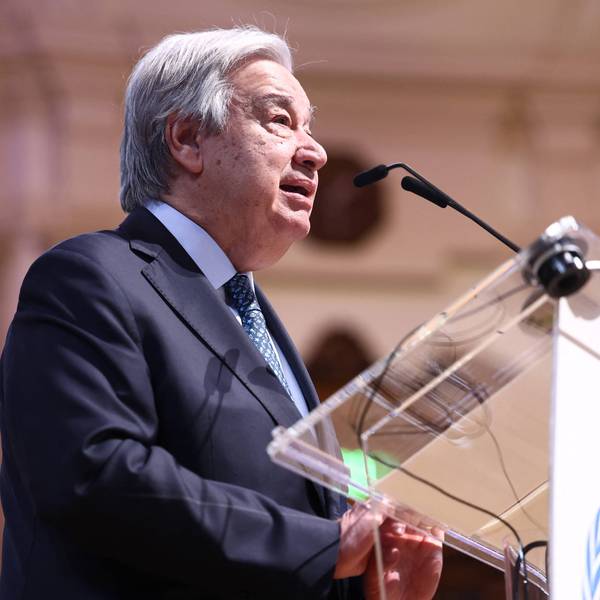
A new multi-paper World Health Organization report published Monday in The Lancet details the need to overhaul global food systems to address mass malnutrition. (Photo: Bartosz Hadyniak/Getty Images)
A multi-part World Health Organization report published Monday in the British medical journal The Lancet detailed the need to urgently transform the world's failing food systems to combat the coexistence of undernourishment and obesity--or the "double burden of malnutrition."
"Without a profound food system transformation, the economic, social, and environmental costs of inaction will hinder the growth and development of individuals and societies for decades to come."
--Francesco Branca, WHO
Based on global data from recent decades, the WHO report estimated that more than 150 million children are stunted worldwide while nearly 2.3 billion children and adults--about 30% of the planet's human population--are overweight.
Dr. Francesco Branca, the report's lead author and director of the WHO's Department of Nutrition for Health and Development, said that "we can no longer characterize countries as low-income and undernourished, or high-income and only concerned with obesity."
As he put it: "We are facing a new nutrition reality."
This new reality "is driven by changes to the food system, which have increased availability of ultra-processed foods that are linked to increased weight gain, while also adversely affecting infant and pre-schooler diets," said co-author and University of North Carolina professor Barry Popkin. "These changes include disappearing fresh food markets, increasing supermarkets, and the control of the food chain by supermarkets, and global food, catering, and agriculture companies in many countries."
Considering these changes, Branca explained that "all forms of malnutrition have a common denominator--food systems that fail to provide all people with healthy, safe, affordable, and sustainable diets."
"Changing this will require action across food systems--from production and processing, through trade and distribution, pricing, marketing, and labeling, to consumption and waste," he added. "All relevant policies and investments must be radically re-examined."
This is especially true for the more than a third of low- and middle-income countries that face "the two extremes of malnutrition." A WHO statement highlighted the following regions: sub-Saharan Africa, south and east Asia, and the Pacific.
Authors of the WHO report urged world governments, the United Nations, civil society, academics, the media, donors, the private sector, and economic platforms to pursue fundamental changes to global food systems with the aim of ending mass malnutrition. Doing so, according to the authors, means seeking assistance from grassroots groups, farmers and their unions, faith-based leaders, advocates for planetary health, leaders of green companies, local politicians, and consumer associations.
"Given the political economy of food, the commodification of food systems, and growing patterns of inequality worldwide, the new nutrition reality calls for a broadened community of actors who work in mutually reinforcing and interconnected ways on a global scale," said Branca. "Without a profound food system transformation, the economic, social, and environmental costs of inaction will hinder the growth and development of individuals and societies for decades to come."
The report acknowledged that fighting malnutrition requires successfully promoting healthier diets, which WHO defines as: optimal breastfeeding practices in the first two years; a wide variety of fruits and vegetables, whole grains, fiber, nuts, and seeds; and limited amounts of animal products--particularly processed meats--as well as foods and beverages high in sugar, saturated fat, trans fat, and salt.
"Today's publication of the WHO Series on the Double Burden of Malnutrition comes after 12 months of Lancet articles exploring nutrition in all its forms," wrote The Lancet editor-in-chief Dr. Richard Horton in an editorial accompanying the report.
"With these and other articles across Lancet journals throughout 2019, it has become clear that nutrition and malnutrition need to be approached from multiple perspectives," Horton continued, "and although findings have sometimes converged, there is still work to be done to understand malnutrition's multiple manifestations."
In January, as Common Dreams reported, more than three dozen experts with the EAT-Lancet Commission called for a "global agricultural revolution" and people worldwide to adopt a "planetary health diet" to tackle the harmful nutritional and environmental impacts of the world's unhealthy, unsustainable food system.
Co-lead commissioner Dr. Walter Willett of Harvard University explained at the time that "to be healthy, diets must have an appropriate calorie intake and consist of a variety of plant-based foods, low amounts of animal-based foods, unsaturated rather than saturated fats, and few refined grains, highly processed foods, and added sugars."
Dear Common Dreams reader, It’s been nearly 30 years since I co-founded Common Dreams with my late wife, Lina Newhouser. We had the radical notion that journalism should serve the public good, not corporate profits. It was clear to us from the outset what it would take to build such a project. No paid advertisements. No corporate sponsors. No millionaire publisher telling us what to think or do. Many people said we wouldn't last a year, but we proved those doubters wrong. Together with a tremendous team of journalists and dedicated staff, we built an independent media outlet free from the constraints of profits and corporate control. Our mission has always been simple: To inform. To inspire. To ignite change for the common good. Building Common Dreams was not easy. Our survival was never guaranteed. When you take on the most powerful forces—Wall Street greed, fossil fuel industry destruction, Big Tech lobbyists, and uber-rich oligarchs who have spent billions upon billions rigging the economy and democracy in their favor—the only bulwark you have is supporters who believe in your work. But here’s the urgent message from me today. It's never been this bad out there. And it's never been this hard to keep us going. At the very moment Common Dreams is most needed, the threats we face are intensifying. We need your support now more than ever. We don't accept corporate advertising and never will. We don't have a paywall because we don't think people should be blocked from critical news based on their ability to pay. Everything we do is funded by the donations of readers like you. When everyone does the little they can afford, we are strong. But if that support retreats or dries up, so do we. Will you donate now to make sure Common Dreams not only survives but thrives? —Craig Brown, Co-founder |
A multi-part World Health Organization report published Monday in the British medical journal The Lancet detailed the need to urgently transform the world's failing food systems to combat the coexistence of undernourishment and obesity--or the "double burden of malnutrition."
"Without a profound food system transformation, the economic, social, and environmental costs of inaction will hinder the growth and development of individuals and societies for decades to come."
--Francesco Branca, WHO
Based on global data from recent decades, the WHO report estimated that more than 150 million children are stunted worldwide while nearly 2.3 billion children and adults--about 30% of the planet's human population--are overweight.
Dr. Francesco Branca, the report's lead author and director of the WHO's Department of Nutrition for Health and Development, said that "we can no longer characterize countries as low-income and undernourished, or high-income and only concerned with obesity."
As he put it: "We are facing a new nutrition reality."
This new reality "is driven by changes to the food system, which have increased availability of ultra-processed foods that are linked to increased weight gain, while also adversely affecting infant and pre-schooler diets," said co-author and University of North Carolina professor Barry Popkin. "These changes include disappearing fresh food markets, increasing supermarkets, and the control of the food chain by supermarkets, and global food, catering, and agriculture companies in many countries."
Considering these changes, Branca explained that "all forms of malnutrition have a common denominator--food systems that fail to provide all people with healthy, safe, affordable, and sustainable diets."
"Changing this will require action across food systems--from production and processing, through trade and distribution, pricing, marketing, and labeling, to consumption and waste," he added. "All relevant policies and investments must be radically re-examined."
This is especially true for the more than a third of low- and middle-income countries that face "the two extremes of malnutrition." A WHO statement highlighted the following regions: sub-Saharan Africa, south and east Asia, and the Pacific.
Authors of the WHO report urged world governments, the United Nations, civil society, academics, the media, donors, the private sector, and economic platforms to pursue fundamental changes to global food systems with the aim of ending mass malnutrition. Doing so, according to the authors, means seeking assistance from grassroots groups, farmers and their unions, faith-based leaders, advocates for planetary health, leaders of green companies, local politicians, and consumer associations.
"Given the political economy of food, the commodification of food systems, and growing patterns of inequality worldwide, the new nutrition reality calls for a broadened community of actors who work in mutually reinforcing and interconnected ways on a global scale," said Branca. "Without a profound food system transformation, the economic, social, and environmental costs of inaction will hinder the growth and development of individuals and societies for decades to come."
The report acknowledged that fighting malnutrition requires successfully promoting healthier diets, which WHO defines as: optimal breastfeeding practices in the first two years; a wide variety of fruits and vegetables, whole grains, fiber, nuts, and seeds; and limited amounts of animal products--particularly processed meats--as well as foods and beverages high in sugar, saturated fat, trans fat, and salt.
"Today's publication of the WHO Series on the Double Burden of Malnutrition comes after 12 months of Lancet articles exploring nutrition in all its forms," wrote The Lancet editor-in-chief Dr. Richard Horton in an editorial accompanying the report.
"With these and other articles across Lancet journals throughout 2019, it has become clear that nutrition and malnutrition need to be approached from multiple perspectives," Horton continued, "and although findings have sometimes converged, there is still work to be done to understand malnutrition's multiple manifestations."
In January, as Common Dreams reported, more than three dozen experts with the EAT-Lancet Commission called for a "global agricultural revolution" and people worldwide to adopt a "planetary health diet" to tackle the harmful nutritional and environmental impacts of the world's unhealthy, unsustainable food system.
Co-lead commissioner Dr. Walter Willett of Harvard University explained at the time that "to be healthy, diets must have an appropriate calorie intake and consist of a variety of plant-based foods, low amounts of animal-based foods, unsaturated rather than saturated fats, and few refined grains, highly processed foods, and added sugars."
A multi-part World Health Organization report published Monday in the British medical journal The Lancet detailed the need to urgently transform the world's failing food systems to combat the coexistence of undernourishment and obesity--or the "double burden of malnutrition."
"Without a profound food system transformation, the economic, social, and environmental costs of inaction will hinder the growth and development of individuals and societies for decades to come."
--Francesco Branca, WHO
Based on global data from recent decades, the WHO report estimated that more than 150 million children are stunted worldwide while nearly 2.3 billion children and adults--about 30% of the planet's human population--are overweight.
Dr. Francesco Branca, the report's lead author and director of the WHO's Department of Nutrition for Health and Development, said that "we can no longer characterize countries as low-income and undernourished, or high-income and only concerned with obesity."
As he put it: "We are facing a new nutrition reality."
This new reality "is driven by changes to the food system, which have increased availability of ultra-processed foods that are linked to increased weight gain, while also adversely affecting infant and pre-schooler diets," said co-author and University of North Carolina professor Barry Popkin. "These changes include disappearing fresh food markets, increasing supermarkets, and the control of the food chain by supermarkets, and global food, catering, and agriculture companies in many countries."
Considering these changes, Branca explained that "all forms of malnutrition have a common denominator--food systems that fail to provide all people with healthy, safe, affordable, and sustainable diets."
"Changing this will require action across food systems--from production and processing, through trade and distribution, pricing, marketing, and labeling, to consumption and waste," he added. "All relevant policies and investments must be radically re-examined."
This is especially true for the more than a third of low- and middle-income countries that face "the two extremes of malnutrition." A WHO statement highlighted the following regions: sub-Saharan Africa, south and east Asia, and the Pacific.
Authors of the WHO report urged world governments, the United Nations, civil society, academics, the media, donors, the private sector, and economic platforms to pursue fundamental changes to global food systems with the aim of ending mass malnutrition. Doing so, according to the authors, means seeking assistance from grassroots groups, farmers and their unions, faith-based leaders, advocates for planetary health, leaders of green companies, local politicians, and consumer associations.
"Given the political economy of food, the commodification of food systems, and growing patterns of inequality worldwide, the new nutrition reality calls for a broadened community of actors who work in mutually reinforcing and interconnected ways on a global scale," said Branca. "Without a profound food system transformation, the economic, social, and environmental costs of inaction will hinder the growth and development of individuals and societies for decades to come."
The report acknowledged that fighting malnutrition requires successfully promoting healthier diets, which WHO defines as: optimal breastfeeding practices in the first two years; a wide variety of fruits and vegetables, whole grains, fiber, nuts, and seeds; and limited amounts of animal products--particularly processed meats--as well as foods and beverages high in sugar, saturated fat, trans fat, and salt.
"Today's publication of the WHO Series on the Double Burden of Malnutrition comes after 12 months of Lancet articles exploring nutrition in all its forms," wrote The Lancet editor-in-chief Dr. Richard Horton in an editorial accompanying the report.
"With these and other articles across Lancet journals throughout 2019, it has become clear that nutrition and malnutrition need to be approached from multiple perspectives," Horton continued, "and although findings have sometimes converged, there is still work to be done to understand malnutrition's multiple manifestations."
In January, as Common Dreams reported, more than three dozen experts with the EAT-Lancet Commission called for a "global agricultural revolution" and people worldwide to adopt a "planetary health diet" to tackle the harmful nutritional and environmental impacts of the world's unhealthy, unsustainable food system.
Co-lead commissioner Dr. Walter Willett of Harvard University explained at the time that "to be healthy, diets must have an appropriate calorie intake and consist of a variety of plant-based foods, low amounts of animal-based foods, unsaturated rather than saturated fats, and few refined grains, highly processed foods, and added sugars."