SUBSCRIBE TO OUR FREE NEWSLETTER
Daily news & progressive opinion—funded by the people, not the corporations—delivered straight to your inbox.
5
#000000
#FFFFFF
To donate by check, phone, or other method, see our More Ways to Give page.
Daily news & progressive opinion—funded by the people, not the corporations—delivered straight to your inbox.
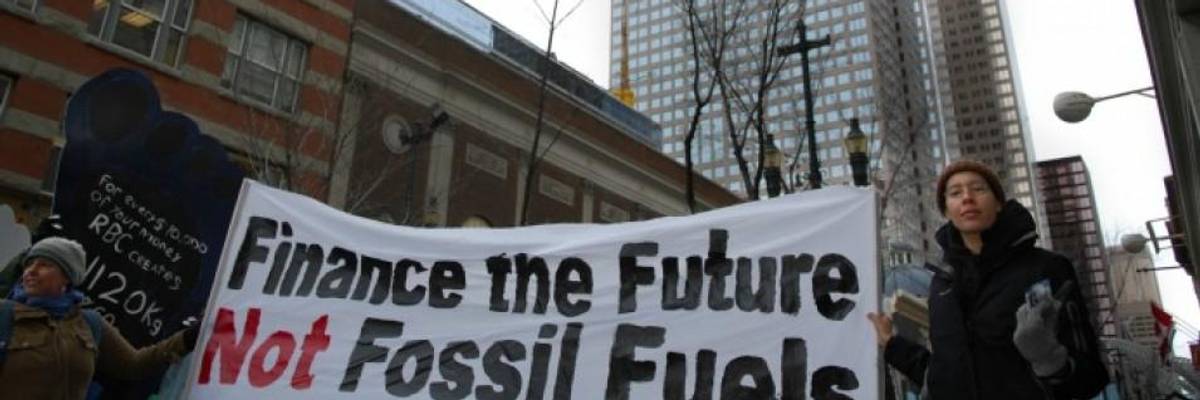
Goldman Sachs said Sunday it would not finance new Arctic oil drilling or exploration or new thermal coal mines and coal-fired power plant projects worldwide. (Photo: ItzaFineDay/flickr/cc)
Goldman Sachs earned cautious praise from environmental advocacy groups Sunday after the bank announced it would not finance new Arctic oil drilling or exploration and ruled out funding new thermal coal mines and coal-fired power plant projects worldwide.
"This new policy from Goldman Sachs raises the bar for other U.S. banks if they want to be taken seriously on climate change," said Jason Opena Disterhoft, climate and energy senior campaigner at Rainforest Action Network (RAN).
In its new energy policy Goldman said, in part:
We recognize that we have an impact on the environment through our operations, our investments, and the production and services we finance on behalf of our clients. As an institution that brings providers and users of capital together, we believe that capital markets can and should play an important role in addressing environmental challenges including climate change.
The commitment related to Arctic drilling and exploration, Goldman said, "includes but is not limited to the Arctic National Wildlife Refuge." The Trump administration has pushed to open the previously protected area to fossil fuel exploration despite Indigenous opposition and threat of adverse ecological impacts.
"The Trump administration may not care about ignoring the will of the American people or trampling Indigenous rights, but a growing number of major financial institutions are making it clear that they do," said Sierra Club campaign representative Ben Cushing. "Goldman Sachs is right to recognize that destroying the Arctic Refuge would be bad business."
Sierra Club, in its press statement, said that Goldman is the first major U.S. bank to make the commitments not to fund new coal projects or Arctic oil drilling. Still, the bank--which ranked this year among the "top dirty dozen" banks in terms of fossil fuel financing--must go further in terms of climate commitments, added Sierra Club, saying that Goldman Sachs did not rule out funding new fracking and tar sands projects.
According to 350.org founder Bill McKibben, Goldman's new commitment "leaves a lot to do, but it's a big start--such thanks to all who have fought to make it happen!"
Among the grassroots activists engaged in that is the Gwich'in Steering Committee, who see the threat of their sacred land in the Arctic being pillaged by the Trump administration's possible fossil fuel plunder.
Sierra Club and RAN say it's now up to other financial institutions to make similar moves--and for Goldman to be even bolder in its climate commitments.
"Goldman Sachs's updated policy shows that U.S. banks can draw red lines on oil and gas, and now other major U.S. banks, especially JPMorgan Chase--the world's worst banker of fossil fuels by a wide margin--must improve on what Goldman has done," said Opena Disterhoft. "The writing was already on the wall for coal financing," he added. "Goldman Sachs's new policy puts that writing in flashing neon."
"The smart money on Wall Street is drawing red lines on oil and gas, and exiting coal. The big money has to respond, or it will be left holding the bag," Opena Disterhoft said. "Over to you, Jamie Dimon and JPMorgan Chase."
Dear Common Dreams reader, It’s been nearly 30 years since I co-founded Common Dreams with my late wife, Lina Newhouser. We had the radical notion that journalism should serve the public good, not corporate profits. It was clear to us from the outset what it would take to build such a project. No paid advertisements. No corporate sponsors. No millionaire publisher telling us what to think or do. Many people said we wouldn't last a year, but we proved those doubters wrong. Together with a tremendous team of journalists and dedicated staff, we built an independent media outlet free from the constraints of profits and corporate control. Our mission has always been simple: To inform. To inspire. To ignite change for the common good. Building Common Dreams was not easy. Our survival was never guaranteed. When you take on the most powerful forces—Wall Street greed, fossil fuel industry destruction, Big Tech lobbyists, and uber-rich oligarchs who have spent billions upon billions rigging the economy and democracy in their favor—the only bulwark you have is supporters who believe in your work. But here’s the urgent message from me today. It's never been this bad out there. And it's never been this hard to keep us going. At the very moment Common Dreams is most needed, the threats we face are intensifying. We need your support now more than ever. We don't accept corporate advertising and never will. We don't have a paywall because we don't think people should be blocked from critical news based on their ability to pay. Everything we do is funded by the donations of readers like you. When everyone does the little they can afford, we are strong. But if that support retreats or dries up, so do we. Will you donate now to make sure Common Dreams not only survives but thrives? —Craig Brown, Co-founder |
Goldman Sachs earned cautious praise from environmental advocacy groups Sunday after the bank announced it would not finance new Arctic oil drilling or exploration and ruled out funding new thermal coal mines and coal-fired power plant projects worldwide.
"This new policy from Goldman Sachs raises the bar for other U.S. banks if they want to be taken seriously on climate change," said Jason Opena Disterhoft, climate and energy senior campaigner at Rainforest Action Network (RAN).
In its new energy policy Goldman said, in part:
We recognize that we have an impact on the environment through our operations, our investments, and the production and services we finance on behalf of our clients. As an institution that brings providers and users of capital together, we believe that capital markets can and should play an important role in addressing environmental challenges including climate change.
The commitment related to Arctic drilling and exploration, Goldman said, "includes but is not limited to the Arctic National Wildlife Refuge." The Trump administration has pushed to open the previously protected area to fossil fuel exploration despite Indigenous opposition and threat of adverse ecological impacts.
"The Trump administration may not care about ignoring the will of the American people or trampling Indigenous rights, but a growing number of major financial institutions are making it clear that they do," said Sierra Club campaign representative Ben Cushing. "Goldman Sachs is right to recognize that destroying the Arctic Refuge would be bad business."
Sierra Club, in its press statement, said that Goldman is the first major U.S. bank to make the commitments not to fund new coal projects or Arctic oil drilling. Still, the bank--which ranked this year among the "top dirty dozen" banks in terms of fossil fuel financing--must go further in terms of climate commitments, added Sierra Club, saying that Goldman Sachs did not rule out funding new fracking and tar sands projects.
According to 350.org founder Bill McKibben, Goldman's new commitment "leaves a lot to do, but it's a big start--such thanks to all who have fought to make it happen!"
Among the grassroots activists engaged in that is the Gwich'in Steering Committee, who see the threat of their sacred land in the Arctic being pillaged by the Trump administration's possible fossil fuel plunder.
Sierra Club and RAN say it's now up to other financial institutions to make similar moves--and for Goldman to be even bolder in its climate commitments.
"Goldman Sachs's updated policy shows that U.S. banks can draw red lines on oil and gas, and now other major U.S. banks, especially JPMorgan Chase--the world's worst banker of fossil fuels by a wide margin--must improve on what Goldman has done," said Opena Disterhoft. "The writing was already on the wall for coal financing," he added. "Goldman Sachs's new policy puts that writing in flashing neon."
"The smart money on Wall Street is drawing red lines on oil and gas, and exiting coal. The big money has to respond, or it will be left holding the bag," Opena Disterhoft said. "Over to you, Jamie Dimon and JPMorgan Chase."
Goldman Sachs earned cautious praise from environmental advocacy groups Sunday after the bank announced it would not finance new Arctic oil drilling or exploration and ruled out funding new thermal coal mines and coal-fired power plant projects worldwide.
"This new policy from Goldman Sachs raises the bar for other U.S. banks if they want to be taken seriously on climate change," said Jason Opena Disterhoft, climate and energy senior campaigner at Rainforest Action Network (RAN).
In its new energy policy Goldman said, in part:
We recognize that we have an impact on the environment through our operations, our investments, and the production and services we finance on behalf of our clients. As an institution that brings providers and users of capital together, we believe that capital markets can and should play an important role in addressing environmental challenges including climate change.
The commitment related to Arctic drilling and exploration, Goldman said, "includes but is not limited to the Arctic National Wildlife Refuge." The Trump administration has pushed to open the previously protected area to fossil fuel exploration despite Indigenous opposition and threat of adverse ecological impacts.
"The Trump administration may not care about ignoring the will of the American people or trampling Indigenous rights, but a growing number of major financial institutions are making it clear that they do," said Sierra Club campaign representative Ben Cushing. "Goldman Sachs is right to recognize that destroying the Arctic Refuge would be bad business."
Sierra Club, in its press statement, said that Goldman is the first major U.S. bank to make the commitments not to fund new coal projects or Arctic oil drilling. Still, the bank--which ranked this year among the "top dirty dozen" banks in terms of fossil fuel financing--must go further in terms of climate commitments, added Sierra Club, saying that Goldman Sachs did not rule out funding new fracking and tar sands projects.
According to 350.org founder Bill McKibben, Goldman's new commitment "leaves a lot to do, but it's a big start--such thanks to all who have fought to make it happen!"
Among the grassroots activists engaged in that is the Gwich'in Steering Committee, who see the threat of their sacred land in the Arctic being pillaged by the Trump administration's possible fossil fuel plunder.
Sierra Club and RAN say it's now up to other financial institutions to make similar moves--and for Goldman to be even bolder in its climate commitments.
"Goldman Sachs's updated policy shows that U.S. banks can draw red lines on oil and gas, and now other major U.S. banks, especially JPMorgan Chase--the world's worst banker of fossil fuels by a wide margin--must improve on what Goldman has done," said Opena Disterhoft. "The writing was already on the wall for coal financing," he added. "Goldman Sachs's new policy puts that writing in flashing neon."
"The smart money on Wall Street is drawing red lines on oil and gas, and exiting coal. The big money has to respond, or it will be left holding the bag," Opena Disterhoft said. "Over to you, Jamie Dimon and JPMorgan Chase."