SUBSCRIBE TO OUR FREE NEWSLETTER
Daily news & progressive opinion—funded by the people, not the corporations—delivered straight to your inbox.
5
#000000
#FFFFFF
To donate by check, phone, or other method, see our More Ways to Give page.
Daily news & progressive opinion—funded by the people, not the corporations—delivered straight to your inbox.

Sen. Bernie Sanders (I-Vt.) and South Bend, Indiana Mayor Pete Buttigieg participate in the first round of the second Democratic primary debate of the 2020 presidential campaign season hosted by CNN at the Fox Theatre in Detroit, Michigan on July 30, 2019. (Photo: Brendan Smialowski/AFP via Getty Images)
Sen. Bernie Sanders late Thursday directly confronted fellow Democratic presidential candidate Pete Buttigieg's recent attacks on the idea of tuition-free public college and made a broader case for universal programs funded by higher taxes on the rich over means-tested alternatives.
"You pay for it by raising revenue from the very rich, but then you say in a very simple way that any person who wants a higher education, college, trade school, should be able to do it."
--Sen. Bernie Sanders
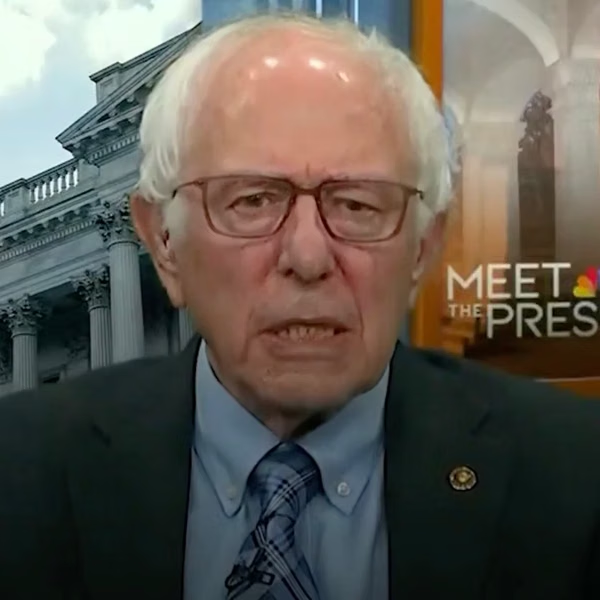
"I say Buttigieg is wrong on both counts," Sanders said in an appearance on MSNBC when asked about the South Bend, Indiana mayor's criticism of free public college as elitist and regressive.
Tackling Buttigieg's argument that tuition-free public college neglects those who may not want to attend a public college or university, the senator from Vermont said, "Of course, when we talk about making higher education--public colleges and universities--tuition-free, we mean not only college but we mean trade schools as well."
"There are millions of good jobs out there in construction and all kinds of areas, where people are good at working with their hands, they don't want to go to college, and of course we are going to make tuition free for those people," Sanders told MSNBC's Chris Hayes.
Watch:
The senator went on to address Buttigieg's claim that making public colleges and universities tuition-free would be wrongheaded because it would allow "the kids of millionaires" to benefit.
Sanders responded:
I'm very glad that Mr. Buttigieg is worried that I have been too easy on upper-income people and the millionaires and billionaires, that I'm gonna allow their kids to go to public colleges and universities--just, by the way, as they do go to public schools right now. Trump's kids can go to any public school, elementary school, high school in the country "tuition-free."
But the point is, I happen to believe that when you talk about programs like Social Security, like healthcare, like higher education, they should be universal. The way you pay for them, and the way I do it, not the way Buttigieg does it, is I do demand that at a time of massive income and wealth inequality, that the very rich will start paying their fair share of taxes, as will corporate America.
"You pay for it by raising revenue from the very rich," Sanders continued, "but then you say in a very simple way that any person who wants a higher education, college, trade school, should be able to do it."
Buttigieg's attacks on proposals to make public colleges and universities tuition-free began last week with an Iowa ad that claimed universal and free public college is unrealistic and would alienate "half the country."
Contrary to plans released by Sanders and Sen. Elizabeth Warren (D-Mass.), which would make public colleges and universities tuition-free for all regardless of income, Buttigieg's proposal (pdf) would make a public college education tuition-free only for households earning up to $100,000 per year.
Progressives were quick to condemn Buttigieg's criticism, pointing out that his attacks could just as easily apply to other public programs.
"Universal public systems are designed to benefit EVERYBODY!" Rep. Alexandria Ocasio-Cortez (D-N.Y.) tweeted last week. "Everyone contributes and everyone enjoys. We don't ban the rich from public schools, firefighters, or libraries because they are public goods."
This country and this world are at a monumental crossroads. US voters have an opportunity to beat back the forces of fascism and confront the billionaires who are rigging the economy, our media system, and our democracy, making it increasingly impossible for ordinary people to get by. We’re not just talking about the election. We’re talking about what must be done once these fascist elements are vanquished from power. We need a bolder set of solutions than what either major party has so far been willing to offer and a working-class movement ready to fight like hell for it. Trump didn't emerge from nowhere. The conditions that fueled MAGA authoritarianism were created by decades of radical neoliberal economic policies and a corrupt political system dominated by corporate interests. They slashed taxes on the super-rich, promising that the benefits would trickle down. They said giveaways to the corporate titans would make life more affordable for the rest of us. It was all bullshit. And when a bitter, betrayed populace searches for someone to blame, right-wing demagogues have little trouble finding scapegoats. People know when they're being lied to, but you won't hear any of this from the corporate media. Only independent journalism—powered and funded by people who believe in building a better world—can deliver truly trustworthy daily news. If you share our vision, please contribute whatever you can to sustain our work. |
Sen. Bernie Sanders late Thursday directly confronted fellow Democratic presidential candidate Pete Buttigieg's recent attacks on the idea of tuition-free public college and made a broader case for universal programs funded by higher taxes on the rich over means-tested alternatives.
"You pay for it by raising revenue from the very rich, but then you say in a very simple way that any person who wants a higher education, college, trade school, should be able to do it."
--Sen. Bernie Sanders
"I say Buttigieg is wrong on both counts," Sanders said in an appearance on MSNBC when asked about the South Bend, Indiana mayor's criticism of free public college as elitist and regressive.
Tackling Buttigieg's argument that tuition-free public college neglects those who may not want to attend a public college or university, the senator from Vermont said, "Of course, when we talk about making higher education--public colleges and universities--tuition-free, we mean not only college but we mean trade schools as well."
"There are millions of good jobs out there in construction and all kinds of areas, where people are good at working with their hands, they don't want to go to college, and of course we are going to make tuition free for those people," Sanders told MSNBC's Chris Hayes.
Watch:
The senator went on to address Buttigieg's claim that making public colleges and universities tuition-free would be wrongheaded because it would allow "the kids of millionaires" to benefit.
Sanders responded:
I'm very glad that Mr. Buttigieg is worried that I have been too easy on upper-income people and the millionaires and billionaires, that I'm gonna allow their kids to go to public colleges and universities--just, by the way, as they do go to public schools right now. Trump's kids can go to any public school, elementary school, high school in the country "tuition-free."
But the point is, I happen to believe that when you talk about programs like Social Security, like healthcare, like higher education, they should be universal. The way you pay for them, and the way I do it, not the way Buttigieg does it, is I do demand that at a time of massive income and wealth inequality, that the very rich will start paying their fair share of taxes, as will corporate America.
"You pay for it by raising revenue from the very rich," Sanders continued, "but then you say in a very simple way that any person who wants a higher education, college, trade school, should be able to do it."
Buttigieg's attacks on proposals to make public colleges and universities tuition-free began last week with an Iowa ad that claimed universal and free public college is unrealistic and would alienate "half the country."
Contrary to plans released by Sanders and Sen. Elizabeth Warren (D-Mass.), which would make public colleges and universities tuition-free for all regardless of income, Buttigieg's proposal (pdf) would make a public college education tuition-free only for households earning up to $100,000 per year.
Progressives were quick to condemn Buttigieg's criticism, pointing out that his attacks could just as easily apply to other public programs.
"Universal public systems are designed to benefit EVERYBODY!" Rep. Alexandria Ocasio-Cortez (D-N.Y.) tweeted last week. "Everyone contributes and everyone enjoys. We don't ban the rich from public schools, firefighters, or libraries because they are public goods."