SUBSCRIBE TO OUR FREE NEWSLETTER
Daily news & progressive opinion—funded by the people, not the corporations—delivered straight to your inbox.
5
#000000
#FFFFFF
To donate by check, phone, or other method, see our More Ways to Give page.


Daily news & progressive opinion—funded by the people, not the corporations—delivered straight to your inbox.

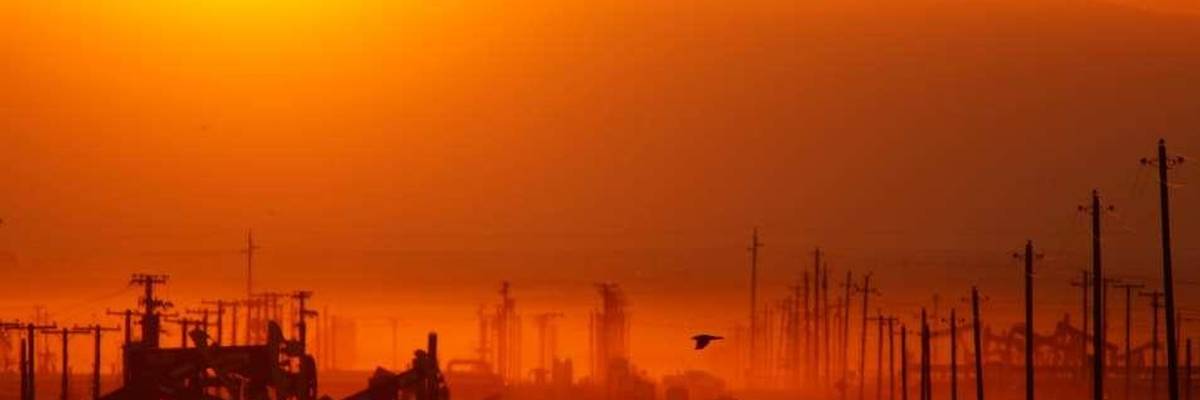
"Until we stop new investment in fossil fuels and massively scale up green power," warned one activist, "the risks from catastrophic climate change will continue to rise." (Photo: David McNew/Getty Images)
In yet another signal to global governments that greater ambition is needed to combat the climate crisis, an annual United Nations report released Monday revealed that levels of long-lived greenhouse gases in the atmosphere reached record highs last year.
"We face a stark choice: set in motion the radical transformations we need now, or face the consequences of a planet radically altered by climate change."
--Inger Andersen, UNEP
The latest World Meteorological Organization (WMO) Greenhouse Gas Bulletin (pdf) provided figures for globally averaged concentrations of three key climate-heating gases in 2018:
"These values represent, respectively, 147%, 259%, and 123% of pre-industrial (before 1750) levels," the bulletin noted. In terms of contributions to warming the climate, "carbon dioxide is the single most important anthropogenic GHG in the atmosphere" among all long-lived greenhouse gases, the primary focus of the report.
Both methane and nitrious oxide are emitted by natural sources, but about 60 percent of CH4 emitted into the atmosphere comes from human activities such as biomass burning, cattle farming, fossil fuel exploitation, landfills, and rice agriculture, according to the bulletin. About 40 percent of N2O comes from human sources, including fertilizer use and various industrial processes.
From 2017 to 2018, concentrations of all three gases surged by higher amounts than the yearly increases documented over the past decade.
"Since 1990, there has been a 43% increase in total radiative forcing--the warming effect on the climate--by long-lived greenhouse gases," the WMO said in a statement announcing the new bulletin.
The U.N. agency warned that "this continuing long-term trend means that future generations will be confronted with increasingly severe impacts of climate change, including rising temperatures, more extreme weather, water stress, sea level rise, and disruption to marine and land ecosystems."
The bulletin was released a week before the next U.N. Climate Change Conference, COP 25, is scheduled to start. Representatives from across the globe will meet at the conference in Madrid to discuss governments' commitments to tackling the human-caused climate emergency, including obligations under the 2015 Paris accord.
WMO Secretary-General Petteri Taalas, in the agency's statement, tied the bulletin's findings to the necessity of bolder climate action on a global scale.
"There is no sign of a slowdown, let alone a decline, in greenhouse gases concentration in the atmosphere despite all the commitments under the Paris agreement on climate change," Taalas said. "We need to translate the commitments into action and increase the level of ambition for the sake of the future welfare of... mankind."
"It is worth recalling that the last time the Earth experienced a comparable concentration of CO2 was 3-5 million years ago," he added. "Back then, the temperature was 2-3degC warmer, sea level was 10-20 meters higher than now."
Inger Andersen, executive director of the U.N . Environment Program--which last week released a report detailing how projections for fossil fuel production by 2030 are "dangerously out of step" with global climate goals--connected the bulletin to UNEP's next annual Emission Gap Report, set to be published Tuesday.
"The findings of WMO's Greenhouse Gas Bulletin and UNEP's Emissions Gap Report point us in a clear direction--in this critical period, the world must deliver concrete, stepped-up action on emissions," Andersen said. "We face a stark choice: set in motion the radical transformations we need now, or face the consequences of a planet radically altered by climate change."
U.N. Secretary-General Antonio Guterres shared the WMO's bulletin on Twitter Monday and wrote, "another record that shows we are not doing enough to address the climate emergency."
The bulletin elicted renewed demands from activists for both governments and the private sector to ramp up efforts to drive down greenhouse gases, particularly by phasing out fossil fuels.
"The record rise in greenhouse gas concentrations is a cruel reminder that for all the real progress in clean technology, we have yet to even stop global emissions increases," Nick Mabey, chief executive of global think tank E3G, told The Guardian. "The climate system cannot be negotiated with. Until we stop new investment in fossil fuels and massively scale up green power the risks from catastrophic climate change will continue to rise."

Dear Common Dreams reader, It’s been nearly 30 years since I co-founded Common Dreams with my late wife, Lina Newhouser. We had the radical notion that journalism should serve the public good, not corporate profits. It was clear to us from the outset what it would take to build such a project. No paid advertisements. No corporate sponsors. No millionaire publisher telling us what to think or do. Many people said we wouldn't last a year, but we proved those doubters wrong. Together with a tremendous team of journalists and dedicated staff, we built an independent media outlet free from the constraints of profits and corporate control. Our mission has always been simple: To inform. To inspire. To ignite change for the common good. Building Common Dreams was not easy. Our survival was never guaranteed. When you take on the most powerful forces—Wall Street greed, fossil fuel industry destruction, Big Tech lobbyists, and uber-rich oligarchs who have spent billions upon billions rigging the economy and democracy in their favor—the only bulwark you have is supporters who believe in your work. But here’s the urgent message from me today. It's never been this bad out there. And it's never been this hard to keep us going. At the very moment Common Dreams is most needed, the threats we face are intensifying. We need your support now more than ever. We don't accept corporate advertising and never will. We don't have a paywall because we don't think people should be blocked from critical news based on their ability to pay. Everything we do is funded by the donations of readers like you. When everyone does the little they can afford, we are strong. But if that support retreats or dries up, so do we. Will you donate now to make sure Common Dreams not only survives but thrives? —Craig Brown, Co-founder |
In yet another signal to global governments that greater ambition is needed to combat the climate crisis, an annual United Nations report released Monday revealed that levels of long-lived greenhouse gases in the atmosphere reached record highs last year.
"We face a stark choice: set in motion the radical transformations we need now, or face the consequences of a planet radically altered by climate change."
--Inger Andersen, UNEP
The latest World Meteorological Organization (WMO) Greenhouse Gas Bulletin (pdf) provided figures for globally averaged concentrations of three key climate-heating gases in 2018:
"These values represent, respectively, 147%, 259%, and 123% of pre-industrial (before 1750) levels," the bulletin noted. In terms of contributions to warming the climate, "carbon dioxide is the single most important anthropogenic GHG in the atmosphere" among all long-lived greenhouse gases, the primary focus of the report.
Both methane and nitrious oxide are emitted by natural sources, but about 60 percent of CH4 emitted into the atmosphere comes from human activities such as biomass burning, cattle farming, fossil fuel exploitation, landfills, and rice agriculture, according to the bulletin. About 40 percent of N2O comes from human sources, including fertilizer use and various industrial processes.
From 2017 to 2018, concentrations of all three gases surged by higher amounts than the yearly increases documented over the past decade.
"Since 1990, there has been a 43% increase in total radiative forcing--the warming effect on the climate--by long-lived greenhouse gases," the WMO said in a statement announcing the new bulletin.
The U.N. agency warned that "this continuing long-term trend means that future generations will be confronted with increasingly severe impacts of climate change, including rising temperatures, more extreme weather, water stress, sea level rise, and disruption to marine and land ecosystems."
The bulletin was released a week before the next U.N. Climate Change Conference, COP 25, is scheduled to start. Representatives from across the globe will meet at the conference in Madrid to discuss governments' commitments to tackling the human-caused climate emergency, including obligations under the 2015 Paris accord.
WMO Secretary-General Petteri Taalas, in the agency's statement, tied the bulletin's findings to the necessity of bolder climate action on a global scale.
"There is no sign of a slowdown, let alone a decline, in greenhouse gases concentration in the atmosphere despite all the commitments under the Paris agreement on climate change," Taalas said. "We need to translate the commitments into action and increase the level of ambition for the sake of the future welfare of... mankind."
"It is worth recalling that the last time the Earth experienced a comparable concentration of CO2 was 3-5 million years ago," he added. "Back then, the temperature was 2-3degC warmer, sea level was 10-20 meters higher than now."
Inger Andersen, executive director of the U.N . Environment Program--which last week released a report detailing how projections for fossil fuel production by 2030 are "dangerously out of step" with global climate goals--connected the bulletin to UNEP's next annual Emission Gap Report, set to be published Tuesday.
"The findings of WMO's Greenhouse Gas Bulletin and UNEP's Emissions Gap Report point us in a clear direction--in this critical period, the world must deliver concrete, stepped-up action on emissions," Andersen said. "We face a stark choice: set in motion the radical transformations we need now, or face the consequences of a planet radically altered by climate change."
U.N. Secretary-General Antonio Guterres shared the WMO's bulletin on Twitter Monday and wrote, "another record that shows we are not doing enough to address the climate emergency."
The bulletin elicted renewed demands from activists for both governments and the private sector to ramp up efforts to drive down greenhouse gases, particularly by phasing out fossil fuels.
"The record rise in greenhouse gas concentrations is a cruel reminder that for all the real progress in clean technology, we have yet to even stop global emissions increases," Nick Mabey, chief executive of global think tank E3G, told The Guardian. "The climate system cannot be negotiated with. Until we stop new investment in fossil fuels and massively scale up green power the risks from catastrophic climate change will continue to rise."

In yet another signal to global governments that greater ambition is needed to combat the climate crisis, an annual United Nations report released Monday revealed that levels of long-lived greenhouse gases in the atmosphere reached record highs last year.
"We face a stark choice: set in motion the radical transformations we need now, or face the consequences of a planet radically altered by climate change."
--Inger Andersen, UNEP
The latest World Meteorological Organization (WMO) Greenhouse Gas Bulletin (pdf) provided figures for globally averaged concentrations of three key climate-heating gases in 2018:
"These values represent, respectively, 147%, 259%, and 123% of pre-industrial (before 1750) levels," the bulletin noted. In terms of contributions to warming the climate, "carbon dioxide is the single most important anthropogenic GHG in the atmosphere" among all long-lived greenhouse gases, the primary focus of the report.
Both methane and nitrious oxide are emitted by natural sources, but about 60 percent of CH4 emitted into the atmosphere comes from human activities such as biomass burning, cattle farming, fossil fuel exploitation, landfills, and rice agriculture, according to the bulletin. About 40 percent of N2O comes from human sources, including fertilizer use and various industrial processes.
From 2017 to 2018, concentrations of all three gases surged by higher amounts than the yearly increases documented over the past decade.
"Since 1990, there has been a 43% increase in total radiative forcing--the warming effect on the climate--by long-lived greenhouse gases," the WMO said in a statement announcing the new bulletin.
The U.N. agency warned that "this continuing long-term trend means that future generations will be confronted with increasingly severe impacts of climate change, including rising temperatures, more extreme weather, water stress, sea level rise, and disruption to marine and land ecosystems."
The bulletin was released a week before the next U.N. Climate Change Conference, COP 25, is scheduled to start. Representatives from across the globe will meet at the conference in Madrid to discuss governments' commitments to tackling the human-caused climate emergency, including obligations under the 2015 Paris accord.
WMO Secretary-General Petteri Taalas, in the agency's statement, tied the bulletin's findings to the necessity of bolder climate action on a global scale.
"There is no sign of a slowdown, let alone a decline, in greenhouse gases concentration in the atmosphere despite all the commitments under the Paris agreement on climate change," Taalas said. "We need to translate the commitments into action and increase the level of ambition for the sake of the future welfare of... mankind."
"It is worth recalling that the last time the Earth experienced a comparable concentration of CO2 was 3-5 million years ago," he added. "Back then, the temperature was 2-3degC warmer, sea level was 10-20 meters higher than now."
Inger Andersen, executive director of the U.N . Environment Program--which last week released a report detailing how projections for fossil fuel production by 2030 are "dangerously out of step" with global climate goals--connected the bulletin to UNEP's next annual Emission Gap Report, set to be published Tuesday.
"The findings of WMO's Greenhouse Gas Bulletin and UNEP's Emissions Gap Report point us in a clear direction--in this critical period, the world must deliver concrete, stepped-up action on emissions," Andersen said. "We face a stark choice: set in motion the radical transformations we need now, or face the consequences of a planet radically altered by climate change."
U.N. Secretary-General Antonio Guterres shared the WMO's bulletin on Twitter Monday and wrote, "another record that shows we are not doing enough to address the climate emergency."
The bulletin elicted renewed demands from activists for both governments and the private sector to ramp up efforts to drive down greenhouse gases, particularly by phasing out fossil fuels.
"The record rise in greenhouse gas concentrations is a cruel reminder that for all the real progress in clean technology, we have yet to even stop global emissions increases," Nick Mabey, chief executive of global think tank E3G, told The Guardian. "The climate system cannot be negotiated with. Until we stop new investment in fossil fuels and massively scale up green power the risks from catastrophic climate change will continue to rise."