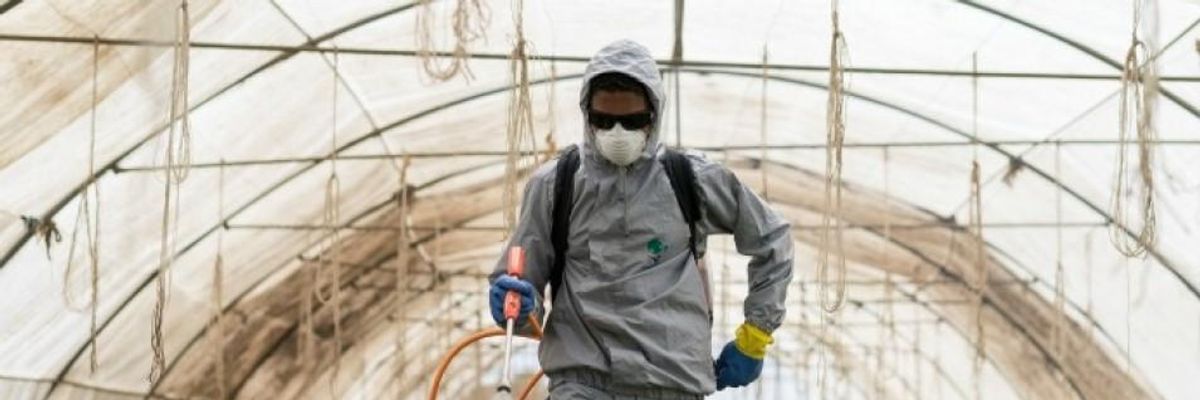
A French mayor banned the pesticide glysophate from areas near homes in his village and inspired other municipalities to do the same. (Photo: USAID Egypt/cc/flickr)
After Mayor of Small Village Bans Glyphosate, Dozens of Others Join Rebellion Against French Law
Tests on the people of Langouët showed levels of glyphosate—one of the most widely used herbicides and the active ingredient in RoundUp—in their urine up to 30 times the recommended limit. It was especially high in children.
After the mayor of a small French village banned the pesticide gysophate from land near homes and businesses in his municipality, the government took him to court--and sparked a movement as 20 other mayors across the western European country joined in barring the pesticide from their towns and cities.
Daniel Cueff, the mayor of Langouet, a village in France's northwest with around 600 residents, made the decision to ban the pesticide earlier in the year after the chemical began showing up in high levels in the urine of town residents.
As The New York Times reported:
Tests on the people of Langouet showed levels of glyphosate--one of the most widely used herbicides and the active ingredient in RoundUp--in their urine up to 30 times the recommended limit. It was especially high in children.
While French President Emanuel Macron promised in 2017 to ban glyphosate around the country by 2020, he later amended that promise to say it was impossible.
Cueff said he decided to act after seeing that, in his view, the national government wasn't going to do enough for the people of his village.
"Isn't the mayor of a village called on to fill in for the state's deficiencies?" said Cueff.
But the French government didn't react kindly to the mayor taking matters into his own hands, bringing Cueff to court where it argued he did not have the authority to enact such a ban. The judge struck down the village ordinance, as Reuters reported in August.
There's a inconsistency there, Cueff told the Times:
Mr. Cueff says he doesn't understand why, on the one hand, the state barred town governments in 2017 from using glyphosate, but still allowed its use on farms cheek by jowl with small towns.
"This is a contradictory message," he said. "Here in Langouet there are no contradictory positions."
At least 40 municipalities have followed Cueff's lead. The mayor said that shows that change is coming.
"Twenty years ago we were a bit alone," said Cueff. "They thought we were exaggerating. Today it's the opposite. People come to me and ask if they can't do more."
We are at a crossroads
This country and this world are at a monumental crossroads. US voters have an opportunity to beat back the forces of fascism and confront the billionaires who are rigging the economy, our media system, and our democracy, making it increasingly impossible for ordinary people to get by. We’re not just talking about the election. We’re talking about what must be done once these fascist elements are vanquished from power. We need a bolder set of solutions than what either major party has so far been willing to offer and a working-class movement ready to fight like hell for it. Trump didn't emerge from nowhere. The conditions that fueled MAGA authoritarianism were created by decades of radical neoliberal economic policies and a corrupt political system dominated by corporate interests. They slashed taxes on the super-rich, promising that the benefits would trickle down. They said giveaways to the corporate titans would make life more affordable for the rest of us. It was all bullshit. And when a bitter, betrayed populace searches for someone to blame, right-wing demagogues have little trouble finding scapegoats. People know when they're being lied to, but you won't hear any of this from the corporate media. Only independent journalism—powered and funded by people who believe in building a better world—can deliver truly trustworthy daily news. Our Fall Campaign is underway, and we need your help. To power our newsroom through the rest of the year, we need to raise $125,000 by midnight on October 31. So if you share our vision, please contribute whatever you can to sustain our work. |
After the mayor of a small French village banned the pesticide gysophate from land near homes and businesses in his municipality, the government took him to court--and sparked a movement as 20 other mayors across the western European country joined in barring the pesticide from their towns and cities.
Daniel Cueff, the mayor of Langouet, a village in France's northwest with around 600 residents, made the decision to ban the pesticide earlier in the year after the chemical began showing up in high levels in the urine of town residents.
As The New York Times reported:
Tests on the people of Langouet showed levels of glyphosate--one of the most widely used herbicides and the active ingredient in RoundUp--in their urine up to 30 times the recommended limit. It was especially high in children.
While French President Emanuel Macron promised in 2017 to ban glyphosate around the country by 2020, he later amended that promise to say it was impossible.
Cueff said he decided to act after seeing that, in his view, the national government wasn't going to do enough for the people of his village.
"Isn't the mayor of a village called on to fill in for the state's deficiencies?" said Cueff.
But the French government didn't react kindly to the mayor taking matters into his own hands, bringing Cueff to court where it argued he did not have the authority to enact such a ban. The judge struck down the village ordinance, as Reuters reported in August.
There's a inconsistency there, Cueff told the Times:
Mr. Cueff says he doesn't understand why, on the one hand, the state barred town governments in 2017 from using glyphosate, but still allowed its use on farms cheek by jowl with small towns.
"This is a contradictory message," he said. "Here in Langouet there are no contradictory positions."
At least 40 municipalities have followed Cueff's lead. The mayor said that shows that change is coming.
"Twenty years ago we were a bit alone," said Cueff. "They thought we were exaggerating. Today it's the opposite. People come to me and ask if they can't do more."