SUBSCRIBE TO OUR FREE NEWSLETTER
Daily news & progressive opinion—funded by the people, not the corporations—delivered straight to your inbox.
5
#000000
#FFFFFF
To donate by check, phone, or other method, see our More Ways to Give page.
Daily news & progressive opinion—funded by the people, not the corporations—delivered straight to your inbox.
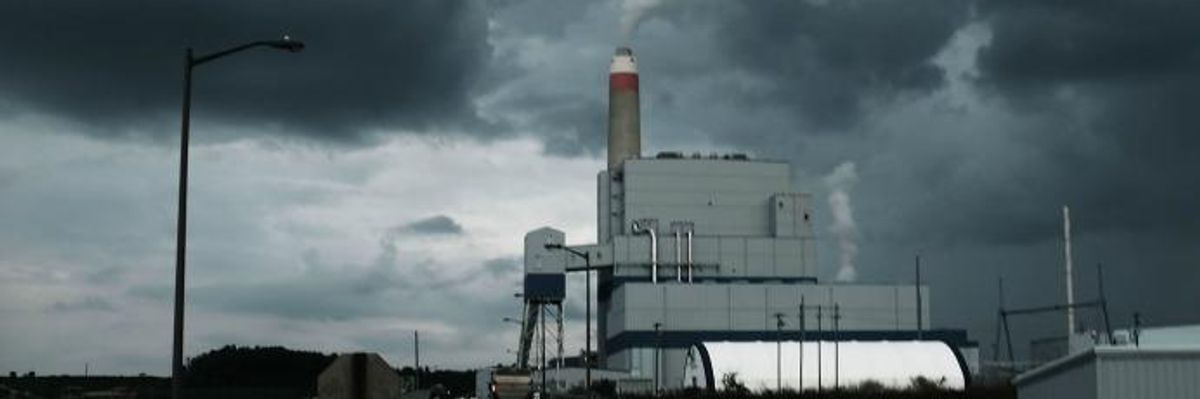
The Longview Power Plant, a coal-fired plant, stands on August 21, 2018 in Maidsville, West Virginia. (Photo: Spencer Platt/Getty Images)
President Donald Trump's EPA is provoking criticism once again, this time over a new "no surprises" policy stopping unannounced visits to power, chemical, and waste facilities.
"The Trump @EPA is just chucking aside any flimsy pretense that they care about upholding environmental laws, enforcing against big polluters, or protecting Americans," tweeted John Walke, Clean Air Director and senior attorney for the Natural Resources Defense Council. "Giving a courtesy heads up to suspected *ongoing* lawbreakers is beyond the pale even for the Trump @EPA."
Watchdog group Public Employees for Environmental Responsibility (PEER) publicized the development in a press statement on Thursday. It cites a memo, dated July 11, 2019, to regional administrators from Susan Bodine, EPA's Assistant Administrator for Enforcement and Compliance Assurance.
"I fear that EPA's 'no surprises' posture masks a 'see no evil' approach to corporate polluters."
--Tim Whitehouse, PEERHer office, according to the EPA site, "goes after pollution problems that impact American communities through vigorous civil and criminal enforcement. Our enforcement activities target the most serious water, air, and chemical hazards. "
Bodine's memo says "EPA aims to enhance its partnerships with its state, local, and tribal co-regulators by more effectively carrying out our shared responsibilities under environmental laws."
The "no surprises" approach, it continues, is "the foundation of joint work planning and will minimize the misunderstandings that can be caused by the lack of regular, bilateral communication."
"EPA regions and the states should work together to identify which inspections the EPA or a state will perform," it says.
The memo adds that "inspection planning will avoid duplicate efforts, improve efficiency, reduce unnecessary burdens on the regulated community, and could provide EPA regions and states with more flexibility in setting and adjusting inspection targets and Compliance Monitoring Strategies."
Among "best practices" to be followed are for EPA regions to "provide states with advance notice of inspections."
Regions and states, the memo adds, should also "consider the use of alternative compliance monitoring strategies."
There should be a joint effort by EPA and states about whether possible "enforcement actions should be federal, state, or joint," and, if any such action is deemed warranted, EPA should first notify the state before the facility in question, the memo says.
PEER, in its statement, rebuked the administration for the move, which it said would likely undermine the mission of protecting the environment. The group also pointed to its finding earlier this month that criminal pollution enforcement under Trump's EPA is at record low levels.
"Taking the element of surprise away from inspections decreases their effectiveness, for obvious reasons," stated PEER executive director Tim Whitehouse, a former EPA enforcement attorney. "I fear that EPA's 'no surprises' posture masks a 'see no evil' approach to corporate polluters."
"Basing enforcement on inter-agency consensus places politics above pollution control," added Whitehouse. "Nobody opposes cooperation or supports duplication, but this policy risks environmental protection by giving the upper hand to corporate polluters and states that don't want to enforce environmental laws."
Esquire's Charles Pierce put the potential impact of the change in stark terms.
"If it were up to me," he wrote, "I'd want the people who own power plants and chemical factories to wake up every morning in cold dread that someone from the Environmental Protection Agency might drop buy to see what corners we've been cutting recently. That way, I suspect, fertilizer plants would be less likely to blow up and take entire towns with them."
Dear Common Dreams reader, It’s been nearly 30 years since I co-founded Common Dreams with my late wife, Lina Newhouser. We had the radical notion that journalism should serve the public good, not corporate profits. It was clear to us from the outset what it would take to build such a project. No paid advertisements. No corporate sponsors. No millionaire publisher telling us what to think or do. Many people said we wouldn't last a year, but we proved those doubters wrong. Together with a tremendous team of journalists and dedicated staff, we built an independent media outlet free from the constraints of profits and corporate control. Our mission has always been simple: To inform. To inspire. To ignite change for the common good. Building Common Dreams was not easy. Our survival was never guaranteed. When you take on the most powerful forces—Wall Street greed, fossil fuel industry destruction, Big Tech lobbyists, and uber-rich oligarchs who have spent billions upon billions rigging the economy and democracy in their favor—the only bulwark you have is supporters who believe in your work. But here’s the urgent message from me today. It's never been this bad out there. And it's never been this hard to keep us going. At the very moment Common Dreams is most needed, the threats we face are intensifying. We need your support now more than ever. We don't accept corporate advertising and never will. We don't have a paywall because we don't think people should be blocked from critical news based on their ability to pay. Everything we do is funded by the donations of readers like you. When everyone does the little they can afford, we are strong. But if that support retreats or dries up, so do we. Will you donate now to make sure Common Dreams not only survives but thrives? —Craig Brown, Co-founder |
President Donald Trump's EPA is provoking criticism once again, this time over a new "no surprises" policy stopping unannounced visits to power, chemical, and waste facilities.
"The Trump @EPA is just chucking aside any flimsy pretense that they care about upholding environmental laws, enforcing against big polluters, or protecting Americans," tweeted John Walke, Clean Air Director and senior attorney for the Natural Resources Defense Council. "Giving a courtesy heads up to suspected *ongoing* lawbreakers is beyond the pale even for the Trump @EPA."
Watchdog group Public Employees for Environmental Responsibility (PEER) publicized the development in a press statement on Thursday. It cites a memo, dated July 11, 2019, to regional administrators from Susan Bodine, EPA's Assistant Administrator for Enforcement and Compliance Assurance.
"I fear that EPA's 'no surprises' posture masks a 'see no evil' approach to corporate polluters."
--Tim Whitehouse, PEERHer office, according to the EPA site, "goes after pollution problems that impact American communities through vigorous civil and criminal enforcement. Our enforcement activities target the most serious water, air, and chemical hazards. "
Bodine's memo says "EPA aims to enhance its partnerships with its state, local, and tribal co-regulators by more effectively carrying out our shared responsibilities under environmental laws."
The "no surprises" approach, it continues, is "the foundation of joint work planning and will minimize the misunderstandings that can be caused by the lack of regular, bilateral communication."
"EPA regions and the states should work together to identify which inspections the EPA or a state will perform," it says.
The memo adds that "inspection planning will avoid duplicate efforts, improve efficiency, reduce unnecessary burdens on the regulated community, and could provide EPA regions and states with more flexibility in setting and adjusting inspection targets and Compliance Monitoring Strategies."
Among "best practices" to be followed are for EPA regions to "provide states with advance notice of inspections."
Regions and states, the memo adds, should also "consider the use of alternative compliance monitoring strategies."
There should be a joint effort by EPA and states about whether possible "enforcement actions should be federal, state, or joint," and, if any such action is deemed warranted, EPA should first notify the state before the facility in question, the memo says.
PEER, in its statement, rebuked the administration for the move, which it said would likely undermine the mission of protecting the environment. The group also pointed to its finding earlier this month that criminal pollution enforcement under Trump's EPA is at record low levels.
"Taking the element of surprise away from inspections decreases their effectiveness, for obvious reasons," stated PEER executive director Tim Whitehouse, a former EPA enforcement attorney. "I fear that EPA's 'no surprises' posture masks a 'see no evil' approach to corporate polluters."
"Basing enforcement on inter-agency consensus places politics above pollution control," added Whitehouse. "Nobody opposes cooperation or supports duplication, but this policy risks environmental protection by giving the upper hand to corporate polluters and states that don't want to enforce environmental laws."
Esquire's Charles Pierce put the potential impact of the change in stark terms.
"If it were up to me," he wrote, "I'd want the people who own power plants and chemical factories to wake up every morning in cold dread that someone from the Environmental Protection Agency might drop buy to see what corners we've been cutting recently. That way, I suspect, fertilizer plants would be less likely to blow up and take entire towns with them."
President Donald Trump's EPA is provoking criticism once again, this time over a new "no surprises" policy stopping unannounced visits to power, chemical, and waste facilities.
"The Trump @EPA is just chucking aside any flimsy pretense that they care about upholding environmental laws, enforcing against big polluters, or protecting Americans," tweeted John Walke, Clean Air Director and senior attorney for the Natural Resources Defense Council. "Giving a courtesy heads up to suspected *ongoing* lawbreakers is beyond the pale even for the Trump @EPA."
Watchdog group Public Employees for Environmental Responsibility (PEER) publicized the development in a press statement on Thursday. It cites a memo, dated July 11, 2019, to regional administrators from Susan Bodine, EPA's Assistant Administrator for Enforcement and Compliance Assurance.
"I fear that EPA's 'no surprises' posture masks a 'see no evil' approach to corporate polluters."
--Tim Whitehouse, PEERHer office, according to the EPA site, "goes after pollution problems that impact American communities through vigorous civil and criminal enforcement. Our enforcement activities target the most serious water, air, and chemical hazards. "
Bodine's memo says "EPA aims to enhance its partnerships with its state, local, and tribal co-regulators by more effectively carrying out our shared responsibilities under environmental laws."
The "no surprises" approach, it continues, is "the foundation of joint work planning and will minimize the misunderstandings that can be caused by the lack of regular, bilateral communication."
"EPA regions and the states should work together to identify which inspections the EPA or a state will perform," it says.
The memo adds that "inspection planning will avoid duplicate efforts, improve efficiency, reduce unnecessary burdens on the regulated community, and could provide EPA regions and states with more flexibility in setting and adjusting inspection targets and Compliance Monitoring Strategies."
Among "best practices" to be followed are for EPA regions to "provide states with advance notice of inspections."
Regions and states, the memo adds, should also "consider the use of alternative compliance monitoring strategies."
There should be a joint effort by EPA and states about whether possible "enforcement actions should be federal, state, or joint," and, if any such action is deemed warranted, EPA should first notify the state before the facility in question, the memo says.
PEER, in its statement, rebuked the administration for the move, which it said would likely undermine the mission of protecting the environment. The group also pointed to its finding earlier this month that criminal pollution enforcement under Trump's EPA is at record low levels.
"Taking the element of surprise away from inspections decreases their effectiveness, for obvious reasons," stated PEER executive director Tim Whitehouse, a former EPA enforcement attorney. "I fear that EPA's 'no surprises' posture masks a 'see no evil' approach to corporate polluters."
"Basing enforcement on inter-agency consensus places politics above pollution control," added Whitehouse. "Nobody opposes cooperation or supports duplication, but this policy risks environmental protection by giving the upper hand to corporate polluters and states that don't want to enforce environmental laws."
Esquire's Charles Pierce put the potential impact of the change in stark terms.
"If it were up to me," he wrote, "I'd want the people who own power plants and chemical factories to wake up every morning in cold dread that someone from the Environmental Protection Agency might drop buy to see what corners we've been cutting recently. That way, I suspect, fertilizer plants would be less likely to blow up and take entire towns with them."