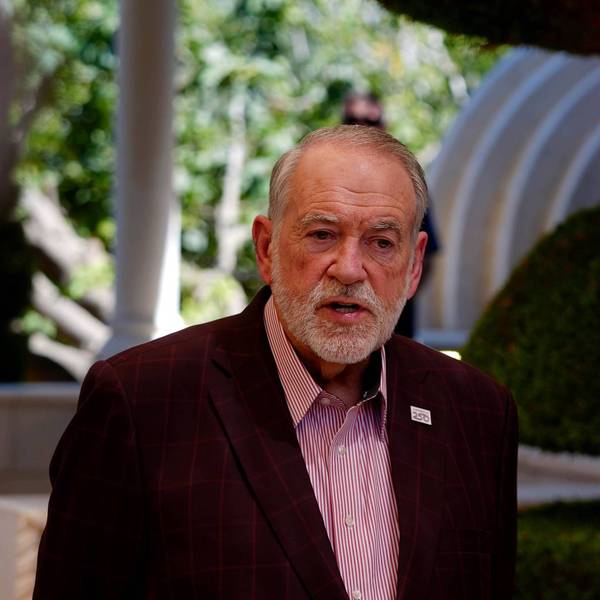
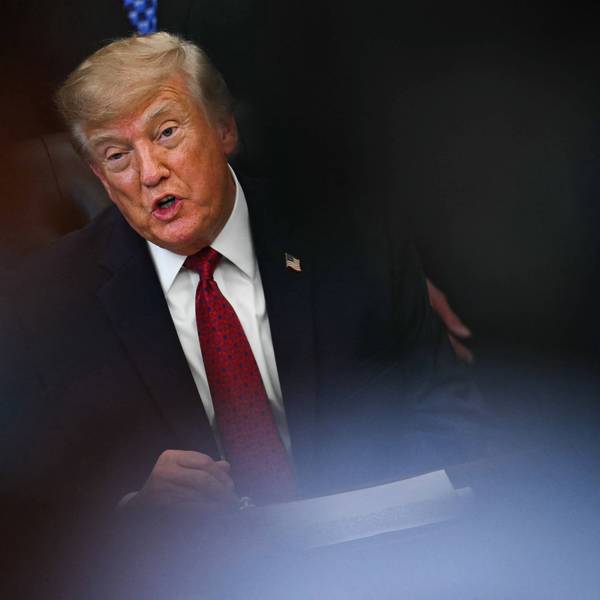

Jared Kushner, President Donald Trump's son-in-law and senior adviser, speaking in an interview that aired Sunday on "Axios on HBO." (Screengrab)
Pompeo Admits Kushner Peace Plan Likely Unworkable as Trump's Son-in-Law Openly Dehumanizes Palestinian People
"I get why people think this is going to be a deal that only the Israelis could love," secretary of state says in leaked audio
Secretary of State Mike Pompeo admitted that the Trump administration's Middle East peace plan could be seen as "unexecutable" while Jared Kushner, the president's son-in-law and senior adviser, suggested that Palestinians aren't capable of governing themselves.
Kushner, who's in charge of the administration's supposed peace plan, made the comments in an interview that aired Sunday on "Axios on HBO." He told interviewer Jonathan Swan that there is a "high bar" for Palestinians to be rid of Israeli interference.
Kushner said that before Palestinians can be seen worthy of investors' money, they "need to have a fair judicial system ... freedom of press, freedom of expression, tolerance for all religions."
Asked if Palestinians were capable of governing themselves without Israeli interference, Kushner said: "That's a very good question. That's one that we'll have to see. The hope is that they, over time, will become capable of governing."
As Swan noted, the Trump administration has taken numerous actions that suggest it's not an honest broker in forming a peace deal. For example, the administration closed its consulate general in Jerusalem; Trump's ambassador to Israel said the country is "on the side of God"; the administration moved the U.S. embassy from Tel Aviv to occupied Jerusalem; and it cut millions in humanitarian aid to Palestinians, including funds for the United Nations Relief and Works Agency for Palestine Refugees in the Near East (UNRWA).
"Can you not see why [Palestinians] might not want to talk to you and that they might not trust you?" asked Swan.
"There's a difference," said Kushner, "between the Palestinian leadership and the Palestinian people."
"The actions we've taken were because America's aid is not entitlement, right? If we make certain decisions--which we're allowed to as a sovereign nation to respect the rights of another sovereign nation--and we get criticized by that government the response of this president is not to say, 'Oh, let me give you more aid.' So, again that was a result of decisions taken by the Palestinian leadership," Kushner continued. "With regards to the Palestinian people, I do believe that they want to have a better life, and I do think that they're not going to judge..."
"They don't mind the aid being cut?" interjected Swan.
"They're not going to judge anything based on trusting me or trusting anyone else," said Kushner. "They're going to judge it based on the facts and then make a determination--do they think this will allow them to have a pathway to a better life or not?"
Matt Duss, foreign policy adviser to Sen. Bernie Sanders (I-Vt.), said on Twitter that Kushner's lack of political experience led him to say the quiet part out loud.
Jewish Voice for Peace also reacted on Twitter to Kushner's remarks.
Kushner's interview aired the same day as comments by Pompeo at a private meeting of the Conference of Presidents of Major American Jewish Organizations last week were leaked.
In the remarks, first reported Sunday by the Washington Post, Pompeo said the Trump administration's Mideast plan could be "unexecutable" and "may be rejected."
"I get why people think this is going to be a deal that only the Israelis could love," he said. "I understand the perception of that. I hope everyone will just give the space to listen and let it settle in a little bit."
And if Israel annexes the occupied West Bank, Pompeo said the administration would weigh "what would be the best ways to achieve the outcomes that we think are in America and Israel's best interests."
We are at a crossroads
This country and this world are at a monumental crossroads. In a few short weeks, US voters will have an opportunity to beat back the forces of fascism and confront the billionaires who are rigging the economy, our media system, and our democracy, making it increasingly impossible for ordinary people to get by. We’re not just talking about the election. We’re talking about what must be done once these fascist elements are vanquished from power. We need a bolder set of solutions than what either major party has so far been willing to offer and a working-class movement ready to fight like hell for it. Trump didn't emerge from nowhere. The conditions that fueled MAGA authoritarianism were created by decades of radical neoliberal economic policies and a corrupt political system dominated by corporate interests. They slashed taxes on the super-rich, promising that the benefits would trickle down. They said giveaways to the corporate titans would make life more affordable for the rest of us. It was all bullshit. And when a bitter, betrayed populace searches for someone to blame, right-wing demagogues have little trouble finding scapegoats. People know when they're being lied to, but you won't hear any of this from the corporate media. Only independent journalism—powered and funded by people who believe in building a better world—can deliver truly trustworthy daily news. Our Fall Campaign is underway, and we need your help. To power our newsroom through the rest of the year, we need to raise $125,000 by midnight on October 31. So if you share our vision, please contribute whatever you can to sustain our work. |
Secretary of State Mike Pompeo admitted that the Trump administration's Middle East peace plan could be seen as "unexecutable" while Jared Kushner, the president's son-in-law and senior adviser, suggested that Palestinians aren't capable of governing themselves.
Kushner, who's in charge of the administration's supposed peace plan, made the comments in an interview that aired Sunday on "Axios on HBO." He told interviewer Jonathan Swan that there is a "high bar" for Palestinians to be rid of Israeli interference.
Kushner said that before Palestinians can be seen worthy of investors' money, they "need to have a fair judicial system ... freedom of press, freedom of expression, tolerance for all religions."
Asked if Palestinians were capable of governing themselves without Israeli interference, Kushner said: "That's a very good question. That's one that we'll have to see. The hope is that they, over time, will become capable of governing."
As Swan noted, the Trump administration has taken numerous actions that suggest it's not an honest broker in forming a peace deal. For example, the administration closed its consulate general in Jerusalem; Trump's ambassador to Israel said the country is "on the side of God"; the administration moved the U.S. embassy from Tel Aviv to occupied Jerusalem; and it cut millions in humanitarian aid to Palestinians, including funds for the United Nations Relief and Works Agency for Palestine Refugees in the Near East (UNRWA).
"Can you not see why [Palestinians] might not want to talk to you and that they might not trust you?" asked Swan.
"There's a difference," said Kushner, "between the Palestinian leadership and the Palestinian people."
"The actions we've taken were because America's aid is not entitlement, right? If we make certain decisions--which we're allowed to as a sovereign nation to respect the rights of another sovereign nation--and we get criticized by that government the response of this president is not to say, 'Oh, let me give you more aid.' So, again that was a result of decisions taken by the Palestinian leadership," Kushner continued. "With regards to the Palestinian people, I do believe that they want to have a better life, and I do think that they're not going to judge..."
"They don't mind the aid being cut?" interjected Swan.
"They're not going to judge anything based on trusting me or trusting anyone else," said Kushner. "They're going to judge it based on the facts and then make a determination--do they think this will allow them to have a pathway to a better life or not?"
Matt Duss, foreign policy adviser to Sen. Bernie Sanders (I-Vt.), said on Twitter that Kushner's lack of political experience led him to say the quiet part out loud.
Jewish Voice for Peace also reacted on Twitter to Kushner's remarks.
Kushner's interview aired the same day as comments by Pompeo at a private meeting of the Conference of Presidents of Major American Jewish Organizations last week were leaked.
In the remarks, first reported Sunday by the Washington Post, Pompeo said the Trump administration's Mideast plan could be "unexecutable" and "may be rejected."
"I get why people think this is going to be a deal that only the Israelis could love," he said. "I understand the perception of that. I hope everyone will just give the space to listen and let it settle in a little bit."
And if Israel annexes the occupied West Bank, Pompeo said the administration would weigh "what would be the best ways to achieve the outcomes that we think are in America and Israel's best interests."