

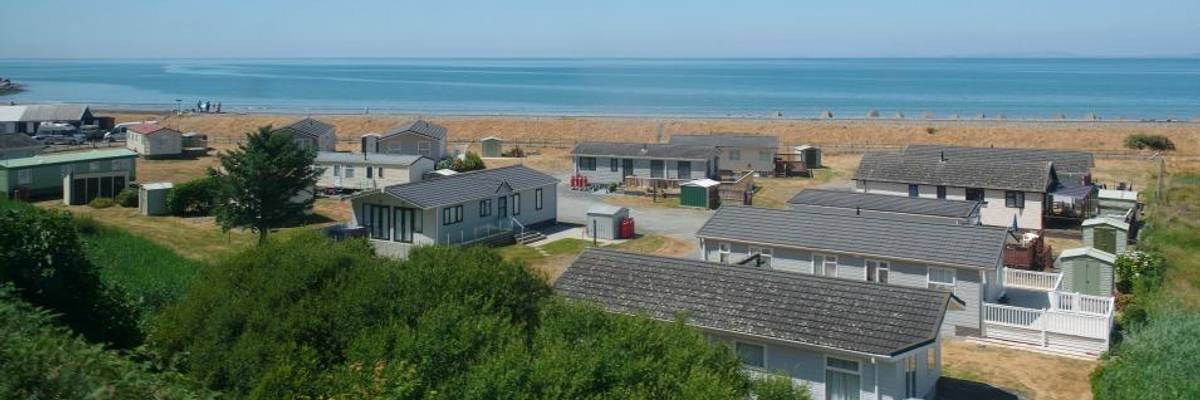
The Welsh coastal village of Fairbourne is set to become the first town in the U.K. to be abandoned because of the effects of the climate crisis. (Photo: Matt Buck/Flickr/cc)
Residents of Welsh Village Set to Become UK's First Climate Refugees As Soon As 2042
"This is a wake-up call for the country. This is going to happen elsewhere."
Residents of a Welsh coastal village are set to become the first climate refugees in the United Kingdom.
The 850 residents of Fairbourne will meet next month to discuss a plan that the local lawmaking body, Gwynedd Council, is developing to evacuate the town by 2054 at the latest, amid concerns about rising sea levels.
Gwynedd Council determined in 2013 that defending Fairbourne from the effects of the climate crisis would not be possible in the long term. The council, along with the national agency Natural Resources Wales, funded a $6 million flood management plan over the past four years.
According to Wales Online, "there will be no money spent on defending this community of around 400 homes and 850 people after 2054," leading the council to decide recently that decommissioning the town must be considered and that "relocating residents is a certainty."
A relocation scheme could go into effect as early as 2042. After the town is evacuated, all buildings, roads, and utilities will be dismantled, with Fairbourne converted into a tidal salt marsh, according to The Guardian.
" Climate change is happening, and it is unfortunately only a matter of time before it has a very real human impact on coastal communities like Fairbourne," councillor Catrin Wager told Wales Online.
"By talking to the community sooner rather than later, our aim is to work through these difficult issues together in order to give ourselves as much time as possible to come up with viable options and the best possible solutions," she added.
The possibility of compensation will likely be discussed at the town meeting planned for June 26. As The Guardian reported last week, Fairbourne residents are not expected to receive financial aid from the Welsh government when they are forced to leave, making them the U.K.'s first climate refugees.
A number of other coastal communities around the U.K. are likely to meet a similar fate. Both the British Parliament and Welsh lawmakers officially declared a climate emergency in recent weeks, under pressure from the global grassroots movement Extinction Rebellion--but campaigners responded promptly by ramping up pressure on government leaders to follow the declarations by taking meaningful action to solve the climate crisis and stop rising sea levels as well as other effects.
"This is a wake-up call for the country," Bev Wilkins, who moved to Fairbourne in 2002, told The Guardian. "This is going to happen elsewhere. Sometimes you have to see someone else go through it--we just happen to be the first."
We are at a crossroads
This country and this world are at a monumental crossroads. In a few short weeks, US voters will have an opportunity to beat back the forces of fascism and confront the billionaires who are rigging the economy, our media system, and our democracy, making it increasingly impossible for ordinary people to get by. We’re not just talking about the election. We’re talking about what must be done once these fascist elements are vanquished from power. We need a bolder set of solutions than what either major party has so far been willing to offer and a working-class movement ready to fight like hell for it. Trump didn't emerge from nowhere. The conditions that fueled MAGA authoritarianism were created by decades of radical neoliberal economic policies and a corrupt political system dominated by corporate interests. They slashed taxes on the super-rich, promising that the benefits would trickle down. They said giveaways to the corporate titans would make life more affordable for the rest of us. It was all bullshit. And when a bitter, betrayed populace searches for someone to blame, right-wing demagogues have little trouble finding scapegoats. People know when they're being lied to, but you won't hear any of this from the corporate media. Only independent journalism—powered and funded by people who believe in building a better world—can deliver truly trustworthy daily news. Our Fall Campaign is underway, and we need your help. To power our newsroom through the rest of the year, we need to raise $125,000 by midnight on October 31. So if you share our vision, please contribute whatever you can to sustain our work. |
Residents of a Welsh coastal village are set to become the first climate refugees in the United Kingdom.
The 850 residents of Fairbourne will meet next month to discuss a plan that the local lawmaking body, Gwynedd Council, is developing to evacuate the town by 2054 at the latest, amid concerns about rising sea levels.
Gwynedd Council determined in 2013 that defending Fairbourne from the effects of the climate crisis would not be possible in the long term. The council, along with the national agency Natural Resources Wales, funded a $6 million flood management plan over the past four years.
According to Wales Online, "there will be no money spent on defending this community of around 400 homes and 850 people after 2054," leading the council to decide recently that decommissioning the town must be considered and that "relocating residents is a certainty."
A relocation scheme could go into effect as early as 2042. After the town is evacuated, all buildings, roads, and utilities will be dismantled, with Fairbourne converted into a tidal salt marsh, according to The Guardian.
" Climate change is happening, and it is unfortunately only a matter of time before it has a very real human impact on coastal communities like Fairbourne," councillor Catrin Wager told Wales Online.
"By talking to the community sooner rather than later, our aim is to work through these difficult issues together in order to give ourselves as much time as possible to come up with viable options and the best possible solutions," she added.
The possibility of compensation will likely be discussed at the town meeting planned for June 26. As The Guardian reported last week, Fairbourne residents are not expected to receive financial aid from the Welsh government when they are forced to leave, making them the U.K.'s first climate refugees.
A number of other coastal communities around the U.K. are likely to meet a similar fate. Both the British Parliament and Welsh lawmakers officially declared a climate emergency in recent weeks, under pressure from the global grassroots movement Extinction Rebellion--but campaigners responded promptly by ramping up pressure on government leaders to follow the declarations by taking meaningful action to solve the climate crisis and stop rising sea levels as well as other effects.
"This is a wake-up call for the country," Bev Wilkins, who moved to Fairbourne in 2002, told The Guardian. "This is going to happen elsewhere. Sometimes you have to see someone else go through it--we just happen to be the first."
Residents of a Welsh coastal village are set to become the first climate refugees in the United Kingdom.
The 850 residents of Fairbourne will meet next month to discuss a plan that the local lawmaking body, Gwynedd Council, is developing to evacuate the town by 2054 at the latest, amid concerns about rising sea levels.
Gwynedd Council determined in 2013 that defending Fairbourne from the effects of the climate crisis would not be possible in the long term. The council, along with the national agency Natural Resources Wales, funded a $6 million flood management plan over the past four years.
According to Wales Online, "there will be no money spent on defending this community of around 400 homes and 850 people after 2054," leading the council to decide recently that decommissioning the town must be considered and that "relocating residents is a certainty."
A relocation scheme could go into effect as early as 2042. After the town is evacuated, all buildings, roads, and utilities will be dismantled, with Fairbourne converted into a tidal salt marsh, according to The Guardian.
" Climate change is happening, and it is unfortunately only a matter of time before it has a very real human impact on coastal communities like Fairbourne," councillor Catrin Wager told Wales Online.
"By talking to the community sooner rather than later, our aim is to work through these difficult issues together in order to give ourselves as much time as possible to come up with viable options and the best possible solutions," she added.
The possibility of compensation will likely be discussed at the town meeting planned for June 26. As The Guardian reported last week, Fairbourne residents are not expected to receive financial aid from the Welsh government when they are forced to leave, making them the U.K.'s first climate refugees.
A number of other coastal communities around the U.K. are likely to meet a similar fate. Both the British Parliament and Welsh lawmakers officially declared a climate emergency in recent weeks, under pressure from the global grassroots movement Extinction Rebellion--but campaigners responded promptly by ramping up pressure on government leaders to follow the declarations by taking meaningful action to solve the climate crisis and stop rising sea levels as well as other effects.
"This is a wake-up call for the country," Bev Wilkins, who moved to Fairbourne in 2002, told The Guardian. "This is going to happen elsewhere. Sometimes you have to see someone else go through it--we just happen to be the first."