SUBSCRIBE TO OUR FREE NEWSLETTER
Daily news & progressive opinion—funded by the people, not the corporations—delivered straight to your inbox.
5
#000000
#FFFFFF
To donate by check, phone, or other method, see our More Ways to Give page.
Daily news & progressive opinion—funded by the people, not the corporations—delivered straight to your inbox.
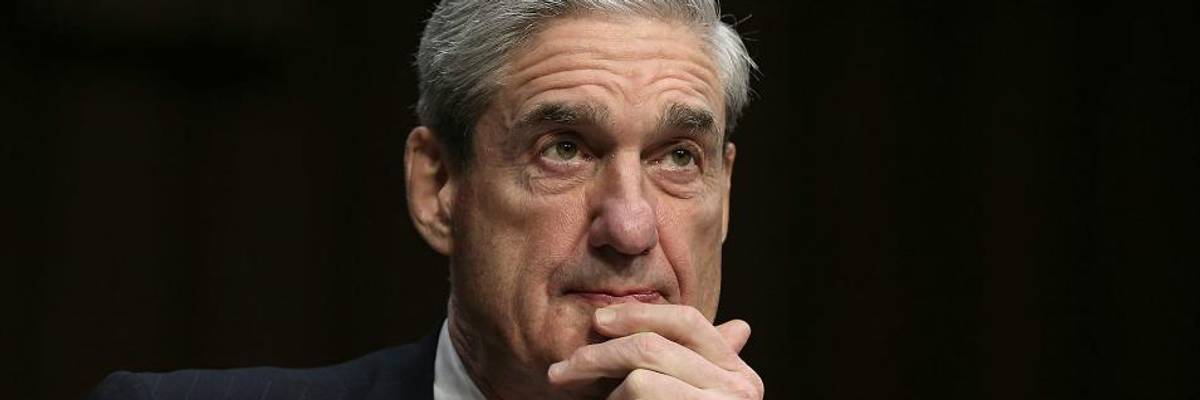
Attorney General William Barr released a redacted version of Special Counsel Robert Mueller's report on Thursday. (Photo: Alex Wong/Getty Images)
Attorney General William Barr delivered a redacted version of the Mueller report to Congress and posted the special counsel's findings online Thursday morning.
The document's publication followed a Justice Department press conference that critics and Democratic lawmakers denounced as an effort to spin Mueller's findings and protect President Donald Trump.
"Before the American people can read it themselves, Barr is trying to spin a report he knows will damage his boss," tweeted Rep. Barbara Lee during Barr's morning press conference. "Don't listen to Barr--read Mueller's words yourself."
Though Democrats demanded the full report, the findings delivered to Congress were redacted. During his press conference, Barr insisted that none of the redactions were the result of "executive privilege."
Read Mueller's report (pdf):
According to the New York Times, Justice Department officials had "numerous conversations" with White House lawyers ahead of the Mueller report's release.
Karen Hobert Flynn, president of government watchdog group Common Cause, said in a statement that "Congress must be given the full report and Congress must determine what needs to be redacted."
"Those determinations should not be made by a Trump apologist like William Barr who openly criticized the Mueller investigation prior to his appointment as Attorney General," Flynn added.
As the Washington Post reports, Mueller's findings paint "a far less flattering picture for Trump than the attorney general has offered" on the question of whether the Trump campaign coordinated with Russian government officials.
"Although the investigation established that the Russian government perceived it would benefit from a Trump presidency and worked to secure that outcome, and that the campaign expected it would benefit electorally from information stolen and released through Russian efforts," Mueller's team wrote, "the investigation did not establish that members of the Trump campaign conspired or coordinated with the Russian government in its election interference activities."
"While the investigation identified numerous links between individuals with ties to the Russian government and individuals associated with the Trump campaign, the evidence was not sufficient to support criminal charges," the report reads.
Mueller's 400-page report also examines 10 instances of possible obstruction of justice by the president.
While the special counsel does not reach "ultimate conclusions about the president's conduct," his report explicitly does not exonerate Trump of obstruction.
"[I]f we had confidence after a thorough investigation of the facts that the president clearly did not commit obstruction of justice, we would so state," the report reads. "Based on the facts and the applicable legal standards, we are unable to reach that judgment. Accordingly, while this report does not conclude that the president committed a crime, it also does not exonerate him."
Mueller's report also highlights Trump's reaction when he learned the special counsel was appointed.
"Oh my God," Trump said, according to the report. "This is terrible. This is the end of my presidency. I'm f**ked."
Dear Common Dreams reader, It’s been nearly 30 years since I co-founded Common Dreams with my late wife, Lina Newhouser. We had the radical notion that journalism should serve the public good, not corporate profits. It was clear to us from the outset what it would take to build such a project. No paid advertisements. No corporate sponsors. No millionaire publisher telling us what to think or do. Many people said we wouldn't last a year, but we proved those doubters wrong. Together with a tremendous team of journalists and dedicated staff, we built an independent media outlet free from the constraints of profits and corporate control. Our mission has always been simple: To inform. To inspire. To ignite change for the common good. Building Common Dreams was not easy. Our survival was never guaranteed. When you take on the most powerful forces—Wall Street greed, fossil fuel industry destruction, Big Tech lobbyists, and uber-rich oligarchs who have spent billions upon billions rigging the economy and democracy in their favor—the only bulwark you have is supporters who believe in your work. But here’s the urgent message from me today. It's never been this bad out there. And it's never been this hard to keep us going. At the very moment Common Dreams is most needed, the threats we face are intensifying. We need your support now more than ever. We don't accept corporate advertising and never will. We don't have a paywall because we don't think people should be blocked from critical news based on their ability to pay. Everything we do is funded by the donations of readers like you. When everyone does the little they can afford, we are strong. But if that support retreats or dries up, so do we. Will you donate now to make sure Common Dreams not only survives but thrives? —Craig Brown, Co-founder |
Attorney General William Barr delivered a redacted version of the Mueller report to Congress and posted the special counsel's findings online Thursday morning.
The document's publication followed a Justice Department press conference that critics and Democratic lawmakers denounced as an effort to spin Mueller's findings and protect President Donald Trump.
"Before the American people can read it themselves, Barr is trying to spin a report he knows will damage his boss," tweeted Rep. Barbara Lee during Barr's morning press conference. "Don't listen to Barr--read Mueller's words yourself."
Though Democrats demanded the full report, the findings delivered to Congress were redacted. During his press conference, Barr insisted that none of the redactions were the result of "executive privilege."
Read Mueller's report (pdf):
According to the New York Times, Justice Department officials had "numerous conversations" with White House lawyers ahead of the Mueller report's release.
Karen Hobert Flynn, president of government watchdog group Common Cause, said in a statement that "Congress must be given the full report and Congress must determine what needs to be redacted."
"Those determinations should not be made by a Trump apologist like William Barr who openly criticized the Mueller investigation prior to his appointment as Attorney General," Flynn added.
As the Washington Post reports, Mueller's findings paint "a far less flattering picture for Trump than the attorney general has offered" on the question of whether the Trump campaign coordinated with Russian government officials.
"Although the investigation established that the Russian government perceived it would benefit from a Trump presidency and worked to secure that outcome, and that the campaign expected it would benefit electorally from information stolen and released through Russian efforts," Mueller's team wrote, "the investigation did not establish that members of the Trump campaign conspired or coordinated with the Russian government in its election interference activities."
"While the investigation identified numerous links between individuals with ties to the Russian government and individuals associated with the Trump campaign, the evidence was not sufficient to support criminal charges," the report reads.
Mueller's 400-page report also examines 10 instances of possible obstruction of justice by the president.
While the special counsel does not reach "ultimate conclusions about the president's conduct," his report explicitly does not exonerate Trump of obstruction.
"[I]f we had confidence after a thorough investigation of the facts that the president clearly did not commit obstruction of justice, we would so state," the report reads. "Based on the facts and the applicable legal standards, we are unable to reach that judgment. Accordingly, while this report does not conclude that the president committed a crime, it also does not exonerate him."
Mueller's report also highlights Trump's reaction when he learned the special counsel was appointed.
"Oh my God," Trump said, according to the report. "This is terrible. This is the end of my presidency. I'm f**ked."
Attorney General William Barr delivered a redacted version of the Mueller report to Congress and posted the special counsel's findings online Thursday morning.
The document's publication followed a Justice Department press conference that critics and Democratic lawmakers denounced as an effort to spin Mueller's findings and protect President Donald Trump.
"Before the American people can read it themselves, Barr is trying to spin a report he knows will damage his boss," tweeted Rep. Barbara Lee during Barr's morning press conference. "Don't listen to Barr--read Mueller's words yourself."
Though Democrats demanded the full report, the findings delivered to Congress were redacted. During his press conference, Barr insisted that none of the redactions were the result of "executive privilege."
Read Mueller's report (pdf):
According to the New York Times, Justice Department officials had "numerous conversations" with White House lawyers ahead of the Mueller report's release.
Karen Hobert Flynn, president of government watchdog group Common Cause, said in a statement that "Congress must be given the full report and Congress must determine what needs to be redacted."
"Those determinations should not be made by a Trump apologist like William Barr who openly criticized the Mueller investigation prior to his appointment as Attorney General," Flynn added.
As the Washington Post reports, Mueller's findings paint "a far less flattering picture for Trump than the attorney general has offered" on the question of whether the Trump campaign coordinated with Russian government officials.
"Although the investigation established that the Russian government perceived it would benefit from a Trump presidency and worked to secure that outcome, and that the campaign expected it would benefit electorally from information stolen and released through Russian efforts," Mueller's team wrote, "the investigation did not establish that members of the Trump campaign conspired or coordinated with the Russian government in its election interference activities."
"While the investigation identified numerous links between individuals with ties to the Russian government and individuals associated with the Trump campaign, the evidence was not sufficient to support criminal charges," the report reads.
Mueller's 400-page report also examines 10 instances of possible obstruction of justice by the president.
While the special counsel does not reach "ultimate conclusions about the president's conduct," his report explicitly does not exonerate Trump of obstruction.
"[I]f we had confidence after a thorough investigation of the facts that the president clearly did not commit obstruction of justice, we would so state," the report reads. "Based on the facts and the applicable legal standards, we are unable to reach that judgment. Accordingly, while this report does not conclude that the president committed a crime, it also does not exonerate him."
Mueller's report also highlights Trump's reaction when he learned the special counsel was appointed.
"Oh my God," Trump said, according to the report. "This is terrible. This is the end of my presidency. I'm f**ked."