SUBSCRIBE TO OUR FREE NEWSLETTER
Daily news & progressive opinion—funded by the people, not the corporations—delivered straight to your inbox.
5
#000000
#FFFFFF
To donate by check, phone, or other method, see our More Ways to Give page.
Daily news & progressive opinion—funded by the people, not the corporations—delivered straight to your inbox.
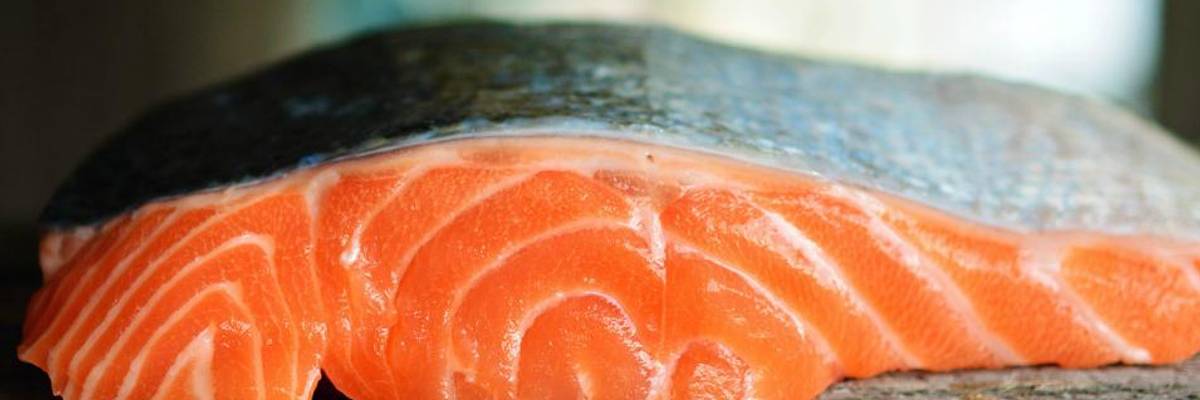
The Food and Drug Administration (FDA) on Friday lifted an import alert that banned genetically modified or GE salmon. (Photo: Pixabay)
The Trump administration has lifted a ban on importing genetically engineered or GE salmon, which critics have long called "Frankenfish," in a move that consumer advocates charge "runs counter to sound science and market demand."
"With this move, FDA has put American consumers at serious risk by putting unlabeled, unnatural fish on the market."
-- Friends of the Earth
The Food and Drug Administration (FDA) announced the decision on Friday, more than three years after approving GE salmon as the first biotech animal authorized for commercial sale and consumption in the United States.
That approval as well as the agency's repeal of the import alert are major wins for the biotech industry--and have come despite concerns (pdf) repeatedly raised by environmental and public health advocates about the threats to wild salmon populations and consumers.
As Politico reported:
The alert was put in place after a spending bill provision backed by Sen. Lisa Murkowski (R-Alaska) blocked the fish from entering commerce in the U.S. until FDA finalized labeling guidelines that would inform consumers the product was genetically modified.
FDA on Friday said it no longer needs to finalize those labeling guidelines because a 2016 law requiring the disclosure of genetically engineered ingredients nationwide applies to the salmon, essentially taking the product outside of FDA's purview.
The Trump administration's guidelines for the GE or GMO labeling law, released last year by the U.S. Department of Agriculture (USDA), have been described by critics as "a disaster." As Common Dreams reported in December, "To make the disclosure, food producers have four options: text, a friendly-looking symbol, an electronic or digital link, or a text message."
"USDA's new guidelines don't require adequate mandatory labeling, don't require calling the fish 'genetically engineered,' and don't help consumers know what kind of fish they are buying," George Kimbrell, legal director at the Center for Food Safety, said in a statement on Monday.
"These guidelines don't require mandatory labeling of GE salmon, and instead allow producers to use QR codes or 1-800 numbers for more information. That clearly is not what the Murkowski amendment requires," added Kimbrell, whose group is considering legal action against the FDA.
The FDA's decision, made without consulting indigenous groups who rely on salmon for food and income, also roiled tribal leaders.
"It's unconscionable and arrogant to think man can improve upon our Creator's perfection in wild salmon as a justification and excuse to satisfy corporate ambition and greed," declared Fawn Sharp, president of the Quinault Indian Nation. Sharp said the unilateral move "is an alarming signal that our sacred and prized wild salmon is now even more vulnerable to external markets and ecological threats."
Valerie Segrest, Muckleshoot tribal member and executive director of Feed Seven Generations, concurred.
"Clearly this is an appropriation of our culture and this action will lead to inevitable contamination and irreversible damage to our food system," Segret concluded. "By lifting the ban on genetically engineered salmon, the FDA has put American consumers at serious risk and has directly attacked the life ways of Pacific Northwest Tribal communities."
Further, as Dana Perls, a senior food policy campaigner with Friends of the Earth, pointed out, the agency's decision doesn't align with public demand: "More than 80 retailers have said they won't sell this risky, unlabeled GMO fish and polls show consumers don't want it."
Dear Common Dreams reader, It’s been nearly 30 years since I co-founded Common Dreams with my late wife, Lina Newhouser. We had the radical notion that journalism should serve the public good, not corporate profits. It was clear to us from the outset what it would take to build such a project. No paid advertisements. No corporate sponsors. No millionaire publisher telling us what to think or do. Many people said we wouldn't last a year, but we proved those doubters wrong. Together with a tremendous team of journalists and dedicated staff, we built an independent media outlet free from the constraints of profits and corporate control. Our mission has always been simple: To inform. To inspire. To ignite change for the common good. Building Common Dreams was not easy. Our survival was never guaranteed. When you take on the most powerful forces—Wall Street greed, fossil fuel industry destruction, Big Tech lobbyists, and uber-rich oligarchs who have spent billions upon billions rigging the economy and democracy in their favor—the only bulwark you have is supporters who believe in your work. But here’s the urgent message from me today. It's never been this bad out there. And it's never been this hard to keep us going. At the very moment Common Dreams is most needed, the threats we face are intensifying. We need your support now more than ever. We don't accept corporate advertising and never will. We don't have a paywall because we don't think people should be blocked from critical news based on their ability to pay. Everything we do is funded by the donations of readers like you. When everyone does the little they can afford, we are strong. But if that support retreats or dries up, so do we. Will you donate now to make sure Common Dreams not only survives but thrives? —Craig Brown, Co-founder |
The Trump administration has lifted a ban on importing genetically engineered or GE salmon, which critics have long called "Frankenfish," in a move that consumer advocates charge "runs counter to sound science and market demand."
"With this move, FDA has put American consumers at serious risk by putting unlabeled, unnatural fish on the market."
-- Friends of the Earth
The Food and Drug Administration (FDA) announced the decision on Friday, more than three years after approving GE salmon as the first biotech animal authorized for commercial sale and consumption in the United States.
That approval as well as the agency's repeal of the import alert are major wins for the biotech industry--and have come despite concerns (pdf) repeatedly raised by environmental and public health advocates about the threats to wild salmon populations and consumers.
As Politico reported:
The alert was put in place after a spending bill provision backed by Sen. Lisa Murkowski (R-Alaska) blocked the fish from entering commerce in the U.S. until FDA finalized labeling guidelines that would inform consumers the product was genetically modified.
FDA on Friday said it no longer needs to finalize those labeling guidelines because a 2016 law requiring the disclosure of genetically engineered ingredients nationwide applies to the salmon, essentially taking the product outside of FDA's purview.
The Trump administration's guidelines for the GE or GMO labeling law, released last year by the U.S. Department of Agriculture (USDA), have been described by critics as "a disaster." As Common Dreams reported in December, "To make the disclosure, food producers have four options: text, a friendly-looking symbol, an electronic or digital link, or a text message."
"USDA's new guidelines don't require adequate mandatory labeling, don't require calling the fish 'genetically engineered,' and don't help consumers know what kind of fish they are buying," George Kimbrell, legal director at the Center for Food Safety, said in a statement on Monday.
"These guidelines don't require mandatory labeling of GE salmon, and instead allow producers to use QR codes or 1-800 numbers for more information. That clearly is not what the Murkowski amendment requires," added Kimbrell, whose group is considering legal action against the FDA.
The FDA's decision, made without consulting indigenous groups who rely on salmon for food and income, also roiled tribal leaders.
"It's unconscionable and arrogant to think man can improve upon our Creator's perfection in wild salmon as a justification and excuse to satisfy corporate ambition and greed," declared Fawn Sharp, president of the Quinault Indian Nation. Sharp said the unilateral move "is an alarming signal that our sacred and prized wild salmon is now even more vulnerable to external markets and ecological threats."
Valerie Segrest, Muckleshoot tribal member and executive director of Feed Seven Generations, concurred.
"Clearly this is an appropriation of our culture and this action will lead to inevitable contamination and irreversible damage to our food system," Segret concluded. "By lifting the ban on genetically engineered salmon, the FDA has put American consumers at serious risk and has directly attacked the life ways of Pacific Northwest Tribal communities."
Further, as Dana Perls, a senior food policy campaigner with Friends of the Earth, pointed out, the agency's decision doesn't align with public demand: "More than 80 retailers have said they won't sell this risky, unlabeled GMO fish and polls show consumers don't want it."
The Trump administration has lifted a ban on importing genetically engineered or GE salmon, which critics have long called "Frankenfish," in a move that consumer advocates charge "runs counter to sound science and market demand."
"With this move, FDA has put American consumers at serious risk by putting unlabeled, unnatural fish on the market."
-- Friends of the Earth
The Food and Drug Administration (FDA) announced the decision on Friday, more than three years after approving GE salmon as the first biotech animal authorized for commercial sale and consumption in the United States.
That approval as well as the agency's repeal of the import alert are major wins for the biotech industry--and have come despite concerns (pdf) repeatedly raised by environmental and public health advocates about the threats to wild salmon populations and consumers.
As Politico reported:
The alert was put in place after a spending bill provision backed by Sen. Lisa Murkowski (R-Alaska) blocked the fish from entering commerce in the U.S. until FDA finalized labeling guidelines that would inform consumers the product was genetically modified.
FDA on Friday said it no longer needs to finalize those labeling guidelines because a 2016 law requiring the disclosure of genetically engineered ingredients nationwide applies to the salmon, essentially taking the product outside of FDA's purview.
The Trump administration's guidelines for the GE or GMO labeling law, released last year by the U.S. Department of Agriculture (USDA), have been described by critics as "a disaster." As Common Dreams reported in December, "To make the disclosure, food producers have four options: text, a friendly-looking symbol, an electronic or digital link, or a text message."
"USDA's new guidelines don't require adequate mandatory labeling, don't require calling the fish 'genetically engineered,' and don't help consumers know what kind of fish they are buying," George Kimbrell, legal director at the Center for Food Safety, said in a statement on Monday.
"These guidelines don't require mandatory labeling of GE salmon, and instead allow producers to use QR codes or 1-800 numbers for more information. That clearly is not what the Murkowski amendment requires," added Kimbrell, whose group is considering legal action against the FDA.
The FDA's decision, made without consulting indigenous groups who rely on salmon for food and income, also roiled tribal leaders.
"It's unconscionable and arrogant to think man can improve upon our Creator's perfection in wild salmon as a justification and excuse to satisfy corporate ambition and greed," declared Fawn Sharp, president of the Quinault Indian Nation. Sharp said the unilateral move "is an alarming signal that our sacred and prized wild salmon is now even more vulnerable to external markets and ecological threats."
Valerie Segrest, Muckleshoot tribal member and executive director of Feed Seven Generations, concurred.
"Clearly this is an appropriation of our culture and this action will lead to inevitable contamination and irreversible damage to our food system," Segret concluded. "By lifting the ban on genetically engineered salmon, the FDA has put American consumers at serious risk and has directly attacked the life ways of Pacific Northwest Tribal communities."
Further, as Dana Perls, a senior food policy campaigner with Friends of the Earth, pointed out, the agency's decision doesn't align with public demand: "More than 80 retailers have said they won't sell this risky, unlabeled GMO fish and polls show consumers don't want it."