

SUBSCRIBE TO OUR FREE NEWSLETTER
Daily news & progressive opinion—funded by the people, not the corporations—delivered straight to your inbox.
5
#000000
#FFFFFF
To donate by check, phone, or other method, see our More Ways to Give page.
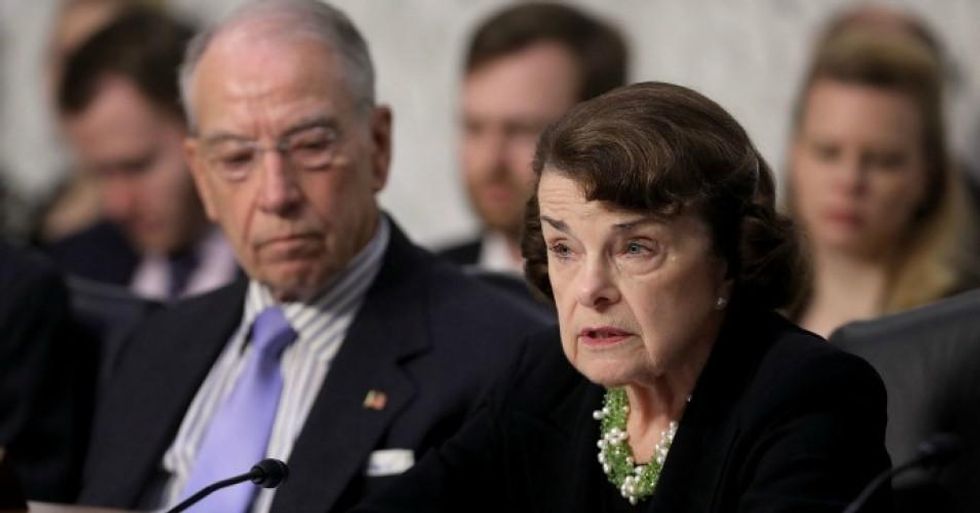
Sen. Dianne Feinstein is under fire on Friday for keeping from fellow lawmakers a letter from a female constituent who alleged that controversial Supreme Court nominee Brett Kavanaugh attempted to sexually assault her while the two were high school students.
'What in blazes was Dianne Feinstein thinking?" Michael Tomasky, political correspondent for The Daily Beast, demanded to know in a column on Friday. "It was late July when she got that letter from a female constituent alleging that Brett Kavanaugh sexually assaulted her when they were in high school. And only this week did she bother to share it with her Democratic Judiciary Committee colleagues?"
Feinstein, the top Democrat on the Senate Judiciary Committee, confirmed existence of the letter on Thursday and said she had referred the matter to the FBI. The letter came to her, however, in July after President Donald Trump nominated Kavanaugh. Politico reported Thursday:
No other Democrats on the committee have seen the letter, Democratic aides said, and Senate Democrats met privately on Wednesday night to discuss what exactly to do with it, according to multiple sources familiar with the meeting.
Wednesday's meeting was the first time that the letter came up among Democrats on the committee, according to aides. Democratic lawmakers worry that Kavanaugh's confirmation to the Supreme Court is nearly a done deal.
In addition to rebuffing calls from fellow Democrats on the Judiciary Committee to share the letter, the New Yorker reported that a "source familiar with the committee's activities said that Feinstein's staff initially conveyed to other Democratic members' offices that the incident was too distant in the past to merit public discussion, and that Feinstein had 'taken care of it.'"
The Washington Post also reported:
Feinstein did not attend the closed session of Kavanaugh's confirmation hearing last Thursday, in which sensitive information can be discussed. The sexual misconduct allegation didn't come up during the closed session, Republicans said.
In addition to wanting to protect the woman's identity, the New Yorker reported that sources familiar with the senator's decision said "Feinstein also acted out of a sense that Democrats would be better off focusing on legal, rather than personal, issues in their questioning of Kavanaugh."
Kavanaugh, however, "won't think twice about using his twisted view of the law to invade the 'personal' rights of American women," asserted CounterPunch editor Jeffrey St. Clair.
Huffington Post reporter Marina Fang also noted on Twitter that Republicans have "repeatedly brought up Kavanaugh as a good guy, carpool dad, basketball coach, et al."
As for protecting the woman's identity, Tomasky argues that Feinstein could have simply redacted her name.
In fact, he argues, Feinstein "made an absolute disaster of things." That's because, he argues, "she has helped facilitate the discrediting of the woman who is accusing Kavanaugh here, because it looks desperate and eleventh-hour, whereas if she'd made this public before, people would have had time to process it and Republicans couldn't have made that accusation."
Kavanaugh has denied the accusations.
Sen. Chuck Grassley (R-Iowa), who heads the Judicary Committee, said Thursday there were no plans to cancel the scheduled Sept. 20 vote on Kavanaugh.
Sen. Dianne Feinstein is under fire on Friday for keeping from fellow lawmakers a letter from a female constituent who alleged that controversial Supreme Court nominee Brett Kavanaugh attempted to sexually assault her while the two were high school students.
'What in blazes was Dianne Feinstein thinking?" Michael Tomasky, political correspondent for The Daily Beast, demanded to know in a column on Friday. "It was late July when she got that letter from a female constituent alleging that Brett Kavanaugh sexually assaulted her when they were in high school. And only this week did she bother to share it with her Democratic Judiciary Committee colleagues?"
Feinstein, the top Democrat on the Senate Judiciary Committee, confirmed existence of the letter on Thursday and said she had referred the matter to the FBI. The letter came to her, however, in July after President Donald Trump nominated Kavanaugh. Politico reported Thursday:
No other Democrats on the committee have seen the letter, Democratic aides said, and Senate Democrats met privately on Wednesday night to discuss what exactly to do with it, according to multiple sources familiar with the meeting.
Wednesday's meeting was the first time that the letter came up among Democrats on the committee, according to aides. Democratic lawmakers worry that Kavanaugh's confirmation to the Supreme Court is nearly a done deal.
In addition to rebuffing calls from fellow Democrats on the Judiciary Committee to share the letter, the New Yorker reported that a "source familiar with the committee's activities said that Feinstein's staff initially conveyed to other Democratic members' offices that the incident was too distant in the past to merit public discussion, and that Feinstein had 'taken care of it.'"
The Washington Post also reported:
Feinstein did not attend the closed session of Kavanaugh's confirmation hearing last Thursday, in which sensitive information can be discussed. The sexual misconduct allegation didn't come up during the closed session, Republicans said.
In addition to wanting to protect the woman's identity, the New Yorker reported that sources familiar with the senator's decision said "Feinstein also acted out of a sense that Democrats would be better off focusing on legal, rather than personal, issues in their questioning of Kavanaugh."
Kavanaugh, however, "won't think twice about using his twisted view of the law to invade the 'personal' rights of American women," asserted CounterPunch editor Jeffrey St. Clair.
Huffington Post reporter Marina Fang also noted on Twitter that Republicans have "repeatedly brought up Kavanaugh as a good guy, carpool dad, basketball coach, et al."
As for protecting the woman's identity, Tomasky argues that Feinstein could have simply redacted her name.
In fact, he argues, Feinstein "made an absolute disaster of things." That's because, he argues, "she has helped facilitate the discrediting of the woman who is accusing Kavanaugh here, because it looks desperate and eleventh-hour, whereas if she'd made this public before, people would have had time to process it and Republicans couldn't have made that accusation."
Kavanaugh has denied the accusations.
Sen. Chuck Grassley (R-Iowa), who heads the Judicary Committee, said Thursday there were no plans to cancel the scheduled Sept. 20 vote on Kavanaugh.
Sen. Dianne Feinstein is under fire on Friday for keeping from fellow lawmakers a letter from a female constituent who alleged that controversial Supreme Court nominee Brett Kavanaugh attempted to sexually assault her while the two were high school students.
'What in blazes was Dianne Feinstein thinking?" Michael Tomasky, political correspondent for The Daily Beast, demanded to know in a column on Friday. "It was late July when she got that letter from a female constituent alleging that Brett Kavanaugh sexually assaulted her when they were in high school. And only this week did she bother to share it with her Democratic Judiciary Committee colleagues?"
Feinstein, the top Democrat on the Senate Judiciary Committee, confirmed existence of the letter on Thursday and said she had referred the matter to the FBI. The letter came to her, however, in July after President Donald Trump nominated Kavanaugh. Politico reported Thursday:
No other Democrats on the committee have seen the letter, Democratic aides said, and Senate Democrats met privately on Wednesday night to discuss what exactly to do with it, according to multiple sources familiar with the meeting.
Wednesday's meeting was the first time that the letter came up among Democrats on the committee, according to aides. Democratic lawmakers worry that Kavanaugh's confirmation to the Supreme Court is nearly a done deal.
In addition to rebuffing calls from fellow Democrats on the Judiciary Committee to share the letter, the New Yorker reported that a "source familiar with the committee's activities said that Feinstein's staff initially conveyed to other Democratic members' offices that the incident was too distant in the past to merit public discussion, and that Feinstein had 'taken care of it.'"
The Washington Post also reported:
Feinstein did not attend the closed session of Kavanaugh's confirmation hearing last Thursday, in which sensitive information can be discussed. The sexual misconduct allegation didn't come up during the closed session, Republicans said.
In addition to wanting to protect the woman's identity, the New Yorker reported that sources familiar with the senator's decision said "Feinstein also acted out of a sense that Democrats would be better off focusing on legal, rather than personal, issues in their questioning of Kavanaugh."
Kavanaugh, however, "won't think twice about using his twisted view of the law to invade the 'personal' rights of American women," asserted CounterPunch editor Jeffrey St. Clair.
Huffington Post reporter Marina Fang also noted on Twitter that Republicans have "repeatedly brought up Kavanaugh as a good guy, carpool dad, basketball coach, et al."
As for protecting the woman's identity, Tomasky argues that Feinstein could have simply redacted her name.
In fact, he argues, Feinstein "made an absolute disaster of things." That's because, he argues, "she has helped facilitate the discrediting of the woman who is accusing Kavanaugh here, because it looks desperate and eleventh-hour, whereas if she'd made this public before, people would have had time to process it and Republicans couldn't have made that accusation."
Kavanaugh has denied the accusations.
Sen. Chuck Grassley (R-Iowa), who heads the Judicary Committee, said Thursday there were no plans to cancel the scheduled Sept. 20 vote on Kavanaugh.

