

SUBSCRIBE TO OUR FREE NEWSLETTER
Daily news & progressive opinion—funded by the people, not the corporations—delivered straight to your inbox.
5
#000000
#FFFFFF
To donate by check, phone, or other method, see our More Ways to Give page.
The Trump administration has given way to an unusually engaged public, with one in five Americans reporting in a new survey that they've attended a protest or rally since 2016--and 70 percent of those who rallied said they disapproved of President Donald Trump and his policies.
The poll, by the Washington Post and Kaiser Family Foundation, showed that political activism is new for many. About 19 percent of those who have demonstrated in the past two years said they had never been to a protest before 2016.
The numbers show a significant shift from just a few years ago. In 2009, the Pew Research Center found that only about four percent of Americans had participated in an organized political demonstration.
The survey "confirms there is a resistance and that a lot of people want to be associated with it," Michael Kazin, a history professor at Georgetown University and editor of Dissent magazine, told the Washington Post.
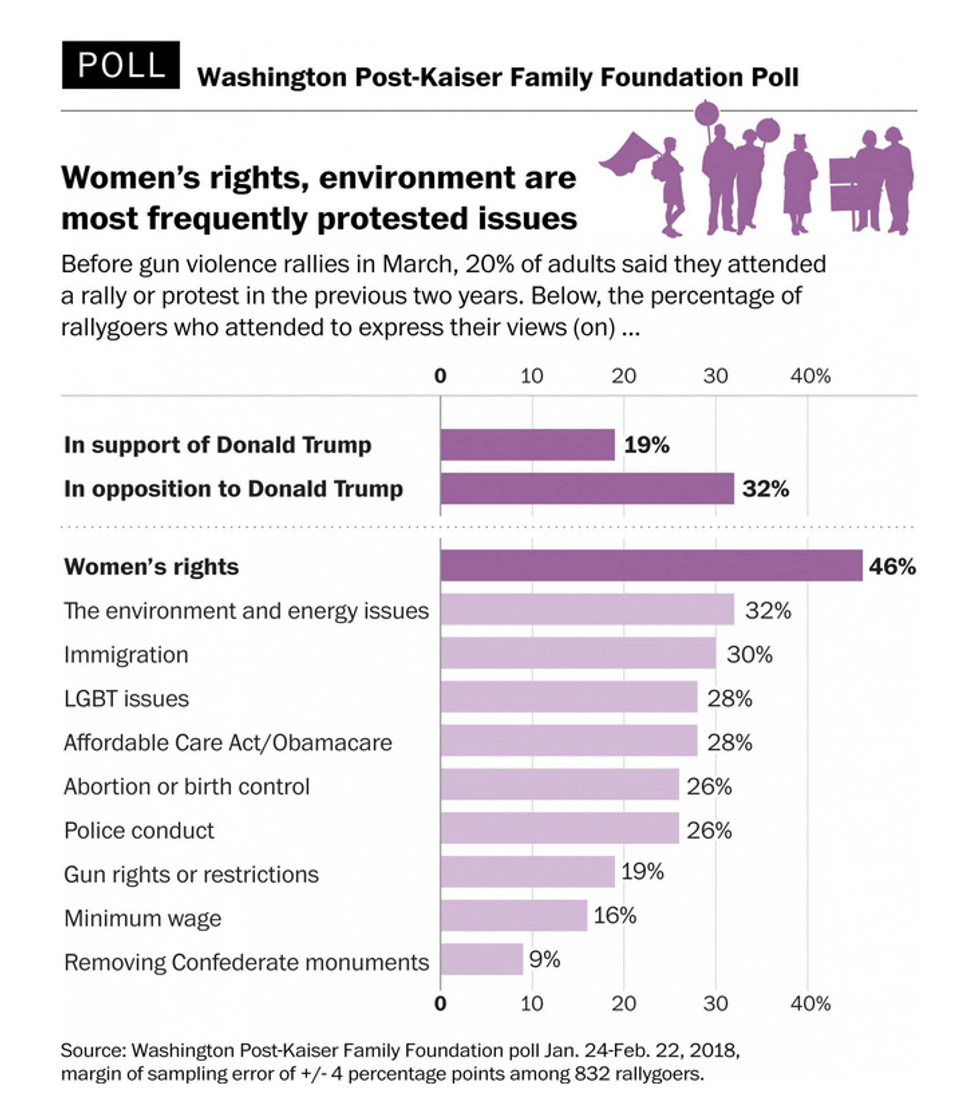
About 46 percent of respondents said they had been to demonstrations focusing on women's rights. The environment, immigration policy, and LGBTQ rights were also top issues Americans rallied for, according to the poll.
The survey took place this past January and February, just before widespread anti-gun violence mobilizations followed the shooting in February at Marjory Stoneman Douglas High School in Parkland, Fla. Teenage students led an estimated 800 "March for Our Lives" rallies across the nation on March 24, and thousands of students staged walkouts on March 14, demanding stricter gun control legislation.
In recent weeks, teachers and education supporters in Oklahoma, West Virginia, and Kentucky have also taken part in actions after years of corporate tax cuts have left teachers without raises and students struggling in underfunded and neglected schools.
On Thursday, hundreds of people voiced outrage after the latest fatal shooting of an unarmed black man, Saheed Vassell, by a police officer in Brooklyn, N.Y.--days after similar protests after the killing of Stephon Clark in Sacramento, Calif.
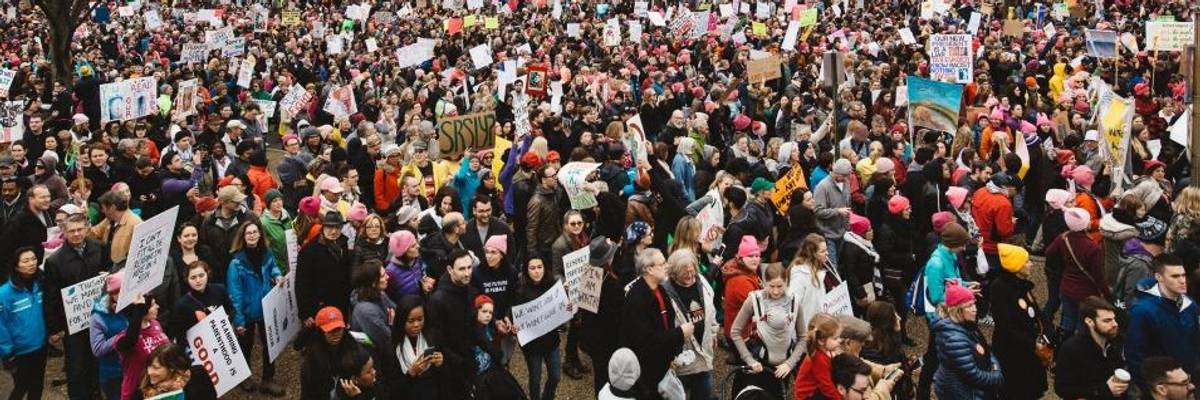
Other explosive issues in the past year have included the Republican Party's repeated attempts to repeal the Affordable Care Act last summer, which were stymied in large part thanks to protests led by the disability rights group ADAPT; and the Trump administration's attacks on women's rights as well as the president's admitted history of sexually assaulting women, which played a role in driving an estimated four million Americans to attend the Women's March on January 21, 2017--the largest protest in American history.
The momentum shows no sign of waning as the 2018 midterm elections draw near. Eighty-three percent of those surveyed said they intend to vote on election day, and a third said they plan to work or volunteer for a political campaign.
The Trump administration has given way to an unusually engaged public, with one in five Americans reporting in a new survey that they've attended a protest or rally since 2016--and 70 percent of those who rallied said they disapproved of President Donald Trump and his policies.
The poll, by the Washington Post and Kaiser Family Foundation, showed that political activism is new for many. About 19 percent of those who have demonstrated in the past two years said they had never been to a protest before 2016.
The numbers show a significant shift from just a few years ago. In 2009, the Pew Research Center found that only about four percent of Americans had participated in an organized political demonstration.
The survey "confirms there is a resistance and that a lot of people want to be associated with it," Michael Kazin, a history professor at Georgetown University and editor of Dissent magazine, told the Washington Post.
About 46 percent of respondents said they had been to demonstrations focusing on women's rights. The environment, immigration policy, and LGBTQ rights were also top issues Americans rallied for, according to the poll.
The survey took place this past January and February, just before widespread anti-gun violence mobilizations followed the shooting in February at Marjory Stoneman Douglas High School in Parkland, Fla. Teenage students led an estimated 800 "March for Our Lives" rallies across the nation on March 24, and thousands of students staged walkouts on March 14, demanding stricter gun control legislation.
In recent weeks, teachers and education supporters in Oklahoma, West Virginia, and Kentucky have also taken part in actions after years of corporate tax cuts have left teachers without raises and students struggling in underfunded and neglected schools.
On Thursday, hundreds of people voiced outrage after the latest fatal shooting of an unarmed black man, Saheed Vassell, by a police officer in Brooklyn, N.Y.--days after similar protests after the killing of Stephon Clark in Sacramento, Calif.
Other explosive issues in the past year have included the Republican Party's repeated attempts to repeal the Affordable Care Act last summer, which were stymied in large part thanks to protests led by the disability rights group ADAPT; and the Trump administration's attacks on women's rights as well as the president's admitted history of sexually assaulting women, which played a role in driving an estimated four million Americans to attend the Women's March on January 21, 2017--the largest protest in American history.
The momentum shows no sign of waning as the 2018 midterm elections draw near. Eighty-three percent of those surveyed said they intend to vote on election day, and a third said they plan to work or volunteer for a political campaign.
The Trump administration has given way to an unusually engaged public, with one in five Americans reporting in a new survey that they've attended a protest or rally since 2016--and 70 percent of those who rallied said they disapproved of President Donald Trump and his policies.
The poll, by the Washington Post and Kaiser Family Foundation, showed that political activism is new for many. About 19 percent of those who have demonstrated in the past two years said they had never been to a protest before 2016.
The numbers show a significant shift from just a few years ago. In 2009, the Pew Research Center found that only about four percent of Americans had participated in an organized political demonstration.
The survey "confirms there is a resistance and that a lot of people want to be associated with it," Michael Kazin, a history professor at Georgetown University and editor of Dissent magazine, told the Washington Post.
About 46 percent of respondents said they had been to demonstrations focusing on women's rights. The environment, immigration policy, and LGBTQ rights were also top issues Americans rallied for, according to the poll.
The survey took place this past January and February, just before widespread anti-gun violence mobilizations followed the shooting in February at Marjory Stoneman Douglas High School in Parkland, Fla. Teenage students led an estimated 800 "March for Our Lives" rallies across the nation on March 24, and thousands of students staged walkouts on March 14, demanding stricter gun control legislation.
In recent weeks, teachers and education supporters in Oklahoma, West Virginia, and Kentucky have also taken part in actions after years of corporate tax cuts have left teachers without raises and students struggling in underfunded and neglected schools.
On Thursday, hundreds of people voiced outrage after the latest fatal shooting of an unarmed black man, Saheed Vassell, by a police officer in Brooklyn, N.Y.--days after similar protests after the killing of Stephon Clark in Sacramento, Calif.
Other explosive issues in the past year have included the Republican Party's repeated attempts to repeal the Affordable Care Act last summer, which were stymied in large part thanks to protests led by the disability rights group ADAPT; and the Trump administration's attacks on women's rights as well as the president's admitted history of sexually assaulting women, which played a role in driving an estimated four million Americans to attend the Women's March on January 21, 2017--the largest protest in American history.
The momentum shows no sign of waning as the 2018 midterm elections draw near. Eighty-three percent of those surveyed said they intend to vote on election day, and a third said they plan to work or volunteer for a political campaign.

