SUBSCRIBE TO OUR FREE NEWSLETTER
Daily news & progressive opinion—funded by the people, not the corporations—delivered straight to your inbox.
5
#000000
#FFFFFF
To donate by check, phone, or other method, see our More Ways to Give page.
Sens. Elizabeth Warren and Bernie Sanders are not impressed.
And they were not alone Tuesday as outrage and disgust erupted among consumer watchdogs and progressives after Sen. Angus King (I-Maine) and sixteen Democrats joined with 50 Republicans in the U.S. Senate to advance a bill that critics say is just another handout for Wall Street banks--one that also sets the stage for the next major financial meltdown.
"This bill wouldn't be on the path to becoming law without the support of these Democrats." --Sen. Elizabeth Warren (D-Mass.)With a vote of 67-32, including the 17 Democrats who voted yes, a "motion to proceed" received enough support to send the 'Bank Lobbyist Act'--technically the Economic Growth, Regulatory Relief, and Consumer Protection Act, or S. 2155--to the floor for debate, possible amendments, and then a final vote later this week or next.
The full roll-call vote is here. And the 17 members of the Democratic caucus who voted in favor:
| Bennet (D-CO) Carper (D-DE) Coons (D-DE) Donnelly (D-IN) Hassan (D-NH) Heitkamp (D-ND) | Jones (D-AL) Kaine (D-VA) King (I-ME) Manchin (D-WV) McCaskill (D-MO) Nelson (D-FL) | Peters (D-MI) Shaheen (D-NH) Stabenow (D-MI) Tester (D-MT) Warner (D-VA) |
Kurt Walters, campaign director at Demand Progress's grassroots anti-corruption wing Rootstrikers, said those 17 members of the Democratic caucus who voted to advance the bill in the Senate have simply no defense.
"Voters have seen this movie before. It didn't work out in 2008 and it's no wiser today. There is simply no excuse for a Democrat to add their name to Wall Street deregulation," Walters said following the vote. Identifying members who voted in favor as "the Bailout Caucus," he said those lawmakers have now sent a very clear message: "I work for my bank donors, not my constituents."
Sen. Elizabeth Warren (D-Mass.), one of the proposals most vocal opponents, slammed Republicans for backing the bill, but did not let her Democratic colleagues who joined them off the hook:
Sen. Bernie Sanders (I-Vt.), who like Sen. King caucuses with the Democrats, appeared to have a had a hard time understanding those who supported the bill:
And it's not as though Democrats were holding their noses in order to attain some higher or more noble goal. Not only bad policy itself, critics pointed out that Democrats who voted in favor did absolutely nothing to leverage their votes:
Considering the crash of 2008--and recognizing the more recent scandals at Wells Fargo, Equifax and other financial institutions--Bartlett Naylor, a financial policy analyst with Public Citizen, argued ahead of the vote that Democrats and other lawmakers in the Senate "should be fighting for tougher Wall Street rules, not rolling them back to pay back wealthy corporate donors."
Naylor said the support the "deregulatory package" has received thus far from the Democrats is "an ugly reflection of Wall Street's political clout in both parties, purchased through billions in political spending over many decades."
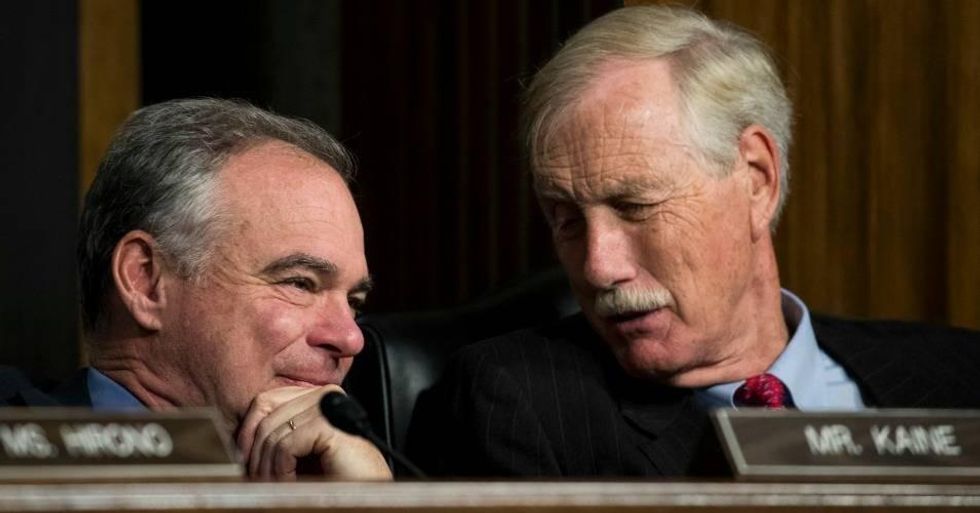
Naylor specifically called out the vote of U.S. Sen. Tim Kaine (D-Va.), the former vice presidential candidate for the Democrats. Kaine's cosponsoring of the bill, lamented Naylor, "shows that too many Democratic politicians remain far too close to the financial sector. Even more concerning are press reports that the bill's supporters could benefit financially from its passage."
Sens. Elizabeth Warren and Bernie Sanders are not impressed.
And they were not alone Tuesday as outrage and disgust erupted among consumer watchdogs and progressives after Sen. Angus King (I-Maine) and sixteen Democrats joined with 50 Republicans in the U.S. Senate to advance a bill that critics say is just another handout for Wall Street banks--one that also sets the stage for the next major financial meltdown.
"This bill wouldn't be on the path to becoming law without the support of these Democrats." --Sen. Elizabeth Warren (D-Mass.)With a vote of 67-32, including the 17 Democrats who voted yes, a "motion to proceed" received enough support to send the 'Bank Lobbyist Act'--technically the Economic Growth, Regulatory Relief, and Consumer Protection Act, or S. 2155--to the floor for debate, possible amendments, and then a final vote later this week or next.
The full roll-call vote is here. And the 17 members of the Democratic caucus who voted in favor:
| Bennet (D-CO) Carper (D-DE) Coons (D-DE) Donnelly (D-IN) Hassan (D-NH) Heitkamp (D-ND) | Jones (D-AL) Kaine (D-VA) King (I-ME) Manchin (D-WV) McCaskill (D-MO) Nelson (D-FL) | Peters (D-MI) Shaheen (D-NH) Stabenow (D-MI) Tester (D-MT) Warner (D-VA) |
Kurt Walters, campaign director at Demand Progress's grassroots anti-corruption wing Rootstrikers, said those 17 members of the Democratic caucus who voted to advance the bill in the Senate have simply no defense.
"Voters have seen this movie before. It didn't work out in 2008 and it's no wiser today. There is simply no excuse for a Democrat to add their name to Wall Street deregulation," Walters said following the vote. Identifying members who voted in favor as "the Bailout Caucus," he said those lawmakers have now sent a very clear message: "I work for my bank donors, not my constituents."
Sen. Elizabeth Warren (D-Mass.), one of the proposals most vocal opponents, slammed Republicans for backing the bill, but did not let her Democratic colleagues who joined them off the hook:
Sen. Bernie Sanders (I-Vt.), who like Sen. King caucuses with the Democrats, appeared to have a had a hard time understanding those who supported the bill:
And it's not as though Democrats were holding their noses in order to attain some higher or more noble goal. Not only bad policy itself, critics pointed out that Democrats who voted in favor did absolutely nothing to leverage their votes:
Considering the crash of 2008--and recognizing the more recent scandals at Wells Fargo, Equifax and other financial institutions--Bartlett Naylor, a financial policy analyst with Public Citizen, argued ahead of the vote that Democrats and other lawmakers in the Senate "should be fighting for tougher Wall Street rules, not rolling them back to pay back wealthy corporate donors."
Naylor said the support the "deregulatory package" has received thus far from the Democrats is "an ugly reflection of Wall Street's political clout in both parties, purchased through billions in political spending over many decades."
Naylor specifically called out the vote of U.S. Sen. Tim Kaine (D-Va.), the former vice presidential candidate for the Democrats. Kaine's cosponsoring of the bill, lamented Naylor, "shows that too many Democratic politicians remain far too close to the financial sector. Even more concerning are press reports that the bill's supporters could benefit financially from its passage."
Sens. Elizabeth Warren and Bernie Sanders are not impressed.
And they were not alone Tuesday as outrage and disgust erupted among consumer watchdogs and progressives after Sen. Angus King (I-Maine) and sixteen Democrats joined with 50 Republicans in the U.S. Senate to advance a bill that critics say is just another handout for Wall Street banks--one that also sets the stage for the next major financial meltdown.
"This bill wouldn't be on the path to becoming law without the support of these Democrats." --Sen. Elizabeth Warren (D-Mass.)With a vote of 67-32, including the 17 Democrats who voted yes, a "motion to proceed" received enough support to send the 'Bank Lobbyist Act'--technically the Economic Growth, Regulatory Relief, and Consumer Protection Act, or S. 2155--to the floor for debate, possible amendments, and then a final vote later this week or next.
The full roll-call vote is here. And the 17 members of the Democratic caucus who voted in favor:
| Bennet (D-CO) Carper (D-DE) Coons (D-DE) Donnelly (D-IN) Hassan (D-NH) Heitkamp (D-ND) | Jones (D-AL) Kaine (D-VA) King (I-ME) Manchin (D-WV) McCaskill (D-MO) Nelson (D-FL) | Peters (D-MI) Shaheen (D-NH) Stabenow (D-MI) Tester (D-MT) Warner (D-VA) |
Kurt Walters, campaign director at Demand Progress's grassroots anti-corruption wing Rootstrikers, said those 17 members of the Democratic caucus who voted to advance the bill in the Senate have simply no defense.
"Voters have seen this movie before. It didn't work out in 2008 and it's no wiser today. There is simply no excuse for a Democrat to add their name to Wall Street deregulation," Walters said following the vote. Identifying members who voted in favor as "the Bailout Caucus," he said those lawmakers have now sent a very clear message: "I work for my bank donors, not my constituents."
Sen. Elizabeth Warren (D-Mass.), one of the proposals most vocal opponents, slammed Republicans for backing the bill, but did not let her Democratic colleagues who joined them off the hook:
Sen. Bernie Sanders (I-Vt.), who like Sen. King caucuses with the Democrats, appeared to have a had a hard time understanding those who supported the bill:
And it's not as though Democrats were holding their noses in order to attain some higher or more noble goal. Not only bad policy itself, critics pointed out that Democrats who voted in favor did absolutely nothing to leverage their votes:
Considering the crash of 2008--and recognizing the more recent scandals at Wells Fargo, Equifax and other financial institutions--Bartlett Naylor, a financial policy analyst with Public Citizen, argued ahead of the vote that Democrats and other lawmakers in the Senate "should be fighting for tougher Wall Street rules, not rolling them back to pay back wealthy corporate donors."
Naylor said the support the "deregulatory package" has received thus far from the Democrats is "an ugly reflection of Wall Street's political clout in both parties, purchased through billions in political spending over many decades."
Naylor specifically called out the vote of U.S. Sen. Tim Kaine (D-Va.), the former vice presidential candidate for the Democrats. Kaine's cosponsoring of the bill, lamented Naylor, "shows that too many Democratic politicians remain far too close to the financial sector. Even more concerning are press reports that the bill's supporters could benefit financially from its passage."