SUBSCRIBE TO OUR FREE NEWSLETTER
Daily news & progressive opinion—funded by the people, not the corporations—delivered straight to your inbox.
5
#000000
#FFFFFF
To donate by check, phone, or other method, see our More Ways to Give page.
Daily news & progressive opinion—funded by the people, not the corporations—delivered straight to your inbox.
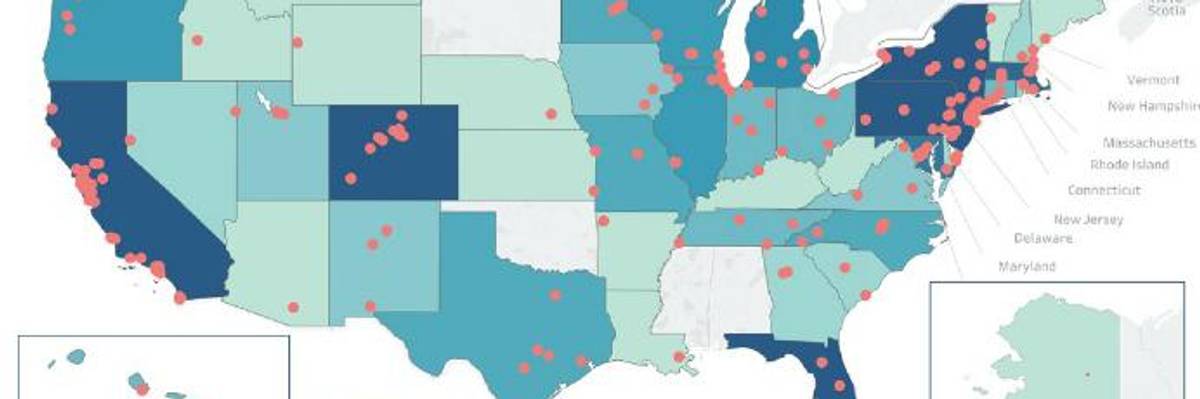
More than 200 mayors from cities across the United States have signed on to a letter opposing the Trump administration's efforts to repeal the Clean Power Plan. (Photo: Climate Mayors)
Citing concerns about the impacts of the climate crisis on communities across the United States, mayors representing more than 51 million Americans have come out against efforts at the nation's top environmental agency to repeal the Clean Power Plan, an Obama administration rule that aimed to cut carbon emissions from power plants.
"No one is insulated from the impacts of climate change--people in cities of all sizes, along with suburban and rural communities are all at risk."
--Climate Mayors
Although many environmentalists have criticized the plan as "woefully inadequate," the Trump administration's attack on it has raised alarm among activists and policymakers alike.
Last March, in a move decried as "terribly irresponsible," President Donald Trump signed an executive order demanding a review of the plan--which has faced challenges in federal court--ahead of its possible repeal. In December, the Environmental Protection Agency (EPA) announced it was seeking public comment for how to replace it.
In a letter addressed to Scott Pruitt, the Trump-appointed EPA administrator, 236 mayors from 47 states wrote, "We strongly oppose the proposed repeal of the Clean Power Plan, which would put our citizens at risk and harm our efforts to address the urgent threat of climate change."
"Communities across the country are experiencing the effects of climate change today: sea level rise; hotter, longer, and more frequent heat waves; increased extreme weather; and many other harmful impacts," they noted. "Residents of our communities have experienced harmful impacts of climate change such as dirtier air, increased heat-related illnesses and deaths, damaged and disappearing coastlines, longer droughts and other strains on water quantity and quality, and increasingly frequent and severe storms and wildfires."
"No one is insulated from the impacts of climate change--people in cities of all sizes, along with suburban and rural communities are all at risk," they continued. "Reducing greenhouse gas emissions is essential to protect our citizens against the worst impacts of climate change."
"Cities are not going to sit on the sidelines while the Trump administration attempts to take away our country's best hope to cut carbon pollution and address climate change."
--Henry Henderson, NRDC
The mayors pointed to research (pdf) illustrating the incredible economic consequences of the climate crisis, and emphasized that while the financial and environmental impacts are felt locally--and mitigation and adaption efforts often occur on a community level--"the legal authority of cities and other municipalities generally extends only as far as their state governments and federal law allow, and as a result, our local efforts to address climate change are highly sensitive to national policies like the Clean Power Plan."
The letter was celebrated by environmentalists such as Henry Henderson at the National Resources Defense Council (NRDC), who wrote: "The mayors' letter reflects the voices of communities across the country that are bearing the worst effects of climate change and are eager for solutions. It shows that cities are not going to sit on the sidelines while the Trump administration attempts to take away our country's best hope to cut carbon pollution and address climate change."
Several of the local leaders who signed on to the letter, organized by the group Climate Mayors, took to Twitter to detail their concerns with the planned repeal:
Dear Common Dreams reader, It’s been nearly 30 years since I co-founded Common Dreams with my late wife, Lina Newhouser. We had the radical notion that journalism should serve the public good, not corporate profits. It was clear to us from the outset what it would take to build such a project. No paid advertisements. No corporate sponsors. No millionaire publisher telling us what to think or do. Many people said we wouldn't last a year, but we proved those doubters wrong. Together with a tremendous team of journalists and dedicated staff, we built an independent media outlet free from the constraints of profits and corporate control. Our mission has always been simple: To inform. To inspire. To ignite change for the common good. Building Common Dreams was not easy. Our survival was never guaranteed. When you take on the most powerful forces—Wall Street greed, fossil fuel industry destruction, Big Tech lobbyists, and uber-rich oligarchs who have spent billions upon billions rigging the economy and democracy in their favor—the only bulwark you have is supporters who believe in your work. But here’s the urgent message from me today. It's never been this bad out there. And it's never been this hard to keep us going. At the very moment Common Dreams is most needed, the threats we face are intensifying. We need your support now more than ever. We don't accept corporate advertising and never will. We don't have a paywall because we don't think people should be blocked from critical news based on their ability to pay. Everything we do is funded by the donations of readers like you. When everyone does the little they can afford, we are strong. But if that support retreats or dries up, so do we. Will you donate now to make sure Common Dreams not only survives but thrives? —Craig Brown, Co-founder |
Citing concerns about the impacts of the climate crisis on communities across the United States, mayors representing more than 51 million Americans have come out against efforts at the nation's top environmental agency to repeal the Clean Power Plan, an Obama administration rule that aimed to cut carbon emissions from power plants.
"No one is insulated from the impacts of climate change--people in cities of all sizes, along with suburban and rural communities are all at risk."
--Climate Mayors
Although many environmentalists have criticized the plan as "woefully inadequate," the Trump administration's attack on it has raised alarm among activists and policymakers alike.
Last March, in a move decried as "terribly irresponsible," President Donald Trump signed an executive order demanding a review of the plan--which has faced challenges in federal court--ahead of its possible repeal. In December, the Environmental Protection Agency (EPA) announced it was seeking public comment for how to replace it.
In a letter addressed to Scott Pruitt, the Trump-appointed EPA administrator, 236 mayors from 47 states wrote, "We strongly oppose the proposed repeal of the Clean Power Plan, which would put our citizens at risk and harm our efforts to address the urgent threat of climate change."
"Communities across the country are experiencing the effects of climate change today: sea level rise; hotter, longer, and more frequent heat waves; increased extreme weather; and many other harmful impacts," they noted. "Residents of our communities have experienced harmful impacts of climate change such as dirtier air, increased heat-related illnesses and deaths, damaged and disappearing coastlines, longer droughts and other strains on water quantity and quality, and increasingly frequent and severe storms and wildfires."
"No one is insulated from the impacts of climate change--people in cities of all sizes, along with suburban and rural communities are all at risk," they continued. "Reducing greenhouse gas emissions is essential to protect our citizens against the worst impacts of climate change."
"Cities are not going to sit on the sidelines while the Trump administration attempts to take away our country's best hope to cut carbon pollution and address climate change."
--Henry Henderson, NRDC
The mayors pointed to research (pdf) illustrating the incredible economic consequences of the climate crisis, and emphasized that while the financial and environmental impacts are felt locally--and mitigation and adaption efforts often occur on a community level--"the legal authority of cities and other municipalities generally extends only as far as their state governments and federal law allow, and as a result, our local efforts to address climate change are highly sensitive to national policies like the Clean Power Plan."
The letter was celebrated by environmentalists such as Henry Henderson at the National Resources Defense Council (NRDC), who wrote: "The mayors' letter reflects the voices of communities across the country that are bearing the worst effects of climate change and are eager for solutions. It shows that cities are not going to sit on the sidelines while the Trump administration attempts to take away our country's best hope to cut carbon pollution and address climate change."
Several of the local leaders who signed on to the letter, organized by the group Climate Mayors, took to Twitter to detail their concerns with the planned repeal:
Citing concerns about the impacts of the climate crisis on communities across the United States, mayors representing more than 51 million Americans have come out against efforts at the nation's top environmental agency to repeal the Clean Power Plan, an Obama administration rule that aimed to cut carbon emissions from power plants.
"No one is insulated from the impacts of climate change--people in cities of all sizes, along with suburban and rural communities are all at risk."
--Climate Mayors
Although many environmentalists have criticized the plan as "woefully inadequate," the Trump administration's attack on it has raised alarm among activists and policymakers alike.
Last March, in a move decried as "terribly irresponsible," President Donald Trump signed an executive order demanding a review of the plan--which has faced challenges in federal court--ahead of its possible repeal. In December, the Environmental Protection Agency (EPA) announced it was seeking public comment for how to replace it.
In a letter addressed to Scott Pruitt, the Trump-appointed EPA administrator, 236 mayors from 47 states wrote, "We strongly oppose the proposed repeal of the Clean Power Plan, which would put our citizens at risk and harm our efforts to address the urgent threat of climate change."
"Communities across the country are experiencing the effects of climate change today: sea level rise; hotter, longer, and more frequent heat waves; increased extreme weather; and many other harmful impacts," they noted. "Residents of our communities have experienced harmful impacts of climate change such as dirtier air, increased heat-related illnesses and deaths, damaged and disappearing coastlines, longer droughts and other strains on water quantity and quality, and increasingly frequent and severe storms and wildfires."
"No one is insulated from the impacts of climate change--people in cities of all sizes, along with suburban and rural communities are all at risk," they continued. "Reducing greenhouse gas emissions is essential to protect our citizens against the worst impacts of climate change."
"Cities are not going to sit on the sidelines while the Trump administration attempts to take away our country's best hope to cut carbon pollution and address climate change."
--Henry Henderson, NRDC
The mayors pointed to research (pdf) illustrating the incredible economic consequences of the climate crisis, and emphasized that while the financial and environmental impacts are felt locally--and mitigation and adaption efforts often occur on a community level--"the legal authority of cities and other municipalities generally extends only as far as their state governments and federal law allow, and as a result, our local efforts to address climate change are highly sensitive to national policies like the Clean Power Plan."
The letter was celebrated by environmentalists such as Henry Henderson at the National Resources Defense Council (NRDC), who wrote: "The mayors' letter reflects the voices of communities across the country that are bearing the worst effects of climate change and are eager for solutions. It shows that cities are not going to sit on the sidelines while the Trump administration attempts to take away our country's best hope to cut carbon pollution and address climate change."
Several of the local leaders who signed on to the letter, organized by the group Climate Mayors, took to Twitter to detail their concerns with the planned repeal: