SUBSCRIBE TO OUR FREE NEWSLETTER
Daily news & progressive opinion—funded by the people, not the corporations—delivered straight to your inbox.
5
#000000
#FFFFFF
To donate by check, phone, or other method, see our More Ways to Give page.
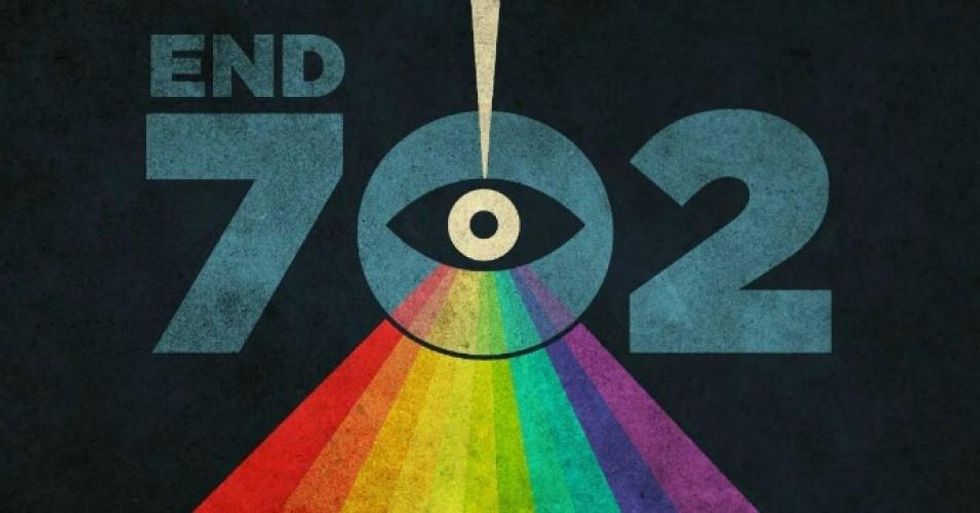
Despite spending much of the last twelve months denouncing the legitimate threat posed by President Donald Trump's penchant for authoritarian policies and behavior, 65 Democrats in the U.S. House of Representatives on Thursday joined with 191 Republicans in passing a bill that advocates of civil liberties warn will lead to the wholesale violation 'of privacy rights for everyone in the United States.'
While the final vote on the FISA Amendments Reauthorization Act of 2017 (or S.139)--which included renewal of the controversial Section 702 which allows government agencies to spy on the emails, text messages, and other electronic communications of Americans and foreigners without a warrant--was 256 to 164 in favor of passage, the partisan breakdown revealed that Republicans in the majority needed a great deal of Democratic support in order to have it pass.
"The House voted today to give President Trump and his administration more spying powers," said Neema Singh Guliani, policy counsel with the ACLU, in a statement following the vote. "The government will use this bill to continue warrantless intrusions into Americans' private emails, text messages, and other communications."
And while "no president should have this power," Guliani continued, "members of Congress just voted to hand it to an administration that has labeled individuals as threats based merely on their religion, nationality, or viewpoints."
Though Democrats have a long history--including under the previous administration of President Barack Obama--of backing mass surveillance and submitting to the demands of U.S. intelligence agencies, critics point out the hard-to-ignore hypocrisy of those who have endlessly warned against Trump's authoritarian tendencies with one hand, while supporting these repressive and anti-democratic surveillance powers with the other. As Trevor Timm, executive director of the Freedom of the Press Foundation, argued in a tweet:
Members of the Democratic Party, Timm elaborated in his NBC News op-ed,
have been all over the airwaves recently accusing Donald Trump of abusing the Justice Department to go after his political enemies--most notably his former opponent Hillary Clinton and the Clinton Foundation, which the Department of Justice is reportedly currently investigating based on allegation made during the 2016 presidential campaign. So you'd think they would oppose handing Donald Trump any more power with which he could potentially use against all sorts of Americans who attract negative attention from his administration.
Yet, with the help of some Democrats, the House of Representatives voted today -- and the Senate will do so sometime in the next week -- to extend a controversial NSA surveillance power that potentially affects millions of Americans' privacy rights.
And journalist Adam Johnson made a similar argument in a series of tweets:
Sandra Fulton, government relations manage for the Free Press Action Fund, said "the last thing Congress should be doing" is renewing a law that allows U.S. intelligence agencies "to continue spying on the communications of people in the United States, forfeiting the essential privacy rights" of every person in the United States. "No government entity should have such oppressive surveillance powers," Fulton said. "This unconstitutional legislation will allow the FBI to continue sifting through the data even when those searches don't involve a specific criminal investigation."
In an email sent to The Intercept's Alex Emmons following the vote, Daniel Schuman, policy director for the progressive group Demand Progress, criticized the party's failure to oppose the bill and bemoaned that a "swing of just 26 Democrats would have defeated the measure."
While Timm expressed gratitute to House Democrats who fought to add critical privacy protections to the bill, an amendment offered by Rep. Justin Amash which was supported by many progressives was defeated:
Meanwhile, Democrats like Rep. Adam Schiff of California, who has aggressively opposed Trump on other fronts, were specifically called out for voting in favor of reauthorization of Section 702:
And journalist Glenn Greenwald, who consistently slammed the provisions of Section 702 and expansive NSA spying powers under Obama, said that its outrageous how Democrats who oppose Trump at nearly every turn would so blithely vote to reauthorize these powers given their repeated and stated concerns about the president.
Despite spending much of the last twelve months denouncing the legitimate threat posed by President Donald Trump's penchant for authoritarian policies and behavior, 65 Democrats in the U.S. House of Representatives on Thursday joined with 191 Republicans in passing a bill that advocates of civil liberties warn will lead to the wholesale violation 'of privacy rights for everyone in the United States.'
While the final vote on the FISA Amendments Reauthorization Act of 2017 (or S.139)--which included renewal of the controversial Section 702 which allows government agencies to spy on the emails, text messages, and other electronic communications of Americans and foreigners without a warrant--was 256 to 164 in favor of passage, the partisan breakdown revealed that Republicans in the majority needed a great deal of Democratic support in order to have it pass.
"The House voted today to give President Trump and his administration more spying powers," said Neema Singh Guliani, policy counsel with the ACLU, in a statement following the vote. "The government will use this bill to continue warrantless intrusions into Americans' private emails, text messages, and other communications."
And while "no president should have this power," Guliani continued, "members of Congress just voted to hand it to an administration that has labeled individuals as threats based merely on their religion, nationality, or viewpoints."
Though Democrats have a long history--including under the previous administration of President Barack Obama--of backing mass surveillance and submitting to the demands of U.S. intelligence agencies, critics point out the hard-to-ignore hypocrisy of those who have endlessly warned against Trump's authoritarian tendencies with one hand, while supporting these repressive and anti-democratic surveillance powers with the other. As Trevor Timm, executive director of the Freedom of the Press Foundation, argued in a tweet:
Members of the Democratic Party, Timm elaborated in his NBC News op-ed,
have been all over the airwaves recently accusing Donald Trump of abusing the Justice Department to go after his political enemies--most notably his former opponent Hillary Clinton and the Clinton Foundation, which the Department of Justice is reportedly currently investigating based on allegation made during the 2016 presidential campaign. So you'd think they would oppose handing Donald Trump any more power with which he could potentially use against all sorts of Americans who attract negative attention from his administration.
Yet, with the help of some Democrats, the House of Representatives voted today -- and the Senate will do so sometime in the next week -- to extend a controversial NSA surveillance power that potentially affects millions of Americans' privacy rights.
And journalist Adam Johnson made a similar argument in a series of tweets:
Sandra Fulton, government relations manage for the Free Press Action Fund, said "the last thing Congress should be doing" is renewing a law that allows U.S. intelligence agencies "to continue spying on the communications of people in the United States, forfeiting the essential privacy rights" of every person in the United States. "No government entity should have such oppressive surveillance powers," Fulton said. "This unconstitutional legislation will allow the FBI to continue sifting through the data even when those searches don't involve a specific criminal investigation."
In an email sent to The Intercept's Alex Emmons following the vote, Daniel Schuman, policy director for the progressive group Demand Progress, criticized the party's failure to oppose the bill and bemoaned that a "swing of just 26 Democrats would have defeated the measure."
While Timm expressed gratitute to House Democrats who fought to add critical privacy protections to the bill, an amendment offered by Rep. Justin Amash which was supported by many progressives was defeated:
Meanwhile, Democrats like Rep. Adam Schiff of California, who has aggressively opposed Trump on other fronts, were specifically called out for voting in favor of reauthorization of Section 702:
And journalist Glenn Greenwald, who consistently slammed the provisions of Section 702 and expansive NSA spying powers under Obama, said that its outrageous how Democrats who oppose Trump at nearly every turn would so blithely vote to reauthorize these powers given their repeated and stated concerns about the president.
Despite spending much of the last twelve months denouncing the legitimate threat posed by President Donald Trump's penchant for authoritarian policies and behavior, 65 Democrats in the U.S. House of Representatives on Thursday joined with 191 Republicans in passing a bill that advocates of civil liberties warn will lead to the wholesale violation 'of privacy rights for everyone in the United States.'
While the final vote on the FISA Amendments Reauthorization Act of 2017 (or S.139)--which included renewal of the controversial Section 702 which allows government agencies to spy on the emails, text messages, and other electronic communications of Americans and foreigners without a warrant--was 256 to 164 in favor of passage, the partisan breakdown revealed that Republicans in the majority needed a great deal of Democratic support in order to have it pass.
"The House voted today to give President Trump and his administration more spying powers," said Neema Singh Guliani, policy counsel with the ACLU, in a statement following the vote. "The government will use this bill to continue warrantless intrusions into Americans' private emails, text messages, and other communications."
And while "no president should have this power," Guliani continued, "members of Congress just voted to hand it to an administration that has labeled individuals as threats based merely on their religion, nationality, or viewpoints."
Though Democrats have a long history--including under the previous administration of President Barack Obama--of backing mass surveillance and submitting to the demands of U.S. intelligence agencies, critics point out the hard-to-ignore hypocrisy of those who have endlessly warned against Trump's authoritarian tendencies with one hand, while supporting these repressive and anti-democratic surveillance powers with the other. As Trevor Timm, executive director of the Freedom of the Press Foundation, argued in a tweet:
Members of the Democratic Party, Timm elaborated in his NBC News op-ed,
have been all over the airwaves recently accusing Donald Trump of abusing the Justice Department to go after his political enemies--most notably his former opponent Hillary Clinton and the Clinton Foundation, which the Department of Justice is reportedly currently investigating based on allegation made during the 2016 presidential campaign. So you'd think they would oppose handing Donald Trump any more power with which he could potentially use against all sorts of Americans who attract negative attention from his administration.
Yet, with the help of some Democrats, the House of Representatives voted today -- and the Senate will do so sometime in the next week -- to extend a controversial NSA surveillance power that potentially affects millions of Americans' privacy rights.
And journalist Adam Johnson made a similar argument in a series of tweets:
Sandra Fulton, government relations manage for the Free Press Action Fund, said "the last thing Congress should be doing" is renewing a law that allows U.S. intelligence agencies "to continue spying on the communications of people in the United States, forfeiting the essential privacy rights" of every person in the United States. "No government entity should have such oppressive surveillance powers," Fulton said. "This unconstitutional legislation will allow the FBI to continue sifting through the data even when those searches don't involve a specific criminal investigation."
In an email sent to The Intercept's Alex Emmons following the vote, Daniel Schuman, policy director for the progressive group Demand Progress, criticized the party's failure to oppose the bill and bemoaned that a "swing of just 26 Democrats would have defeated the measure."
While Timm expressed gratitute to House Democrats who fought to add critical privacy protections to the bill, an amendment offered by Rep. Justin Amash which was supported by many progressives was defeated:
Meanwhile, Democrats like Rep. Adam Schiff of California, who has aggressively opposed Trump on other fronts, were specifically called out for voting in favor of reauthorization of Section 702:
And journalist Glenn Greenwald, who consistently slammed the provisions of Section 702 and expansive NSA spying powers under Obama, said that its outrageous how Democrats who oppose Trump at nearly every turn would so blithely vote to reauthorize these powers given their repeated and stated concerns about the president.