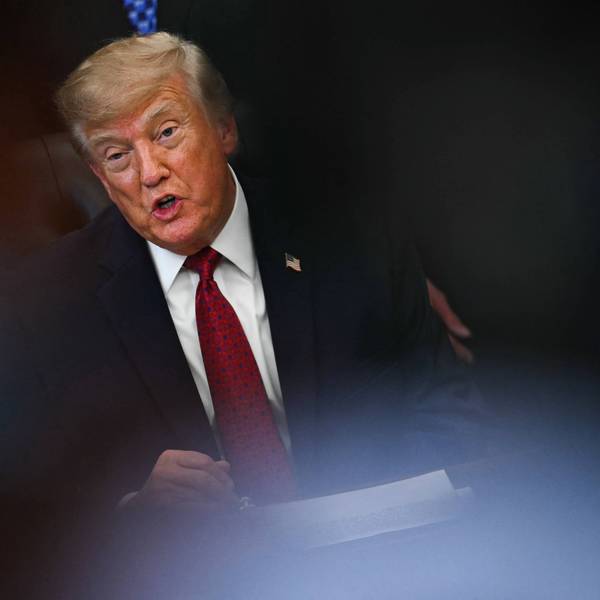
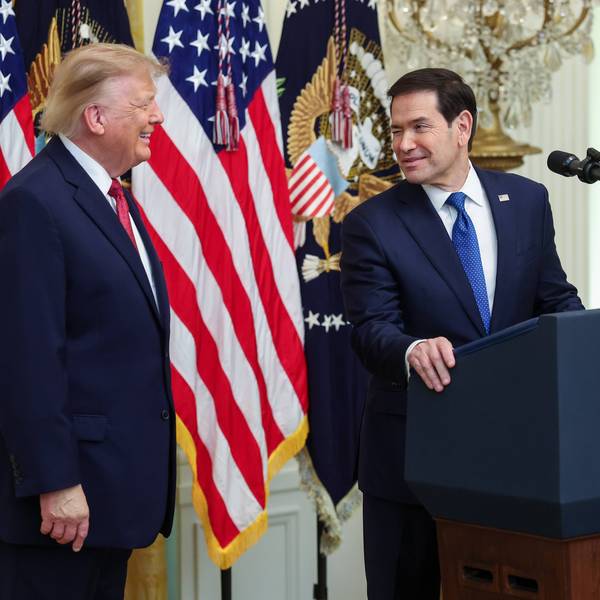
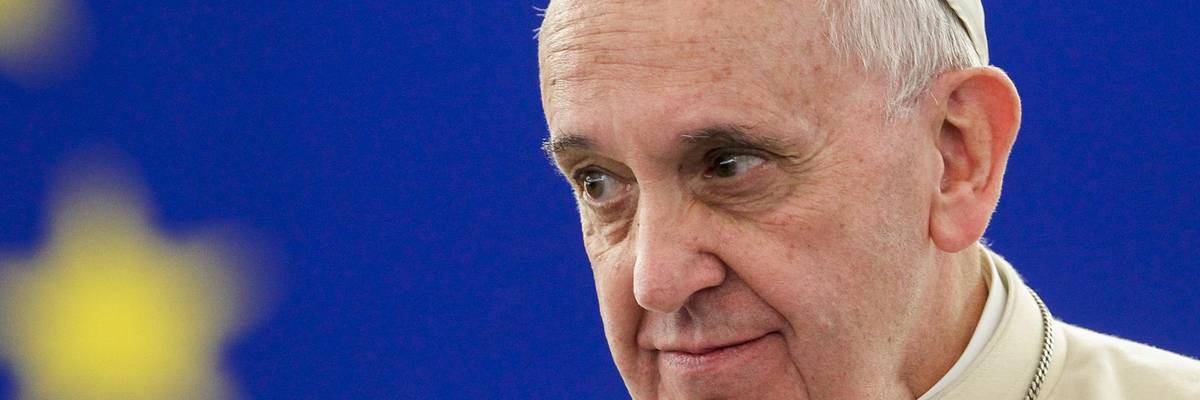
In his Christmas Day address, Pope Francis appealed for peace on behalf of the world's children, especially those living in conflict zones. (Photo: Martin Schulz/Flickr/cc)
Pope Francis Appeals for Peace Amid Conflicts Supported and Inflamed by Trump
"As the winds of war are blowing in our world," Pope makes appeal for an end to conflicts that impact the world's children
With a focus on the impact of war, conflict, and inequality on the world's children, Pope Francis delivered a Christmas Day sermon in Rome's St. Peter's Square on Monday that catalogued a multitude of concerns with policies pushed by President Donald Trump as well as previous U.S. presidents.
The Pope restated his support for a two-state solution to the Israeli-Palestinian conflict, which was inflamed earlier this month by Trump's decision to move the U.S. embassy in Israel from Tel Aviv to Jerusalem--implicitly siding with the Israelis in the decades-long dispute over the ancient city.
Noting that children "suffer because of growing tensions" in the region, he expressed hope that "the will to resume dialogue may prevail between the parties and that a negotiated solution can finally be reached, one that would allow the peaceful coexistence of two states within mutually agreed and internationally recognized borders."
The pontiff's speech came days after the U.S. was left nearly isolated in its stance at the United Nations, with only seven relatively small countries expressing approval of Trump's decision, compared with 128 countries that voted to reject the move and 35 that abstained from voting.
The vote came after threats from Trump and U.N. Ambassador Nikki Haley threatened to pull funding from countries that voted against the U.S.
In addition to the Israeli-Palestinian conflict, Pope Francis made an appeal for peace on behalf of children living in Syria, Yemen, and Iraq, all of which have been engulfed in conflict in recent years.
Civilian deaths have surged under Trump in the U.S. fight against ISIS in Iraq and Syria, while U.S.-backed Saudi airstrikes in Yemen have left the country in a state of chaos, grappling with a cholera epidemic and a state of near-famine for eight million people.
The Pope addressed the plight of refugees all over the world, without directly calling out Trump's ban on travelers from several countries and his pledge to build a wall at the U.S.-Mexico border to keep immigrants out of the country but making a veiled reference to policies that close borders off to refugees.
"Today, as the winds of war are blowing in our world," the Pope told a crowd of worshippers, "Christmas invites us to focus on the sign of the child and to recognize him in the faces of little children, especially those for whom, like Jesus, 'there is no place in the inn.'"
We are at a crossroads
This country and this world are at a monumental crossroads. In a few short weeks, US voters will have an opportunity to beat back the forces of fascism and confront the billionaires who are rigging the economy, our media system, and our democracy, making it increasingly impossible for ordinary people to get by. We’re not just talking about the election. We’re talking about what must be done once these fascist elements are vanquished from power. We need a bolder set of solutions than what either major party has so far been willing to offer and a working-class movement ready to fight like hell for it. Trump didn't emerge from nowhere. The conditions that fueled MAGA authoritarianism were created by decades of radical neoliberal economic policies and a corrupt political system dominated by corporate interests. They slashed taxes on the super-rich, promising that the benefits would trickle down. They said giveaways to the corporate titans would make life more affordable for the rest of us. It was all bullshit. And when a bitter, betrayed populace searches for someone to blame, right-wing demagogues have little trouble finding scapegoats. People know when they're being lied to, but you won't hear any of this from the corporate media. Only independent journalism—powered and funded by people who believe in building a better world—can deliver truly trustworthy daily news. Our Fall Campaign is underway, and we need your help. To power our newsroom through the rest of the year, we need to raise $125,000 by midnight on October 31. So if you share our vision, please contribute whatever you can to sustain our work. |
With a focus on the impact of war, conflict, and inequality on the world's children, Pope Francis delivered a Christmas Day sermon in Rome's St. Peter's Square on Monday that catalogued a multitude of concerns with policies pushed by President Donald Trump as well as previous U.S. presidents.
The Pope restated his support for a two-state solution to the Israeli-Palestinian conflict, which was inflamed earlier this month by Trump's decision to move the U.S. embassy in Israel from Tel Aviv to Jerusalem--implicitly siding with the Israelis in the decades-long dispute over the ancient city.
Noting that children "suffer because of growing tensions" in the region, he expressed hope that "the will to resume dialogue may prevail between the parties and that a negotiated solution can finally be reached, one that would allow the peaceful coexistence of two states within mutually agreed and internationally recognized borders."
The pontiff's speech came days after the U.S. was left nearly isolated in its stance at the United Nations, with only seven relatively small countries expressing approval of Trump's decision, compared with 128 countries that voted to reject the move and 35 that abstained from voting.
The vote came after threats from Trump and U.N. Ambassador Nikki Haley threatened to pull funding from countries that voted against the U.S.
In addition to the Israeli-Palestinian conflict, Pope Francis made an appeal for peace on behalf of children living in Syria, Yemen, and Iraq, all of which have been engulfed in conflict in recent years.
Civilian deaths have surged under Trump in the U.S. fight against ISIS in Iraq and Syria, while U.S.-backed Saudi airstrikes in Yemen have left the country in a state of chaos, grappling with a cholera epidemic and a state of near-famine for eight million people.
The Pope addressed the plight of refugees all over the world, without directly calling out Trump's ban on travelers from several countries and his pledge to build a wall at the U.S.-Mexico border to keep immigrants out of the country but making a veiled reference to policies that close borders off to refugees.
"Today, as the winds of war are blowing in our world," the Pope told a crowd of worshippers, "Christmas invites us to focus on the sign of the child and to recognize him in the faces of little children, especially those for whom, like Jesus, 'there is no place in the inn.'"
With a focus on the impact of war, conflict, and inequality on the world's children, Pope Francis delivered a Christmas Day sermon in Rome's St. Peter's Square on Monday that catalogued a multitude of concerns with policies pushed by President Donald Trump as well as previous U.S. presidents.
The Pope restated his support for a two-state solution to the Israeli-Palestinian conflict, which was inflamed earlier this month by Trump's decision to move the U.S. embassy in Israel from Tel Aviv to Jerusalem--implicitly siding with the Israelis in the decades-long dispute over the ancient city.
Noting that children "suffer because of growing tensions" in the region, he expressed hope that "the will to resume dialogue may prevail between the parties and that a negotiated solution can finally be reached, one that would allow the peaceful coexistence of two states within mutually agreed and internationally recognized borders."
The pontiff's speech came days after the U.S. was left nearly isolated in its stance at the United Nations, with only seven relatively small countries expressing approval of Trump's decision, compared with 128 countries that voted to reject the move and 35 that abstained from voting.
The vote came after threats from Trump and U.N. Ambassador Nikki Haley threatened to pull funding from countries that voted against the U.S.
In addition to the Israeli-Palestinian conflict, Pope Francis made an appeal for peace on behalf of children living in Syria, Yemen, and Iraq, all of which have been engulfed in conflict in recent years.
Civilian deaths have surged under Trump in the U.S. fight against ISIS in Iraq and Syria, while U.S.-backed Saudi airstrikes in Yemen have left the country in a state of chaos, grappling with a cholera epidemic and a state of near-famine for eight million people.
The Pope addressed the plight of refugees all over the world, without directly calling out Trump's ban on travelers from several countries and his pledge to build a wall at the U.S.-Mexico border to keep immigrants out of the country but making a veiled reference to policies that close borders off to refugees.
"Today, as the winds of war are blowing in our world," the Pope told a crowd of worshippers, "Christmas invites us to focus on the sign of the child and to recognize him in the faces of little children, especially those for whom, like Jesus, 'there is no place in the inn.'"