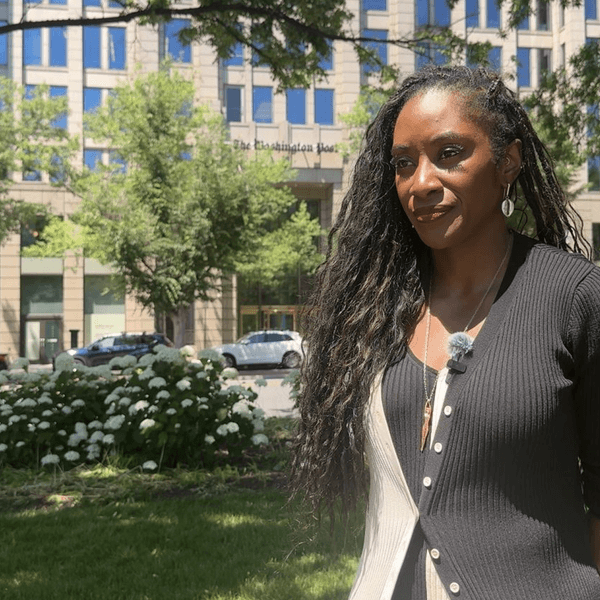
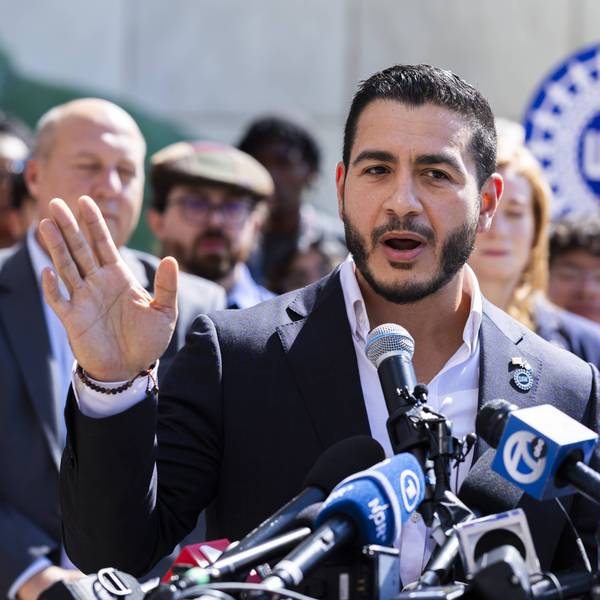
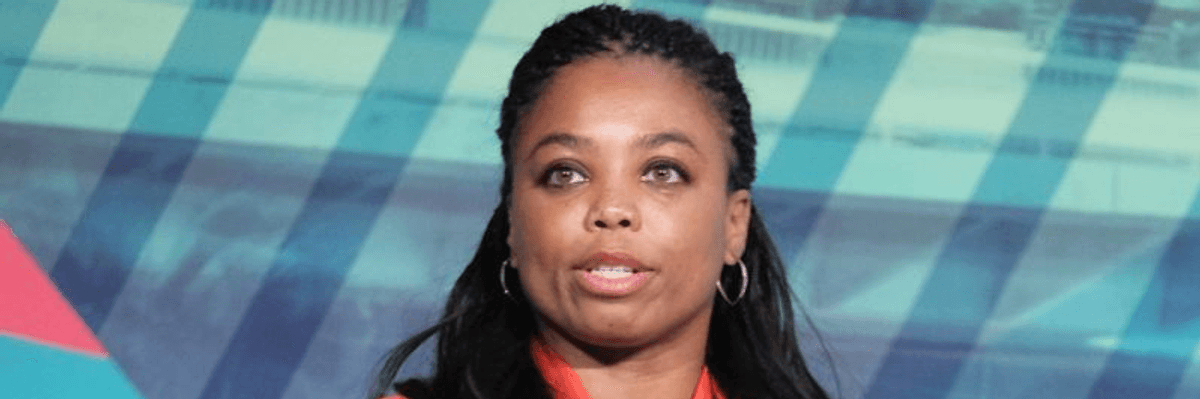
Jemele Hill has spoken out in support of black NFL players who have chosen to kneel during the national anthem, while President Trump has urged team owners to punish them. (Photo: Blavity/Twitter)
ESPN Denounced for 'Despicable Attempt to Silence' Journalist Jemele Hill
"By choosing to ban its reporters' opinions, ESPN is making an explicitly political decision to side with the Trump administration on the wrong side of history."
Fellow journalists, free speech defenders, and racial justice advocates are jumping to the defense of sports anchor Jemele Hill on Tuesday, after she was suspended for two weeks for "a second violation" of ESPN's social media policy.
Hill posted a series of tweets about Dallas Cowboys owner Jerry Jones' demand that his players stand for the national anthem. Jones's move sparked outrage as many NFL players have chosen to kneel during the anthem to draw attention to police brutality and other forms of injustice experienced disproportionately by black Americans.
Rashad Robinson, executive director of the advocacy group Color of Change, slammed ESPN's decision as he called it "a flagrant suppression of Black voices in sports. ESPN is happy to stand with enablers of racism and sexism, but dare speak out against these issues and you're in trouble."
Hill suggested NFL fans who disagree with Jones should show their disapproval by refusing to support his team's sponsors.
Hill previously called President Donald Trump a white supremacist last month. White House Press Secretary Sarah Huckabee Sanders told reporters Hill should be fired for her comments.
While President Donald Trump tweeted an attack on Hill Tuesday morning (blaming her for their ratings, which he incorrectly said have "tanked"), journalist John Nichols was among those who defended Hill's statement as social commentary on the over-arching issue of racial injustice--one that ESPN can't simply ignore when many in the sports world are publicly speaking out against it.
Organizers of the Women's March released a statement in support of Hill:
The suspension of Jemele Hill is a despicable attempt to silence a Black woman speaking out against systematic oppression in this country. This suspension is proof of how deeply entrenched racism is within our institutions.
Jemele's comments to encourage consumers to let advertisers know how they feel, reflect the feelings of many of us. Millions of Americans understand the importance of protecting our first amendment right to free speech and of using this sacred right to express legitimate fear about the current climate of racism and bigotry.
ESPN defended its earlier reprimand of Hill last month by saying the company "is not a political organization" and therefore political statements by reporters aren't appropriate. But as Robinson noted, the network's stance is itself political. "By choosing to ban its reporters' opinions, ESPN is making an explicitly political decision to side with the Trump administration on the wrong side of history," he said.
Others spoke out on social media, with many noting the irony of ESPN holding Hill's social media activity to a standard that the president hasn't met:
An Urgent Message From Our Co-Founder
Dear Common Dreams reader, It’s been nearly 30 years since I co-founded Common Dreams with my late wife, Lina Newhouser. We had the radical notion that journalism should serve the public good, not corporate profits. It was clear to us from the outset what it would take to build such a project. No paid advertisements. No corporate sponsors. No millionaire publisher telling us what to think or do. Many people said we wouldn't last a year, but we proved those doubters wrong. Together with a tremendous team of journalists and dedicated staff, we built an independent media outlet free from the constraints of profits and corporate control. Our mission has always been simple: To inform. To inspire. To ignite change for the common good. Building Common Dreams was not easy. Our survival was never guaranteed. When you take on the most powerful forces—Wall Street greed, fossil fuel industry destruction, Big Tech lobbyists, and uber-rich oligarchs who have spent billions upon billions rigging the economy and democracy in their favor—the only bulwark you have is supporters who believe in your work. But here’s the urgent message from me today. It's never been this bad out there. And it's never been this hard to keep us going. At the very moment Common Dreams is most needed, the threats we face are intensifying. We need your support now more than ever. We don't accept corporate advertising and never will. We don't have a paywall because we don't think people should be blocked from critical news based on their ability to pay. Everything we do is funded by the donations of readers like you. When everyone does the little they can afford, we are strong. But if that support retreats or dries up, so do we. Will you donate now to make sure Common Dreams not only survives but thrives? —Craig Brown, Co-founder |
Fellow journalists, free speech defenders, and racial justice advocates are jumping to the defense of sports anchor Jemele Hill on Tuesday, after she was suspended for two weeks for "a second violation" of ESPN's social media policy.
Hill posted a series of tweets about Dallas Cowboys owner Jerry Jones' demand that his players stand for the national anthem. Jones's move sparked outrage as many NFL players have chosen to kneel during the anthem to draw attention to police brutality and other forms of injustice experienced disproportionately by black Americans.
Rashad Robinson, executive director of the advocacy group Color of Change, slammed ESPN's decision as he called it "a flagrant suppression of Black voices in sports. ESPN is happy to stand with enablers of racism and sexism, but dare speak out against these issues and you're in trouble."
Hill suggested NFL fans who disagree with Jones should show their disapproval by refusing to support his team's sponsors.
Hill previously called President Donald Trump a white supremacist last month. White House Press Secretary Sarah Huckabee Sanders told reporters Hill should be fired for her comments.
While President Donald Trump tweeted an attack on Hill Tuesday morning (blaming her for their ratings, which he incorrectly said have "tanked"), journalist John Nichols was among those who defended Hill's statement as social commentary on the over-arching issue of racial injustice--one that ESPN can't simply ignore when many in the sports world are publicly speaking out against it.
Organizers of the Women's March released a statement in support of Hill:
The suspension of Jemele Hill is a despicable attempt to silence a Black woman speaking out against systematic oppression in this country. This suspension is proof of how deeply entrenched racism is within our institutions.
Jemele's comments to encourage consumers to let advertisers know how they feel, reflect the feelings of many of us. Millions of Americans understand the importance of protecting our first amendment right to free speech and of using this sacred right to express legitimate fear about the current climate of racism and bigotry.
ESPN defended its earlier reprimand of Hill last month by saying the company "is not a political organization" and therefore political statements by reporters aren't appropriate. But as Robinson noted, the network's stance is itself political. "By choosing to ban its reporters' opinions, ESPN is making an explicitly political decision to side with the Trump administration on the wrong side of history," he said.
Others spoke out on social media, with many noting the irony of ESPN holding Hill's social media activity to a standard that the president hasn't met:
Fellow journalists, free speech defenders, and racial justice advocates are jumping to the defense of sports anchor Jemele Hill on Tuesday, after she was suspended for two weeks for "a second violation" of ESPN's social media policy.
Hill posted a series of tweets about Dallas Cowboys owner Jerry Jones' demand that his players stand for the national anthem. Jones's move sparked outrage as many NFL players have chosen to kneel during the anthem to draw attention to police brutality and other forms of injustice experienced disproportionately by black Americans.
Rashad Robinson, executive director of the advocacy group Color of Change, slammed ESPN's decision as he called it "a flagrant suppression of Black voices in sports. ESPN is happy to stand with enablers of racism and sexism, but dare speak out against these issues and you're in trouble."
Hill suggested NFL fans who disagree with Jones should show their disapproval by refusing to support his team's sponsors.
Hill previously called President Donald Trump a white supremacist last month. White House Press Secretary Sarah Huckabee Sanders told reporters Hill should be fired for her comments.
While President Donald Trump tweeted an attack on Hill Tuesday morning (blaming her for their ratings, which he incorrectly said have "tanked"), journalist John Nichols was among those who defended Hill's statement as social commentary on the over-arching issue of racial injustice--one that ESPN can't simply ignore when many in the sports world are publicly speaking out against it.
Organizers of the Women's March released a statement in support of Hill:
The suspension of Jemele Hill is a despicable attempt to silence a Black woman speaking out against systematic oppression in this country. This suspension is proof of how deeply entrenched racism is within our institutions.
Jemele's comments to encourage consumers to let advertisers know how they feel, reflect the feelings of many of us. Millions of Americans understand the importance of protecting our first amendment right to free speech and of using this sacred right to express legitimate fear about the current climate of racism and bigotry.
ESPN defended its earlier reprimand of Hill last month by saying the company "is not a political organization" and therefore political statements by reporters aren't appropriate. But as Robinson noted, the network's stance is itself political. "By choosing to ban its reporters' opinions, ESPN is making an explicitly political decision to side with the Trump administration on the wrong side of history," he said.
Others spoke out on social media, with many noting the irony of ESPN holding Hill's social media activity to a standard that the president hasn't met: