
Witnesses Say US Military Killed Fleeing Yemeni Child in Latest Botched Raid
The Pentagon said last week that there were "no credible indications of civilian casualties" from the latest U.S. Navy SEALs raid on a village in Yemen.
Yet new reporting by The Intercept, citing eyewitness accounts, offers more evidence to contradict the military's claim.
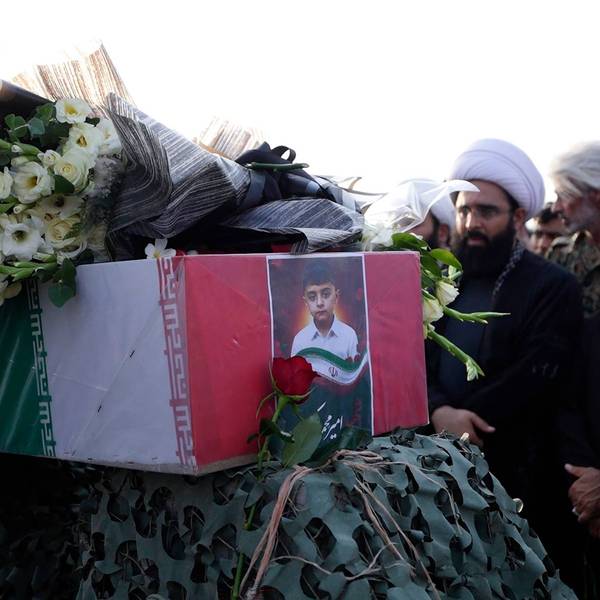
Residents of the village in Mareb province said that there were in fact 10 civilians killed and wounded, including a 15-year old child who was trying to flee a barrage of firing from Apache helicopters.
His name was Abdullah Saeed Salem al Adhal.
His 22-year-old brother, Murad al Adhal, said to the news outlet that he saw "the nearby hills were filled with the American soldiers."
"My little brother Abdullah ran for his life with the other women and children. They killed him as he was running," said Murad, who was also shot in the leg.
Apart from countering U.S. claims about the event, journalist Iona Craig writes, the
eyewitness testimony also raises serious questions about intelligence gathering methods and the ability of decision-makers to determine who is and who is not an Al Qaeda militant amidst Yemen's multifaceted conflict where loyalties are fluid and pragmatically based.
Human rights organization Reprieve has also countered the military's version of events, and identified 70-year-old, partially blind Nasser al-Adhal as among the civilians killed in the May 23 raid. He was shot by U.S. forces as he went to greet the SEALs, believing them to be guests.
"This new flawed raid by President Trump shows the U.S. is not capable of distinguishing a terrorist from an innocent civilian," said Kate Higham, head of the assassinations program at Reprieve, in the wake of the raid.
"President Trump must order an immediate investigation into what went wrong and halt all raids and drone strikes before more innocent Yeminis are killed," she added.
Apart from reeling from two years of war, millions of Yemenis are facing acute hunger and a cholera outbreak. The World Health Organization said Monday that the death toll from that epidemic has claimed 471 lives.
Meanwhile, a handful of U.S. lawmakers is trying to block the sale of $110 billion arms deal with Saudi Arabia, which is leading the coalition fight in Yemen and has been accused of committing war crimes in that conflict.
And in Iraq, another front in the ever-expanding global war on terror, Secretary of Defense James "Mad Dog" Mattis said Sunday the U.S. military will begin to use "annihilation tactics" to defeat Islamic State (ISIS) fighters, adding to CBS's "Face the Nation" that "[c]ivilian casualties are a fact of life in this sort of situation."
We are at a crossroads
This country and this world are at a monumental crossroads. In a few short weeks, US voters will have an opportunity to beat back the forces of fascism and confront the billionaires who are rigging the economy, our media system, and our democracy, making it increasingly impossible for ordinary people to get by. We’re not just talking about the election. We’re talking about what must be done once these fascist elements are vanquished from power. We need a bolder set of solutions than what either major party has so far been willing to offer and a working-class movement ready to fight like hell for it. Trump didn't emerge from nowhere. The conditions that fueled MAGA authoritarianism were created by decades of radical neoliberal economic policies and a corrupt political system dominated by corporate interests. They slashed taxes on the super-rich, promising that the benefits would trickle down. They said giveaways to the corporate titans would make life more affordable for the rest of us. It was all bullshit. And when a bitter, betrayed populace searches for someone to blame, right-wing demagogues have little trouble finding scapegoats. People know when they're being lied to, but you won't hear any of this from the corporate media. Only independent journalism—powered and funded by people who believe in building a better world—can deliver truly trustworthy daily news. Our Fall Campaign is underway, and we need your help. To power our newsroom through the rest of the year, we need to raise $125,000 by midnight on October 31. So if you share our vision, please contribute whatever you can to sustain our work. |
The Pentagon said last week that there were "no credible indications of civilian casualties" from the latest U.S. Navy SEALs raid on a village in Yemen.
Yet new reporting by The Intercept, citing eyewitness accounts, offers more evidence to contradict the military's claim.
Residents of the village in Mareb province said that there were in fact 10 civilians killed and wounded, including a 15-year old child who was trying to flee a barrage of firing from Apache helicopters.
His name was Abdullah Saeed Salem al Adhal.
His 22-year-old brother, Murad al Adhal, said to the news outlet that he saw "the nearby hills were filled with the American soldiers."
"My little brother Abdullah ran for his life with the other women and children. They killed him as he was running," said Murad, who was also shot in the leg.
Apart from countering U.S. claims about the event, journalist Iona Craig writes, the
eyewitness testimony also raises serious questions about intelligence gathering methods and the ability of decision-makers to determine who is and who is not an Al Qaeda militant amidst Yemen's multifaceted conflict where loyalties are fluid and pragmatically based.
Human rights organization Reprieve has also countered the military's version of events, and identified 70-year-old, partially blind Nasser al-Adhal as among the civilians killed in the May 23 raid. He was shot by U.S. forces as he went to greet the SEALs, believing them to be guests.
"This new flawed raid by President Trump shows the U.S. is not capable of distinguishing a terrorist from an innocent civilian," said Kate Higham, head of the assassinations program at Reprieve, in the wake of the raid.
"President Trump must order an immediate investigation into what went wrong and halt all raids and drone strikes before more innocent Yeminis are killed," she added.
Apart from reeling from two years of war, millions of Yemenis are facing acute hunger and a cholera outbreak. The World Health Organization said Monday that the death toll from that epidemic has claimed 471 lives.
Meanwhile, a handful of U.S. lawmakers is trying to block the sale of $110 billion arms deal with Saudi Arabia, which is leading the coalition fight in Yemen and has been accused of committing war crimes in that conflict.
And in Iraq, another front in the ever-expanding global war on terror, Secretary of Defense James "Mad Dog" Mattis said Sunday the U.S. military will begin to use "annihilation tactics" to defeat Islamic State (ISIS) fighters, adding to CBS's "Face the Nation" that "[c]ivilian casualties are a fact of life in this sort of situation."
The Pentagon said last week that there were "no credible indications of civilian casualties" from the latest U.S. Navy SEALs raid on a village in Yemen.
Yet new reporting by The Intercept, citing eyewitness accounts, offers more evidence to contradict the military's claim.
Residents of the village in Mareb province said that there were in fact 10 civilians killed and wounded, including a 15-year old child who was trying to flee a barrage of firing from Apache helicopters.
His name was Abdullah Saeed Salem al Adhal.
His 22-year-old brother, Murad al Adhal, said to the news outlet that he saw "the nearby hills were filled with the American soldiers."
"My little brother Abdullah ran for his life with the other women and children. They killed him as he was running," said Murad, who was also shot in the leg.
Apart from countering U.S. claims about the event, journalist Iona Craig writes, the
eyewitness testimony also raises serious questions about intelligence gathering methods and the ability of decision-makers to determine who is and who is not an Al Qaeda militant amidst Yemen's multifaceted conflict where loyalties are fluid and pragmatically based.
Human rights organization Reprieve has also countered the military's version of events, and identified 70-year-old, partially blind Nasser al-Adhal as among the civilians killed in the May 23 raid. He was shot by U.S. forces as he went to greet the SEALs, believing them to be guests.
"This new flawed raid by President Trump shows the U.S. is not capable of distinguishing a terrorist from an innocent civilian," said Kate Higham, head of the assassinations program at Reprieve, in the wake of the raid.
"President Trump must order an immediate investigation into what went wrong and halt all raids and drone strikes before more innocent Yeminis are killed," she added.
Apart from reeling from two years of war, millions of Yemenis are facing acute hunger and a cholera outbreak. The World Health Organization said Monday that the death toll from that epidemic has claimed 471 lives.
Meanwhile, a handful of U.S. lawmakers is trying to block the sale of $110 billion arms deal with Saudi Arabia, which is leading the coalition fight in Yemen and has been accused of committing war crimes in that conflict.
And in Iraq, another front in the ever-expanding global war on terror, Secretary of Defense James "Mad Dog" Mattis said Sunday the U.S. military will begin to use "annihilation tactics" to defeat Islamic State (ISIS) fighters, adding to CBS's "Face the Nation" that "[c]ivilian casualties are a fact of life in this sort of situation."