SUBSCRIBE TO OUR FREE NEWSLETTER
Daily news & progressive opinion—funded by the people, not the corporations—delivered straight to your inbox.
5
#000000
#FFFFFF
To donate by check, phone, or other method, see our More Ways to Give page.
Daily news & progressive opinion—funded by the people, not the corporations—delivered straight to your inbox.
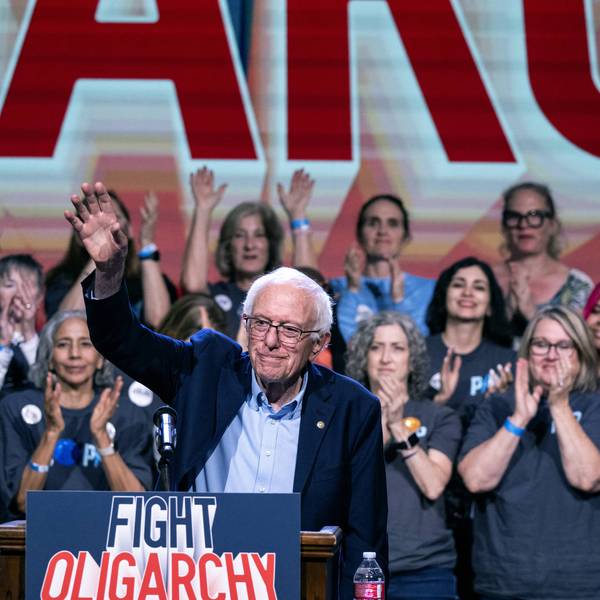
Bernie Sanders spoke to Democratic members of the House of Representatives on Wednesday but was reportedly booed as he attempted to explain that his endorsement of presumptive nominee Hillary Clinton might not fit into an easy timeline and that transforming the nation is about more than one election.
While providing anonymity to all of its sources, Politico reported how "one person inside the room" said there were "boos from lawmakers" while Sanders was addressing questions about endorsing Clinton.
One unnamed "senior Democrat" described being personally frustrated that Sanders used the meeting to talk about the central issues of his historic campaign while refusing to simply say when Clinton would receive his blessing publicly. "It was frustrating because he's squandering the movement he built with a self-obsession that was totally on display," the individual said.
Rep. Gerry Connolly (D-Va.), who was present during the meeting, took issue with the version of events offered by Politico's sources, writing on Twitter:
Sanders also disputed the reporting by Politico, telling CNN's Wolf Blitzer during a midday interview that "by and large the response was pretty good. There were some people who were in disagreement."
Blitzer asked if he heard actual booing. "I don't know," Sanders shrugged in response. There were, he added, "a few people... discontented."
In its reporting, CNN cited three Democrats who said there was "a group of members booing [Sanders] at one point." The news outlet reported:
The vast majority of House Democrats endorsed Clinton's candidacy early in the primary process, but Sanders was invited to attend the weekly meeting as a courtesy extended to all presidential candidates. When Clinton appeared last month, she was applauded and praised for her commitment to help Democrats regain control of Congress this fall.
Many Democrats have been reluctant to publicly criticize Sanders for continuing his campaign because they want to ensure that the supporters he activated through the long primary contest will come out and vote for the Democratic ticket in November.
Strikingly, of the available reporting, only those who requested or received anonymity from journalists reported hearing boos, while all those identified, including Rep. Steny Hoyer (D-Md.) and House Democratic Caucus Chairman Xavier Becerra (D-Calif.), both of whom spoke to CNN, said they did not.
Meanwhile, the Huffington Post offered this account of the contentious portion of the meeting, reporting that things got increasingly "testy" when the "topic turned from policy to politics":
At some point during the question-and-answer session, members began asking Sanders for a timeline for when he would endorse Clinton. Some began chanting the word "timeline." Rep. Sanford Bishop (D-Ga.) was yelling from the back of the room, asking him when he'd endorse.
Sanders repeatedly declined to offer a specific date, which resulted in some booing from the members.
"How do we unite?" asked Rep. Joyce Beatty (D-Ohio), according to the high-ranking aide. "You are the person who has me the most frustrated."
Beatty's office declined to comment, citing the off-the-record rules of the meeting.
Sanders eventually responded that the goal was not to win elections. He paused at this juncture, at which point came the boos. "The goal is to transform America," he said. The Sanders aide said that members in the room applauded at that point.
Leaving the meeting, Sanders spoke briefly to reporters.
"My message was a simple message: We have got to fight for the needs of the middle class and working families of this country," he said. "We got to get people involved in the political process, we got to get a large voter turnout, and if we have a larger voter turnout, Democrats will regain control of the Senate and I believe they're gonna take the House back."
Throughout the rise of his unlikely presidential run, there has been widespread recognition that serious tensions exist between the so-called "Establishment" order of the Democratic Party, represented by Clinton and her backers, and more progressive elements drawn to the vision of the broadly-framed "political revolution" articulated by Sanders.
If the reporting on Wednesday's meeting is an indication, it seems that even as the race winds down and the Democratic National Convention approaches, those tensions may still be a long way from being resolved.
This country and this world are at a monumental crossroads. US voters have an opportunity to beat back the forces of fascism and confront the billionaires who are rigging the economy, our media system, and our democracy, making it increasingly impossible for ordinary people to get by. We’re not just talking about the election. We’re talking about what must be done once these fascist elements are vanquished from power. We need a bolder set of solutions than what either major party has so far been willing to offer and a working-class movement ready to fight like hell for it. Trump didn't emerge from nowhere. The conditions that fueled MAGA authoritarianism were created by decades of radical neoliberal economic policies and a corrupt political system dominated by corporate interests. They slashed taxes on the super-rich, promising that the benefits would trickle down. They said giveaways to the corporate titans would make life more affordable for the rest of us. It was all bullshit. And when a bitter, betrayed populace searches for someone to blame, right-wing demagogues have little trouble finding scapegoats. People know when they're being lied to, but you won't hear any of this from the corporate media. Only independent journalism—powered and funded by people who believe in building a better world—can deliver truly trustworthy daily news. If you share our vision, please contribute whatever you can to sustain our work. |
Bernie Sanders spoke to Democratic members of the House of Representatives on Wednesday but was reportedly booed as he attempted to explain that his endorsement of presumptive nominee Hillary Clinton might not fit into an easy timeline and that transforming the nation is about more than one election.
While providing anonymity to all of its sources, Politico reported how "one person inside the room" said there were "boos from lawmakers" while Sanders was addressing questions about endorsing Clinton.
One unnamed "senior Democrat" described being personally frustrated that Sanders used the meeting to talk about the central issues of his historic campaign while refusing to simply say when Clinton would receive his blessing publicly. "It was frustrating because he's squandering the movement he built with a self-obsession that was totally on display," the individual said.
Rep. Gerry Connolly (D-Va.), who was present during the meeting, took issue with the version of events offered by Politico's sources, writing on Twitter:
Sanders also disputed the reporting by Politico, telling CNN's Wolf Blitzer during a midday interview that "by and large the response was pretty good. There were some people who were in disagreement."
Blitzer asked if he heard actual booing. "I don't know," Sanders shrugged in response. There were, he added, "a few people... discontented."
In its reporting, CNN cited three Democrats who said there was "a group of members booing [Sanders] at one point." The news outlet reported:
The vast majority of House Democrats endorsed Clinton's candidacy early in the primary process, but Sanders was invited to attend the weekly meeting as a courtesy extended to all presidential candidates. When Clinton appeared last month, she was applauded and praised for her commitment to help Democrats regain control of Congress this fall.
Many Democrats have been reluctant to publicly criticize Sanders for continuing his campaign because they want to ensure that the supporters he activated through the long primary contest will come out and vote for the Democratic ticket in November.
Strikingly, of the available reporting, only those who requested or received anonymity from journalists reported hearing boos, while all those identified, including Rep. Steny Hoyer (D-Md.) and House Democratic Caucus Chairman Xavier Becerra (D-Calif.), both of whom spoke to CNN, said they did not.
Meanwhile, the Huffington Post offered this account of the contentious portion of the meeting, reporting that things got increasingly "testy" when the "topic turned from policy to politics":
At some point during the question-and-answer session, members began asking Sanders for a timeline for when he would endorse Clinton. Some began chanting the word "timeline." Rep. Sanford Bishop (D-Ga.) was yelling from the back of the room, asking him when he'd endorse.
Sanders repeatedly declined to offer a specific date, which resulted in some booing from the members.
"How do we unite?" asked Rep. Joyce Beatty (D-Ohio), according to the high-ranking aide. "You are the person who has me the most frustrated."
Beatty's office declined to comment, citing the off-the-record rules of the meeting.
Sanders eventually responded that the goal was not to win elections. He paused at this juncture, at which point came the boos. "The goal is to transform America," he said. The Sanders aide said that members in the room applauded at that point.
Leaving the meeting, Sanders spoke briefly to reporters.
"My message was a simple message: We have got to fight for the needs of the middle class and working families of this country," he said. "We got to get people involved in the political process, we got to get a large voter turnout, and if we have a larger voter turnout, Democrats will regain control of the Senate and I believe they're gonna take the House back."
Throughout the rise of his unlikely presidential run, there has been widespread recognition that serious tensions exist between the so-called "Establishment" order of the Democratic Party, represented by Clinton and her backers, and more progressive elements drawn to the vision of the broadly-framed "political revolution" articulated by Sanders.
If the reporting on Wednesday's meeting is an indication, it seems that even as the race winds down and the Democratic National Convention approaches, those tensions may still be a long way from being resolved.