SUBSCRIBE TO OUR FREE NEWSLETTER
Daily news & progressive opinion—funded by the people, not the corporations—delivered straight to your inbox.
5
#000000
#FFFFFF
To donate by check, phone, or other method, see our More Ways to Give page.
Daily news & progressive opinion—funded by the people, not the corporations—delivered straight to your inbox.
As a "humanitarian crisis that has been largely ignored by the rest of the world" continues to grip the Central African Republic (CAR) on Thursday, new military forces are on their way to intervene, causing some to question the motives when a country with military might sends troops into its resource-rich, former colony.
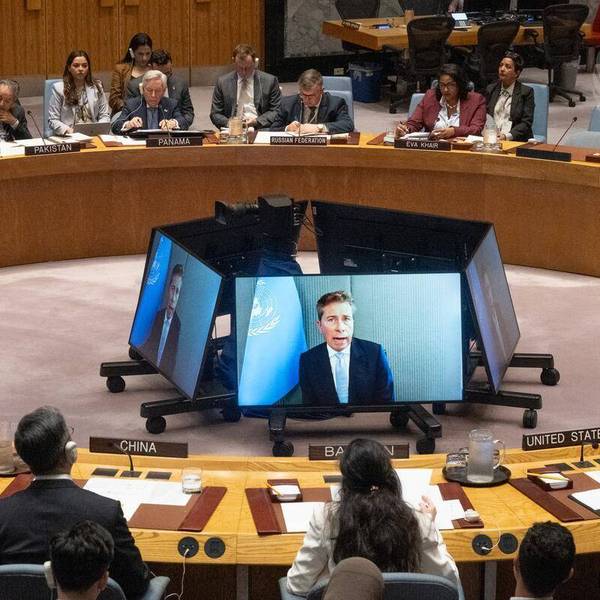
The UN Security Council on Thursday authorized the deployment of African-led and French-backed forces there, the same day clashes in the capital of Bangui left over 100 dead.
The additional troops mean that France is doubling its number of forces there.
Reports about the current situation in the CAR are indeed dire. One AP photographer tweeted, "In 30 years I have rarely seen such scenes of desolation and despair." Over 400,000 people have been displaced, according to the UN, there have been reports of sexual violence, child soldiers and targeted assassinations, and the crisis has been called a "human catastrophe of epic proportions."
"There is a consistent pattern of reprisal attacks after military incursions in the Central African Republic which leaves civilians exposed and in great danger," said Christian Mukosa, Amnesty International's Central Africa expert.
While most reporting on the violence that has rocked the central African nation since a coup in March portrays the root of the problem as sectarian, international studies lecturer Rob Prince says that France's role should not be overlooked, writing that "France has been much more a part of the problem the C.A.R. faces than a part of any solution."
"In the short run, a French or United Nations Security Council-condoned military intervention could temporarily help avoid the current disaster from spinning out of control," Price writes; however, there's much more to the story:
Of course omitted from France's concern about the human rights tragedy unfolding in the Central African Republic is Paris' history - uninterrupted over the past 125 years - of exploiting the country's rich national resources and manipulating the country's political system through the employment of France's Africa holy quartet: intelligence, bribery, special forces intervention, control and manipulation of mercenary forces to undermine any political leader or movement that challenges French corporate interests. Indeed, France's involvement in the C.A.R. is yet another fine example of how "liberty, equality and fraternity" translates into "repression, glaring inequality and ethnic hatred" in France's former African colonies.
[...]
Beneath the surface of France's concern is a new, more militarized posture - under the New Age pretext of humanitarian intervention - to re-militarize its role in Africa that has included its military role in recent times in Libya, Mali, Niger (where its military force has been reinforced) and the C.A.R. The common unspoken denominator in all these cases? Uranium (Mali, Niger, C.A.R.) and oil (Libya). Concerned about the Chinese-U.S. African energy/mineral offensive of the past decade, France is nervous about shoring up its influence on the continent that is one of the key sources of French prosperity: the ongoing, never-ending resource rape of Africa. Few comments could be more disingenuous than French President Francois Hollande explaining the recent French military role in Mali: "We have no vested interests here; this is a humanitarian venture." Is it only a French audience would be fool enough to believe that? It has about the same credibility as George W. Bush (or was it Rumsfeld?) arguing that invading Iraq was "not about oil."
If military intervention is temporarily possible to freeze the violence, France is equally concerned about protecting its vast economic interests in uranium, diamonds, gold rare timber and tobacco which makes the C.A.R. one of France's most valuable African assets, all of which France has extracted - if not downright looted - from the time the region came under French colonial control in the 1890s. Since the country's 1960 independence, France has been much more a part of the problem the C.A.R. faces than a part of any solution. In fact, while nominally independent, the country has remained both economically and politically very much of an informal French Colony and an integral part of a system put in place by Charles De Gaulle at the end of the 1950s which is referred to as "Francafrique."
[...]
If, once again, the C.A.R. is today on the verge of collapse, as in Rwanda, France, through its unbridled greed, unending economic corporate exploitation and profound political cynicism, bears no small amount of the responsibility for the unfolding tragedy there. Having in large measure created the socio-economic conditions, the underlying causes of Central African misery, now France sends in the troops in an effort of damage control. But sending a few thousand soldiers to freeze the political crisis, done in a manner to maximize France's public image can hardly undo the damage of six decades of Francafrique.
__________________
Dear Common Dreams reader, It’s been nearly 30 years since I co-founded Common Dreams with my late wife, Lina Newhouser. We had the radical notion that journalism should serve the public good, not corporate profits. It was clear to us from the outset what it would take to build such a project. No paid advertisements. No corporate sponsors. No millionaire publisher telling us what to think or do. Many people said we wouldn't last a year, but we proved those doubters wrong. Together with a tremendous team of journalists and dedicated staff, we built an independent media outlet free from the constraints of profits and corporate control. Our mission has always been simple: To inform. To inspire. To ignite change for the common good. Building Common Dreams was not easy. Our survival was never guaranteed. When you take on the most powerful forces—Wall Street greed, fossil fuel industry destruction, Big Tech lobbyists, and uber-rich oligarchs who have spent billions upon billions rigging the economy and democracy in their favor—the only bulwark you have is supporters who believe in your work. But here’s the urgent message from me today. It's never been this bad out there. And it's never been this hard to keep us going. At the very moment Common Dreams is most needed, the threats we face are intensifying. We need your support now more than ever. We don't accept corporate advertising and never will. We don't have a paywall because we don't think people should be blocked from critical news based on their ability to pay. Everything we do is funded by the donations of readers like you. When everyone does the little they can afford, we are strong. But if that support retreats or dries up, so do we. Will you donate now to make sure Common Dreams not only survives but thrives? —Craig Brown, Co-founder |
As a "humanitarian crisis that has been largely ignored by the rest of the world" continues to grip the Central African Republic (CAR) on Thursday, new military forces are on their way to intervene, causing some to question the motives when a country with military might sends troops into its resource-rich, former colony.
The UN Security Council on Thursday authorized the deployment of African-led and French-backed forces there, the same day clashes in the capital of Bangui left over 100 dead.
The additional troops mean that France is doubling its number of forces there.
Reports about the current situation in the CAR are indeed dire. One AP photographer tweeted, "In 30 years I have rarely seen such scenes of desolation and despair." Over 400,000 people have been displaced, according to the UN, there have been reports of sexual violence, child soldiers and targeted assassinations, and the crisis has been called a "human catastrophe of epic proportions."
"There is a consistent pattern of reprisal attacks after military incursions in the Central African Republic which leaves civilians exposed and in great danger," said Christian Mukosa, Amnesty International's Central Africa expert.
While most reporting on the violence that has rocked the central African nation since a coup in March portrays the root of the problem as sectarian, international studies lecturer Rob Prince says that France's role should not be overlooked, writing that "France has been much more a part of the problem the C.A.R. faces than a part of any solution."
"In the short run, a French or United Nations Security Council-condoned military intervention could temporarily help avoid the current disaster from spinning out of control," Price writes; however, there's much more to the story:
Of course omitted from France's concern about the human rights tragedy unfolding in the Central African Republic is Paris' history - uninterrupted over the past 125 years - of exploiting the country's rich national resources and manipulating the country's political system through the employment of France's Africa holy quartet: intelligence, bribery, special forces intervention, control and manipulation of mercenary forces to undermine any political leader or movement that challenges French corporate interests. Indeed, France's involvement in the C.A.R. is yet another fine example of how "liberty, equality and fraternity" translates into "repression, glaring inequality and ethnic hatred" in France's former African colonies.
[...]
Beneath the surface of France's concern is a new, more militarized posture - under the New Age pretext of humanitarian intervention - to re-militarize its role in Africa that has included its military role in recent times in Libya, Mali, Niger (where its military force has been reinforced) and the C.A.R. The common unspoken denominator in all these cases? Uranium (Mali, Niger, C.A.R.) and oil (Libya). Concerned about the Chinese-U.S. African energy/mineral offensive of the past decade, France is nervous about shoring up its influence on the continent that is one of the key sources of French prosperity: the ongoing, never-ending resource rape of Africa. Few comments could be more disingenuous than French President Francois Hollande explaining the recent French military role in Mali: "We have no vested interests here; this is a humanitarian venture." Is it only a French audience would be fool enough to believe that? It has about the same credibility as George W. Bush (or was it Rumsfeld?) arguing that invading Iraq was "not about oil."
If military intervention is temporarily possible to freeze the violence, France is equally concerned about protecting its vast economic interests in uranium, diamonds, gold rare timber and tobacco which makes the C.A.R. one of France's most valuable African assets, all of which France has extracted - if not downright looted - from the time the region came under French colonial control in the 1890s. Since the country's 1960 independence, France has been much more a part of the problem the C.A.R. faces than a part of any solution. In fact, while nominally independent, the country has remained both economically and politically very much of an informal French Colony and an integral part of a system put in place by Charles De Gaulle at the end of the 1950s which is referred to as "Francafrique."
[...]
If, once again, the C.A.R. is today on the verge of collapse, as in Rwanda, France, through its unbridled greed, unending economic corporate exploitation and profound political cynicism, bears no small amount of the responsibility for the unfolding tragedy there. Having in large measure created the socio-economic conditions, the underlying causes of Central African misery, now France sends in the troops in an effort of damage control. But sending a few thousand soldiers to freeze the political crisis, done in a manner to maximize France's public image can hardly undo the damage of six decades of Francafrique.
__________________
As a "humanitarian crisis that has been largely ignored by the rest of the world" continues to grip the Central African Republic (CAR) on Thursday, new military forces are on their way to intervene, causing some to question the motives when a country with military might sends troops into its resource-rich, former colony.
The UN Security Council on Thursday authorized the deployment of African-led and French-backed forces there, the same day clashes in the capital of Bangui left over 100 dead.
The additional troops mean that France is doubling its number of forces there.
Reports about the current situation in the CAR are indeed dire. One AP photographer tweeted, "In 30 years I have rarely seen such scenes of desolation and despair." Over 400,000 people have been displaced, according to the UN, there have been reports of sexual violence, child soldiers and targeted assassinations, and the crisis has been called a "human catastrophe of epic proportions."
"There is a consistent pattern of reprisal attacks after military incursions in the Central African Republic which leaves civilians exposed and in great danger," said Christian Mukosa, Amnesty International's Central Africa expert.
While most reporting on the violence that has rocked the central African nation since a coup in March portrays the root of the problem as sectarian, international studies lecturer Rob Prince says that France's role should not be overlooked, writing that "France has been much more a part of the problem the C.A.R. faces than a part of any solution."
"In the short run, a French or United Nations Security Council-condoned military intervention could temporarily help avoid the current disaster from spinning out of control," Price writes; however, there's much more to the story:
Of course omitted from France's concern about the human rights tragedy unfolding in the Central African Republic is Paris' history - uninterrupted over the past 125 years - of exploiting the country's rich national resources and manipulating the country's political system through the employment of France's Africa holy quartet: intelligence, bribery, special forces intervention, control and manipulation of mercenary forces to undermine any political leader or movement that challenges French corporate interests. Indeed, France's involvement in the C.A.R. is yet another fine example of how "liberty, equality and fraternity" translates into "repression, glaring inequality and ethnic hatred" in France's former African colonies.
[...]
Beneath the surface of France's concern is a new, more militarized posture - under the New Age pretext of humanitarian intervention - to re-militarize its role in Africa that has included its military role in recent times in Libya, Mali, Niger (where its military force has been reinforced) and the C.A.R. The common unspoken denominator in all these cases? Uranium (Mali, Niger, C.A.R.) and oil (Libya). Concerned about the Chinese-U.S. African energy/mineral offensive of the past decade, France is nervous about shoring up its influence on the continent that is one of the key sources of French prosperity: the ongoing, never-ending resource rape of Africa. Few comments could be more disingenuous than French President Francois Hollande explaining the recent French military role in Mali: "We have no vested interests here; this is a humanitarian venture." Is it only a French audience would be fool enough to believe that? It has about the same credibility as George W. Bush (or was it Rumsfeld?) arguing that invading Iraq was "not about oil."
If military intervention is temporarily possible to freeze the violence, France is equally concerned about protecting its vast economic interests in uranium, diamonds, gold rare timber and tobacco which makes the C.A.R. one of France's most valuable African assets, all of which France has extracted - if not downright looted - from the time the region came under French colonial control in the 1890s. Since the country's 1960 independence, France has been much more a part of the problem the C.A.R. faces than a part of any solution. In fact, while nominally independent, the country has remained both economically and politically very much of an informal French Colony and an integral part of a system put in place by Charles De Gaulle at the end of the 1950s which is referred to as "Francafrique."
[...]
If, once again, the C.A.R. is today on the verge of collapse, as in Rwanda, France, through its unbridled greed, unending economic corporate exploitation and profound political cynicism, bears no small amount of the responsibility for the unfolding tragedy there. Having in large measure created the socio-economic conditions, the underlying causes of Central African misery, now France sends in the troops in an effort of damage control. But sending a few thousand soldiers to freeze the political crisis, done in a manner to maximize France's public image can hardly undo the damage of six decades of Francafrique.
__________________