SUBSCRIBE TO OUR FREE NEWSLETTER
Daily news & progressive opinion—funded by the people, not the corporations—delivered straight to your inbox.
5
#000000
#FFFFFF
To donate by check, phone, or other method, see our More Ways to Give page.
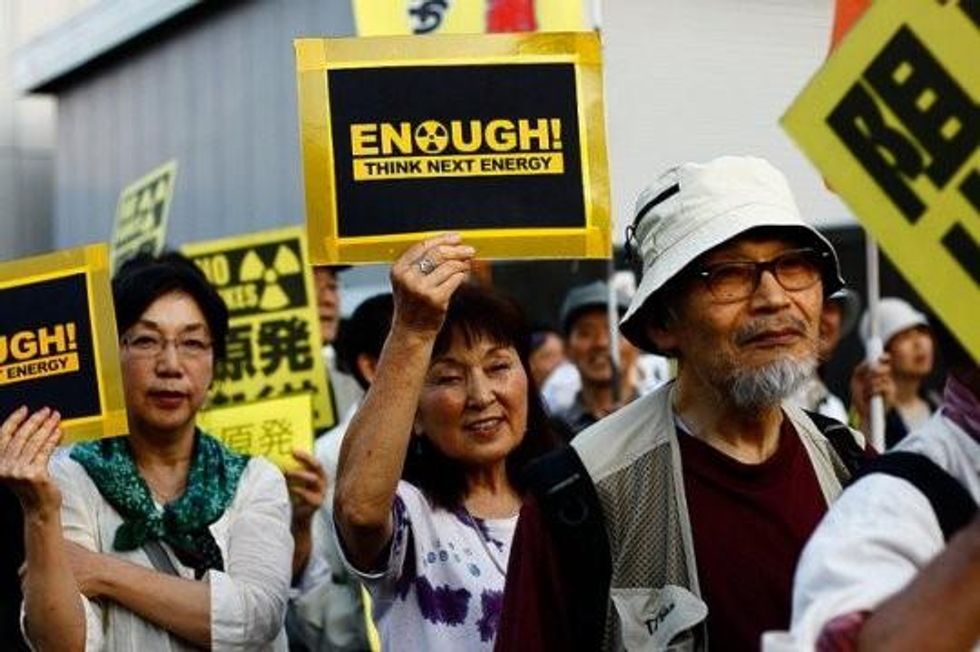
This was the warning given on Monday by Japan's nuclear regulatory body, the Nuclear Regulatory Authority (NRA), describing the radioactive water seeping into the ocean from the crisis-stricken Fukushima nuclear plant.
The emergency shows "why you can't just leave it up to [plant operator] TEPCO alone," Shinji Kinjo, head of an NRA task force, told Reuters.
Kinjo slammed TEPCO, which created a "temporary solution" of an underground barrier to stop water contamination, for having a "sense of crisis [that] is weak." That underground barrier has been breached, allowing the radioactive water to be released, and could accelerate the flow of radioactive discharge from the plant into the ocean.
In July, TEPCO admitted for the first time that contaminated groundwater was leaking from the Fukushima plant into the ocean, and on Sunday gave its first estimate to the public on the amount of radioactive tritium that has leaked into the ocean since the disaster began in March of 2011.
NRA chief Shunichi Tanaka told reporters earlier last month, however, that his agency 'strongly suspected' that Fukushima was leaking radioactivity into the ocean and has been for two years.
Last month, former head of the US Nuclear Regulatory Commission Dale Klein was among other foreign nuclear experts at a panel in Tokyo blasting TEPCO's handling of the crisis including cover-ups of the extent of the damage. "These actions indicate that you (TEPCO) don't know what you are doing," he said. "You do not have a plan and that you are not doing all you can to protect the environment and the people."
_____________________
This was the warning given on Monday by Japan's nuclear regulatory body, the Nuclear Regulatory Authority (NRA), describing the radioactive water seeping into the ocean from the crisis-stricken Fukushima nuclear plant.
The emergency shows "why you can't just leave it up to [plant operator] TEPCO alone," Shinji Kinjo, head of an NRA task force, told Reuters.
Kinjo slammed TEPCO, which created a "temporary solution" of an underground barrier to stop water contamination, for having a "sense of crisis [that] is weak." That underground barrier has been breached, allowing the radioactive water to be released, and could accelerate the flow of radioactive discharge from the plant into the ocean.
In July, TEPCO admitted for the first time that contaminated groundwater was leaking from the Fukushima plant into the ocean, and on Sunday gave its first estimate to the public on the amount of radioactive tritium that has leaked into the ocean since the disaster began in March of 2011.
NRA chief Shunichi Tanaka told reporters earlier last month, however, that his agency 'strongly suspected' that Fukushima was leaking radioactivity into the ocean and has been for two years.
Last month, former head of the US Nuclear Regulatory Commission Dale Klein was among other foreign nuclear experts at a panel in Tokyo blasting TEPCO's handling of the crisis including cover-ups of the extent of the damage. "These actions indicate that you (TEPCO) don't know what you are doing," he said. "You do not have a plan and that you are not doing all you can to protect the environment and the people."
_____________________
This was the warning given on Monday by Japan's nuclear regulatory body, the Nuclear Regulatory Authority (NRA), describing the radioactive water seeping into the ocean from the crisis-stricken Fukushima nuclear plant.
The emergency shows "why you can't just leave it up to [plant operator] TEPCO alone," Shinji Kinjo, head of an NRA task force, told Reuters.
Kinjo slammed TEPCO, which created a "temporary solution" of an underground barrier to stop water contamination, for having a "sense of crisis [that] is weak." That underground barrier has been breached, allowing the radioactive water to be released, and could accelerate the flow of radioactive discharge from the plant into the ocean.
In July, TEPCO admitted for the first time that contaminated groundwater was leaking from the Fukushima plant into the ocean, and on Sunday gave its first estimate to the public on the amount of radioactive tritium that has leaked into the ocean since the disaster began in March of 2011.
NRA chief Shunichi Tanaka told reporters earlier last month, however, that his agency 'strongly suspected' that Fukushima was leaking radioactivity into the ocean and has been for two years.
Last month, former head of the US Nuclear Regulatory Commission Dale Klein was among other foreign nuclear experts at a panel in Tokyo blasting TEPCO's handling of the crisis including cover-ups of the extent of the damage. "These actions indicate that you (TEPCO) don't know what you are doing," he said. "You do not have a plan and that you are not doing all you can to protect the environment and the people."
_____________________