
On Tuesday, small scale farmers and their allies around the world observed the International Day of Peasant's Struggle, by organizing more than 250 actions and manifestations all over the globe.
The international small-farmers movement -- driven by the grassroots network La Via Campesina, which represents nearly two million small-scale growers --mobilized this year, according to its website, "to oppose the current offensive by some states and large corporations at international level to grab land from the farmers, women and men, who have been cultivating it for centuries. Small farmers' demand is simple: they need access to land to grow food for their communities. When land is grabbed by transnational companies, huge monoculture plantations for export are developed. This only leads to increased hunger, social unrest and environmental devastation, including the current climate chaos."
In Honduras, thousands of landless farmworkers occupied 30,000 acres (12,000 hectares) of land across the country to mark the day and as a result of a longstanding feud with private landowners. Unarmed and committed to non-violence, the farmworkers, according to the Associated Press, say the seized territory is "arable public land that small farmers have the legal right to grow crops under Honduran law." Land disputes between small farmers and landlords in Honduras has led to dozens of deaths among farmworkers in recent years.
Mabel Marquez of Via Campesina's Honduras chapter said that peasants "want to avoid any type of confrontation" and are open to dialogue with government officials, according to the Americas Quarterly, which also reported: "Hours after 1,500 farmers seized land belonging to Compania Azucarera Hondurena, S.A. in the northern Cortes department, police had already begun evictions. Other land seizures occurred simultaneously in the Yoro, Santa Barbara, Intibuca, Comayagua, Francisco Morazan, El Paraiso, and Choluteca departments."
* * *
Associated Press: Several thousand Honduran farmworkers occupy land
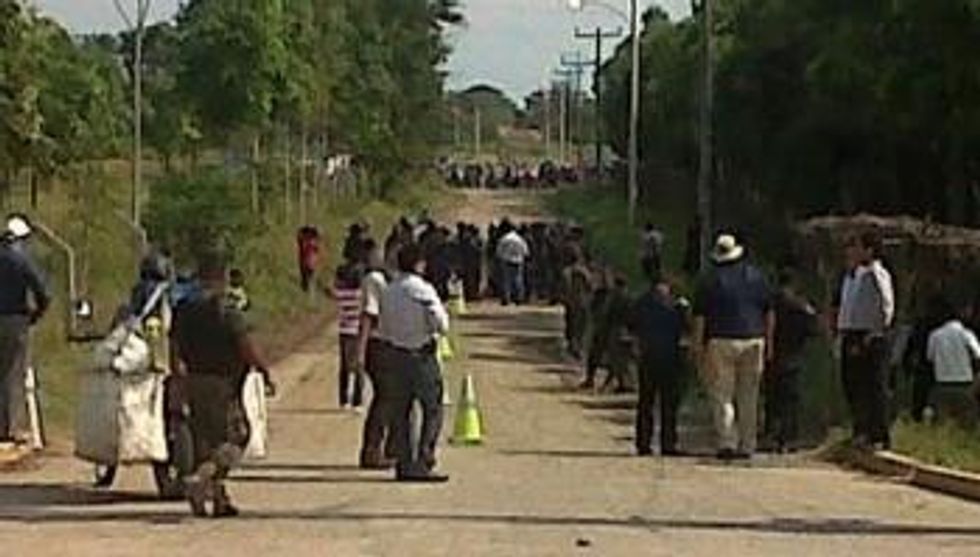
Several thousand farmworkers occupied 30,000 acres (12,000 hectares) of land across Honduras as part of a dispute with large landowners and the government, activists and officials said Wednesday.
Police and soldiers read an eviction notice later in the day and roughly 1,500 farmworkers peacefully left a large sugar plantation near San Pedro Sula. But at least 10 other farms were still occupied Wednesday night, said Mabel Marquez, spokeswoman for activist group Via Campesina.
"We expected the eviction from the San Manuel plantation because of the magnitude of the action and we are analyzing what will come next, but we still have at least 10 occupations that remain," Marquez said.
She said that the largest land occupation was at the 6,000 acres (2,500 hectare) San Manuel plantation on the Caribbean coast. The movement also took possession of several farms on the outskirts of the capital, Tegucigalpa, and in the provinces of Cortes, Yoro, Santa Barbara, Intibuca, Choluteca, Camayagua and Francisco Morazan.
Activists say the seized territory is arable public land that small farmers have the legal right to grow crops under Honduran law. The large landowners who have been farming the land say they bought it legally from the government. A land dispute between small farmers and landlords in the northern Aguan Valley has led to dozens of deaths among farmworkers in recent years.
"We want to avoid any type of confrontation," Marquez said earlier Wednesday, adding that the farmworkers were unarmed and used no force.
Activists said they were seeking meetings with government officials to open a national dialogue on land disputes, make clear that the lands were public property and that the farmworkers shouldn't be dislodged. According to United Nations figures, 53 percent of Hondurans live in the countryside and, according to the Economic Commission for Latin America, the residents of 72 percent of rural homes are below the poverty line.
* * *
Americas Quarterly: Honduran Farmers Stage Nationwide Land Seizure
Though Wednesday's confrontations between farmers and law enforcement remained relatively peaceful, many previous land disputes have ended in violence. Tension over land has run high in Honduras for decades, as half the population lives outside of the cities and 72 percent of rural households live in poverty. Fifty-five farmers, farm security guards and policemen have died in land-related conflicts over the past two years alone.
* * *
La Via Campesina: on the International Day of Peasant's Struggle
The international farmers movement La Via Campesina is [mobilized] this year to oppose the current offensive by some states and large corporations at international level to grab land from the farmers, women and men, who have been cultivating it for centuries. Small farmers' demand is simple: they need access to land to grow food for their communities. When land is grabbed by transnational companies, huge monoculture plantations for export are developed. This only leads to increased hunger, social unrest andenvironmental devastation, including the current climate chaos. [...]
"In the run up to the Rio+20 Earth Summit, farmers and supporters of the food sovereignty and agroecology movement are now actively opposing the "greening of capitalism" that is now promoted at the international level. We believe that land, water, seeds and all natural resources should be used by small farmers to protect them and feed to world, and not by transnational corporations to make profit," said Henry Saragih, general coordinator of la Via Campesina.
# # #
On Tuesday, small scale farmers and their allies around the world observed the International Day of Peasant's Struggle, by organizing more than 250 actions and manifestations all over the globe.
The international small-farmers movement -- driven by the grassroots network La Via Campesina, which represents nearly two million small-scale growers --mobilized this year, according to its website, "to oppose the current offensive by some states and large corporations at international level to grab land from the farmers, women and men, who have been cultivating it for centuries. Small farmers' demand is simple: they need access to land to grow food for their communities. When land is grabbed by transnational companies, huge monoculture plantations for export are developed. This only leads to increased hunger, social unrest and environmental devastation, including the current climate chaos."
In Honduras, thousands of landless farmworkers occupied 30,000 acres (12,000 hectares) of land across the country to mark the day and as a result of a longstanding feud with private landowners. Unarmed and committed to non-violence, the farmworkers, according to the Associated Press, say the seized territory is "arable public land that small farmers have the legal right to grow crops under Honduran law." Land disputes between small farmers and landlords in Honduras has led to dozens of deaths among farmworkers in recent years.
Mabel Marquez of Via Campesina's Honduras chapter said that peasants "want to avoid any type of confrontation" and are open to dialogue with government officials, according to the Americas Quarterly, which also reported: "Hours after 1,500 farmers seized land belonging to Compania Azucarera Hondurena, S.A. in the northern Cortes department, police had already begun evictions. Other land seizures occurred simultaneously in the Yoro, Santa Barbara, Intibuca, Comayagua, Francisco Morazan, El Paraiso, and Choluteca departments."
* * *
Associated Press: Several thousand Honduran farmworkers occupy land
Several thousand farmworkers occupied 30,000 acres (12,000 hectares) of land across Honduras as part of a dispute with large landowners and the government, activists and officials said Wednesday.
Police and soldiers read an eviction notice later in the day and roughly 1,500 farmworkers peacefully left a large sugar plantation near San Pedro Sula. But at least 10 other farms were still occupied Wednesday night, said Mabel Marquez, spokeswoman for activist group Via Campesina.
"We expected the eviction from the San Manuel plantation because of the magnitude of the action and we are analyzing what will come next, but we still have at least 10 occupations that remain," Marquez said.
She said that the largest land occupation was at the 6,000 acres (2,500 hectare) San Manuel plantation on the Caribbean coast. The movement also took possession of several farms on the outskirts of the capital, Tegucigalpa, and in the provinces of Cortes, Yoro, Santa Barbara, Intibuca, Choluteca, Camayagua and Francisco Morazan.
Activists say the seized territory is arable public land that small farmers have the legal right to grow crops under Honduran law. The large landowners who have been farming the land say they bought it legally from the government. A land dispute between small farmers and landlords in the northern Aguan Valley has led to dozens of deaths among farmworkers in recent years.
"We want to avoid any type of confrontation," Marquez said earlier Wednesday, adding that the farmworkers were unarmed and used no force.
Activists said they were seeking meetings with government officials to open a national dialogue on land disputes, make clear that the lands were public property and that the farmworkers shouldn't be dislodged. According to United Nations figures, 53 percent of Hondurans live in the countryside and, according to the Economic Commission for Latin America, the residents of 72 percent of rural homes are below the poverty line.
* * *
Americas Quarterly: Honduran Farmers Stage Nationwide Land Seizure
Though Wednesday's confrontations between farmers and law enforcement remained relatively peaceful, many previous land disputes have ended in violence. Tension over land has run high in Honduras for decades, as half the population lives outside of the cities and 72 percent of rural households live in poverty. Fifty-five farmers, farm security guards and policemen have died in land-related conflicts over the past two years alone.
* * *
La Via Campesina: on the International Day of Peasant's Struggle
The international farmers movement La Via Campesina is [mobilized] this year to oppose the current offensive by some states and large corporations at international level to grab land from the farmers, women and men, who have been cultivating it for centuries. Small farmers' demand is simple: they need access to land to grow food for their communities. When land is grabbed by transnational companies, huge monoculture plantations for export are developed. This only leads to increased hunger, social unrest andenvironmental devastation, including the current climate chaos. [...]
"In the run up to the Rio+20 Earth Summit, farmers and supporters of the food sovereignty and agroecology movement are now actively opposing the "greening of capitalism" that is now promoted at the international level. We believe that land, water, seeds and all natural resources should be used by small farmers to protect them and feed to world, and not by transnational corporations to make profit," said Henry Saragih, general coordinator of la Via Campesina.
# # #
On Tuesday, small scale farmers and their allies around the world observed the International Day of Peasant's Struggle, by organizing more than 250 actions and manifestations all over the globe.
The international small-farmers movement -- driven by the grassroots network La Via Campesina, which represents nearly two million small-scale growers --mobilized this year, according to its website, "to oppose the current offensive by some states and large corporations at international level to grab land from the farmers, women and men, who have been cultivating it for centuries. Small farmers' demand is simple: they need access to land to grow food for their communities. When land is grabbed by transnational companies, huge monoculture plantations for export are developed. This only leads to increased hunger, social unrest and environmental devastation, including the current climate chaos."
In Honduras, thousands of landless farmworkers occupied 30,000 acres (12,000 hectares) of land across the country to mark the day and as a result of a longstanding feud with private landowners. Unarmed and committed to non-violence, the farmworkers, according to the Associated Press, say the seized territory is "arable public land that small farmers have the legal right to grow crops under Honduran law." Land disputes between small farmers and landlords in Honduras has led to dozens of deaths among farmworkers in recent years.
Mabel Marquez of Via Campesina's Honduras chapter said that peasants "want to avoid any type of confrontation" and are open to dialogue with government officials, according to the Americas Quarterly, which also reported: "Hours after 1,500 farmers seized land belonging to Compania Azucarera Hondurena, S.A. in the northern Cortes department, police had already begun evictions. Other land seizures occurred simultaneously in the Yoro, Santa Barbara, Intibuca, Comayagua, Francisco Morazan, El Paraiso, and Choluteca departments."
* * *
Associated Press: Several thousand Honduran farmworkers occupy land
Several thousand farmworkers occupied 30,000 acres (12,000 hectares) of land across Honduras as part of a dispute with large landowners and the government, activists and officials said Wednesday.
Police and soldiers read an eviction notice later in the day and roughly 1,500 farmworkers peacefully left a large sugar plantation near San Pedro Sula. But at least 10 other farms were still occupied Wednesday night, said Mabel Marquez, spokeswoman for activist group Via Campesina.
"We expected the eviction from the San Manuel plantation because of the magnitude of the action and we are analyzing what will come next, but we still have at least 10 occupations that remain," Marquez said.
She said that the largest land occupation was at the 6,000 acres (2,500 hectare) San Manuel plantation on the Caribbean coast. The movement also took possession of several farms on the outskirts of the capital, Tegucigalpa, and in the provinces of Cortes, Yoro, Santa Barbara, Intibuca, Choluteca, Camayagua and Francisco Morazan.
Activists say the seized territory is arable public land that small farmers have the legal right to grow crops under Honduran law. The large landowners who have been farming the land say they bought it legally from the government. A land dispute between small farmers and landlords in the northern Aguan Valley has led to dozens of deaths among farmworkers in recent years.
"We want to avoid any type of confrontation," Marquez said earlier Wednesday, adding that the farmworkers were unarmed and used no force.
Activists said they were seeking meetings with government officials to open a national dialogue on land disputes, make clear that the lands were public property and that the farmworkers shouldn't be dislodged. According to United Nations figures, 53 percent of Hondurans live in the countryside and, according to the Economic Commission for Latin America, the residents of 72 percent of rural homes are below the poverty line.
* * *
Americas Quarterly: Honduran Farmers Stage Nationwide Land Seizure
Though Wednesday's confrontations between farmers and law enforcement remained relatively peaceful, many previous land disputes have ended in violence. Tension over land has run high in Honduras for decades, as half the population lives outside of the cities and 72 percent of rural households live in poverty. Fifty-five farmers, farm security guards and policemen have died in land-related conflicts over the past two years alone.
* * *
La Via Campesina: on the International Day of Peasant's Struggle
The international farmers movement La Via Campesina is [mobilized] this year to oppose the current offensive by some states and large corporations at international level to grab land from the farmers, women and men, who have been cultivating it for centuries. Small farmers' demand is simple: they need access to land to grow food for their communities. When land is grabbed by transnational companies, huge monoculture plantations for export are developed. This only leads to increased hunger, social unrest andenvironmental devastation, including the current climate chaos. [...]
"In the run up to the Rio+20 Earth Summit, farmers and supporters of the food sovereignty and agroecology movement are now actively opposing the "greening of capitalism" that is now promoted at the international level. We believe that land, water, seeds and all natural resources should be used by small farmers to protect them and feed to world, and not by transnational corporations to make profit," said Henry Saragih, general coordinator of la Via Campesina.
# # #