SUBSCRIBE TO OUR FREE NEWSLETTER
Daily news & progressive opinion—funded by the people, not the corporations—delivered straight to your inbox.
5
#000000
#FFFFFF
To donate by check, phone, or other method, see our More Ways to Give page.
Daily news & progressive opinion—funded by the people, not the corporations—delivered straight to your inbox.
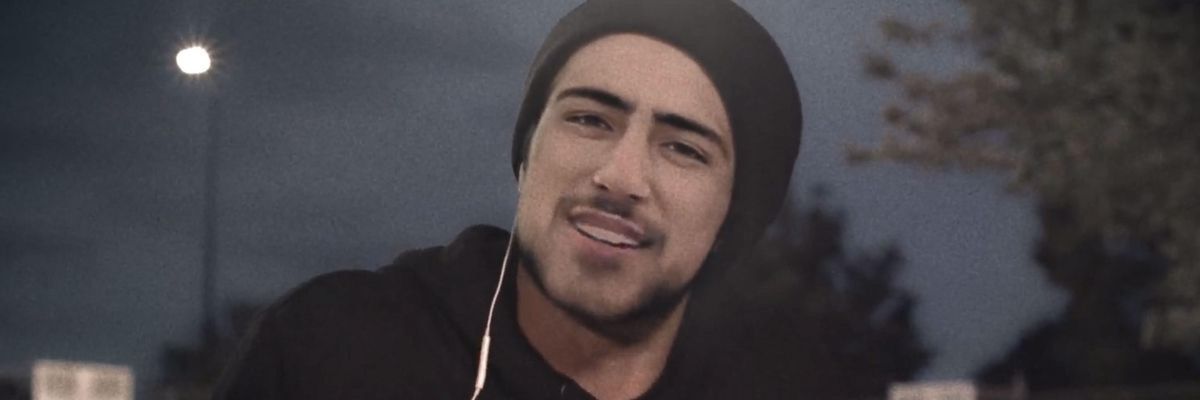
Video image of Joaquin 'Guac' Oliver, brought back to haunting life with Artificial Intelligence, imploring us to, "Vote (or it could now be fight) for me, 'cause I can't."
In furious tribute to the anniversary of the murder of his son Joaquin and 16 others in the Parkland, FL school massacre, Manuel Oliver just scaled a soaring construction crane near the White House to remind its occupant 45,000 people, still and all, had "died of gun violence on your watch." "Today Guac is with me," he said of a huge banner he hung, "making (his) own statement." In a video last year, Guac also spoke - literally, hauntingly, virtually via AI technology - with the same message. "Yo, it's me, it's Guac," he said. "People are still getting killed...We've got to end this."
In furious tribute to this week's anniversary of the murder of his 17-year-old son Joaquin and 16 others in one of this country's worst mass school shootings, Manuel Oliver scaled a towering construction crane across from the White House to remind its occupant that 45,000 people, still and all, had "died of gun violence on your watch." Oliver's action on Monday came exactly four years after a gunman killed 14 students and three staff, and injured 17 more, at Marjory Stoneman Douglas High in Parkland, Florida. It also came as Sandy Hook families finally won some accountability from the gunmaker who killed 20 of their children, and as the financially floundering but still-sociopathic NRA continue to fight even modest limits on their power to kill innocents - offering proof, one more infuriating time, the filibuster has to go. In 2018, in the wake of the Parkland massacre, then-Gov. Rick Scott signed a bill calling for what advocates called "baby steps" toward sensible gun reform: raising the minimum age to buy a gun from 18 to 21, imposing a three-day waiting period for the purchase, and banning bump stocks that turn standard firearms into automatic weapons, like the one the sick kid used in Parkland to mow down 17 people in six minutes. In its enduring, obscene zeal, the NRA sued to block the bill, charging that making any aspiring young mass murderer wait till he's 21 to shoot up a school violates his vital 2nd Amendment rights; legal arguments on that unholy stance begin in March.
Meanwhile, the families of young people senselessly, ceaselessly killed continue to feel the anguish of their loss daily, and most piercingly at times like this. Fred Guttenberg, who like Oliver has become a national gun reform advocate, lost his 14-year-old daughter Jamie that day in 2018 when her "voice was silenced." To mark the date, he posted a searing series of "what ifs" that "for the past 4 years, I find myself asking...every minute of every day." "Dear Jamie," he began, going on to wonder what if she'd been home sick that day, or if a shooter hadn't turned up. "What if every day now, my day still began by telling you how much I love you in person or on the phone, not telling you while sitting at your graveside?" he wrote. "What if the last thought in my head every day was not your FINAL seconds and wondering did you suffer? What if I did not have to go to bed every day hoping that you died instantly, out of fear that if you did not, that means you did suffer?" Most bitterly, he laments that America has yet to prioritize life over profit, to understand gun violence is a primal, deadly public health issue: "What if we could all agree on a way to move America forward to being a society where we can again send our kids to school without active shooter drills or fears of being shot, or to a movie, or to a mall, or to a place of worship? What if we could all agree that we owe it to our kids to be better than this, and to change course NOW."
Manuel and Patricia Oliver, the Venezuelan parents of Joaquin, or 'Guac', have likewise steadfastly labored toward that change; says Patricia, "He left us this legacy." "I lost my son. My son did not lose his father," notes Manuel, who's determined the "guy who wanted to change the world" be "an activist, not a victim...This is an obligation we have as parents." Along with regularly decrying the armed crazy and working with groups like Guns Down America and March for Our Lives, they started the non-profit Change the Ref, which fosters "nonviolent creative confrontation" to lay bare the grisly effects and lifelong grief of victims' families, expose and reduce the influence of the NRA, and "empower our future leaders." Its ultimate goal: "To give the young generation of survivors and victims a disrupting voice to help lead the way to change - a more peaceful future." Among its programs are public art projects - Manuel is an artist - like the jarring Museum of Incomplete, which uses artifacts of gun victims' lives to document what they left behind - journals, drawings, books, dreams cut short. For Joaquin, they contributed his basketball shoes to mark "the season he never finished, the life he never lived." Joaquin dreamed of his team, coached by Manuel, winning a championship; following his death, they finally did, and dedicated their season to him.
And on the fourth anniversary of his son's murder, Manuel climbed a 150-foot crane in the early, gusty morning - "A father's job never ends" - so "the whole world will listen to Joaquin today." Atop D.C., in goggles and hard hat, he unfurled a massive banner with Guac's image to remind Joe Biden of his unrealized vow to enact gun reform; since then, 45,000 people have died on his watch. In a wind-whipped video declaring "Guac is with me," Manuel said he visited D.C. in December asking to see Biden. "I never got that meeting, so now I'm back with Joaquin," he said. "Happy Valentine's." On the ground, police gathered near a Guac-adorned sign that read, "Peaceful action in progress. It's just my dad helping me make a statement. Sorry for the inconvenience." Once Manuel descended, he was arrested. Later, he called the arrest and perilous climb "a little sacrifice - it was nothing" compared to over 200,000 gun deaths since his son's. He also announced a new campaign, Shock Market, to track gun deaths still averaging a horrific 100 a day; its first goal is for Biden to deliver a gun-control plan in next month's State of the Union speech. The project, as always, seeks to "keep Joaquin next to us on this fight." In 2020, Joaquin was also there - literally, hauntingly, harrowingly brought back to virtual llife via AI technology, asking viewers right before what would have been his first election and a key chance to make change to "vote for me, 'cause I can't." The eerily life-like Guac apparaition was "very hard to watch for us to watch, said Patricia. Still, she beseeched, "Please listen to what our son has to say."
"Yo, it's me. It's Guac. I've been gone for two years and nothing's changed, bro. People are still getting killed by guns. Everyone knows it, but they don't do anything. I'm tired of waiting for someone to fix it...We've got to end this." - Joaquin Oliver in Unfinished Votes.
Dear Common Dreams reader, It’s been nearly 30 years since I co-founded Common Dreams with my late wife, Lina Newhouser. We had the radical notion that journalism should serve the public good, not corporate profits. It was clear to us from the outset what it would take to build such a project. No paid advertisements. No corporate sponsors. No millionaire publisher telling us what to think or do. Many people said we wouldn't last a year, but we proved those doubters wrong. Together with a tremendous team of journalists and dedicated staff, we built an independent media outlet free from the constraints of profits and corporate control. Our mission has always been simple: To inform. To inspire. To ignite change for the common good. Building Common Dreams was not easy. Our survival was never guaranteed. When you take on the most powerful forces—Wall Street greed, fossil fuel industry destruction, Big Tech lobbyists, and uber-rich oligarchs who have spent billions upon billions rigging the economy and democracy in their favor—the only bulwark you have is supporters who believe in your work. But here’s the urgent message from me today. It's never been this bad out there. And it's never been this hard to keep us going. At the very moment Common Dreams is most needed, the threats we face are intensifying. We need your support now more than ever. We don't accept corporate advertising and never will. We don't have a paywall because we don't think people should be blocked from critical news based on their ability to pay. Everything we do is funded by the donations of readers like you. When everyone does the little they can afford, we are strong. But if that support retreats or dries up, so do we. Will you donate now to make sure Common Dreams not only survives but thrives? —Craig Brown, Co-founder |
In furious tribute to this week's anniversary of the murder of his 17-year-old son Joaquin and 16 others in one of this country's worst mass school shootings, Manuel Oliver scaled a towering construction crane across from the White House to remind its occupant that 45,000 people, still and all, had "died of gun violence on your watch." Oliver's action on Monday came exactly four years after a gunman killed 14 students and three staff, and injured 17 more, at Marjory Stoneman Douglas High in Parkland, Florida. It also came as Sandy Hook families finally won some accountability from the gunmaker who killed 20 of their children, and as the financially floundering but still-sociopathic NRA continue to fight even modest limits on their power to kill innocents - offering proof, one more infuriating time, the filibuster has to go. In 2018, in the wake of the Parkland massacre, then-Gov. Rick Scott signed a bill calling for what advocates called "baby steps" toward sensible gun reform: raising the minimum age to buy a gun from 18 to 21, imposing a three-day waiting period for the purchase, and banning bump stocks that turn standard firearms into automatic weapons, like the one the sick kid used in Parkland to mow down 17 people in six minutes. In its enduring, obscene zeal, the NRA sued to block the bill, charging that making any aspiring young mass murderer wait till he's 21 to shoot up a school violates his vital 2nd Amendment rights; legal arguments on that unholy stance begin in March.
Meanwhile, the families of young people senselessly, ceaselessly killed continue to feel the anguish of their loss daily, and most piercingly at times like this. Fred Guttenberg, who like Oliver has become a national gun reform advocate, lost his 14-year-old daughter Jamie that day in 2018 when her "voice was silenced." To mark the date, he posted a searing series of "what ifs" that "for the past 4 years, I find myself asking...every minute of every day." "Dear Jamie," he began, going on to wonder what if she'd been home sick that day, or if a shooter hadn't turned up. "What if every day now, my day still began by telling you how much I love you in person or on the phone, not telling you while sitting at your graveside?" he wrote. "What if the last thought in my head every day was not your FINAL seconds and wondering did you suffer? What if I did not have to go to bed every day hoping that you died instantly, out of fear that if you did not, that means you did suffer?" Most bitterly, he laments that America has yet to prioritize life over profit, to understand gun violence is a primal, deadly public health issue: "What if we could all agree on a way to move America forward to being a society where we can again send our kids to school without active shooter drills or fears of being shot, or to a movie, or to a mall, or to a place of worship? What if we could all agree that we owe it to our kids to be better than this, and to change course NOW."
Manuel and Patricia Oliver, the Venezuelan parents of Joaquin, or 'Guac', have likewise steadfastly labored toward that change; says Patricia, "He left us this legacy." "I lost my son. My son did not lose his father," notes Manuel, who's determined the "guy who wanted to change the world" be "an activist, not a victim...This is an obligation we have as parents." Along with regularly decrying the armed crazy and working with groups like Guns Down America and March for Our Lives, they started the non-profit Change the Ref, which fosters "nonviolent creative confrontation" to lay bare the grisly effects and lifelong grief of victims' families, expose and reduce the influence of the NRA, and "empower our future leaders." Its ultimate goal: "To give the young generation of survivors and victims a disrupting voice to help lead the way to change - a more peaceful future." Among its programs are public art projects - Manuel is an artist - like the jarring Museum of Incomplete, which uses artifacts of gun victims' lives to document what they left behind - journals, drawings, books, dreams cut short. For Joaquin, they contributed his basketball shoes to mark "the season he never finished, the life he never lived." Joaquin dreamed of his team, coached by Manuel, winning a championship; following his death, they finally did, and dedicated their season to him.
And on the fourth anniversary of his son's murder, Manuel climbed a 150-foot crane in the early, gusty morning - "A father's job never ends" - so "the whole world will listen to Joaquin today." Atop D.C., in goggles and hard hat, he unfurled a massive banner with Guac's image to remind Joe Biden of his unrealized vow to enact gun reform; since then, 45,000 people have died on his watch. In a wind-whipped video declaring "Guac is with me," Manuel said he visited D.C. in December asking to see Biden. "I never got that meeting, so now I'm back with Joaquin," he said. "Happy Valentine's." On the ground, police gathered near a Guac-adorned sign that read, "Peaceful action in progress. It's just my dad helping me make a statement. Sorry for the inconvenience." Once Manuel descended, he was arrested. Later, he called the arrest and perilous climb "a little sacrifice - it was nothing" compared to over 200,000 gun deaths since his son's. He also announced a new campaign, Shock Market, to track gun deaths still averaging a horrific 100 a day; its first goal is for Biden to deliver a gun-control plan in next month's State of the Union speech. The project, as always, seeks to "keep Joaquin next to us on this fight." In 2020, Joaquin was also there - literally, hauntingly, harrowingly brought back to virtual llife via AI technology, asking viewers right before what would have been his first election and a key chance to make change to "vote for me, 'cause I can't." The eerily life-like Guac apparaition was "very hard to watch for us to watch, said Patricia. Still, she beseeched, "Please listen to what our son has to say."
"Yo, it's me. It's Guac. I've been gone for two years and nothing's changed, bro. People are still getting killed by guns. Everyone knows it, but they don't do anything. I'm tired of waiting for someone to fix it...We've got to end this." - Joaquin Oliver in Unfinished Votes.
In furious tribute to this week's anniversary of the murder of his 17-year-old son Joaquin and 16 others in one of this country's worst mass school shootings, Manuel Oliver scaled a towering construction crane across from the White House to remind its occupant that 45,000 people, still and all, had "died of gun violence on your watch." Oliver's action on Monday came exactly four years after a gunman killed 14 students and three staff, and injured 17 more, at Marjory Stoneman Douglas High in Parkland, Florida. It also came as Sandy Hook families finally won some accountability from the gunmaker who killed 20 of their children, and as the financially floundering but still-sociopathic NRA continue to fight even modest limits on their power to kill innocents - offering proof, one more infuriating time, the filibuster has to go. In 2018, in the wake of the Parkland massacre, then-Gov. Rick Scott signed a bill calling for what advocates called "baby steps" toward sensible gun reform: raising the minimum age to buy a gun from 18 to 21, imposing a three-day waiting period for the purchase, and banning bump stocks that turn standard firearms into automatic weapons, like the one the sick kid used in Parkland to mow down 17 people in six minutes. In its enduring, obscene zeal, the NRA sued to block the bill, charging that making any aspiring young mass murderer wait till he's 21 to shoot up a school violates his vital 2nd Amendment rights; legal arguments on that unholy stance begin in March.
Meanwhile, the families of young people senselessly, ceaselessly killed continue to feel the anguish of their loss daily, and most piercingly at times like this. Fred Guttenberg, who like Oliver has become a national gun reform advocate, lost his 14-year-old daughter Jamie that day in 2018 when her "voice was silenced." To mark the date, he posted a searing series of "what ifs" that "for the past 4 years, I find myself asking...every minute of every day." "Dear Jamie," he began, going on to wonder what if she'd been home sick that day, or if a shooter hadn't turned up. "What if every day now, my day still began by telling you how much I love you in person or on the phone, not telling you while sitting at your graveside?" he wrote. "What if the last thought in my head every day was not your FINAL seconds and wondering did you suffer? What if I did not have to go to bed every day hoping that you died instantly, out of fear that if you did not, that means you did suffer?" Most bitterly, he laments that America has yet to prioritize life over profit, to understand gun violence is a primal, deadly public health issue: "What if we could all agree on a way to move America forward to being a society where we can again send our kids to school without active shooter drills or fears of being shot, or to a movie, or to a mall, or to a place of worship? What if we could all agree that we owe it to our kids to be better than this, and to change course NOW."
Manuel and Patricia Oliver, the Venezuelan parents of Joaquin, or 'Guac', have likewise steadfastly labored toward that change; says Patricia, "He left us this legacy." "I lost my son. My son did not lose his father," notes Manuel, who's determined the "guy who wanted to change the world" be "an activist, not a victim...This is an obligation we have as parents." Along with regularly decrying the armed crazy and working with groups like Guns Down America and March for Our Lives, they started the non-profit Change the Ref, which fosters "nonviolent creative confrontation" to lay bare the grisly effects and lifelong grief of victims' families, expose and reduce the influence of the NRA, and "empower our future leaders." Its ultimate goal: "To give the young generation of survivors and victims a disrupting voice to help lead the way to change - a more peaceful future." Among its programs are public art projects - Manuel is an artist - like the jarring Museum of Incomplete, which uses artifacts of gun victims' lives to document what they left behind - journals, drawings, books, dreams cut short. For Joaquin, they contributed his basketball shoes to mark "the season he never finished, the life he never lived." Joaquin dreamed of his team, coached by Manuel, winning a championship; following his death, they finally did, and dedicated their season to him.
And on the fourth anniversary of his son's murder, Manuel climbed a 150-foot crane in the early, gusty morning - "A father's job never ends" - so "the whole world will listen to Joaquin today." Atop D.C., in goggles and hard hat, he unfurled a massive banner with Guac's image to remind Joe Biden of his unrealized vow to enact gun reform; since then, 45,000 people have died on his watch. In a wind-whipped video declaring "Guac is with me," Manuel said he visited D.C. in December asking to see Biden. "I never got that meeting, so now I'm back with Joaquin," he said. "Happy Valentine's." On the ground, police gathered near a Guac-adorned sign that read, "Peaceful action in progress. It's just my dad helping me make a statement. Sorry for the inconvenience." Once Manuel descended, he was arrested. Later, he called the arrest and perilous climb "a little sacrifice - it was nothing" compared to over 200,000 gun deaths since his son's. He also announced a new campaign, Shock Market, to track gun deaths still averaging a horrific 100 a day; its first goal is for Biden to deliver a gun-control plan in next month's State of the Union speech. The project, as always, seeks to "keep Joaquin next to us on this fight." In 2020, Joaquin was also there - literally, hauntingly, harrowingly brought back to virtual llife via AI technology, asking viewers right before what would have been his first election and a key chance to make change to "vote for me, 'cause I can't." The eerily life-like Guac apparaition was "very hard to watch for us to watch, said Patricia. Still, she beseeched, "Please listen to what our son has to say."
"Yo, it's me. It's Guac. I've been gone for two years and nothing's changed, bro. People are still getting killed by guns. Everyone knows it, but they don't do anything. I'm tired of waiting for someone to fix it...We've got to end this." - Joaquin Oliver in Unfinished Votes.