

5
#000000
#FFFFFF
To donate by check, phone, or other method, see our More Ways to Give page.
Daily news & progressive opinion—funded by the people, not the corporations—delivered straight to your inbox.

Republicans' cuts to Medicaid and their refusal to extend enhanced Affordable Care Act subsidies are key factors in the coverage drop.
Independent healthcare analyst Charles Gaba on Thursday published an updated analysis estimating that up to 12 million Americans have lost their insurance coverage since the start of President Donald Trump's second term.
Gaba based his new estimate on updated data he compiled from recent reports for Medicare, Medicaid, and the Children's Health Insurance Program (CHIP), as well as some state enrollment data for Affordable Care Act (ACA) insurance exchanges.
In total, Gaba found that enrollment in Medicaid and CHIP has dropped by 6.2 million people since the start of Trump's second term, while enrollment in ACA exchanges is down by anywhere from 4.6 million to 6.1 million people, and enrollment in Basic Health Plans (BHP) is down by nearly 275,000 people over the same period.
While there are around 1.8 million more people enrolled in Medicare now than there were at the start of Trump's term, Gaba noted that this isn't nearly enough to make up for the loss of enrollment in other programs.
Adding everything up, Gaba estimated that "between 10.88 million and 12.40 million fewer Americans enrolled in a public healthcare coverage program as of June 2026 than in were as of January 2025."
As in prior analyses, Gaba examined the possibility that some of the people who lost coverage through these programs transitioned to employer-sponsored insurance, but deemed it "extremely unlikely... since unemployment is higher than it was in January 2025."
Over the last two years, Trump and congressional Republicans have taken a number of actions that have made healthcare less affordable and pushed people off coverage.
First, they cut spending on Medicaid by an estimated $900 billion over a 10-year period when they enacted the One Big Beautiful Bill Act in 2025. The Congressional Budget Office projects these cuts will leave more than 10 million fewer people enrolled in the program by 2034.
GOP lawmakers last year also refused to extend enhanced subsidies for insurance plans purchased through the ACA, even as insurers raised premiums on those plans by an average of 26% this year, according to an analysis published by KFF.
In a Thursday article published by Time, scholars Neale Mahoney and Abigail Sanchez of the Stanford Institute for Economic Research warned that the costs of private health insurance are set to spike even further in 2027.
"Employer health plan costs are projected to rise 8 to 10% next year," Mahoney and Sanchez explained, "the largest increase in more than 20 years and double the average increase of the 2010s."
The two researchers said there are three major reasons for the surge in insurance costs: The expiration of the enhanced ACA subsidies, an increase in premiums and out-of-pocket costs for employer-based insurance plans, and the upcoming Medicaid work requirements projected to push millions of people off the program.
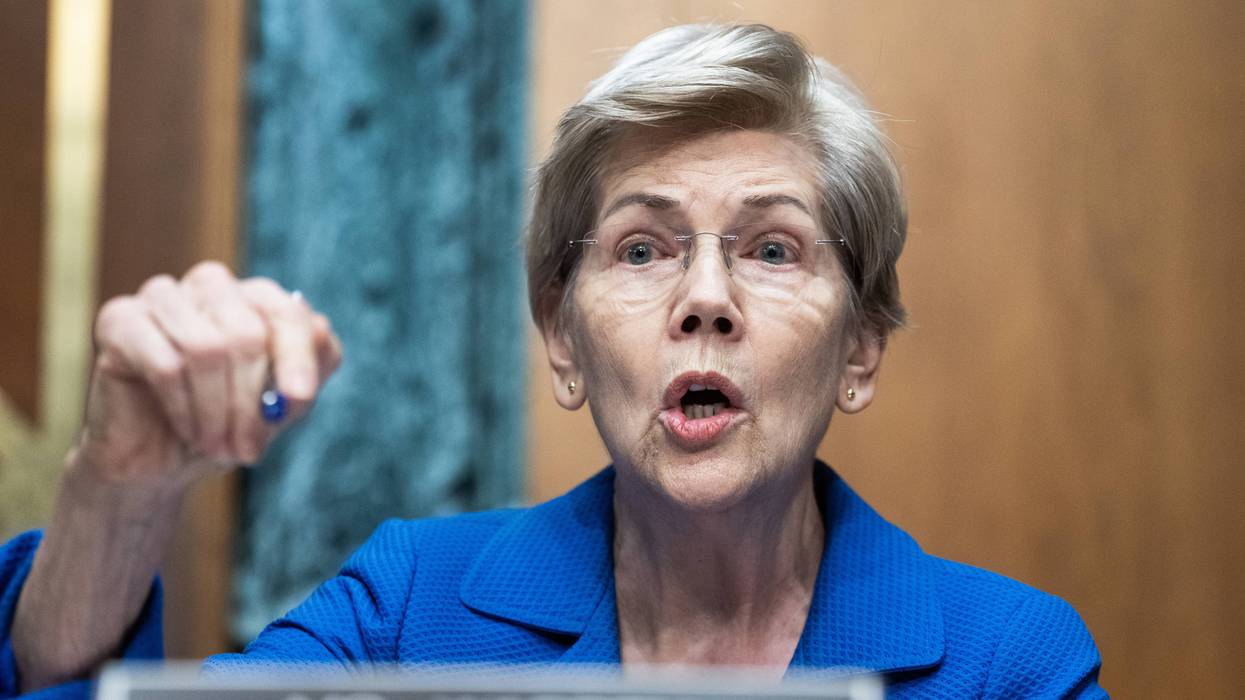
"Donald Trump promised to lower costs on day one. Instead, he has spent his presidency creating an affordability crisis, and now he's calling his self-made crisis a hoax."
With the US midterm elections just weeks away and control of Congress up for grabs, the top Democrat on the Senate Banking, Housing, and Urban Affairs Committee on Wednesday released a tool tracking inflation under Republican President Donald Trump.
"Donald Trump promised to lower costs on day one. Instead, he has spent his presidency creating an affordability crisis, and now he's calling his self-made crisis a hoax," said Ranking Member Elizabeth Warren (D-Mass.) in a statement. "The Trumpflation Tracker will show families across the country exactly how much of a price they are paying for Trump's and Republicans' failed economic agenda."
The tracker shows not only cumulative inflation since December 2024, the month before Trump returned to office—it's up 5.2%— but also limited job growth during his second term, the impact of his broken promise to cap credit card interest rates, falling wages since he launched an illegal war on Iran in February, mortgage rate increases, and rising household debt.
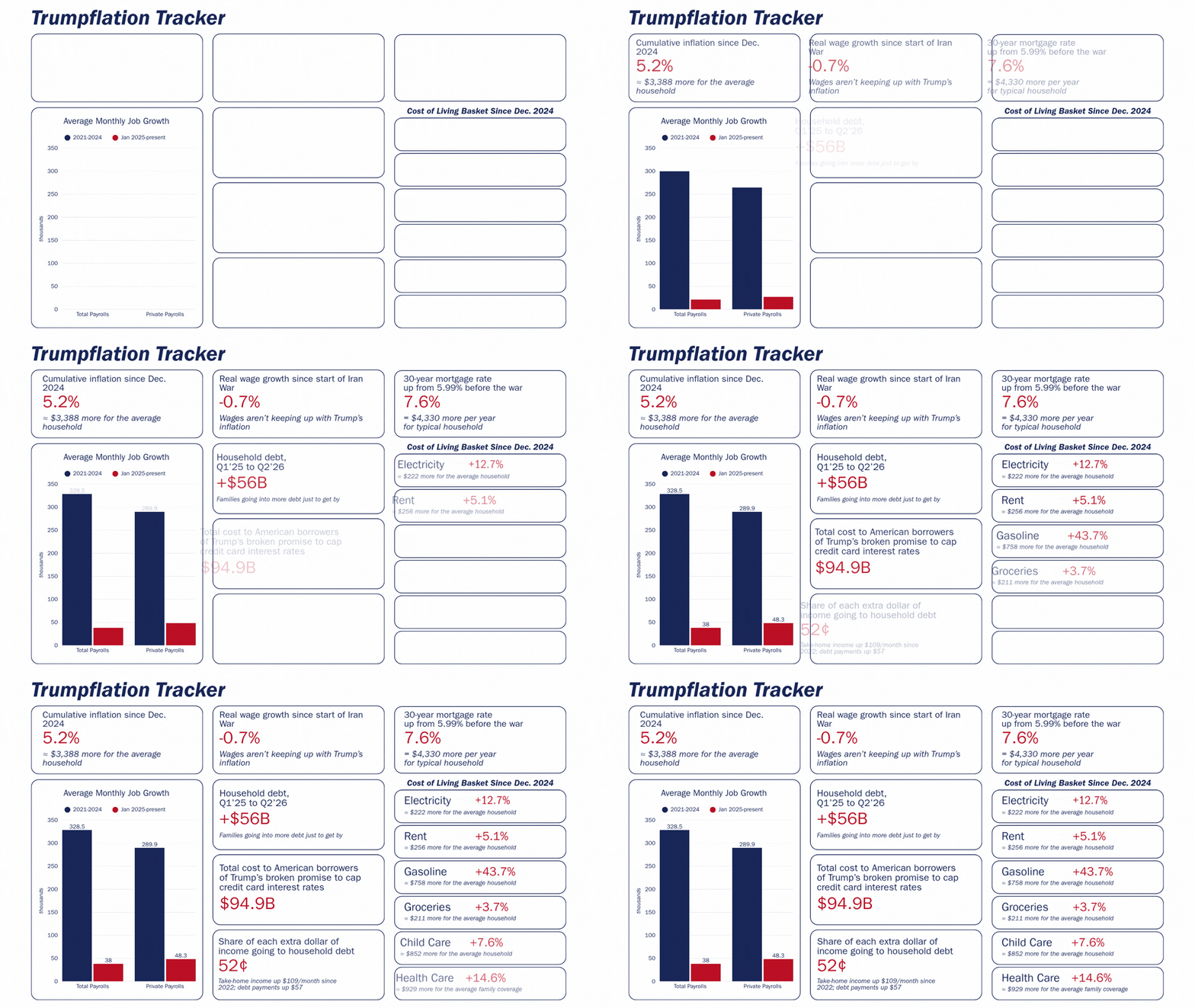
The tool also highlights the country's affordability crisis, detailing how costs have skyrocketed for childcare, electricity, gasoline, groceries, healthcare, and rent, with the average US household paying over $3,000 more.
As Trump rallies behind efforts to build more energy-sucking artificial intelligence data centers, Warren's tracker shows that residential electricity prices are up 12.7% during this term, with the average US household paying $222 more.
Last year, congressional Republicans passed and Trump signed a budget package that cut government healthcare programs and did not extend expiring Affordable Care Act subsidies. Now, per the new tool, healthcare costs are up 14.6%.
Prices for gas and diesel have skyrocketed since Trump and the Israeli military started bombing Iran, but the US president has dismissed concerns, claiming that paying $4 at the pump is "not very high" and is worthwhile to prevent the Middle Eastern nation from building a nuclear weapon—which the US intelligence community concluded, before the war, that Tehran wasn't trying to do.
Warren's tracker puts the gas surge at 43.7% since December 2024, with an average cost of over $750 per household. The senator plans to have the panel's economic experts update the figures on a monthly basis, as more data becomes available.
The Century Foundation's president, Julie Margetta Morgan, applauded the committee "for doing the math on this," writing on social media that "the Trump administration continues to claim that the economy is strong, but this tracker shows clearly just how much families are being squeezed."

"Walmart has amassed the most intimate information about its customers and is developing the technology that can be used to put that data to work at checkout," said Lindsay Owens of Groundwork Collaborative.
As Walmart attempted to debunk research into its pricing practices by watchdog group Groundwork Collaborative on Monday, the organization released a new report detailing more than a dozen patents the $833 billion corporation holds or has applied for—all aimed at monitoring customers' behavior to determine what products to market to them, deceiving them about an item's price, and upcharging them.
“Corporations don’t spend years building high-tech pricing tools, hiring experts, and filing patents just to let them collect dust. They do it because they see a path to higher profit—one that runs right through everyday consumers’ budgets," said Lindsay Owens, president and CEO of Groundwork and the author of the book Gouged: The End of a Fair Price—And What That Means for Your Wallet.
On Monday, Owens and Elizabeth Pancotti, Groundwork's vice president of policy, advocacy, and research, released “The Walmart Watchtower: Patents Speak Louder Than Pledges,” noting that Walmart CEO John Furner just recently attempted to do damage control on Owens' reporting in Gouged regarding the company's artificial intelligence-enabled pricing tactics.
While Walmart executives have "openly touted" the ability of "Sparky," the AI shopping assistant the company launched last year, to push customers to spend an average of 40% more during a shopping trip, Furner insisted last month that Walmart will "price the product, not the person.”
But Groundwork said that beyond its deployment of Sparky, "Walmart’s own investments and patents suggest that the retail giant is building a vast arsenal of tools that can be used to track shoppers and even potentially determine what they pay."
The report reveals that technology patented by Walmart can:
The company has also filed applications for technology that could:
"Walmart has amassed the most intimate information about its customers and is developing the technology that can be used to put that data to work at checkout," said Owens. "Shoppers will have to decide whether to believe Walmart’s patent applications or its PR statements.”
As the report was released, Dan Bartlett, Walmart's executive vice president of corporate affairs, released a public letter accusing Owens of "mischaracterizations" regarding the company's pricing practices.
"Walmart does not and will not use an individual customer’s personal information, income, shopping history, urgency, or willingness to pay to set an individualized price," said Barlett. "We do not engage in dynamic pricing, raising prices in response to a hot afternoon or an approaching snowstorm, for example."
He also said Groundwork has wrongly taken Walmart's patents "as evidence that we will pursue individualized or dynamic pricing," and said the company has "committed not to."
Although Bartlett denied that the company uses AI to upcharge customers, Walmart US CEO Dave Guggina told investors just last month that “when customers engage with Sparky, their average order value jumps 40%.”
Owens responded to Bartlett's letter by saying that any "confusion around Walmart’s pricing practices is of its own making."
"Walmart says one thing in its damage-control letters to customers, another to its investors behind closed doors, and a different thing entirely to the United States Patent and Trademark Office," said Owens.
She called on Walmart to publicly release information about "what data Sparky can see, how that information shapes the recommendations and purchases it makes, and whether sensitive consumer information could be exposed, misused, or used against shoppers," especially considering recent hacking incidents by AI models.
"The arsenal of technologies the company is building that can be used to profile and track us should worry every American who is concerned about their privacy and pocketbooks," Owens said. "This personal data, according to Walmart’s own patents, is a critical element of the new pricing strategies the company is developing."
The report on Walmart's patents released by Groundwork on Monday, said Owens, will allow Americans to "decide for themselves" whether to believe executives' denials.
"We have to crush these sociopaths," said one critic.
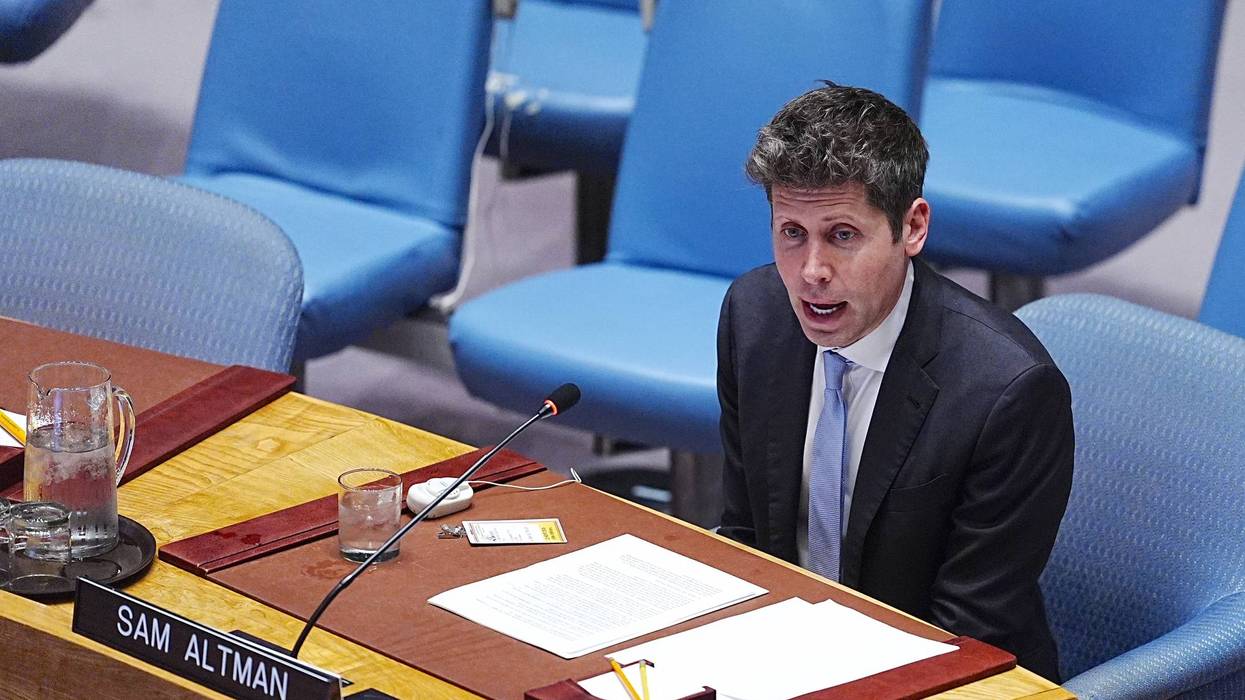
Critics of the artificial intelligence industry expressed horror after OpenAI CEO Sam Altman said the world needs to "accept some bad things happening" as the price to pay for technological advancement.
In a Sunday interview with Politico, Altman was asked where his company differs from rival Anthropic, whose CEO, Dario Amodei, has called for guardrails that will slow the pace of AI development.
"We have always been a big believer that this technology has to be democratized and put into people's hands," said Altman. "One of the biggest differences between us and some of the stricter... AI safety people is that we believe the world should accept some bad things happening for the benefits of this technology."
“We believe the world should accept some bad things happening for the benefits of this technology.”In a conversation for the first edition of Decoded, a new daily newsletter and podcast, OpenAI CEO Sam Altman talked with POLITICO’s @BrendanBordelon about trade-offs, AI safety, and how his company is different from Anthropic.Subscribe to Decoded for the full conversation with Sam Altman: https://t.co/YHJJsDOQVh
— POLITICO (@politico) October 4, 2026
Altman went on to say that one reason he's called for "lighter touch" regulation "comes with an accepting of the fact that some bad things are going to happen as society figures out the resilience."
Critics reacted furiously to Altman's blithe dismissal of "bad things" his own company's technology could cause, especially because many AI developers have warned that it could potentially wipe out human life.
Patrick Gaspard, distinguished senior fellow at the Center for American Progress, called Altman's statement "freaking insane" and said politicians cannot let the AI industry continue without any regulations.
"Our elected leaders need to move past the polling safe territory of data center resistance to the real work of regulating these narcissistic freaks," Gaspard wrote in a Sunday social media post, "who gleefully tell us that we 'need to accept some bad things' from AI for their massive profits. And they don’t even know the limits of what they’re unleashing."
Joshua Topolsky, co-founder of tech news website The Verge, completely rejected the premise of Altman's argument.
"No, I don't think this is a reasonable answer or position," Topolsky wrote, "and no one should accept it or acquiesce to it."
Commentator Wajahat Ali said Altman's statement showed the need for a political movement against the AI industry.
"We have to crush these sociopaths," Ali wrote. "The problem is that many Democrats take money from them, which means they will get bailed out at our expense in the next two to four years."
Ali's comments were echoed by Talking Points Memo founder Josh Marshall.
"A whole political movement should be stood up against this arrogant and sociopathic bullshit," Marshall wrote.
Adam Carlson, founder of Zenith Polls, said Altman's remarks were symbolic of how completely out of touch Silicon Valley executives are with ordinary people.
"To any normal, rational person who doesn’t stand to materially benefit from AI acceleration or buy their whole schtick hook line and sinker," wrote Carlson, "you genuinely just sound insane talking about 'accepting bad things' without specifying exactly what you mean."
The social media account for The Tennessee Holler offered up a satirical summary of Atlman's argument.
"Sociopath elitist tech fascists who think they’re creating God and believe democracy is the enemy," The Tennessee Holler wrote, "want us to finance our own demise to let them take over the world."
"It’s a stalled economy—and working families are stuck in it," said one economist.
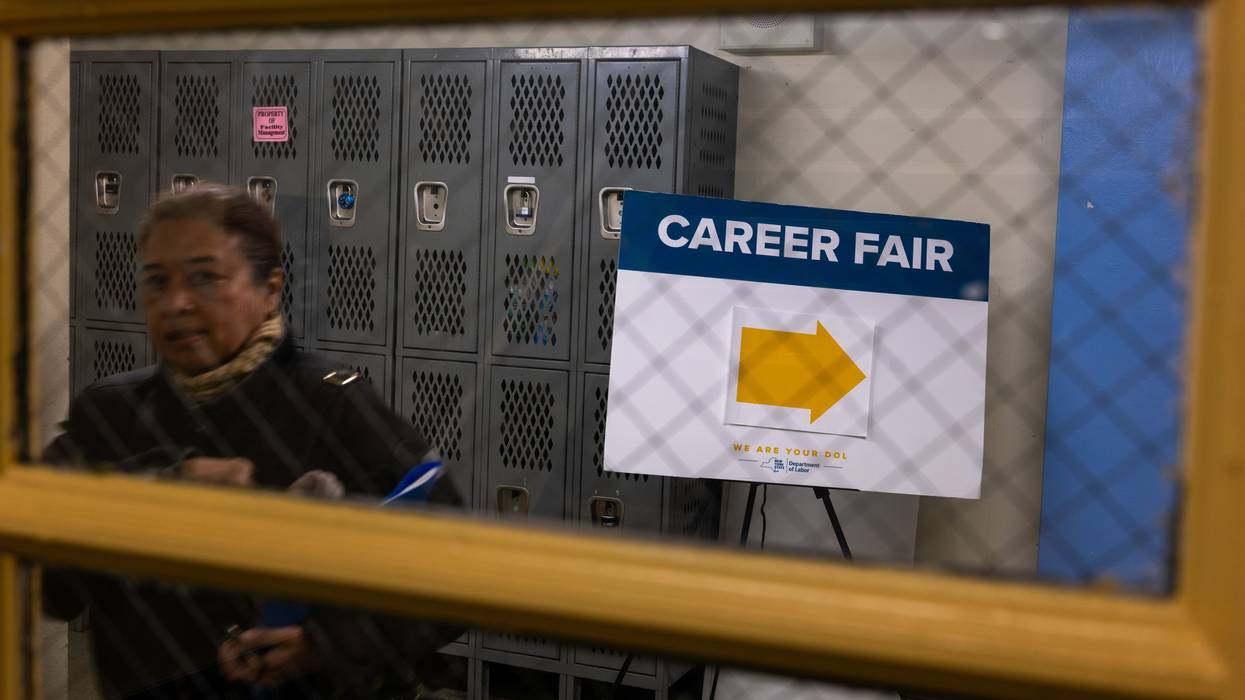
A Friday report from the US Bureau of Labor Statistics showed that the American job market is running on fumes.
According to the BLS, the US economy added just 29,000 jobs in September, which was well below economists' forecasts of 90,000 jobs added on the month.
Additionally, employment numbers for previous months were revised downward by a total of 60,000 jobs, and BLS now estimates that the economy posted a net loss of 10,000 jobs in July and a net gain of 133,000 jobs in August.
In a Friday social media post, economist Bill McBride noted that the economy over the last year has only created 496,000 jobs, which averages to roughly 41,000 jobs per month. For comparison, the economy created an average of 186,000 jobs per month in the last year of former President Joe Biden's term.
Heather Long, chief economist at Navy Federal Credit Union, called the latest jobs numbers "mediocre," and pointed out that wage growth in September posted just a 3% yearly gain.
"That’s a new five-year low," Long remarked, "and it’s wiped out entirely by ~3.4% inflation."
Tahra Hoops, director of economic analysis at Chamber of Progress, also pointed to wage growth failing to keep up with inflation, which she said "gives credibility to the negative consumer sentiment" expressed in recent surveys.
Kyle Moore, chief economist at The Century Foundation, said that the weak wage growth on the month doesn't tell the full story of the stresses working-class Americans are facing because the numbers "leave out debt, all the bills families have to pay before they can spend any of their paycheck."
"A worker with debt often can’t afford to miss a paycheck, and therefore can’t afford to quit a bad job or push for a raise," Moore explained. "That is exactly what we see in today’s job market, with hiring stalled, the quit rate stuck at 1.9%, and wage growth falling as prices climb. Mounting debt, sluggish hiring and real wage growth, and weak social support all disempower workers."
Moore criticized President Donald Trump and his administration for trying to spin their economic policies as successes given the current numbers.
"Until the Trump administration confronts the reality that debt is eating into workers’ gains—wage gains that are now non-existent, in real terms, for the typical worker," said Moore, "the gulf between how this administration spins the economy and how working families actually experience it will continue to widen."
White House National Economic Council Director Kevin Hassett didn't heed Moore's advice on this matter, and continued boasting about the state of the economy during a Friday interview.
"If you look at the data from this week, it's proving that Trumponomics is really working," said Hassett, "and this is one reason why markets are celebrating so much."
Kevin Hassett responds to a bad September jobs report: "If you look at the data from this week, it's proving that Trumponomics is really working ... we're very very happy"
The Fox News host responds by saying "you're bullish and I expected that" pic.twitter.com/bVdTFnteHc
— Aaron Rupar (@atrupar) October 2, 2026
Breyon Williams, chief economist at Groundwork Collaborative, called the weak jobs report emblematic of how the economy as a whole has performed during Trump's second term.
"There’s a clear pattern in the Trump economy," Williams explained. "One sector is creating most of the new jobs, unemployed workers can’t find new jobs, and Americans are seeing their paychecks eaten up by the president’s high prices. When businesses are barely hiring and raises aren’t keeping up with rising prices, it’s a stalled economy—and working families are stuck in it."
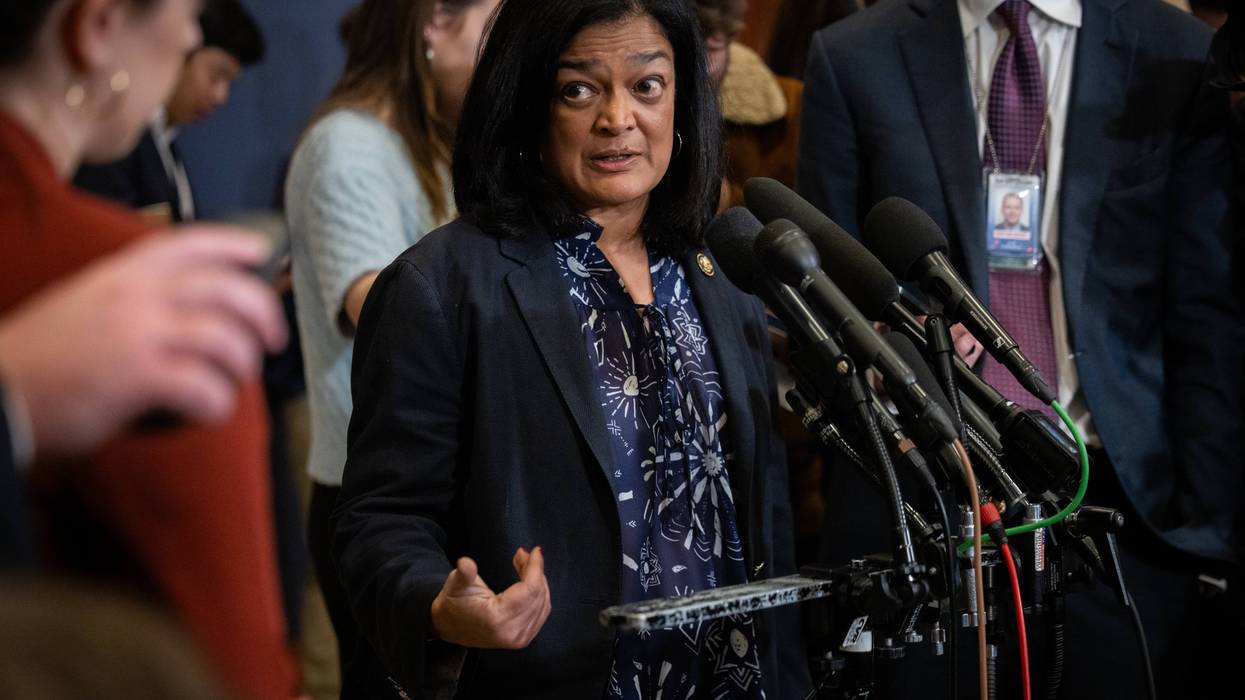
"For too long, we’ve allowed a few Big Tech companies to dominate the market."
Rep. Pramila Jayapal on Thursday unveiled a bill aimed at reining in the artificial intelligence industry that would force every AI company operating in the US to obtain a public charter.
According to Jayapal (D-Wash.), the charter system will be similar to the one long used in the US to regulate banks, which must submit to certain regulatory obligations before being allowed to operate.
"The crux of this bill is simple," said Jayapal. "If you want to be an AI company in this country, you have to obtain a public charter that has a broad set of terms and conditions to operate and ensure public benefit without the harms."
The Washington Democrat said the charter approach was needed given the broad reach large technology companies already have over every aspect of life in the US, and she argued it would be a more proactive alternative to the piecemeal approach US lawmakers have taken to regulating Big Tech.
"For too long, we’ve allowed a few Big Tech companies to dominate the market," she said. "They have used mass surveillance to steal private information, labor, and creative work, building trillion-dollar empires on our tracked personal lives. AI corporations and Big Tech are now following that same playbook."
Under the charter system, tech companies would be banned from practices such as surveillance pricing to charge individual consumers different prices based on their personal data and financial histories.
The system would also establish stronger liabilities for AI companies that commit harmful acts, and particularly egregious actions could be punished by removal of firms' charters, which would essentially be a corporate death penalty.
Jayapal's proposal would also put the government in charge of every step of the AI safety review process and would include "round-the-clock federal oversight, testing in government facilities and approval to release, adversarial stress tests, and a government-controlled kill switch," according to her office.
The proposed framework earned praise from former Federal Trade Commission Chair Lina Khan, who argued that American voters have already "paid an extraordinary price for Big Tech's self-regulation."
"For generations we have required banks, drug makers, and nuclear operators to meet public terms before they do business," Khan added, "and AI companies should be no different."
Sacha Haworth, executive director of the Tech Oversight Project, also gave the Jayapal plan kudos, saying it would "establish desperately needed rules of the road, punish AI companies that release dangerous products, and create the clear public benefit that the American people are calling for."
"Companies have continually pulled the rug out from under families, workers, and small businesses to build powerful and unaccountable Big Tech monopolies that dictate to us how we should live our own lives," Haworth emphasized. "Enough is enough."
Although President Donald Trump and House Speaker Mike Johnson (R-La.) have publicly opposed legislative restrictions on the AI industry, the bill comes as Democrats are aiming to win congressional majorities in the November midterm elections.
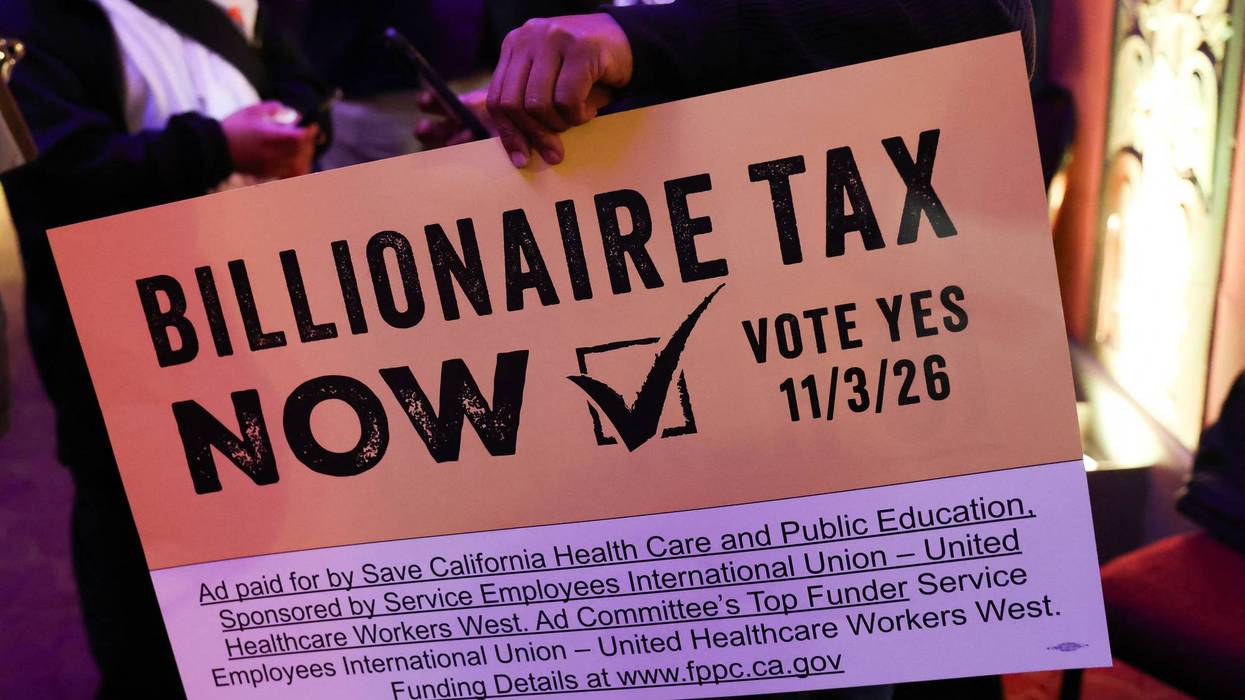
"I believe it's a patriotic duty to pay taxes, and I do so with pride. Our tax system favors wealthy people, and the least we can do is pay up rather than try to avoid it."
As some of California's richest residents pour tens of millions of dollars into defeating a proposed billionaire tax, one former venture capitalist is making a remarkably different argument: He is perfectly happy to pay it—and he's not alone.
John O'Farrell, a former partner at Andreessen Horowitz, explained Wednesday in a 12-post thread on the social media platform X why he supports the California Billionaire Tax Act, commonly known as Proposition 40, which is on the state's November midterm ballot.
O'Farrell's argument contradicts the chorus of Silicon Valley billionaires and their allies who warn that taxing billionaire wealth would drive the ultra-rich out of California.
"I know where I want to live," he wrote.
"I've been fortunate to benefit from tech wealth. I'm not even close to being a billionaire, but I could easily afford to pay the wealth tax—and any billionaire certainly can—without the slightest effect on my lifestyle," O'Farrell said. "I support a wealth tax at my wealth level also."
Introduced by the Service Employees International Union-United Healthcare Workers West, Prop 40 would impose a one-time 5% levy on people worth $1 billion or more, with an option to pay the tax in annual installments of 1% over five years.
The proposal would require the state to spend 90% of revenue from the tax on healthcare and the rest on food assistance and public education. Proponents say the tax would raise roughly $100 billion in revenue. Critics argue that it could drive wealthy residents and investment from California and stall economic growth.
"I find the knee-jerk opposition of some ultra-wealthy people to the idea of paying any new tax deeply disappointing," O'Farrell said in his thread. "To be honest, I can't understand it. They have so much money they couldn't spend it in multiple lifetimes."
Inequality.org, a project of the Institute for Policy Studies—a Washington, DC-based progressive think tank—exposed 22 California billionaires who have poured more than $150 million into defeating Prop 40, "with more rolling in every day," as Chuck Collins wrote for the group.
"These 22 include a prince, several private jet-flying chums of Jeffrey Epstein, and a bunch of crypto and tech bros designing the [artificial intelligence] future for the rest of us," Collins noted. "On January 1, 2025, these 22 billionaires had a combined wealth of $439.8 billion. By September 1, 2026, their wealth had grown to $722.1 billion. In a little under 20 months, their combined wealth increased $282.6 billion, a gain of over 64%."
O'Farrell's social media thread pointed out how "our tax system favors wealthy people."
"I believe it's a patriotic duty to pay taxes, and I do so with pride," he wrote, adding, "the least we can do is pay up rather than try to avoid it."
"Paying taxes is ultimately a matter of self-interest," he contended. "What kind of society do we want to live in? One that rewards achievement but also emphasizes fairness and opportunity for all—or one in which you have to cower in a bunker and live in fear of the pitchforks?"
"One enables the pursuit of happiness for all," he concluded. "The other, just the pursuit of endless wealth."
Prop 40 is backed by numerous progressive groups including the Teamsters union, California Democratic Socialists of America (DSA), and Our Revolution, as well as individual progressives such as Sen. Bernie Sanders (I-Vt.), Rep. Ro Khanna (D-Calif.), and Democratic congressional candidate Connie Chan, who is running to replace retiring longtime San Francisco congresswoman Nancy Pelosi.
Sanders, Khanna, and others—including Congresswoman Aisha Wahab (D-Calif.), Democratic congressional candidate Randy Villegas, and California insurance commissioner candidate Jane Kim—are set to speak at a series of rallies for Prop 40 starting Saturday in San Francisco.
O'Farrell isn't the only wealthy Californian who supports Prop 40. Nvidia CEO Jensen Huang, whose fortune has soared into the hundreds of billions of dollars, has said he is “perfectly fine” with the proposed tax, telling Bloomberg that he and his family “chose to live in Silicon Valley” and that whatever taxes California applies, “so be it.”

"The past almost four years have seen Brazil accomplish a great deal in terms of bringing people out of poverty, creating jobs, curbing hunger, and raising standards of living."
An analysis released Wednesday documents some of the major economic gains that Brazil has made over the past four years during the third term of President Luiz Inácio Lula da Silva, who is currently in a close battle for reelection against rival Flávio Bolsonaro.
The analysis, published by the US-based Center for Economic and Policy Research (CEPR), finds that, between 2022 and 2025, the Brazilian economy grew by a cumulative 8.9%, easily outpacing the average rate of growth in other South American countries.
This growth has been coupled with a drop in the unemployment rate, which has fallen from more than 9% in the second quarter of 2022 to just 5.4% in the second quarter of 2026.
Both poverty and food insecurity fell dramatically in the first two year's of Lula's term, the analysis finds, and in 2025, "Brazil was removed from the Food and Agriculture Organization’s Hunger Map after chronic undernourishment fell below 2.5%."
CEPR's report also gives credit to Lula's policies for improved economic conditions, including a new minimum wage law, an expanded maternity leave program, and increased average payments to low-income families given through the Bolsa Família program.
The economy during Lula's term is far from perfect, however, and the report flags high interest rates set by Brazil's central bank as a key factor in raising consumers' borrowing costs and increasing the rate of household delinquency.
CEPR also noted the negative impact of online betting apps, which Lula has pledged to ban starting next month, on Brazilian workers.
"Brazilian households lost an estimated R$62.5 billion (US$11.2 billion) to online betting in 2025," the report says, "while some 802,000 Bolsa Família households spent more than 2% of their income on betting in January 2025."
Jake Johnston, CEPR's director of international research, said that "the past almost four years have seen Brazil accomplish a great deal in terms of bringing people out of poverty, creating jobs, curbing hunger, and raising standards of living."
"This was done," Johnston added, "despite the lingering impact of the Covid pandemic, external economic shocks that affected the global economy, and excessively high interest rates."
The first round of Brazil's presidential election is set to take place on Sunday, and recent polls show Lula with a narrow lead over Bolsonaro, son of former Brazilian President Jair Bolsonaro, who is still serving a criminal sentence for efforts to instigate a coup after his loss in the 2022 election.
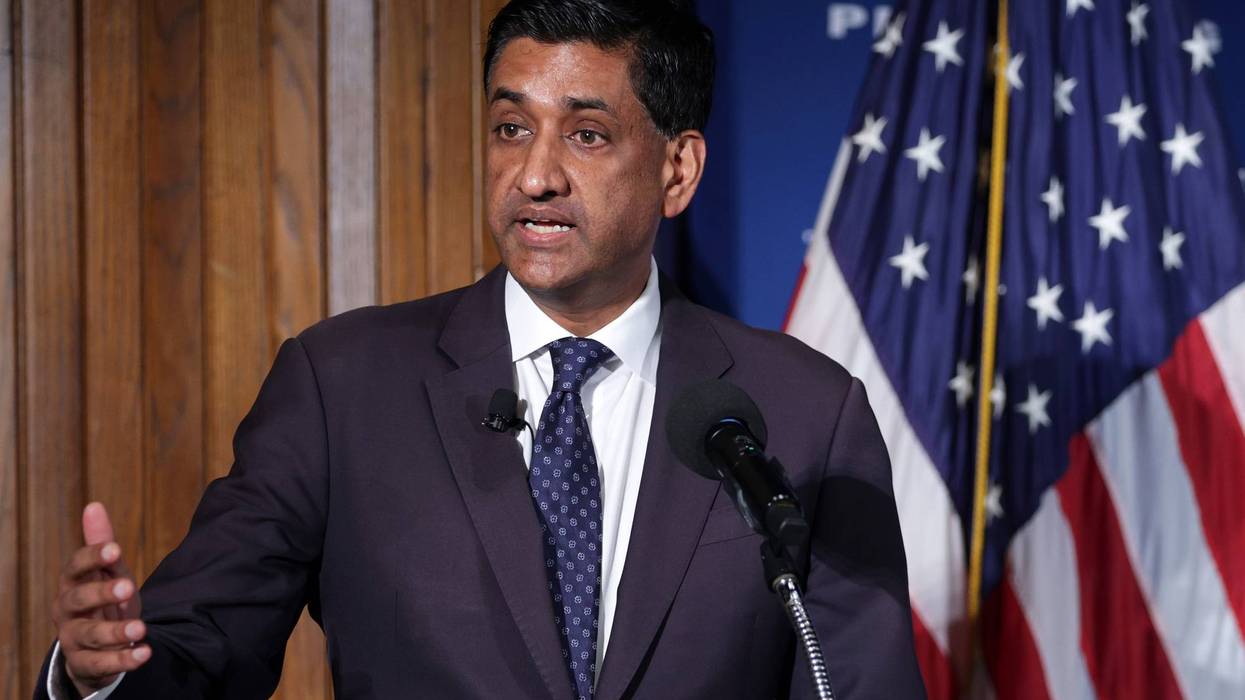
"The tech lords use jargon to confuse. They count on the tech illiteracy of the elected class. They hope we won’t look under the hood," said US Rep. Ro Khanna.
US Rep. Ro Khanna announced plans on Monday to introduce what he described as "the most comprehensive... legislation to date" regulating the artificial intelligence industry.
In an interview with CNBC, Khanna (D-Calif.) said that he wanted to enact at least a temporary ban on recursive AI that is capable of improving itself and modifying its objectives without human input.
Such a ban would be in effect until the federal government had created proper guardrails on the technology, CNBC reported.
“There’s actually a civilizational extinction risk,” Khanna told CNBC, referring to the dangers of recursive AI. "There's a safety risk of loss of control, and then there’s a misuse risk, and we need to take both seriously."
Khanna's bill would also create a new federal agency tasked with crafting and enforcing safety measures on AI models, with independent auditors embedded in every frontier lab that would report directly to the agency.
The legislation wouldn't just create regulations for the AI industry, but also criminal penalties for AI developers who "disable safeguards, kill switches, logging or containment systems, or who knowingly deploy an unauthorized system," CNBC reported.
Promoting the coming bill in a Tuesday social media post, Khanna argued that Big Tech could not be trusted to regulate itself.
"The tech lords use jargon to confuse," Khanna wrote. "They count on the tech illiteracy of the elected class. They hope we won’t look under the hood. They know they can’t gaslight me."
While multiple polls have shown that putting guardrails on the AI industry is politically popular, Republican Party leaders have said that no regulations for the industry are coming so long as they control the White House and the US Congress.
In a Tuesday interview with CNBC, House Speaker Mike Johnson (R-La.) said he hoped that any guardrails put on AI are "voluntary" on the part of Big Tech companies.
Two weeks ago, Johnson said in an interview on CNN that federal regulations of the industry made little sense because "Congress is obviously less qualified than the people who are pushing this frontier to know the ins and outs of it."
President Donald Trump on Tuesday expressed a similar sentiment, telling reporters outside the White House that Big Tech could be trusted to be responsible with the powerful technology it is creating.
"They're outstanding people," Trump said of the tech executives. "They don't want anything to go wrong. I mean, their companies are at stake, if something goes wrong, their companies are at stake. They're not going to let that happen. This is going to be all for the good... they're really going to be policing each other."
Trump on big tech: "They don't want anything to go wrong. Their companies are at stake. They're not gonna let that happen. They're really gonna be policing each other." pic.twitter.com/wP6vfPcavz
— Aaron Rupar (@atrupar) September 29, 2026
Earlier this month, Trump suggested in a social media post that his own intellect was singlehandedly capable of regulating AI, a technology so complicated that even its own creators have acknowledged difficulties in understanding it.
"The only control or ‘guardrails’ that AI needs is a STRONG AND SMART (High IQ!) PRESIDENT,” Trump wrote, “and the USA has that, in spades!"
Trump's hands-off approach to regulating AI isn't just being challenged by Democrats such as Khanna.
According to a Monday report from The Associated Press, Pope Leo XIV reiterated his call for placing safeguards on AI to ensure that it benefits humanity.
Specifically, the US-born pope pointed to recent "concerns raised by many of the experts, specialists in AI," which he said "should be taken seriously."
Pope Leo said warnings that AI could threaten humanity should be taken seriously, rejecting the claims that concerns are 'fake news' and urging leaders to work together on safeguards https://t.co/7qVpNAXYKM pic.twitter.com/Cds6gf5vef
— Reuters (@Reuters) September 29, 2026
"I don’t think that that is ‘fake news’ as some have said," the pope added, in a veiled reference to Trump, "to try and cause whether financial or other some other kind of benefit."

"Families are going further into the red just to cover basic essentials, all while the Trump administration touts hollow talking points about a booming economy."
Research published Tuesday shows that more than half of the income gains seen by the typical American worker since 2022 has been swallowed by debt payments, as high and still-rising costs of housing, groceries, utilities, and other essentials force families to turn to credit cards and other sources of borrowing to stay afloat.
The new report released by The Century Foundation and Protect Borrowers estimates that take-home income for a typical US household rose by approximately $109 per month while the average worker's debt payments rose by $57. In households with a single earner, the groups noted, "52 cents of every dollar a worker gained went to paying down their debt before they could actually spend it on other things."
In two-income households in which both earners faced the average debt payment increase, "the household’s entire real income gain was lost to debt, and then some."
Credit cards and auto loans—which often come with extremely high interest rates—account for most of the debt burden carried by typical US households, which have seen their debt payments grow more than eight times as fast as their income over the past four years, according to The Century Foundation and Protect Borrowers.
"The economy is rigged against working families, and this report shows one big reason why," US Sen. Elizabeth Warren (D-Mass.), the top Democrat on the Senate Banking Committee, said in a statement. "For the typical worker, more than half of every dollar of income growth is going right back out the door in debt payments. Instead of letting lenders rip off families, [President] Donald Trump and congressional Republicans should act today to protect families from getting trapped in cycles of debt, including a cap on credit card interest rates.”
Trump repeatedly vowed during his 2024 presidential campaign to cap credit card interest rates at 10%, but he has since done nothing substantive to fulfill that promise as the nation's credit card debt crisis continues to spiral amid deteriorating economic conditions, with sluggish hiring and inflation—fueled by the president's illegal war on Iran—outpacing wage growth.
"Families are going further into the red just to cover basic essentials, all while the Trump administration touts hollow talking points about a booming economy and fails to deliver on promises to lower costs,” said Aissa Canchola Bañez, policy director for Protect Borrowers. “Today’s report shows just how dire the affordability crisis is for working people who are being forced to surrender their hard-earned income gains to paying off debt and padding the pockets of credit card executives and debt collectors."
"Growing household debt is burying America’s workers," she added, "and policymakers must take action to get them real relief."
The new research warns that, in the absence of ambitious policy action, the debt emergency facing working-class US households "is about to get worse," with many student-loan borrowers about to be forced into expensive repayment plans due to the Trump administration's assault on Biden-era relief efforts.
"Cancelling student and medical debt, capping interest rates, and restraining employer debt traps are all examples of solutions available to provide help to struggling households," the new report states. "We should also address the ways workers end up in debt in the first place through stagnant wages, eroded bargaining power, and lack of public provisioning. Together these interventions represent a coherent alternative to the status quo so that economic growth is measured by what workers actually keep and not just by what employers pay."
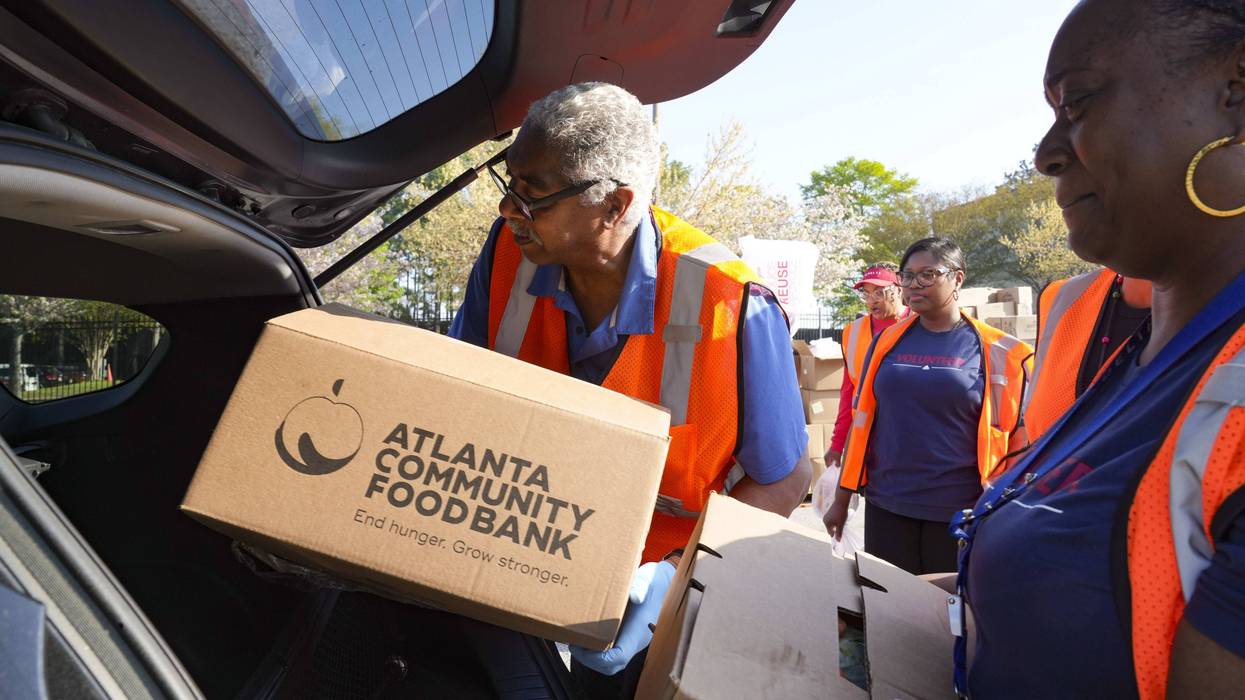
"It’s really hard for people in the United States to understand the scale of hunger."
Two of President Donald Trump's signature policies—the illegal war with Iran and cuts to the Supplemental Nutrition Assistance Program—are putting pressure on food banks throughout the country in the form of higher demand from clients and increased shipping costs.
In a Sunday report from Meidas News, reporter Scott MacFarlane published interviews with several food bank officials who said the increased cost of energy caused by Trump's Iran War has strained their ability to serve their communities.
From a demand side, more families have been relying on food banks because the increased cost of gasoline has left them with less money to spend at the grocery store.
And from a supply perspective, record-high diesel prices have hurt food banks' budgets by increasing transportation costs for staple items.
Craig Rice, chief executive officer at the Manna Food Center in Maryland, told MacFarlane that his organization is "seeing so many people come to us, who’ve never come to [the food bank] before."
"It used to be people who were working hourly-wage jobs," Rice added. "Now we see people who are salary employees. They may have been stable at one price, but suddenly they’re impacted by gas prices."
Amy Beros, president of the Food Bank of Central and Eastern North Carolina, similarly told MacFarlane that organizations in her region have seen demand for food services increase by between "20% to 60%" over the last year.
"It’s really hard for people in the United States to understand the scale of hunger," Beros said, "because it doesn’t look like it looks on TV."
The strain on food banks isn't just limited to one state or region.
Greta Faworski, associate director of Kalamazoo Loaves and Fishes, said in an interview published Monday with Michigan advance that she's seen a 56% increase in people who are reaching out to her organization for help.
Faworski said the recent surge in demand was akin to what she saw last year during a nationwide delay in SNAP benefits in the wake of a federal government shutdown.
"On an average day, we serve about 800 people a day," explained Faworski. "When there was notification because of the government shutdown that November SNAP benefits would not be released on time, in one week, we saw an increase to where we were serving 1,200 people a day."
The problem is expected to grow more acute because state governments starting next month will have to pay for a largest share of SNAP administrative costs due to provisions in the 2025 One Big Beautiful Bill Act.
A report published last week by Spectrum News 13 put a spotlight on how surging diesel costs are squeezing food banks in central Florida.
Greg Higgerson, chief development officer for Second Harvest Food Bank, told Spectrum News 13 that his organization's fuel bill is "somwhere around $15,00 per month," which he said was "up significantly from this time last year."
And like food banks elsewhere in the US, Higgerson said, the Second Harvest Food Bank is being forced to pay higher costs as demand for its services is going up.
“It’s going to be harder to make ends meet in the next few months,” Higgerson said. “There’s going to be more people. We know that, we see it already, and it’s going to cost more to help those folks.”