SUBSCRIBE TO OUR FREE NEWSLETTER
Daily news & progressive opinion—funded by the people, not the corporations—delivered straight to your inbox.
5
#000000
#FFFFFF
To donate by check, phone, or other method, see our More Ways to Give page.
Daily news & progressive opinion—funded by the people, not the corporations—delivered straight to your inbox.
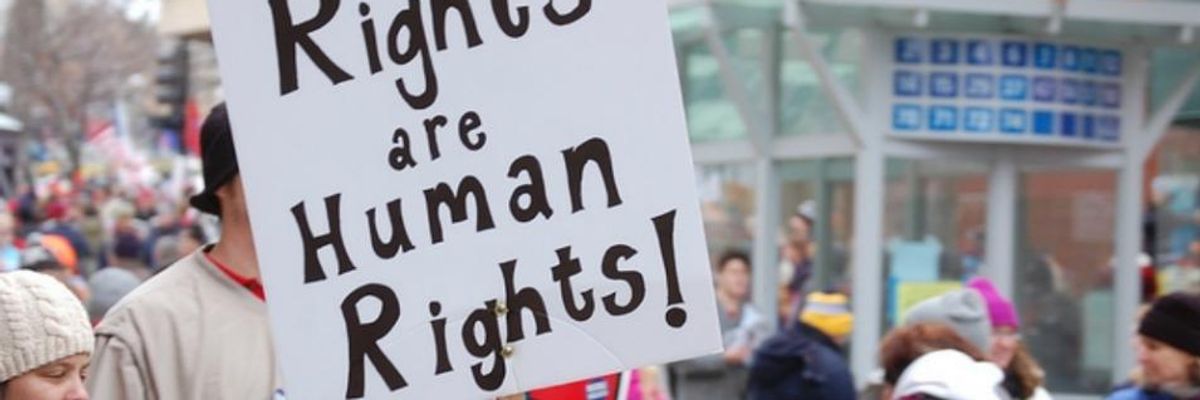
"The average teacher's salary in West Virginia is just $45,622, one of the lowest in the U.S. And they've had enough." (Photo: American Ethnologist)
We're in the midst of a brushfire outbreak of labor militancy not seen in decades.
First came a statewide teachers' strike in West Virginia. When the teachers union leadership negotiated a weak compromise (which was tabled by the GOP-held state Senate anyway), the rank-and-file rebelled and started a wildcat (that is, not approved by leadership) strike that is still going. The strike has forced the closure of public schools in the state's 55 counties, leaving more than 275,000 students without classes to attend.
Next, Oklahoma teachers, very clearly inspired by their West Virginia comrades, announced their own statewide strike on Monday.
We may be at the beginning of a very important national labor push. It's time we all paid attention.
So what is fueling the strikes? In West Virginia, the major complaint is the crumbling state employee health-care system, as Michael Mochaidean, one of the teacher organizers in the state, explains in this episode of the Chapo Trap House podcast. Recent changes in the health-care plan have shifted more and more costs onto teachers, more than erasing recent raises. Daniel Summers, a 35-year-old teacher with small children, says his insurance premium has increased by $300 per month. He was already barely treading water with his wife working and him working a second job, and this was simply too much to take.
Read the full column at The Week.
Dear Common Dreams reader, It’s been nearly 30 years since I co-founded Common Dreams with my late wife, Lina Newhouser. We had the radical notion that journalism should serve the public good, not corporate profits. It was clear to us from the outset what it would take to build such a project. No paid advertisements. No corporate sponsors. No millionaire publisher telling us what to think or do. Many people said we wouldn't last a year, but we proved those doubters wrong. Together with a tremendous team of journalists and dedicated staff, we built an independent media outlet free from the constraints of profits and corporate control. Our mission has always been simple: To inform. To inspire. To ignite change for the common good. Building Common Dreams was not easy. Our survival was never guaranteed. When you take on the most powerful forces—Wall Street greed, fossil fuel industry destruction, Big Tech lobbyists, and uber-rich oligarchs who have spent billions upon billions rigging the economy and democracy in their favor—the only bulwark you have is supporters who believe in your work. But here’s the urgent message from me today. It's never been this bad out there. And it's never been this hard to keep us going. At the very moment Common Dreams is most needed, the threats we face are intensifying. We need your support now more than ever. We don't accept corporate advertising and never will. We don't have a paywall because we don't think people should be blocked from critical news based on their ability to pay. Everything we do is funded by the donations of readers like you. When everyone does the little they can afford, we are strong. But if that support retreats or dries up, so do we. Will you donate now to make sure Common Dreams not only survives but thrives? —Craig Brown, Co-founder |
We're in the midst of a brushfire outbreak of labor militancy not seen in decades.
First came a statewide teachers' strike in West Virginia. When the teachers union leadership negotiated a weak compromise (which was tabled by the GOP-held state Senate anyway), the rank-and-file rebelled and started a wildcat (that is, not approved by leadership) strike that is still going. The strike has forced the closure of public schools in the state's 55 counties, leaving more than 275,000 students without classes to attend.
Next, Oklahoma teachers, very clearly inspired by their West Virginia comrades, announced their own statewide strike on Monday.
We may be at the beginning of a very important national labor push. It's time we all paid attention.
So what is fueling the strikes? In West Virginia, the major complaint is the crumbling state employee health-care system, as Michael Mochaidean, one of the teacher organizers in the state, explains in this episode of the Chapo Trap House podcast. Recent changes in the health-care plan have shifted more and more costs onto teachers, more than erasing recent raises. Daniel Summers, a 35-year-old teacher with small children, says his insurance premium has increased by $300 per month. He was already barely treading water with his wife working and him working a second job, and this was simply too much to take.
Read the full column at The Week.
We're in the midst of a brushfire outbreak of labor militancy not seen in decades.
First came a statewide teachers' strike in West Virginia. When the teachers union leadership negotiated a weak compromise (which was tabled by the GOP-held state Senate anyway), the rank-and-file rebelled and started a wildcat (that is, not approved by leadership) strike that is still going. The strike has forced the closure of public schools in the state's 55 counties, leaving more than 275,000 students without classes to attend.
Next, Oklahoma teachers, very clearly inspired by their West Virginia comrades, announced their own statewide strike on Monday.
We may be at the beginning of a very important national labor push. It's time we all paid attention.
So what is fueling the strikes? In West Virginia, the major complaint is the crumbling state employee health-care system, as Michael Mochaidean, one of the teacher organizers in the state, explains in this episode of the Chapo Trap House podcast. Recent changes in the health-care plan have shifted more and more costs onto teachers, more than erasing recent raises. Daniel Summers, a 35-year-old teacher with small children, says his insurance premium has increased by $300 per month. He was already barely treading water with his wife working and him working a second job, and this was simply too much to take.
Read the full column at The Week.