Transition, Tweets, and Trump
The gods have their own rules.
-- Ovid, Metamorphosis
It's been a couple of really exciting weeks for President-elect Trump and a very busy time at that. Some visitors have come by just to establish rapport with the new president, others simply to offer congratulations, and others looking for work.
The gods have their own rules.
-- Ovid, Metamorphosis
It's been a couple of really exciting weeks for President-elect Trump and a very busy time at that. Some visitors have come by just to establish rapport with the new president, others simply to offer congratulations, and others looking for work.
It started when Prime Minister Shinzo-Abe of Japan stopped by to say "hi" barely a week after the election. That visit was especially welcomed by Mr. Trump since his daughter, Ivanka, an executive in the Trump hotel chain, happened to be present when the prime minister arrived. Sitting in on the meeting she could watch how her father comported himself in the company of this very important person, and served to give her a first-hand look at how he would be acting as president. Some people thought it a bit odd that his daughter, who has no security clearance, should be privy to a conversation between two world leaders. In fairness to Ivanka, however, that should not have been of concern. She did not get to be as important a part of the Trump family as she is, without learning to be discrete. The Prime Minister of Japan was, of course, not the only exciting visitor the president-elect hosted.
Three very important business men and Trump colleagues from India made a special trip at their own expense, simply because they wanted to personally congratulate Mr. Trump on his election. Although three of his children were present at the meeting, a security clearance was not needed for a meeting of this kind since the businessmen are the family's business partners rather than political types. A spokesman for the family did not say whether the family's business investments in India were discussed. A picture was posted, however, showing the businessmen and Mr. Trump standing side by side giving a thumbs up gesture that suggests the men had agreed on something that pleased all of them.
Mr. Trump's pleasure at all the visitors he received was probably matched by his delight that the number of lawsuits confronting him because of his business practices was reduced by one. Although he has always maintained that he doesn't settle lawsuits, he very sensibly permitted his lawyers to settle the one involving former Trump University students who said he had defrauded them. He agreed to pay $25 million to the plaintiffs since he realized that having to testify in court would take away from the valuable time he needs to get ready to assume office.
Of course it has not all been as easy as greeting sycophants, supplicants and business colleagues. Some real problems have introduced themselves to Mr. Trump. The most troubling may well be the suggestion that Mr. Trump's business interests conflict with his duties as president. He at first said that by turning over all his business interests to his children he would avoid all conflicts of interest. That was contrary to the advice he has received from assorted places, including the editorial page of the Wall Street Journal. In an editorial published November 18, 2016 the WSJ told him his best way forward was "to liquidate his stake in the company." Later in the same editorial the editors said: "There is no question that a Trump business sale would be painful and perhaps costly." And without backing off that suggestion, it nonetheless went on to observe that there was a double standard in play in making him sell his business interests. It observed that "public-interest lawyers can move in and out of government without a peep of protest. Unlike liberals, Republicans like to work in the private economy." By pointing out that liberals sup at the public trough rather than get into the hurly burly of the private economy, the paper seeks to make the fact that Mr. Trump has interests he must divest a badge of honor rather than an inconvenience.
It is unclear what Mr. Trump's intentions with respect to divestment are. As he explained in his interview at the New York Times, "The president of the United States is allowed to have whatever conflicts he or she wants but I don't want to do that." During the interview he also observed that: "In theory I could run my business perfectly and then run the country perfectly."
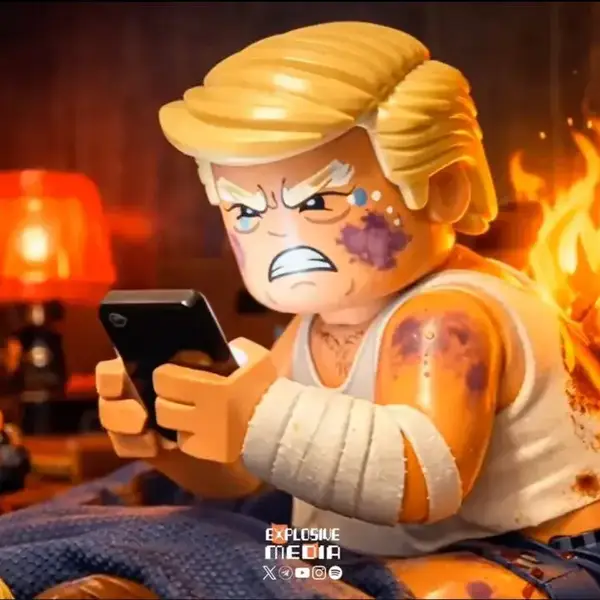
For those who have grown accustomed to learning of the innermost thoughts of president-elect Trump by means of the tweet, there is no reason to think that affairs of state will hold presidential pettiness at bay. His three tweets attacking the cast of the New York musical "Hamilton" are well known. The tweet, however, is more than an attack mechanism. It can impart information. Mr. Trump used a tweet to let his followers know that he is hard at work on Thanksgiving day trying to persuade Carrier Air conditioning company not to leave the United States.
During the campaign Mr. Trump often attacked what he described as the failing media. Under his inspired leadership the country may soon find that the tweet has replaced all other ways historically relied on by the public to obtain information. That would seem appropriate for a country that elected Mr. Trump as president.
An Urgent Message From Our Co-Founder
Dear Common Dreams reader, It’s been nearly 30 years since I co-founded Common Dreams with my late wife, Lina Newhouser. We had the radical notion that journalism should serve the public good, not corporate profits. It was clear to us from the outset what it would take to build such a project. No paid advertisements. No corporate sponsors. No millionaire publisher telling us what to think or do. Many people said we wouldn't last a year, but we proved those doubters wrong. Together with a tremendous team of journalists and dedicated staff, we built an independent media outlet free from the constraints of profits and corporate control. Our mission has always been simple: To inform. To inspire. To ignite change for the common good. Building Common Dreams was not easy. Our survival was never guaranteed. When you take on the most powerful forces—Wall Street greed, fossil fuel industry destruction, Big Tech lobbyists, and uber-rich oligarchs who have spent billions upon billions rigging the economy and democracy in their favor—the only bulwark you have is supporters who believe in your work. But here’s the urgent message from me today. It's never been this bad out there. And it's never been this hard to keep us going. At the very moment Common Dreams is most needed, the threats we face are intensifying. We need your support now more than ever. We don't accept corporate advertising and never will. We don't have a paywall because we don't think people should be blocked from critical news based on their ability to pay. Everything we do is funded by the donations of readers like you. When everyone does the little they can afford, we are strong. But if that support retreats or dries up, so do we. Will you donate now to make sure Common Dreams not only survives but thrives? —Craig Brown, Co-founder |
The gods have their own rules.
-- Ovid, Metamorphosis
It's been a couple of really exciting weeks for President-elect Trump and a very busy time at that. Some visitors have come by just to establish rapport with the new president, others simply to offer congratulations, and others looking for work.
It started when Prime Minister Shinzo-Abe of Japan stopped by to say "hi" barely a week after the election. That visit was especially welcomed by Mr. Trump since his daughter, Ivanka, an executive in the Trump hotel chain, happened to be present when the prime minister arrived. Sitting in on the meeting she could watch how her father comported himself in the company of this very important person, and served to give her a first-hand look at how he would be acting as president. Some people thought it a bit odd that his daughter, who has no security clearance, should be privy to a conversation between two world leaders. In fairness to Ivanka, however, that should not have been of concern. She did not get to be as important a part of the Trump family as she is, without learning to be discrete. The Prime Minister of Japan was, of course, not the only exciting visitor the president-elect hosted.
Three very important business men and Trump colleagues from India made a special trip at their own expense, simply because they wanted to personally congratulate Mr. Trump on his election. Although three of his children were present at the meeting, a security clearance was not needed for a meeting of this kind since the businessmen are the family's business partners rather than political types. A spokesman for the family did not say whether the family's business investments in India were discussed. A picture was posted, however, showing the businessmen and Mr. Trump standing side by side giving a thumbs up gesture that suggests the men had agreed on something that pleased all of them.
Mr. Trump's pleasure at all the visitors he received was probably matched by his delight that the number of lawsuits confronting him because of his business practices was reduced by one. Although he has always maintained that he doesn't settle lawsuits, he very sensibly permitted his lawyers to settle the one involving former Trump University students who said he had defrauded them. He agreed to pay $25 million to the plaintiffs since he realized that having to testify in court would take away from the valuable time he needs to get ready to assume office.
Of course it has not all been as easy as greeting sycophants, supplicants and business colleagues. Some real problems have introduced themselves to Mr. Trump. The most troubling may well be the suggestion that Mr. Trump's business interests conflict with his duties as president. He at first said that by turning over all his business interests to his children he would avoid all conflicts of interest. That was contrary to the advice he has received from assorted places, including the editorial page of the Wall Street Journal. In an editorial published November 18, 2016 the WSJ told him his best way forward was "to liquidate his stake in the company." Later in the same editorial the editors said: "There is no question that a Trump business sale would be painful and perhaps costly." And without backing off that suggestion, it nonetheless went on to observe that there was a double standard in play in making him sell his business interests. It observed that "public-interest lawyers can move in and out of government without a peep of protest. Unlike liberals, Republicans like to work in the private economy." By pointing out that liberals sup at the public trough rather than get into the hurly burly of the private economy, the paper seeks to make the fact that Mr. Trump has interests he must divest a badge of honor rather than an inconvenience.
It is unclear what Mr. Trump's intentions with respect to divestment are. As he explained in his interview at the New York Times, "The president of the United States is allowed to have whatever conflicts he or she wants but I don't want to do that." During the interview he also observed that: "In theory I could run my business perfectly and then run the country perfectly."
For those who have grown accustomed to learning of the innermost thoughts of president-elect Trump by means of the tweet, there is no reason to think that affairs of state will hold presidential pettiness at bay. His three tweets attacking the cast of the New York musical "Hamilton" are well known. The tweet, however, is more than an attack mechanism. It can impart information. Mr. Trump used a tweet to let his followers know that he is hard at work on Thanksgiving day trying to persuade Carrier Air conditioning company not to leave the United States.
During the campaign Mr. Trump often attacked what he described as the failing media. Under his inspired leadership the country may soon find that the tweet has replaced all other ways historically relied on by the public to obtain information. That would seem appropriate for a country that elected Mr. Trump as president.
The gods have their own rules.
-- Ovid, Metamorphosis
It's been a couple of really exciting weeks for President-elect Trump and a very busy time at that. Some visitors have come by just to establish rapport with the new president, others simply to offer congratulations, and others looking for work.
It started when Prime Minister Shinzo-Abe of Japan stopped by to say "hi" barely a week after the election. That visit was especially welcomed by Mr. Trump since his daughter, Ivanka, an executive in the Trump hotel chain, happened to be present when the prime minister arrived. Sitting in on the meeting she could watch how her father comported himself in the company of this very important person, and served to give her a first-hand look at how he would be acting as president. Some people thought it a bit odd that his daughter, who has no security clearance, should be privy to a conversation between two world leaders. In fairness to Ivanka, however, that should not have been of concern. She did not get to be as important a part of the Trump family as she is, without learning to be discrete. The Prime Minister of Japan was, of course, not the only exciting visitor the president-elect hosted.
Three very important business men and Trump colleagues from India made a special trip at their own expense, simply because they wanted to personally congratulate Mr. Trump on his election. Although three of his children were present at the meeting, a security clearance was not needed for a meeting of this kind since the businessmen are the family's business partners rather than political types. A spokesman for the family did not say whether the family's business investments in India were discussed. A picture was posted, however, showing the businessmen and Mr. Trump standing side by side giving a thumbs up gesture that suggests the men had agreed on something that pleased all of them.
Mr. Trump's pleasure at all the visitors he received was probably matched by his delight that the number of lawsuits confronting him because of his business practices was reduced by one. Although he has always maintained that he doesn't settle lawsuits, he very sensibly permitted his lawyers to settle the one involving former Trump University students who said he had defrauded them. He agreed to pay $25 million to the plaintiffs since he realized that having to testify in court would take away from the valuable time he needs to get ready to assume office.
Of course it has not all been as easy as greeting sycophants, supplicants and business colleagues. Some real problems have introduced themselves to Mr. Trump. The most troubling may well be the suggestion that Mr. Trump's business interests conflict with his duties as president. He at first said that by turning over all his business interests to his children he would avoid all conflicts of interest. That was contrary to the advice he has received from assorted places, including the editorial page of the Wall Street Journal. In an editorial published November 18, 2016 the WSJ told him his best way forward was "to liquidate his stake in the company." Later in the same editorial the editors said: "There is no question that a Trump business sale would be painful and perhaps costly." And without backing off that suggestion, it nonetheless went on to observe that there was a double standard in play in making him sell his business interests. It observed that "public-interest lawyers can move in and out of government without a peep of protest. Unlike liberals, Republicans like to work in the private economy." By pointing out that liberals sup at the public trough rather than get into the hurly burly of the private economy, the paper seeks to make the fact that Mr. Trump has interests he must divest a badge of honor rather than an inconvenience.
It is unclear what Mr. Trump's intentions with respect to divestment are. As he explained in his interview at the New York Times, "The president of the United States is allowed to have whatever conflicts he or she wants but I don't want to do that." During the interview he also observed that: "In theory I could run my business perfectly and then run the country perfectly."
For those who have grown accustomed to learning of the innermost thoughts of president-elect Trump by means of the tweet, there is no reason to think that affairs of state will hold presidential pettiness at bay. His three tweets attacking the cast of the New York musical "Hamilton" are well known. The tweet, however, is more than an attack mechanism. It can impart information. Mr. Trump used a tweet to let his followers know that he is hard at work on Thanksgiving day trying to persuade Carrier Air conditioning company not to leave the United States.
During the campaign Mr. Trump often attacked what he described as the failing media. Under his inspired leadership the country may soon find that the tweet has replaced all other ways historically relied on by the public to obtain information. That would seem appropriate for a country that elected Mr. Trump as president.