The US is Bombing Libya Again. It's a Too-Familiar Vicious Cycle
The latest air strikes against Isis are happening because the last offensive created a power vacuum. There’s a good bet that will happen this time too
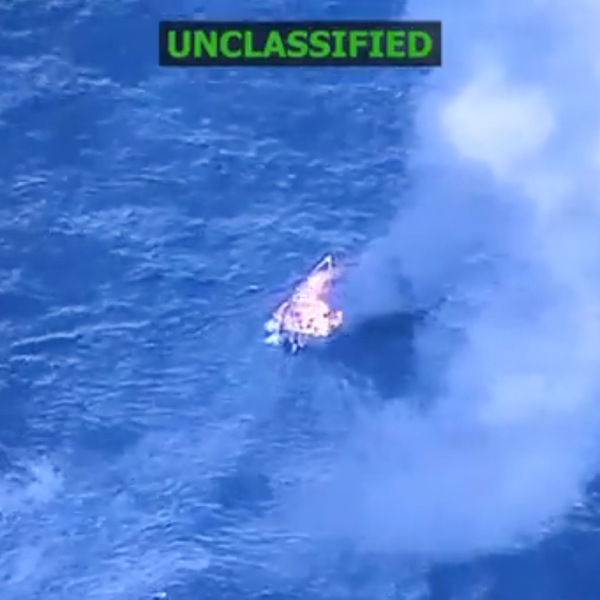
Just five years after bombing Libya to dispose of Muammar Gaddafi, the US is now officially bombing the country again, this time against alleged Isis terrorist strongholds that cropped up in the power vacuum created by the last bombing.
It's yet another episode of the War on Terror Circle of Life, where the US bombs a country and then funnels weapons into the region, which leads to chaos and the opportunity for terrorist organizations, which then leads more US bombing.
Like usual in the Obama administration's wars, there was no Congressional vote on the latest airstrikes in Libya and no declaration of war as required by the Constitution. The administration is pinning the legal authority for this military incursion on the 2001 Authorization for Military Force that was meant for Afghanistan and the perpetrators of 9/11, al-Qaida. Isis, of course, didn't exist until years later, and the two groups are now enemies, but those technicalities don't seem to bother the Obama administration, which is continuing to expand US military presence abroad with little to no public input.
The pattern of bombing-chaos-bombing in Libya follows the same pattern as Iraq, which was largely free of al-Qaida members before the US invasion in 2003, only to see it become a terrorist hotbed for the group once the US military arrived, eventually leading to the formation of Isis. Iraq War III has been quietly but steadily increasing for months now - the US has well over 5,000 troops back in the country after leaving at the end of 2011. The US troop presence went up again recently, recently reaching battalion-level numbers.
With even less fanfare, the same cycle has been playing out in Yemen, which the US has been backing in its appalling and indiscriminate Saudi Arabian bombing campaign that has killed thousands of civilians and led to many calls of war crimes. The war there continues to receives scant coverage in the media and is completely ignored by both presidential campaigns despite the fact that it has also created space for al-Qaida of the Arabian Peninsula (AQAP) to completely rejuvenate itself. As a Reuters investigation in April put it, AQAP has "become stronger than at any time since it first emerged almost 20 years ago."
The US quietly announced in May that it now has troops inside Yemen, fighting the same al-Qaida that it helped strengthen by supporting the Saudi war.
And where will we be in Syria in six months? Well, if Hillary Clinton wins the 2016 presidential election, her campaign is already promising a "reset" on US-Syria policy, where the military has already been dropping bombs for more than a year. Her "reset" policy, described by an advisor in the media last week, sounds an awful lot like she will be starting a war against the Assad regime, in addition to a wider bombing campaign against Isis she has already promised should she get into office.
It's worth noting that the US has been accused of killing dozens of civilians in Syria with its airstrikes on at least two different occasions in the last few weeks. How they plan on avoiding even more destruction - and backlash - when the conflict increases is anyone's guess.
As foreign policy expert Micah Zenko pointed out, when so-called Iraq War III first started almost two years ago now, officials claimed it "will be of a limited duration." In Yemen two months ago, they absurdly said that "we view this as short-term," despite the crisis-level situation they helped create inside the country.
With Libya this time around, I guess we can be relieved that at least the US government isn't outwardly lying about any time limits on this military incursion. As the Guardian's Spencer Ackerman reported, "the US officials say [this] will be a sustained offensive against the militant group," and a Pentagon spokesman admitted "We don't have an end point at this particular point of time."
Whoever is in office after Obama leaves in January will have many decisions to make about wars across the Middle East. But one thing seems clear: the government's established pattern of needing to address the problems its own past actions helped create will continue.
An Urgent Message From Our Co-Founder
Dear Common Dreams reader, It’s been nearly 30 years since I co-founded Common Dreams with my late wife, Lina Newhouser. We had the radical notion that journalism should serve the public good, not corporate profits. It was clear to us from the outset what it would take to build such a project. No paid advertisements. No corporate sponsors. No millionaire publisher telling us what to think or do. Many people said we wouldn't last a year, but we proved those doubters wrong. Together with a tremendous team of journalists and dedicated staff, we built an independent media outlet free from the constraints of profits and corporate control. Our mission has always been simple: To inform. To inspire. To ignite change for the common good. Building Common Dreams was not easy. Our survival was never guaranteed. When you take on the most powerful forces—Wall Street greed, fossil fuel industry destruction, Big Tech lobbyists, and uber-rich oligarchs who have spent billions upon billions rigging the economy and democracy in their favor—the only bulwark you have is supporters who believe in your work. But here’s the urgent message from me today. It's never been this bad out there. And it's never been this hard to keep us going. At the very moment Common Dreams is most needed, the threats we face are intensifying. We need your support now more than ever. We don't accept corporate advertising and never will. We don't have a paywall because we don't think people should be blocked from critical news based on their ability to pay. Everything we do is funded by the donations of readers like you. When everyone does the little they can afford, we are strong. But if that support retreats or dries up, so do we. Will you donate now to make sure Common Dreams not only survives but thrives? —Craig Brown, Co-founder |
Just five years after bombing Libya to dispose of Muammar Gaddafi, the US is now officially bombing the country again, this time against alleged Isis terrorist strongholds that cropped up in the power vacuum created by the last bombing.
It's yet another episode of the War on Terror Circle of Life, where the US bombs a country and then funnels weapons into the region, which leads to chaos and the opportunity for terrorist organizations, which then leads more US bombing.
Like usual in the Obama administration's wars, there was no Congressional vote on the latest airstrikes in Libya and no declaration of war as required by the Constitution. The administration is pinning the legal authority for this military incursion on the 2001 Authorization for Military Force that was meant for Afghanistan and the perpetrators of 9/11, al-Qaida. Isis, of course, didn't exist until years later, and the two groups are now enemies, but those technicalities don't seem to bother the Obama administration, which is continuing to expand US military presence abroad with little to no public input.
The pattern of bombing-chaos-bombing in Libya follows the same pattern as Iraq, which was largely free of al-Qaida members before the US invasion in 2003, only to see it become a terrorist hotbed for the group once the US military arrived, eventually leading to the formation of Isis. Iraq War III has been quietly but steadily increasing for months now - the US has well over 5,000 troops back in the country after leaving at the end of 2011. The US troop presence went up again recently, recently reaching battalion-level numbers.
With even less fanfare, the same cycle has been playing out in Yemen, which the US has been backing in its appalling and indiscriminate Saudi Arabian bombing campaign that has killed thousands of civilians and led to many calls of war crimes. The war there continues to receives scant coverage in the media and is completely ignored by both presidential campaigns despite the fact that it has also created space for al-Qaida of the Arabian Peninsula (AQAP) to completely rejuvenate itself. As a Reuters investigation in April put it, AQAP has "become stronger than at any time since it first emerged almost 20 years ago."
The US quietly announced in May that it now has troops inside Yemen, fighting the same al-Qaida that it helped strengthen by supporting the Saudi war.
And where will we be in Syria in six months? Well, if Hillary Clinton wins the 2016 presidential election, her campaign is already promising a "reset" on US-Syria policy, where the military has already been dropping bombs for more than a year. Her "reset" policy, described by an advisor in the media last week, sounds an awful lot like she will be starting a war against the Assad regime, in addition to a wider bombing campaign against Isis she has already promised should she get into office.
It's worth noting that the US has been accused of killing dozens of civilians in Syria with its airstrikes on at least two different occasions in the last few weeks. How they plan on avoiding even more destruction - and backlash - when the conflict increases is anyone's guess.
As foreign policy expert Micah Zenko pointed out, when so-called Iraq War III first started almost two years ago now, officials claimed it "will be of a limited duration." In Yemen two months ago, they absurdly said that "we view this as short-term," despite the crisis-level situation they helped create inside the country.
With Libya this time around, I guess we can be relieved that at least the US government isn't outwardly lying about any time limits on this military incursion. As the Guardian's Spencer Ackerman reported, "the US officials say [this] will be a sustained offensive against the militant group," and a Pentagon spokesman admitted "We don't have an end point at this particular point of time."
Whoever is in office after Obama leaves in January will have many decisions to make about wars across the Middle East. But one thing seems clear: the government's established pattern of needing to address the problems its own past actions helped create will continue.
Just five years after bombing Libya to dispose of Muammar Gaddafi, the US is now officially bombing the country again, this time against alleged Isis terrorist strongholds that cropped up in the power vacuum created by the last bombing.
It's yet another episode of the War on Terror Circle of Life, where the US bombs a country and then funnels weapons into the region, which leads to chaos and the opportunity for terrorist organizations, which then leads more US bombing.
Like usual in the Obama administration's wars, there was no Congressional vote on the latest airstrikes in Libya and no declaration of war as required by the Constitution. The administration is pinning the legal authority for this military incursion on the 2001 Authorization for Military Force that was meant for Afghanistan and the perpetrators of 9/11, al-Qaida. Isis, of course, didn't exist until years later, and the two groups are now enemies, but those technicalities don't seem to bother the Obama administration, which is continuing to expand US military presence abroad with little to no public input.
The pattern of bombing-chaos-bombing in Libya follows the same pattern as Iraq, which was largely free of al-Qaida members before the US invasion in 2003, only to see it become a terrorist hotbed for the group once the US military arrived, eventually leading to the formation of Isis. Iraq War III has been quietly but steadily increasing for months now - the US has well over 5,000 troops back in the country after leaving at the end of 2011. The US troop presence went up again recently, recently reaching battalion-level numbers.
With even less fanfare, the same cycle has been playing out in Yemen, which the US has been backing in its appalling and indiscriminate Saudi Arabian bombing campaign that has killed thousands of civilians and led to many calls of war crimes. The war there continues to receives scant coverage in the media and is completely ignored by both presidential campaigns despite the fact that it has also created space for al-Qaida of the Arabian Peninsula (AQAP) to completely rejuvenate itself. As a Reuters investigation in April put it, AQAP has "become stronger than at any time since it first emerged almost 20 years ago."
The US quietly announced in May that it now has troops inside Yemen, fighting the same al-Qaida that it helped strengthen by supporting the Saudi war.
And where will we be in Syria in six months? Well, if Hillary Clinton wins the 2016 presidential election, her campaign is already promising a "reset" on US-Syria policy, where the military has already been dropping bombs for more than a year. Her "reset" policy, described by an advisor in the media last week, sounds an awful lot like she will be starting a war against the Assad regime, in addition to a wider bombing campaign against Isis she has already promised should she get into office.
It's worth noting that the US has been accused of killing dozens of civilians in Syria with its airstrikes on at least two different occasions in the last few weeks. How they plan on avoiding even more destruction - and backlash - when the conflict increases is anyone's guess.
As foreign policy expert Micah Zenko pointed out, when so-called Iraq War III first started almost two years ago now, officials claimed it "will be of a limited duration." In Yemen two months ago, they absurdly said that "we view this as short-term," despite the crisis-level situation they helped create inside the country.
With Libya this time around, I guess we can be relieved that at least the US government isn't outwardly lying about any time limits on this military incursion. As the Guardian's Spencer Ackerman reported, "the US officials say [this] will be a sustained offensive against the militant group," and a Pentagon spokesman admitted "We don't have an end point at this particular point of time."
Whoever is in office after Obama leaves in January will have many decisions to make about wars across the Middle East. But one thing seems clear: the government's established pattern of needing to address the problems its own past actions helped create will continue.