SUBSCRIBE TO OUR FREE NEWSLETTER
Daily news & progressive opinion—funded by the people, not the corporations—delivered straight to your inbox.
5
#000000
#FFFFFF
To donate by check, phone, or other method, see our More Ways to Give page.
Daily news & progressive opinion—funded by the people, not the corporations—delivered straight to your inbox.
Republican voter suppression turned Arizona's primary into a fiasco that forced people to wait in five-hour-long lines to vote. Many were turned away.
Wisconsin Republicans are also disenfranchising citizens with laws designed to discourage voting by groups that might vote for Democrats. As many as 300,000 voters could be turned away from voting. How will this affect Tuesday's primary?
Wisconsin Voter Suppression
Republican voter suppression turned Arizona's primary into a fiasco that forced people to wait in five-hour-long lines to vote. Many were turned away.
Wisconsin Republicans are also disenfranchising citizens with laws designed to discourage voting by groups that might vote for Democrats. As many as 300,000 voters could be turned away from voting. How will this affect Tuesday's primary?
Wisconsin Voter Suppression
Wisconsin Republicans have pushed through numerous laws designed to keep certain kinds of people from voting. These laws restrict voter registration; limit the places where people can vote; impose ID requirements that exclude student, veteran and other usually standard forms of ID; greatly reduce early voting hours, including completely eliminating early voting during non-working hours; require voters to stand in long lines at the motor vehicles' office for ID, and other suppression techniques.
To top it off, the law requires the state to run a public education campaign to help voters learn what they need to do to vote, but state Republicans refused to allocate the money for that campaign.
Just how does Wisconsin suppress voting? Jon Green at AMERICAblog sums it up nicely, writing, "The state has passed practically every 21st Century voting restriction we thought Republicans were capable of and then some."
* Photo ID requirement for voting
* Reducing early voting from 30 days to 12, while eliminating it entirely on evenings and weekends
* Require proof of residence when registering to vote
* Eliminated the certification of statewide voter registrars, meaning that anyone who registers others to vote can only do so in the county in which they're certified
* Increased the residency requirement for voting from 10 days to 28 (excepting presidential elections)
* Require that citizens who move within the state less than four weeks prior to an election vote in their old locality
* Eliminated faxing and emailing of absentee ballots to anyone other than military or overseas voters
* Prohibited municipal clerks from returning absentee ballots to citizens to fix mistakes on their forms
* Required an area for poll monitors be set up between three and eight feet from the table where voters sign in
* Eliminated straight-ticket voting for all but military or overseas voters, increasing wait times at polling locations
* Made it harder to use a student ID as proof of residence when registering to vote
The ACLU has a pending lawsuit asking courts to overturn Wisconsin's voter suppression efforts and explains why, in "Frank v. Walker: Fighting Voter Suppression in Wisconsin",
Wisconsin's voter ID law is one of the harshest in the country and requires voters to produce one of a few specified forms of photo identification in order to vote. This restriction imposes a substantial burden on the right to vote by requiring photo identification that many voters do not have, and that many voters cannot easily obtain, in violation of the Fourteenth Amendment of the Constitution.
Wisconsin's voter ID laws require many people to stand in line at the department of motor vehicles to get an ID. Ari Berman at The Nation explains how this works out, in "Wisconsin's Voter-ID Law Could Block 300,000 Registered Voters From the Polls":
Johnny Randle, a 74-year-old African-American resident of Milwaukee, moved to Wisconsin from Mississippi in 2011... Randle, with the help of his daughter, petitioned the DMV to issue him a free ID for voting because he could not afford to pay for his Mississippi birth certificate.
After a five-month "adjudication process," the DMV denied his request. His daughter ultimately tracked down his Mississippi birth certificate, but the name listed, Johnnie Marton Randall, did not match the name he'd used his entire life, Johnny Martin Randle. The DMV said that he would either need to correct his name through the Social Security Administration and get a new Social Security card reflecting the name on his birth certificate or go to court to "change" his name and "provide court documents reflecting that your name has legally been changed to read as 'Johnny M Randle.'" But Randle worried that any change to his Social Security information might interrupt the monthly disability payments he survives on.
Randle was forced to choose between his livelihood and his right to vote.
... Randle is one of 300,000 registered voters in Wisconsin, 9 percent of the electorate, who do not have a government-issued photo ID and could be disenfranchised by the state's new voter-ID law.
The Nation breaks down the numbers of which groups will be more likely to be disenfranchised:
In 2012, African-American voters in Wisconsin were 1.7 times as likely as white voters to lack a driver's license or state photo ID, and Latino voters were 2.6 times as likely as white voters to lack such ID. More than 60 percent of people who've requested a photo ID for voting from the DMV have been black or Hispanic, according to legal filings.
The law also targets students. Student IDs from most public and private universities and colleges are not accepted because they don't contain signatures or a two-year expiration date (compared to a ten-year expiration for driver's licenses). ...
That means many schools, including the University of Wisconsin-Madison, are issuing separate IDs for students to vote, an expensive and time-consuming process for students and administrators. Students who use the new IDs will also have to bring proof of enrollment from their schools, an extra burden of proof that only applies to younger voters.
Students, people of color, older people who will have trouble locating birth certificates ... sounds like ... Democrats! And of course cutting back on early voting hours - in particular eliminating non-working hours like night and weekend voting - serves one and only one purpose, making it harder to vote.
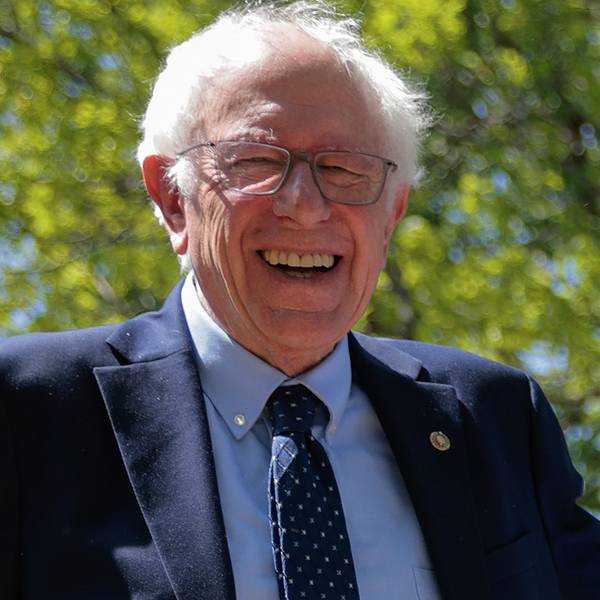
The Hill quotes candidate Bernie Sanders, in "Sanders: Wisconsin voter ID laws are 'un-American'":
"Trying to figure out ways, 'Gee, senior citizens may vote against me, how do I make it harder for them to participate? Young people may vote against me, how do I make sure that many of them will not vote?'" Sanders said, emulating what he thinks a Republican lawmaker would say.
Tuesday's Primary
As a result of these voter-suppression efforts as many as 300,000 Wisconsin citizens who are eligible and registered to vote but don't have the correct ID could be affected.
While the laws target groups that tend to vote more for Democrats than Republicans, it is unclear how this will affect Tuesday's Democratic primary results. Who gains and who loses from this? In previous primaries, more younger voters have voted for Sanders than Clinton by large margins. These voters will face serious disenfranchisement. However older voters have voted for Clinton by large margins, and they also face disenfranchisement. People of color, another demographic facing Wisconsin disenfranchisement, have voted for Clinton or Sanders depending more on region and ancestry, with southern and older African Americans voting for Clinton by very large margins, while Asian-Pacific and younger African Americans have tended to vote more for Sanders.
Will disenfranchisement by age benefit Clinton, by suppressing Sanders' large advantage with students? Will disenfranchisement of people of color benefit Sanders because of Clinton's previous advantages with older African Americans? Will disenfranchisement due to cutbacks in early voting days and especially those cutting the ability vote after work and on weekends suppress the vote and cause very long lines to vote?
How many voters will be turned away? How long will the voting lines extend? Which candidate will have her or his voters suppressed the most? We will know very soon. Unfortunately, this is not the kind of election result citizens in a democracy should be anticipating.
Dear Common Dreams reader, It’s been nearly 30 years since I co-founded Common Dreams with my late wife, Lina Newhouser. We had the radical notion that journalism should serve the public good, not corporate profits. It was clear to us from the outset what it would take to build such a project. No paid advertisements. No corporate sponsors. No millionaire publisher telling us what to think or do. Many people said we wouldn't last a year, but we proved those doubters wrong. Together with a tremendous team of journalists and dedicated staff, we built an independent media outlet free from the constraints of profits and corporate control. Our mission has always been simple: To inform. To inspire. To ignite change for the common good. Building Common Dreams was not easy. Our survival was never guaranteed. When you take on the most powerful forces—Wall Street greed, fossil fuel industry destruction, Big Tech lobbyists, and uber-rich oligarchs who have spent billions upon billions rigging the economy and democracy in their favor—the only bulwark you have is supporters who believe in your work. But here’s the urgent message from me today. It's never been this bad out there. And it's never been this hard to keep us going. At the very moment Common Dreams is most needed, the threats we face are intensifying. We need your support now more than ever. We don't accept corporate advertising and never will. We don't have a paywall because we don't think people should be blocked from critical news based on their ability to pay. Everything we do is funded by the donations of readers like you. When everyone does the little they can afford, we are strong. But if that support retreats or dries up, so do we. Will you donate now to make sure Common Dreams not only survives but thrives? —Craig Brown, Co-founder |
Republican voter suppression turned Arizona's primary into a fiasco that forced people to wait in five-hour-long lines to vote. Many were turned away.
Wisconsin Republicans are also disenfranchising citizens with laws designed to discourage voting by groups that might vote for Democrats. As many as 300,000 voters could be turned away from voting. How will this affect Tuesday's primary?
Wisconsin Voter Suppression
Wisconsin Republicans have pushed through numerous laws designed to keep certain kinds of people from voting. These laws restrict voter registration; limit the places where people can vote; impose ID requirements that exclude student, veteran and other usually standard forms of ID; greatly reduce early voting hours, including completely eliminating early voting during non-working hours; require voters to stand in long lines at the motor vehicles' office for ID, and other suppression techniques.
To top it off, the law requires the state to run a public education campaign to help voters learn what they need to do to vote, but state Republicans refused to allocate the money for that campaign.
Just how does Wisconsin suppress voting? Jon Green at AMERICAblog sums it up nicely, writing, "The state has passed practically every 21st Century voting restriction we thought Republicans were capable of and then some."
* Photo ID requirement for voting
* Reducing early voting from 30 days to 12, while eliminating it entirely on evenings and weekends
* Require proof of residence when registering to vote
* Eliminated the certification of statewide voter registrars, meaning that anyone who registers others to vote can only do so in the county in which they're certified
* Increased the residency requirement for voting from 10 days to 28 (excepting presidential elections)
* Require that citizens who move within the state less than four weeks prior to an election vote in their old locality
* Eliminated faxing and emailing of absentee ballots to anyone other than military or overseas voters
* Prohibited municipal clerks from returning absentee ballots to citizens to fix mistakes on their forms
* Required an area for poll monitors be set up between three and eight feet from the table where voters sign in
* Eliminated straight-ticket voting for all but military or overseas voters, increasing wait times at polling locations
* Made it harder to use a student ID as proof of residence when registering to vote
The ACLU has a pending lawsuit asking courts to overturn Wisconsin's voter suppression efforts and explains why, in "Frank v. Walker: Fighting Voter Suppression in Wisconsin",
Wisconsin's voter ID law is one of the harshest in the country and requires voters to produce one of a few specified forms of photo identification in order to vote. This restriction imposes a substantial burden on the right to vote by requiring photo identification that many voters do not have, and that many voters cannot easily obtain, in violation of the Fourteenth Amendment of the Constitution.
Wisconsin's voter ID laws require many people to stand in line at the department of motor vehicles to get an ID. Ari Berman at The Nation explains how this works out, in "Wisconsin's Voter-ID Law Could Block 300,000 Registered Voters From the Polls":
Johnny Randle, a 74-year-old African-American resident of Milwaukee, moved to Wisconsin from Mississippi in 2011... Randle, with the help of his daughter, petitioned the DMV to issue him a free ID for voting because he could not afford to pay for his Mississippi birth certificate.
After a five-month "adjudication process," the DMV denied his request. His daughter ultimately tracked down his Mississippi birth certificate, but the name listed, Johnnie Marton Randall, did not match the name he'd used his entire life, Johnny Martin Randle. The DMV said that he would either need to correct his name through the Social Security Administration and get a new Social Security card reflecting the name on his birth certificate or go to court to "change" his name and "provide court documents reflecting that your name has legally been changed to read as 'Johnny M Randle.'" But Randle worried that any change to his Social Security information might interrupt the monthly disability payments he survives on.
Randle was forced to choose between his livelihood and his right to vote.
... Randle is one of 300,000 registered voters in Wisconsin, 9 percent of the electorate, who do not have a government-issued photo ID and could be disenfranchised by the state's new voter-ID law.
The Nation breaks down the numbers of which groups will be more likely to be disenfranchised:
In 2012, African-American voters in Wisconsin were 1.7 times as likely as white voters to lack a driver's license or state photo ID, and Latino voters were 2.6 times as likely as white voters to lack such ID. More than 60 percent of people who've requested a photo ID for voting from the DMV have been black or Hispanic, according to legal filings.
The law also targets students. Student IDs from most public and private universities and colleges are not accepted because they don't contain signatures or a two-year expiration date (compared to a ten-year expiration for driver's licenses). ...
That means many schools, including the University of Wisconsin-Madison, are issuing separate IDs for students to vote, an expensive and time-consuming process for students and administrators. Students who use the new IDs will also have to bring proof of enrollment from their schools, an extra burden of proof that only applies to younger voters.
Students, people of color, older people who will have trouble locating birth certificates ... sounds like ... Democrats! And of course cutting back on early voting hours - in particular eliminating non-working hours like night and weekend voting - serves one and only one purpose, making it harder to vote.
The Hill quotes candidate Bernie Sanders, in "Sanders: Wisconsin voter ID laws are 'un-American'":
"Trying to figure out ways, 'Gee, senior citizens may vote against me, how do I make it harder for them to participate? Young people may vote against me, how do I make sure that many of them will not vote?'" Sanders said, emulating what he thinks a Republican lawmaker would say.
Tuesday's Primary
As a result of these voter-suppression efforts as many as 300,000 Wisconsin citizens who are eligible and registered to vote but don't have the correct ID could be affected.
While the laws target groups that tend to vote more for Democrats than Republicans, it is unclear how this will affect Tuesday's Democratic primary results. Who gains and who loses from this? In previous primaries, more younger voters have voted for Sanders than Clinton by large margins. These voters will face serious disenfranchisement. However older voters have voted for Clinton by large margins, and they also face disenfranchisement. People of color, another demographic facing Wisconsin disenfranchisement, have voted for Clinton or Sanders depending more on region and ancestry, with southern and older African Americans voting for Clinton by very large margins, while Asian-Pacific and younger African Americans have tended to vote more for Sanders.
Will disenfranchisement by age benefit Clinton, by suppressing Sanders' large advantage with students? Will disenfranchisement of people of color benefit Sanders because of Clinton's previous advantages with older African Americans? Will disenfranchisement due to cutbacks in early voting days and especially those cutting the ability vote after work and on weekends suppress the vote and cause very long lines to vote?
How many voters will be turned away? How long will the voting lines extend? Which candidate will have her or his voters suppressed the most? We will know very soon. Unfortunately, this is not the kind of election result citizens in a democracy should be anticipating.
Republican voter suppression turned Arizona's primary into a fiasco that forced people to wait in five-hour-long lines to vote. Many were turned away.
Wisconsin Republicans are also disenfranchising citizens with laws designed to discourage voting by groups that might vote for Democrats. As many as 300,000 voters could be turned away from voting. How will this affect Tuesday's primary?
Wisconsin Voter Suppression
Wisconsin Republicans have pushed through numerous laws designed to keep certain kinds of people from voting. These laws restrict voter registration; limit the places where people can vote; impose ID requirements that exclude student, veteran and other usually standard forms of ID; greatly reduce early voting hours, including completely eliminating early voting during non-working hours; require voters to stand in long lines at the motor vehicles' office for ID, and other suppression techniques.
To top it off, the law requires the state to run a public education campaign to help voters learn what they need to do to vote, but state Republicans refused to allocate the money for that campaign.
Just how does Wisconsin suppress voting? Jon Green at AMERICAblog sums it up nicely, writing, "The state has passed practically every 21st Century voting restriction we thought Republicans were capable of and then some."
* Photo ID requirement for voting
* Reducing early voting from 30 days to 12, while eliminating it entirely on evenings and weekends
* Require proof of residence when registering to vote
* Eliminated the certification of statewide voter registrars, meaning that anyone who registers others to vote can only do so in the county in which they're certified
* Increased the residency requirement for voting from 10 days to 28 (excepting presidential elections)
* Require that citizens who move within the state less than four weeks prior to an election vote in their old locality
* Eliminated faxing and emailing of absentee ballots to anyone other than military or overseas voters
* Prohibited municipal clerks from returning absentee ballots to citizens to fix mistakes on their forms
* Required an area for poll monitors be set up between three and eight feet from the table where voters sign in
* Eliminated straight-ticket voting for all but military or overseas voters, increasing wait times at polling locations
* Made it harder to use a student ID as proof of residence when registering to vote
The ACLU has a pending lawsuit asking courts to overturn Wisconsin's voter suppression efforts and explains why, in "Frank v. Walker: Fighting Voter Suppression in Wisconsin",
Wisconsin's voter ID law is one of the harshest in the country and requires voters to produce one of a few specified forms of photo identification in order to vote. This restriction imposes a substantial burden on the right to vote by requiring photo identification that many voters do not have, and that many voters cannot easily obtain, in violation of the Fourteenth Amendment of the Constitution.
Wisconsin's voter ID laws require many people to stand in line at the department of motor vehicles to get an ID. Ari Berman at The Nation explains how this works out, in "Wisconsin's Voter-ID Law Could Block 300,000 Registered Voters From the Polls":
Johnny Randle, a 74-year-old African-American resident of Milwaukee, moved to Wisconsin from Mississippi in 2011... Randle, with the help of his daughter, petitioned the DMV to issue him a free ID for voting because he could not afford to pay for his Mississippi birth certificate.
After a five-month "adjudication process," the DMV denied his request. His daughter ultimately tracked down his Mississippi birth certificate, but the name listed, Johnnie Marton Randall, did not match the name he'd used his entire life, Johnny Martin Randle. The DMV said that he would either need to correct his name through the Social Security Administration and get a new Social Security card reflecting the name on his birth certificate or go to court to "change" his name and "provide court documents reflecting that your name has legally been changed to read as 'Johnny M Randle.'" But Randle worried that any change to his Social Security information might interrupt the monthly disability payments he survives on.
Randle was forced to choose between his livelihood and his right to vote.
... Randle is one of 300,000 registered voters in Wisconsin, 9 percent of the electorate, who do not have a government-issued photo ID and could be disenfranchised by the state's new voter-ID law.
The Nation breaks down the numbers of which groups will be more likely to be disenfranchised:
In 2012, African-American voters in Wisconsin were 1.7 times as likely as white voters to lack a driver's license or state photo ID, and Latino voters were 2.6 times as likely as white voters to lack such ID. More than 60 percent of people who've requested a photo ID for voting from the DMV have been black or Hispanic, according to legal filings.
The law also targets students. Student IDs from most public and private universities and colleges are not accepted because they don't contain signatures or a two-year expiration date (compared to a ten-year expiration for driver's licenses). ...
That means many schools, including the University of Wisconsin-Madison, are issuing separate IDs for students to vote, an expensive and time-consuming process for students and administrators. Students who use the new IDs will also have to bring proof of enrollment from their schools, an extra burden of proof that only applies to younger voters.
Students, people of color, older people who will have trouble locating birth certificates ... sounds like ... Democrats! And of course cutting back on early voting hours - in particular eliminating non-working hours like night and weekend voting - serves one and only one purpose, making it harder to vote.
The Hill quotes candidate Bernie Sanders, in "Sanders: Wisconsin voter ID laws are 'un-American'":
"Trying to figure out ways, 'Gee, senior citizens may vote against me, how do I make it harder for them to participate? Young people may vote against me, how do I make sure that many of them will not vote?'" Sanders said, emulating what he thinks a Republican lawmaker would say.
Tuesday's Primary
As a result of these voter-suppression efforts as many as 300,000 Wisconsin citizens who are eligible and registered to vote but don't have the correct ID could be affected.
While the laws target groups that tend to vote more for Democrats than Republicans, it is unclear how this will affect Tuesday's Democratic primary results. Who gains and who loses from this? In previous primaries, more younger voters have voted for Sanders than Clinton by large margins. These voters will face serious disenfranchisement. However older voters have voted for Clinton by large margins, and they also face disenfranchisement. People of color, another demographic facing Wisconsin disenfranchisement, have voted for Clinton or Sanders depending more on region and ancestry, with southern and older African Americans voting for Clinton by very large margins, while Asian-Pacific and younger African Americans have tended to vote more for Sanders.
Will disenfranchisement by age benefit Clinton, by suppressing Sanders' large advantage with students? Will disenfranchisement of people of color benefit Sanders because of Clinton's previous advantages with older African Americans? Will disenfranchisement due to cutbacks in early voting days and especially those cutting the ability vote after work and on weekends suppress the vote and cause very long lines to vote?
How many voters will be turned away? How long will the voting lines extend? Which candidate will have her or his voters suppressed the most? We will know very soon. Unfortunately, this is not the kind of election result citizens in a democracy should be anticipating.