SUBSCRIBE TO OUR FREE NEWSLETTER
Daily news & progressive opinion—funded by the people, not the corporations—delivered straight to your inbox.
5
#000000
#FFFFFF
To donate by check, phone, or other method, see our More Ways to Give page.
Daily news & progressive opinion—funded by the people, not the corporations—delivered straight to your inbox.
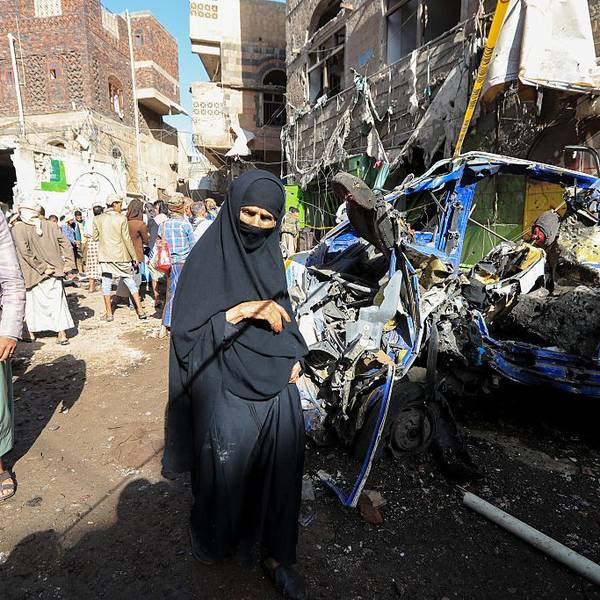
The New York Times (8/30/15) reported on the deaths of civilians in a military assault in Yemen. Wrote reporter Saeed Al-Batati:
Airstrikes by a Saudi-led military coalition killed at least 13 civilians working early Sunday at a water plant in northern Yemen, the plant's owner said.
The bombings appeared to be the latest in a series of airstrikes by Saudi Arabia or its Arab coalition partners that have hit civilian facilities with no apparent military target nearby.
The Washington Post (8/30/15) briefly covered the story too, using a Reuters wire report that gave a higher death toll:
An airstrike by warplanes from a Saudi-led coalition, which said it targeted a bomb-making factory, killed 36 civilians working Sunday at a bottling plant in the northern Yemeni province of Hajjah, residents said.
Noting that another airstrike had killed four people in Sanaa, Yemen's capital, the piece continued:
The attacks were the latest in an air campaign launched in March by a Saudi-led alliance in support of Yemen's exiled government, which is fighting Houthi forces allied with Iran.
Both of these reports left out the information that made this news particularly relevant to the papers' mostly American readership: The US government is actively backing the air war in Yemen that killed those civilians, as the Times and Post have both reported. The Times (3/26/15) wrote at the start of the Saudi assault:
A spokeswoman for the National Security Council said Wednesday night that the United States was providing intelligence and logistical support for the campaign in Yemen, and that President Obama had authorized a "joint planning cell" with Saudi Arabia to coordinate American support for the military offensive.
And the Post, in a piece headlined "How US Weapons Will Play a Huge Role in Saudi Arabia's War in Yemen" (3/26/15), noted that the weaponry involved largely comes from the US:
US officials said they will offer intelligence and logistical support to the Saudis, but that's really only a piece of it: The Saudi military is equipped with billions of dollars in advanced American-made weapons.
But that "huge role" often disappears when the the leading papers are discussing the carnage that results from the air attacks that the US is supporting and supplying. Thus when the Times' Rick Gladstone (8/22/15) reported that "Saudi-led airstrikes on a residential district in Yemen's southwestern city of Taiz had killed more than 65 civilians, including 17 people from one family," according to Doctors Without Borders, and that the death toll in the war included "hundreds of civilians killed in airstrikes," Washington's role in facilitating those deaths went unmentioned.
Dear Common Dreams reader, It’s been nearly 30 years since I co-founded Common Dreams with my late wife, Lina Newhouser. We had the radical notion that journalism should serve the public good, not corporate profits. It was clear to us from the outset what it would take to build such a project. No paid advertisements. No corporate sponsors. No millionaire publisher telling us what to think or do. Many people said we wouldn't last a year, but we proved those doubters wrong. Together with a tremendous team of journalists and dedicated staff, we built an independent media outlet free from the constraints of profits and corporate control. Our mission has always been simple: To inform. To inspire. To ignite change for the common good. Building Common Dreams was not easy. Our survival was never guaranteed. When you take on the most powerful forces—Wall Street greed, fossil fuel industry destruction, Big Tech lobbyists, and uber-rich oligarchs who have spent billions upon billions rigging the economy and democracy in their favor—the only bulwark you have is supporters who believe in your work. But here’s the urgent message from me today. It's never been this bad out there. And it's never been this hard to keep us going. At the very moment Common Dreams is most needed, the threats we face are intensifying. We need your support now more than ever. We don't accept corporate advertising and never will. We don't have a paywall because we don't think people should be blocked from critical news based on their ability to pay. Everything we do is funded by the donations of readers like you. When everyone does the little they can afford, we are strong. But if that support retreats or dries up, so do we. Will you donate now to make sure Common Dreams not only survives but thrives? —Craig Brown, Co-founder |
The New York Times (8/30/15) reported on the deaths of civilians in a military assault in Yemen. Wrote reporter Saeed Al-Batati:
Airstrikes by a Saudi-led military coalition killed at least 13 civilians working early Sunday at a water plant in northern Yemen, the plant's owner said.
The bombings appeared to be the latest in a series of airstrikes by Saudi Arabia or its Arab coalition partners that have hit civilian facilities with no apparent military target nearby.
The Washington Post (8/30/15) briefly covered the story too, using a Reuters wire report that gave a higher death toll:
An airstrike by warplanes from a Saudi-led coalition, which said it targeted a bomb-making factory, killed 36 civilians working Sunday at a bottling plant in the northern Yemeni province of Hajjah, residents said.
Noting that another airstrike had killed four people in Sanaa, Yemen's capital, the piece continued:
The attacks were the latest in an air campaign launched in March by a Saudi-led alliance in support of Yemen's exiled government, which is fighting Houthi forces allied with Iran.
Both of these reports left out the information that made this news particularly relevant to the papers' mostly American readership: The US government is actively backing the air war in Yemen that killed those civilians, as the Times and Post have both reported. The Times (3/26/15) wrote at the start of the Saudi assault:
A spokeswoman for the National Security Council said Wednesday night that the United States was providing intelligence and logistical support for the campaign in Yemen, and that President Obama had authorized a "joint planning cell" with Saudi Arabia to coordinate American support for the military offensive.
And the Post, in a piece headlined "How US Weapons Will Play a Huge Role in Saudi Arabia's War in Yemen" (3/26/15), noted that the weaponry involved largely comes from the US:
US officials said they will offer intelligence and logistical support to the Saudis, but that's really only a piece of it: The Saudi military is equipped with billions of dollars in advanced American-made weapons.
But that "huge role" often disappears when the the leading papers are discussing the carnage that results from the air attacks that the US is supporting and supplying. Thus when the Times' Rick Gladstone (8/22/15) reported that "Saudi-led airstrikes on a residential district in Yemen's southwestern city of Taiz had killed more than 65 civilians, including 17 people from one family," according to Doctors Without Borders, and that the death toll in the war included "hundreds of civilians killed in airstrikes," Washington's role in facilitating those deaths went unmentioned.
The New York Times (8/30/15) reported on the deaths of civilians in a military assault in Yemen. Wrote reporter Saeed Al-Batati:
Airstrikes by a Saudi-led military coalition killed at least 13 civilians working early Sunday at a water plant in northern Yemen, the plant's owner said.
The bombings appeared to be the latest in a series of airstrikes by Saudi Arabia or its Arab coalition partners that have hit civilian facilities with no apparent military target nearby.
The Washington Post (8/30/15) briefly covered the story too, using a Reuters wire report that gave a higher death toll:
An airstrike by warplanes from a Saudi-led coalition, which said it targeted a bomb-making factory, killed 36 civilians working Sunday at a bottling plant in the northern Yemeni province of Hajjah, residents said.
Noting that another airstrike had killed four people in Sanaa, Yemen's capital, the piece continued:
The attacks were the latest in an air campaign launched in March by a Saudi-led alliance in support of Yemen's exiled government, which is fighting Houthi forces allied with Iran.
Both of these reports left out the information that made this news particularly relevant to the papers' mostly American readership: The US government is actively backing the air war in Yemen that killed those civilians, as the Times and Post have both reported. The Times (3/26/15) wrote at the start of the Saudi assault:
A spokeswoman for the National Security Council said Wednesday night that the United States was providing intelligence and logistical support for the campaign in Yemen, and that President Obama had authorized a "joint planning cell" with Saudi Arabia to coordinate American support for the military offensive.
And the Post, in a piece headlined "How US Weapons Will Play a Huge Role in Saudi Arabia's War in Yemen" (3/26/15), noted that the weaponry involved largely comes from the US:
US officials said they will offer intelligence and logistical support to the Saudis, but that's really only a piece of it: The Saudi military is equipped with billions of dollars in advanced American-made weapons.
But that "huge role" often disappears when the the leading papers are discussing the carnage that results from the air attacks that the US is supporting and supplying. Thus when the Times' Rick Gladstone (8/22/15) reported that "Saudi-led airstrikes on a residential district in Yemen's southwestern city of Taiz had killed more than 65 civilians, including 17 people from one family," according to Doctors Without Borders, and that the death toll in the war included "hundreds of civilians killed in airstrikes," Washington's role in facilitating those deaths went unmentioned.