
The Arctic is Shell's New Corporate Crisis
Twenty years ago, the oil giant Shell was plunged into a corporate crisis after it was internationally criticised for trying to dump the redundant Brent Spar oil platform in the North Sea and for being complicit in the murder of the acclaimed Nigerian activist, Ken Saro-Wiwa.
As Shell recoiled from the intense public scrutiny and criticism of these two events, the oil giant spent millions rebranding and rebuilding its image. It would take years for Shell to recover.
Since then, Shell has tried to argue that it is a responsible energy company, which is walking the tight-rope of sustainability on the one hand and society's short-term energy needs on the other, which includes fossil fuels.
Its critics have always maintained that Shell has acted deeply irresponsibility over the last two decades, missing a golden opportunity to lead the oil majors into a clean energy era.
They have pointed out that the company is still addicted to drilling for dirty carbon, even though the scientists have been warning for years that we cannot burn that carbon.
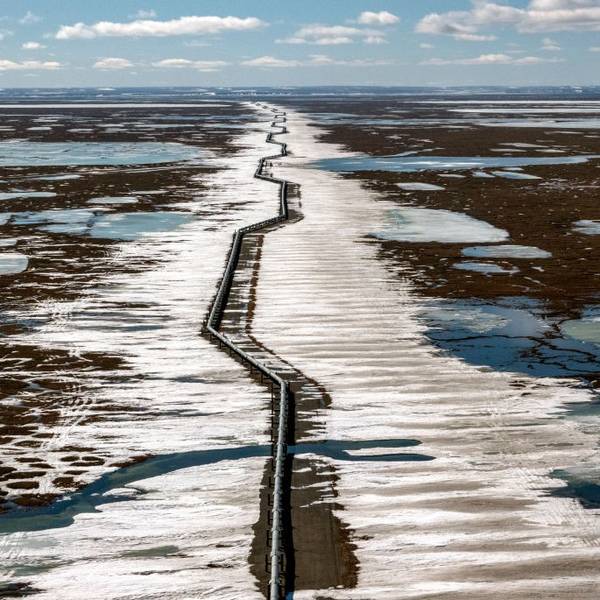
Shell has belligerently ignored the science and pushed ahead with its plans to drill in the dirty tar sands and fragile waters of the Arctic.
Why, you might ask is Shell behaving this way? Today's Telegraph argues that it is a sign of the easy oil being over, with the Arctic being one of the last few regions where vast quantities of oil could potentially be found.
"The Anglo-Dutch company, which is the most cautious of the major international oil companies, is prepared to soak up the bad publicity", argues the paper. "It knows that the Chukchi Sea is one of the last remaining regions that contain world-scale oil reserves that can be reached without taking a major geo-political risk."
Faced with a choice of a clean energy future or dirty risky oil, the oil giant has chosen the later. But such is the opposition to its activities, the Arctic is rapidly becoming the company's corporate crisis for the 21st Century.
Indeed, at Shell's AGM tomorrow, the oil giant will face a barrage of questions concerning its activities, including from Oil Change International (OCI), working with other environmental groups.
"Shell's Arctic program is a high-risk and high-cost attempt to clutch to a fossil fueled future that is slipping away," argues OCI's Hannah McKinnon, who is in the Hague. "Pouring billions of dollars into new fossil fuel reserves is like making a massive investment in landline telephones just as smartphones were hitting the market - it is not where the future is headed. Shell is refusing to see the writing on the wall," she adds.
This "writing on the wall" is plain for the company to see if only it dared to look. The oil giant, according to the Guardian, "has been accused of pursuing a strategy that would lead to potentially catastrophic climate change after an internal document acknowledged a global temperature rise of 4C, twice the level considered safe for the planet."
The AGM comes the day after a planned day of non-violent direct action in Seattle after a weekend protest which saw hundreds of "kayactivists" take to the water to protest against the company's Arctic drilling program.
A brightly coloured flotilla of kayaks, canoes and small boats demonstrated close to Shell's vast 400 foot long and 300 foot tall Polar Pioneer drilling rig in Elliott Bay off Seattle on Saturday. They carried banner such as "Climate Justice," "Oil-Free Future," and "Shell No, Seattle Draws The Line."
One of the many First Nations paddlers was Eric Day from the Swinomish Indian Tribe: "This is our livelihood. We need to protect it for the crabbers, for the fishermen," Day said. "We need to protect it for our children."
Another person protesting was Annette Klapstein, a 62-year-old retired attorney and member of activist group the Raging Grannies. "We here in Seattle do not want Shell in our port," argued Annette. "We want them to get out and change their business before they change our planet and destroy the life of future generations."
Also protesting was Annie Leonard, executive director of Greenpeace USA, "Why would we invest in an energy source that scientists say is leading us to catastrophe?" she asked.
That is a question Shell needs to answer at tomorrow's AGM.
We are at a crossroads
This country and this world are at a monumental crossroads. In a few short weeks, US voters will have an opportunity to beat back the forces of fascism and confront the billionaires who are rigging the economy, our media system, and our democracy, making it increasingly impossible for ordinary people to get by. We’re not just talking about the election. We’re talking about what must be done once these fascist elements are vanquished from power. We need a bolder set of solutions than what either major party has so far been willing to offer and a working-class movement ready to fight like hell for it. Trump didn't emerge from nowhere. The conditions that fueled MAGA authoritarianism were created by decades of radical neoliberal economic policies and a corrupt political system dominated by corporate interests. They slashed taxes on the super-rich, promising that the benefits would trickle down. They said giveaways to the corporate titans would make life more affordable for the rest of us. It was all bullshit. And when a bitter, betrayed populace searches for someone to blame, right-wing demagogues have little trouble finding scapegoats. People know when they're being lied to, but you won't hear any of this from the corporate media. Only independent journalism—powered and funded by people who believe in building a better world—can deliver truly trustworthy daily news. Our Fall Campaign is underway, and we need your help. To power our newsroom through the rest of the year, we need to raise $125,000 by midnight on October 31. So if you share our vision, please contribute whatever you can to sustain our work. |
Twenty years ago, the oil giant Shell was plunged into a corporate crisis after it was internationally criticised for trying to dump the redundant Brent Spar oil platform in the North Sea and for being complicit in the murder of the acclaimed Nigerian activist, Ken Saro-Wiwa.
As Shell recoiled from the intense public scrutiny and criticism of these two events, the oil giant spent millions rebranding and rebuilding its image. It would take years for Shell to recover.
Since then, Shell has tried to argue that it is a responsible energy company, which is walking the tight-rope of sustainability on the one hand and society's short-term energy needs on the other, which includes fossil fuels.
Its critics have always maintained that Shell has acted deeply irresponsibility over the last two decades, missing a golden opportunity to lead the oil majors into a clean energy era.
They have pointed out that the company is still addicted to drilling for dirty carbon, even though the scientists have been warning for years that we cannot burn that carbon.
Shell has belligerently ignored the science and pushed ahead with its plans to drill in the dirty tar sands and fragile waters of the Arctic.
Why, you might ask is Shell behaving this way? Today's Telegraph argues that it is a sign of the easy oil being over, with the Arctic being one of the last few regions where vast quantities of oil could potentially be found.
"The Anglo-Dutch company, which is the most cautious of the major international oil companies, is prepared to soak up the bad publicity", argues the paper. "It knows that the Chukchi Sea is one of the last remaining regions that contain world-scale oil reserves that can be reached without taking a major geo-political risk."
Faced with a choice of a clean energy future or dirty risky oil, the oil giant has chosen the later. But such is the opposition to its activities, the Arctic is rapidly becoming the company's corporate crisis for the 21st Century.
Indeed, at Shell's AGM tomorrow, the oil giant will face a barrage of questions concerning its activities, including from Oil Change International (OCI), working with other environmental groups.
"Shell's Arctic program is a high-risk and high-cost attempt to clutch to a fossil fueled future that is slipping away," argues OCI's Hannah McKinnon, who is in the Hague. "Pouring billions of dollars into new fossil fuel reserves is like making a massive investment in landline telephones just as smartphones were hitting the market - it is not where the future is headed. Shell is refusing to see the writing on the wall," she adds.
This "writing on the wall" is plain for the company to see if only it dared to look. The oil giant, according to the Guardian, "has been accused of pursuing a strategy that would lead to potentially catastrophic climate change after an internal document acknowledged a global temperature rise of 4C, twice the level considered safe for the planet."
The AGM comes the day after a planned day of non-violent direct action in Seattle after a weekend protest which saw hundreds of "kayactivists" take to the water to protest against the company's Arctic drilling program.
A brightly coloured flotilla of kayaks, canoes and small boats demonstrated close to Shell's vast 400 foot long and 300 foot tall Polar Pioneer drilling rig in Elliott Bay off Seattle on Saturday. They carried banner such as "Climate Justice," "Oil-Free Future," and "Shell No, Seattle Draws The Line."
One of the many First Nations paddlers was Eric Day from the Swinomish Indian Tribe: "This is our livelihood. We need to protect it for the crabbers, for the fishermen," Day said. "We need to protect it for our children."
Another person protesting was Annette Klapstein, a 62-year-old retired attorney and member of activist group the Raging Grannies. "We here in Seattle do not want Shell in our port," argued Annette. "We want them to get out and change their business before they change our planet and destroy the life of future generations."
Also protesting was Annie Leonard, executive director of Greenpeace USA, "Why would we invest in an energy source that scientists say is leading us to catastrophe?" she asked.
That is a question Shell needs to answer at tomorrow's AGM.
Twenty years ago, the oil giant Shell was plunged into a corporate crisis after it was internationally criticised for trying to dump the redundant Brent Spar oil platform in the North Sea and for being complicit in the murder of the acclaimed Nigerian activist, Ken Saro-Wiwa.
As Shell recoiled from the intense public scrutiny and criticism of these two events, the oil giant spent millions rebranding and rebuilding its image. It would take years for Shell to recover.
Since then, Shell has tried to argue that it is a responsible energy company, which is walking the tight-rope of sustainability on the one hand and society's short-term energy needs on the other, which includes fossil fuels.
Its critics have always maintained that Shell has acted deeply irresponsibility over the last two decades, missing a golden opportunity to lead the oil majors into a clean energy era.
They have pointed out that the company is still addicted to drilling for dirty carbon, even though the scientists have been warning for years that we cannot burn that carbon.
Shell has belligerently ignored the science and pushed ahead with its plans to drill in the dirty tar sands and fragile waters of the Arctic.
Why, you might ask is Shell behaving this way? Today's Telegraph argues that it is a sign of the easy oil being over, with the Arctic being one of the last few regions where vast quantities of oil could potentially be found.
"The Anglo-Dutch company, which is the most cautious of the major international oil companies, is prepared to soak up the bad publicity", argues the paper. "It knows that the Chukchi Sea is one of the last remaining regions that contain world-scale oil reserves that can be reached without taking a major geo-political risk."
Faced with a choice of a clean energy future or dirty risky oil, the oil giant has chosen the later. But such is the opposition to its activities, the Arctic is rapidly becoming the company's corporate crisis for the 21st Century.
Indeed, at Shell's AGM tomorrow, the oil giant will face a barrage of questions concerning its activities, including from Oil Change International (OCI), working with other environmental groups.
"Shell's Arctic program is a high-risk and high-cost attempt to clutch to a fossil fueled future that is slipping away," argues OCI's Hannah McKinnon, who is in the Hague. "Pouring billions of dollars into new fossil fuel reserves is like making a massive investment in landline telephones just as smartphones were hitting the market - it is not where the future is headed. Shell is refusing to see the writing on the wall," she adds.
This "writing on the wall" is plain for the company to see if only it dared to look. The oil giant, according to the Guardian, "has been accused of pursuing a strategy that would lead to potentially catastrophic climate change after an internal document acknowledged a global temperature rise of 4C, twice the level considered safe for the planet."
The AGM comes the day after a planned day of non-violent direct action in Seattle after a weekend protest which saw hundreds of "kayactivists" take to the water to protest against the company's Arctic drilling program.
A brightly coloured flotilla of kayaks, canoes and small boats demonstrated close to Shell's vast 400 foot long and 300 foot tall Polar Pioneer drilling rig in Elliott Bay off Seattle on Saturday. They carried banner such as "Climate Justice," "Oil-Free Future," and "Shell No, Seattle Draws The Line."
One of the many First Nations paddlers was Eric Day from the Swinomish Indian Tribe: "This is our livelihood. We need to protect it for the crabbers, for the fishermen," Day said. "We need to protect it for our children."
Another person protesting was Annette Klapstein, a 62-year-old retired attorney and member of activist group the Raging Grannies. "We here in Seattle do not want Shell in our port," argued Annette. "We want them to get out and change their business before they change our planet and destroy the life of future generations."
Also protesting was Annie Leonard, executive director of Greenpeace USA, "Why would we invest in an energy source that scientists say is leading us to catastrophe?" she asked.
That is a question Shell needs to answer at tomorrow's AGM.