

SUBSCRIBE TO OUR FREE NEWSLETTER
Daily news & progressive opinion—funded by the people, not the corporations—delivered straight to your inbox.
5
#000000
#FFFFFF
To donate by check, phone, or other method, see our More Ways to Give page.
Daily news & progressive opinion—funded by the people, not the corporations—delivered straight to your inbox.
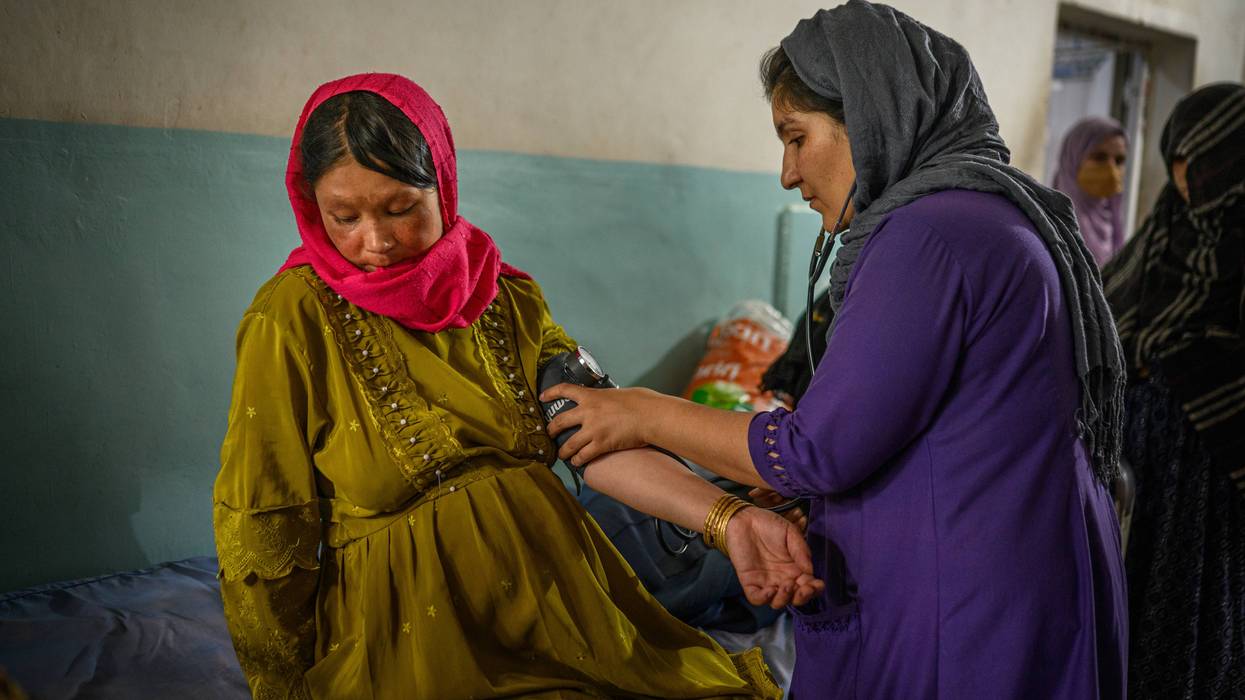
"Every dollar withdrawn from women's organizations is a dollar withdrawn from survivors of conflict-related sexual violence, displaced mothers, girls forced from school, and communities struggling to survive."
At least 1 million women and girls in conflict and disaster zones around the world have lost access to humanitarian aid as a result of massive funding cuts by the US under the Trump administration and other developed nations.
A report out on Friday from the United Nations Women's Program surveyed over 800 women's organizations across 52 countries, which provide emergency supplies, shelter to women fleeing violence, financial assistance to those in need, healthcare, mental health services, childcare, and treatment for sexual violence, among other support.
Sofia Calltorp, chief of humanitarian action for UN Women, described these organizations as "the muscle and lifeblood of the humanitarian response" in some of the world's most vulnerable war zones and disaster areas, including Afghanistan, the Democratic Republic of the Congo, Sudan, and Yemen.
But according to the report, since January 2025, 90% of these groups say they cannot meet current needs, and 60% say they are reaching fewer women and girls than before.
Three-quarters of the groups say that as a result of the cuts they have been forced to reduce staff, and four in ten expect to close in the next 12 months.
At the beginning of his second term, President Donald Trump conducted a sweeping and abrupt purge of US humanitarian aid, which fell from $14.1 billion in 2024 to just $3.4 billion in 2025.
Immediately after taking office, he froze all foreign assistance. And under the leadership of the world's first trillionaire, Elon Musk, and his so-called Department of Government Efficiency (DOGE), his administration suddenly canceled most funding from the US Agency for International Development (USAID), cutting development assistance by more than $40 billion, including over $10 billion in humanitarian assistance.
The US had previously provided 40% of all global humanitarian aid, and its stripping of funds was by far the most devastating. It was made worse when other nations, including France, Germany, and the UK, also cut billions as part of what is predicted to be a collective 28% reduction in aid from Group of 7 nations by the end of 2026, according to the Women's Refugee Commission.
As a report from Refugees International found, the Trump administration's cuts were especially targeted at programs that served women and girls around the world. They canceled 88% of maternal and child health funding, 94% of sexual and reproductive health funding, and 80% of gender-based violence prevention funding.
"Every dollar withdrawn from women's organizations is a dollar withdrawn from survivors of conflict-related sexual violence, displaced mothers, girls forced from school, and communities struggling to survive," Calltorp said.
The effects on the women who benefit from these programs have been swift and brutal, especially as global conflicts become more widespread and deadly.
While cases of conflict-related sexual violence doubled in 2025, nearly two-thirds of the women's groups surveyed said that the number of safe spaces and gender-based violence services has been significantly reduced or completely eliminated in their communities.
"Behind these numbers are devastating consequences," the UN said in a statement. "A woman seeking refuge from violence might show up at the door of a shelter that has shut down; a pregnant woman may have to walk for hours to reach a health clinic; or a mother may be denied food for her children."
“If I had funding, I would have supported her… helped her heal and rebuild her life."
The report contains testimony from leaders of some of the organizations bearing the burden of the cuts. To protect them from harm, the report did not include their names or the organizations they worked for.
A representative from one women-led organization in Sudan told UN Women that the cuts have forced them to scale back their services and resources.
As a result, one 17-year-old survivor of sexual violence went untreated for four days. She became pregnant before later attempting suicide and died after six months.
“If I had funding, I would have supported her… helped her heal and rebuild her life," said a representative from the organization.
Nine out of 10 organizations said they'd seen increases in poverty among women they serve, 8 in 10 have seen increases in girls dropping out of school, and 7 in 10 have seen an increase in forced marriage.
“Due to a lack of outreach workers in one neighborhood, within a few months we observed a sharp rise in adolescent pregnancies," said the representative of one organization in the Democratic Republic of the Congo.
Another group in the DRC said that they were forced to put more than 1,500 women-led households on waiting lists for aid.
"The most affected groups are single mothers and their children, for whom postponing support has worsened food insecurity and malnutrition," the group said.
"The cuts to women’s organizations are happening at the same time we are seeing women’s rights being eroded—and these two things are so deeply connected," Calltorp said.
Nearly two-thirds of the organizations also said that their staff was working without pay so they could continue providing support to the women and girls who needed them despite the cuts.
"These sacrifices are a testament to their commitment, but the expectation cannot be that women absorb these costs," Calltorp said.
She called for "immediate action from donors and the humanitarian community to prioritize funding for women’s organizations," adding, "We will not and cannot allow them to become another casualty of war."
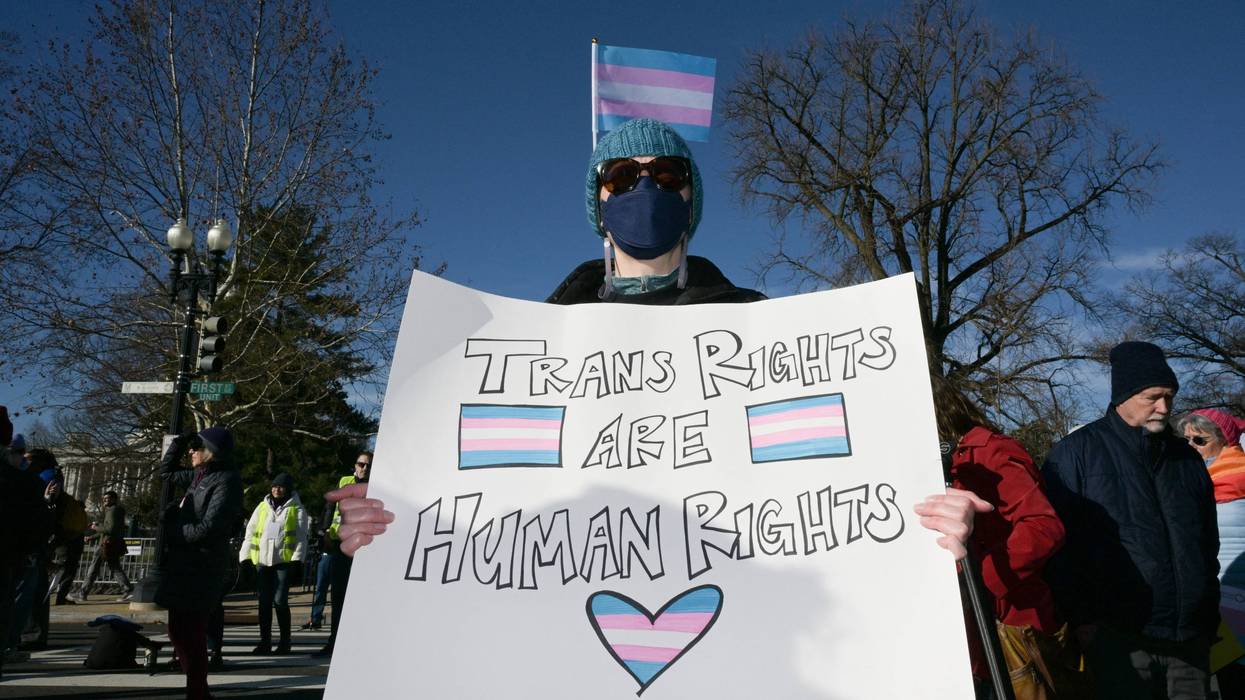
As the defense teams in Hecox and BPJ seek to police the bodies of transgender women and girls, all women and girls who don’t adhere to society’s rigid standard of femininity will feel the impact.
The power politicians have over women’s bodies is one of the oldest tools of control in American history. Throughout that history, the promise of protecting women has been the longtime excuse for excluding women from civic life and limiting our freedom. That history isn’t over.
The Supreme Court will soon decide Little v. Hecox and West Virginia v. BPJ—legal cases out of Idaho and West Virginia that will determine whether transgender athletes will be allowed to compete on women’s and girls’ school sports teams.
Idaho’s attorney general has argued that the bans ensure “women’s spaces and sports remain fair, safe, and dedicated to empowering female athletes.” Or, in other words, that we must allow politicians to pass these bans to “protect” women. Although the court’s decision is expected any day now, I have already made mine. Transgender sports bans are not and never have been about protecting women.
I have spent my career fighting to protect the bodily autonomy and legal protections of all women and girls. When people ask me, whether genuinely or in bad faith, why transgender women are unequivocally included in my organization’s work, I tell them the truth: Our fight is the same.
If you have been in the business of fighting for women’s rights and protections as long as I have, you know that women face many threats to their safety and autonomy, but not one of those threats includes transgender people.
The tactics being used to exclude transgender athletes are similar to those once used to keep women from casting a ballot, having a credit card, or getting the healthcare they need.
In 1776, a woman couldn’t own the clothes on her back, much less the home she built. Proponents of the practice said it was “intended for her protection.” One 100 years later, when women were shut out of the legal profession, the Supreme Court ruled in favor of such paternalism, even stating that “man is, or should be, woman’s protector.” And when women were later fighting for the right to abortion, we were told that our bodies are not our own.
It is no wonder, then, that the red herring of protecting women is being deployed in the Trump administration’s executive orders and in the Hecox and BPJ cases. It is the same excuse being used in a flurry of sports bans and anti-transgender bills that have been introduced and implemented around the country over the past six years. Ultimately, transgender sports bans fail to address the real threats women face in sports, like unfair pay and unequal access to training and facilities.
The great irony is that bans against transgender women in women’s sports, women’s bathrooms, and other areas of public life actually endanger all women. The Idaho law that the Hecox case is challenging, for example, requires women and girl student-athletes whose sex is disputed to undergo invasive sex testing, including physical examinations. Athletes in men’s sports are not subject to the same degradation.
For as long as women and girls have been allowed to participate in sports, their bodies have been scrutinized. From non-white women who do not conform to white beauty standards, to girls with short hair or baggy clothes, to those who are deemed too strong, women athletes who do not perform femininity as some deem correctly have been harassed, punished, and forced to face humiliating tests to prove their gender.
It is no accident that Project 2025 and its supporters are pushing both anti-transgender legislation and a rollback of women’s protections against sexual harassment and assault, their right to reproductive healthcare, and even their ability to vote. Today, as the defense teams in Hecox and BPJ seek to police the bodies of transgender women and girls, all women and girls who don’t adhere to society’s rigid standard of femininity will feel the impact.
If you have been in the business of fighting for women’s rights and protections as long as I have, you know that women face many threats to their safety and autonomy, but not one of those threats includes transgender people.
It remains to be seen if the Supreme Court’s decision in Hecox and BPJ will reaffirm what I already know to be true: We women, including transgender women, must be in the fight for liberation together.
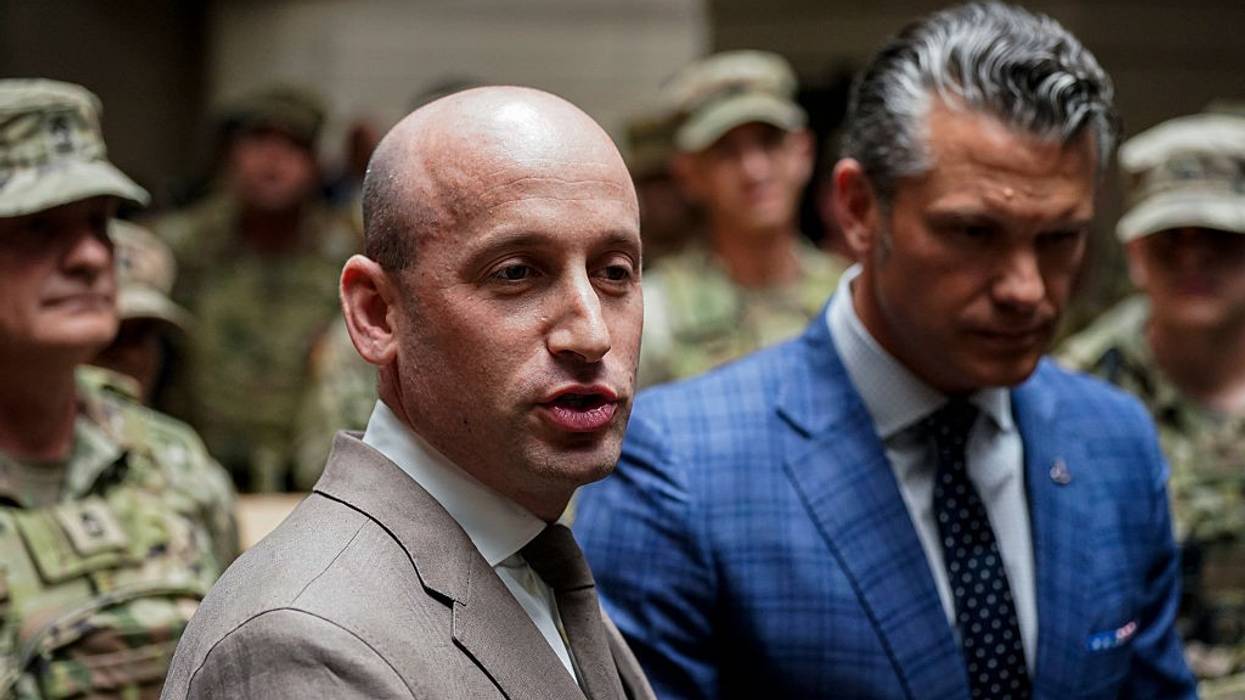
"He is a White House official who is taking to Twitter to hurl these absolutely false and transphobic attacks," said Paulina Mangubat. "It's just absolutely disgusting."
"I said what I said."
That was Democratic National Committee (DNC) staffer Paulina Mangubat's statement Thursday evening after her response to White House adviser Stephen Miller's smear against Democratic US Senate candidate James Talarico of Texas went viral earlier this week.
After Miller posted a picture on Wednesday of Talarico with the comment that Democrats in Texas had nominated "their first transgender Senate candidate,” Mangubat, who serves as the DNC's content and creative director and is behind many of the committee's social media posts, had a concise response.
"Shut up, you ugly fuck," Mangubat wrote, prompting an angry reply from Miller's wife, right-wing podcaster Katie Miller. She named Mangubat as the person behind the DNC's social media presence and announced that the staffer was "30, unmarried with no kids"—a fresh example of the MAGA movement's fixation with liberal, unmarried women.
On Thursday, Ben Meiselas of the progressive media company MeidasTouch invited Mangubat on his show to give her the opportunity to respond to Katie Miller.
"What do you want Katie Miller to know?" asked Meiselas.
"I want Katie Miller to know that her husband is an ugly fuck," Mangubat replied.
Meiselas: Katie Miller has been posting about you. I want to give you the opportunity right now to respond. What do you want to say to her?
Paulina Mangubat, Content and Creative Director for @TheDemocrats: I want Katie Miller to know that her husband is an ugly fuck. pic.twitter.com/KA8ioubJqx
— Acyn (@Acyn) May 29, 2026
"Stephen Miller is one of the most powerful men in the country right now," she continued. "He is a White House official who is taking to Twitter to hurl these absolutely false and transphobic attacks against an amazing candidate in Texas, James Talarico."
Mangubat added that Miller's actions during President Donald Trump's terms in office have been "ugly," pointing to his role as an architect of Trump's family separation policy and his mass deportation agenda—an operation in which federal agents have fatally shot at least six people, including at least three US citizens.
"He is celebrating when ICE shoots down Americans in the street," said Mangubat in an apparent reference to Miller's comment—just hours after Alex Pretti was shot and killed by federal agents in Minneapolis in January—that Pretti was a "would-be assassin."
"It's just absolutely disgusting," she continued. "And so yeah, I stand by calling him an ugly fuck."
Earlier this week, Katie Miller posted a photo of Mangubat and said that "this is what a sad, unhappy, female Liberal looks like,” adding “it’s why Pew reports 50% of them have been diagnosed with a mental condition.”
Miller didn't say what Pew Research data she was referring to, nor did she cite any evidence when she later asserted on Fox News that her husband being called ugly "is the same violent political rhetoric that is leading people to shooting up."
Meanwhile, Mangubat quickly seized on Katie Miller's attacks on her marital status to publicly announce her impending wedding.