

SUBSCRIBE TO OUR FREE NEWSLETTER
Daily news & progressive opinion—funded by the people, not the corporations—delivered straight to your inbox.
5
#000000
#FFFFFF
To donate by check, phone, or other method, see our More Ways to Give page.
Daily news & progressive opinion—funded by the people, not the corporations—delivered straight to your inbox.
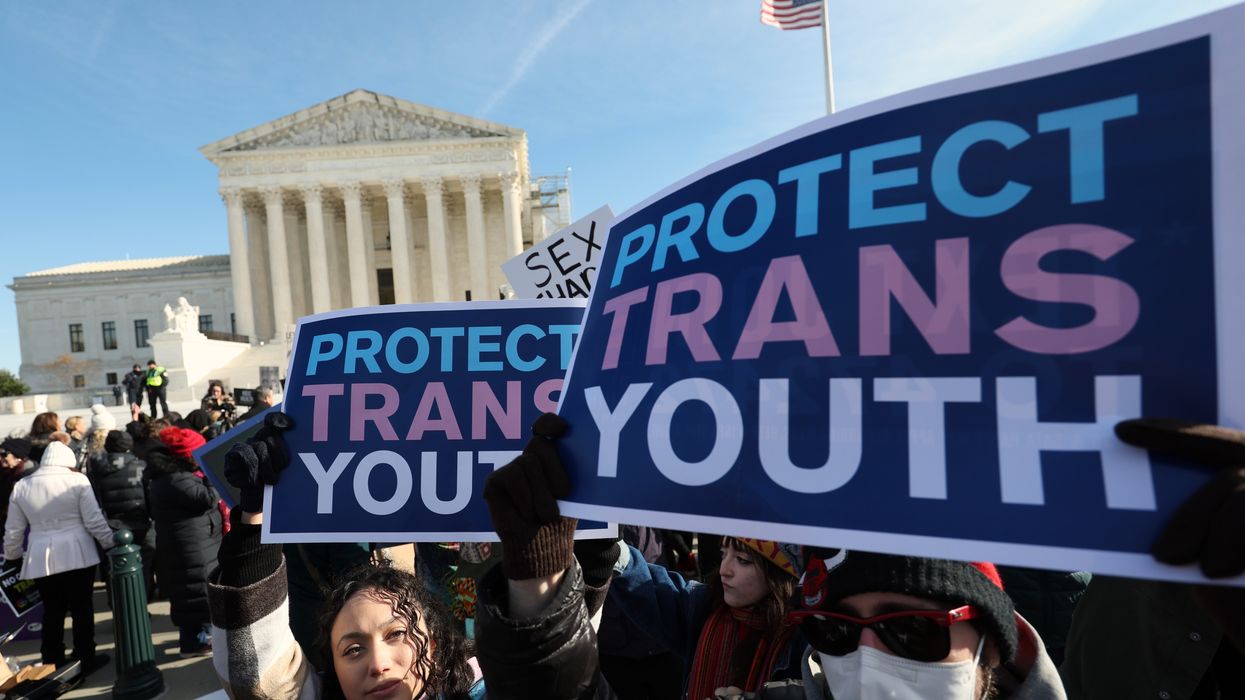
"This order will kill kids, there's no other way to say it," asserted one critic.
In his administration's latest attack on LGBTQ+ Americans, Republican U.S. President Donald Trump on Tuesday issued an executive order banning the federal government from supporting a wide range of gender-affirming healthcare for transgender youth.
Trump's order—titled "Protecting Children From Chemical and Surgical Mutilation"—states that the federal government "will not fund, sponsor, promote, assist, or support the so-called 'transition' of a child from one sex to another, and it will rigorously enforce all laws that prohibit or limit these destructive and life-altering procedures."
"Child" is defined in the order as anyone younger than 19—including 18-year-old adults. The directive covers treatments and procedures including gender-affirming surgeries, puberty blockers, and hormone replacement therapy. The ban will adversely affect people who rely upon federal programs including Medicare, Medicaid, and TRICARE, through which the Department of Defense provides health coverage for nearly 2 million youth dependents.
This order will kill kids, there's no other way to say it. It's the government forcibly taking control of the bodies of thousands of children.
[image or embed]
— Katelyn Burns (@katelynburns.com) January 28, 2025 at 3:19 PM
Furthermore, the order—which is almost certain to be challenged in court—places hospitals, clinics, and other providers of gender-affirming care at risk of losing federal funding.
"This executive order is a brazen attempt to put politicians in between people and their doctors, preventing them from accessing evidence-based healthcare supported by every major medical association in the country," Kelly Robinson, president of the LGBTQ+ advocacy group Human Rights Campaign, said in a statement. "It is deeply unfair to play politics with people's lives and strip transgender young people, their families, and their providers of the freedom to make necessary healthcare decisions."
"Questions about this care should be answered by doctors—not politicians—and decisions must rest with families, doctors, and the patient," Robinson added. "Everyone deserves the freedom to make deeply personal healthcare decisions for themselves and their families—no matter your income, zip code, or health coverage."
Trump made opposing rights for transgender people—especially children—a major part of his 2024 campaign, as it was during his first term.
The president's executive order claims that "medical professionals are maiming and sterilizing a growing number of impressionable children under the radical and false claim that adults can change a child's sex through a series of irreversible medical interventions."
"This dangerous trend will be a stain on our nation's history, and it must end," asserts the directive, which dubiously claims that "countless children soon regret that they have been mutilated and begin to grasp the horrifying tragedy that they will never be able to conceive children of their own or nurture their children through breastfeeding."
However, trans advocate Erin Reed pushed back, noting on social media that "detransition is rare, 1-4% in most studies, and regret even lower."
Furthermore, many doctors and medical experts agree that gender-affirming care saves the lives of trans youth, who are at higher risk of suicide and other self-harm, partly due to discrimination, bullying, and other societal pressures.
Trans people and their allies are already fighting back against Trump's policies. On Tuesday, half a dozen active-duty transgender U.S. troops and two people seeking to join the military sued to block a revival of the president's first-term ban on trans people enlisting in the armed forces.
The previous day, a transgender woman inmate in a federal women's prison sued the Trump administration over a recent executive order narrowly defining sex, arguing it is motivated by hate, violates the Constitution's ban on cruel and unusual punishment, and places her in mortal danger if she is transferred to a men's facility as ordered by the government.
In stark contrast with the direction in which Trump is steering the U.S., health officials in Thailand—which last year became the first nation in Southeast Asia to legalize same-sex marriage equality—this week announced a multimillion-dollar initiative to provide gender-affirming care for 200,000 transgender people in the country.
Thai Prime Minister Paetongtarn Shinawatra said last week that the marriage equality law, which went into effect this month, "marks the beginning of Thai society's greater awareness of gender diversity, and our embrace of everyone regardless of sexual orientation, race, or religion—our affirmation that everyone is entitled to equal rights and dignity."
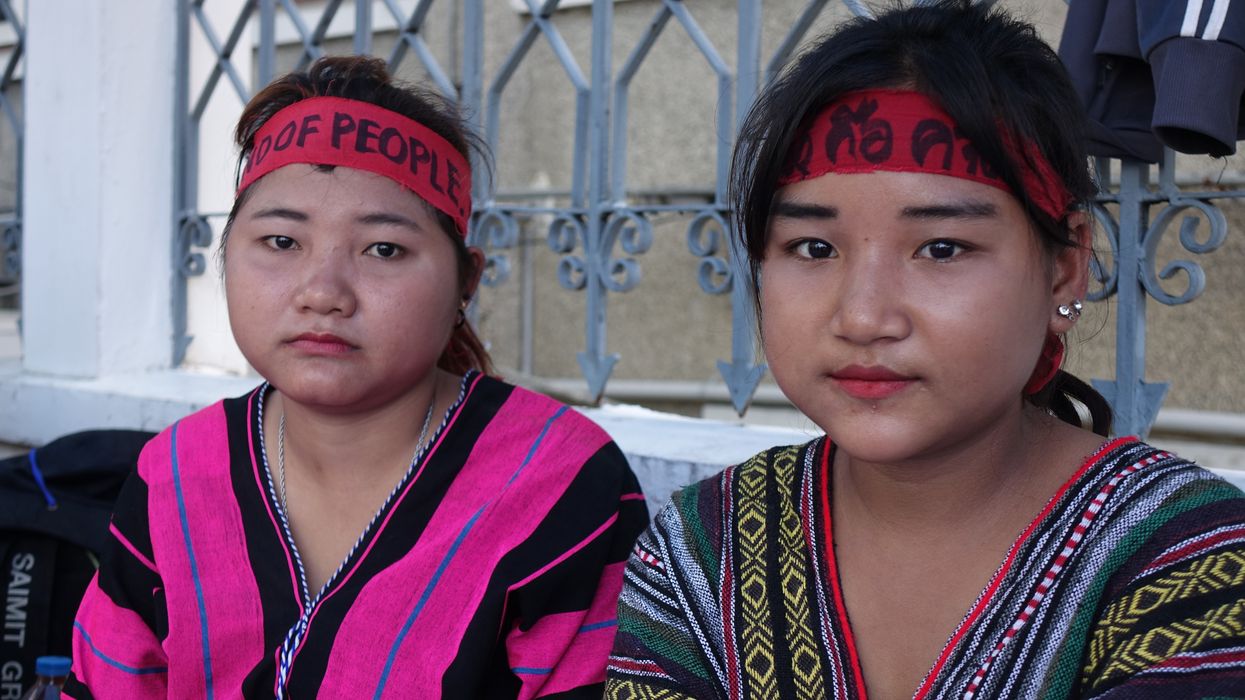
UNESCO must abandon its support for a conservation model that annihilates Indigenous peoples; it should begin by de-listing sites where human rights abuses occur.
I stand, mesmerized by the landscape. Distant mountains are cloaked in every shade of green, and a clear, still lake reflects the sky. The deep amber sunset lights the golden script carved into the wooden sign: Kaeng Krachan National Park.
Nearby, a young couple captures the moment in a selfie—a postcard from paradise, one of Thailand’s World Heritage Sites.
“Not there... there!” Kai, our guide, tugs my arm, and points to a spot by the river. “That’s where they found part of Billy’s body.” And, just like that, my reverie breaks.
For many Indigenous people, their lands declared as World Heritage Sites morph into alien territories, belonging not to them, but to “all the peoples of the world”—especially the fee-paying tourists.
Pholachi “Billy” Rakchongcharoen was an Indigenous Karen activist. He was collecting honey when he was arrested by park officials and vanished. Five years later, pieces of his skull surfaced in a drum under a bridge—right here in paradise. Billy was just 30, about the same age as those young selfie takers.
Later, we meet Menor, his widow. Her eyes heavy with sorrow, she says, “Why do we need a World Heritage Site on our ancestral land? It never gives the community any benefits. It just takes things away from us.”
This landscape, hailed by UNESCO for its “outstanding value to all humanity,” is home to a tragedy. And the Karen people, its true custodians, are its victims. The Karen practice rotational agriculture—where different plots of land are used over successive years and then left fallow for up to a decade. Essentially, they prepare a new area for planting by using controlled fires, which enrich the soil and enhance biodiversity. All of this is accompanied by rituals and ceremonies to honor the Earth, their food provider. Since colonial times, conservationists, blind to this harmony, branded it pejoratively as “slash and burn.”
In 1996, the Karen of Bang Kloi village were evicted by the government under the guise of protecting the park. They resisted. Billy was one of them—until his voice was silenced.
Inspired by Billy and his grandfather, the indomitable Ko-ee who died aged 107 after a lifetime of resistance, the Karen of Bang Kloi reclaimed their territory in 2020, only to be violently expelled again. Despite this grim history, despite the pleas of three United Nations special rapporteurs to address human rights concerns before the designation, UNESCO assigned the Kaeng Krachan Forest Complex (KKFC) World Heritage Site (WHS) status in 2021. The accolade was in the category “natural criteria,” defined as a “significant natural habitat for in-situ conservation of biological diversity.”
But despite the beliefs of UNESCO experts and tourists, the Kaeng Krachan habitat did not occur naturally. The landscape was sculpted and nurtured by Indigenous people for generations. As one Karen man pointed out, “The WHS staff only see the forest and animals; they don’t see the people. They don’t see us. It’s a kind of blindness.”
Another Karen voice added bluntly, “KKFC becoming a WHS is a serious violation of human rights.”
Since its designation as a World Heritage Site there’s been an increase in harassment and arrests, and a tightening of restrictions. Karen people said that the World Heritage status meant that attempts to force everyone out of the forest “have got worse”.
This isn’t just a Thai tragedy. It’s a global one. Human rights investigations have documented torture, rape, and killings of Indigenous people in “natural” World Heritage Sites—especially in Asia and Africa. These sites, celebrated for their beauty and ecological importance, become war zones for the locals. Governments and NGOs, armed with UNESCO’s blessing, push the Indigenous people out and blame them for the degradation of what they have long protected.
Countries crave UNESCO’s nod. It brings prestige, tourists, funding. But for those evicted, it’s a nightmare.
In my travels with Survival International, the global movement for Indigenous peoples’ rights, I’ve seen these “wonders of the world.” The Serengeti’s vast plains, Odzala’s shadowy Congo forests, India’s tiger reserves, Yosemite’s grandeur—all share a dark secret. The pristine wilderness tourists adore is soaked with Indigenous blood, sweat, and tears. These landscapes were their homes, sustained by their knowledge and practices until outsiders decided they were “wild nature,” needing protection from the very people who understood them best. It’s colonialism masquerading as conservation.
For many Indigenous people, their lands declared as World Heritage Sites morph into alien territories, belonging not to them, but to “all the peoples of the world”—especially the fee-paying tourists.
We need to put this conservation model on trial, just as we did with other unjust, outdated, and harmful ideas—racial segregation, gender inequality. The true protectors of our shared natural heritage are Indigenous peoples. Their ways of life are sustainable, rooted in providing for future generations. For them, nature is home, the foundation of life and survival. They are the best stewards of the natural world. As one group of Karen declared, defiant despite the years of oppression: “If we don’t fight today, there will be no future for our children.”
UNESCO must abandon its support for a conservation model that annihilates Indigenous peoples. It should begin by de-listing sites where human rights abuses occur. Only then can it begin to decolonize itself—and genuinely protect our planet.
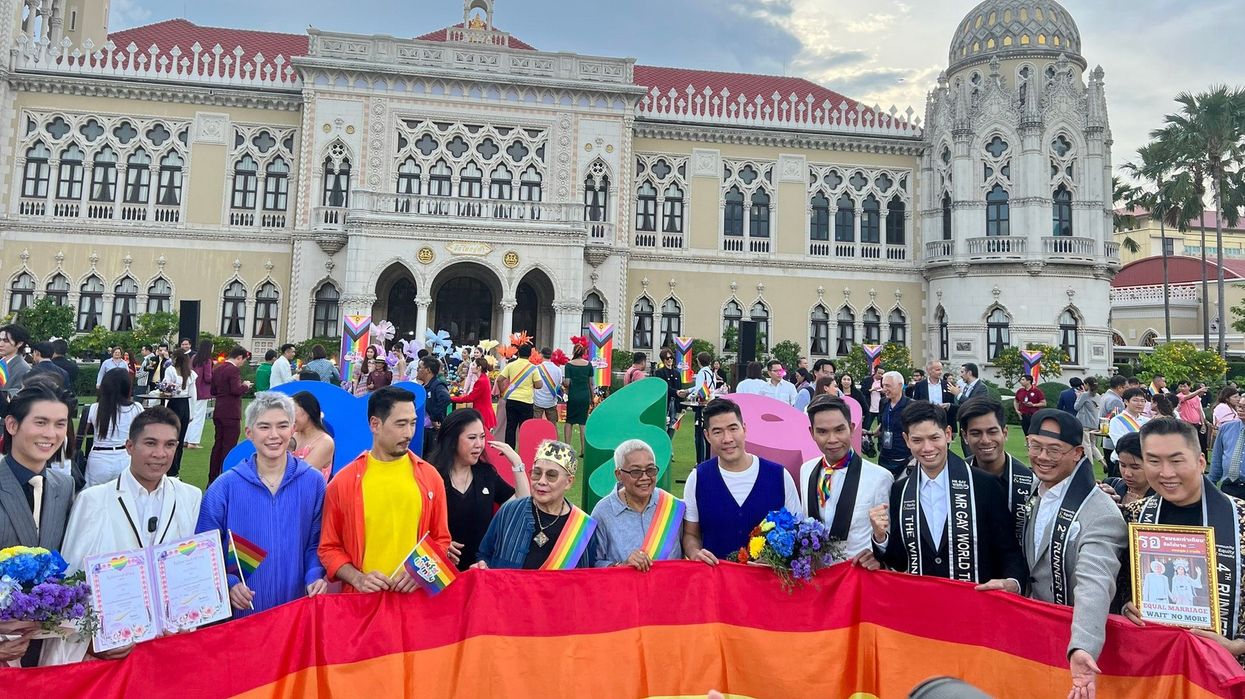
"While there is no doubt that the legalization of marriage for LGBTI couples is a key milestone for Thailand, much more must be done to guarantee full protection," said one campaigner.
LGBTQ+ advocates around the world on Tuesday cheered the Thai Senate's passage of a bill legalizing same-sex marriage, a move that—if approved by the country's king as expected—would make Thailand the first country in Southeast Asia to do so.
The Bangkok Post reported Thai senators voted 130-4, with 18 abstentions, in favor of a bill to legalize same-sex marriages in the country of 72 million people. The Thai House of Representatives overwhelmingly approved the legislation in March. The legislation would become law if it passes further review by the Senate and the Constitutional Court and is approved by King Rama X. Royal assent is a formality that will almost certainly be granted.
"The bill represents a monumental step forward for LGBTQ+ rights in Thailand," Panyaphon Phiphatkhunarnon, founder of the advocacy group Love Foundation, told CNN.
Plaifa Kyoka Shodladd, an 18-year-old activist, told The New York Times that "after 20 years of trying to legalize this matter, finally, love wins."
In Asia, only Nepal and Taiwan have achieved same-sex marriage equality. Thailand would become the 39th nation to legalize same-sex marriage worldwide.
Legalization "would underscore Thailand's leadership in the region in promoting human rights and gender equality," said the Thai Civil Society Commission of Marriage Equality, Activists, and LGBTI+ Couples.
Amnesty International Thailand researcher Chanatip Tatiyakaroonwong said in a
statement: "Thailand has taken a historic step towards becoming the first country in Southeast Asia to legalize marriage for LGBTI couples. This landmark moment is a reward for the tireless work of activists, civil society organizations, and lawmakers who have fought for this victory."
"While there is no doubt that the legalization of marriage for LGBTI couples is a key milestone for Thailand, much more must be done to guarantee full protection of LGBTI people in the country," Chanatip continued. "LGBTI people in Thailand continue to face many forms of violence and discrimination, including but not limited to technology-facilitated gender-based violence, which often targets human rights defenders."
"Thai authorities must build on the momentum and take further steps that protect the rights and ensure the participation of LGBTI people and organizations," Chanatip added.
Thailand's imminent legalization of same-sex marriage equality stands in contrast with the hundreds of pieces of anti-LGBTQ+ legislation proposed or passed mostly in Republican-controlled state legislatures in the United States.
Advocates are also worried about the future of LGBTQ+ rights at the national level, as U.S. Supreme Court Justice Clarence Thomas suggested in Dobbs v. Jackson Women's Health Organization—the ruling that erased half a century of federal abortion rights—that the high court could reconsider cases including Obergefell v. Hodges, which in 2015 legalized same-sex marriage nationwide.

The exchange came on the first day of a Qatari-brokered four-day cease-fire that is slated to see at least 50 Israeli hostages exchanged for at least 150 Palestinian women and children held in Israel.
The first 24 Israeli hostages held by Hamas in Gaza were released Friday evening in exchange for 39 Palestinian women and children held in Israeli prisons.
The exchange came on the first day of a Qatari-brokered four-day cease-fire that is slated to see at least 50 Israeli hostages exchanged for at least 150 Palestinian women and children held in Israel. The office of Israeli Prime Minister Benjamin Netanyahu has said that the pause would be extended a day for every additional 10 hostages released.
"It's a sign of hope for Palestinians and Israelis that the cease-fire will continue and the killing will stop," Mohammed Khatib, who watched the release of the first Palestinian prisoners Friday, told BBC News.
"I'm very happy of course, but I feel devastated by how that deal was reached… at the cost of our brothers' and sisters' lives in Gaza."
The pause in the fighting has also allowed much needed aid trucks to enter Gaza. The United Nations Office for the Coordination of Humanitarian Affairs (OCHA) said that 200 aid trucks were sent from Israel Friday, of which 137 were unloaded by the U.N. Relief and Works Agency for Palestinian Refugees in the Near East, U.N. News reported. It's the largest convey of aid to enter Gaza since Israel's bombardment began October 7.
"Hundreds of thousands of people were assisted with food, water, medical supplies and other essential humanitarian items," OCHA said.
Four trucks full of gas and 129,000 liters of fuel also arrived in Gaza Friday.
However, Hamas has reportedly delayed the release of more hostages Saturday because it says Israel is not allowing aid to enter northern Gaza, Al Jazeera reported. The group said Israel had also violated the terms of the cease-fire by shooting tear gas and live ammunition at people who attempted to return to their homes in northern Gaza and by flying surveillance drones high over Gaza Saturday.
Hamas took around 240 hostages—both Israelis and foreign nationals—into Gaza during its October 7 attack on Israel that also killed around 1,200 people. On Friday, the group released 13 Israelis, including an 85-year-old woman and children as young as 2, as well as 10 Thai nationals and one person from the Philippines, The Guardian reported.
"Each of them is an entire world," Netanyahu said in response to the first release. "But I emphasize… we are committed to returning all the hostages. This is one of the aims of the war and we are committed to achieving all the aims of the war."
The families of the Thai hostages celebrated their return.
"We are all very happy. Everybody is crying," Rungarun Wichangern, the brother of 33-year-old Vetoon Phoome who was released Friday, told The Guardian.
Phoome, who was working on a potato and pomegranate farm near Gaza when he was captured, was one of 30,000 Thai nationals working in the agricultural sector in Israel before the war, and one of around 5,000 employed at farms near Gaza. The Thai government said that 20 more Thai nationals were still being held in Gaza.
The one Philippines hostage released was 33-year-old Gelienor "Jimmy" Pacheco, who had been working as a carer in Gaza. Philippine President Ferdinand Marcos said on social media that he was "overjoyed" by Pacheco's release, and that he was safely at the Thai embassy in Israel.
"I salute the work of the Philippine Foreign Service in securing his release, and once again thank the State of Qatar for their invaluable assistance in making Jimmy's release possible," Marcos said.
Another Philippine woman, Noralyn Babadilla, remains missing.
Meanwhile, jubilant crowds turned out in the West Bank to welcome the first Palestinian prisoners released from Israeli custody, according to BBC News. The group included 24 women and 15 teenage boys. They had been arrested for offenses ranging from stone throwing to attempted murder. While some had been convicted, others were awaiting trial. Of a total of 300 Palestinian women and children marked by Israel for potential release, less than 25% have been convicted.
Israel holds around 8,000 Palestinians in its prisons, 3,000 of whom were detained since the October 7 attacks, Al Jazeera reported. Nearly every family in the West Bank has had a relative detained at one point, according to BBC News.
The NGO Palestinian Prisoners' Club said that Israel had told the families of released prisoners that they could be fined around 70,000 shekels ($18,740) for sharing sweets to celebrate their loved ones' return, speaking to reporters, or having guests over.
One of the Palestinian prisoners released was 24-year-old Marah Bakeer, who was 16 when she was arrested for allegedly attempting to stab an Israeli soldier, something she and her family deny. Israeli forces shot her in the arm and hand 12 times before her arrest.
"I'm very happy of course, but I feel devastated by how that deal was reached… at the cost of our brothers' and sisters' lives in Gaza," Bakeer said.
The Israeli attack on Gaza has killed more than 14,800 people, around 10,000 of them women and children. This means Israel has killed women and children at a rate that outstrips the deadliest conflicts of the 21st century, The New York Times reported Saturday. More than double the number of women and children have been killed in Gaza in nearly two months of fighting than have been reported killed in Ukraine in two years. Using women and children as a conservative stand-in for overall civilian deaths would mean more civilians have died during these two months than were killed by U.S. forces in the first year of the Iraq War, and nearly as many as the 12,400 estimated killed by the U.S. and its allies during nearly two decades of war in Afghanistan.
"It's beyond anything that I've seen in my career," Marc Garlasco, a former Pentagon senior intelligence analyst who now advises the Dutch organization PAX, told the Times, adding that, for a comparison, one may "have to go back to Vietnam, or the Second World War."
The bombardment has also destroyed or damaged more than 60,000 buildings, and some Gazans used the pause in the fighting to return to their homes and survey the damage.
"Our home is destroyed, nothing remains standing. And most of the ducks and chickens were eaten by hungry street dogs," one older woman told Al Jazeera. "This is not a war; it is a genocide."

"I believe this record will be repeated many times," said one scientist. "It confirms that extreme climate models are being proven to be true."
Temperature records were shattered across Southeast Asia this past weekend as tens of millions of people throughout the region continue to endure a weekslong heatwave intensified by the fossil fuel-driven climate emergency.
All-time highs were recorded Saturday in Vietnam and Laos. The mercury hit 44.2°C (111.6°F) in Vietnam's northern district of Tuong Duong, marking the country's hottest temperature on record, according to climatologist and weather historian Maximiliano Herrera.
"This is a worrying record in the context of climate change and global warming," environmental scientist Nguyen Ngoc Huy said from the Vietnamese capital of Hanoi. "I believe this record will be repeated many times. It confirms that extreme climate models are being proven to be true."
In neighboring Laos, the temperature reached 43.5°C (110.3°F) in the city of Luang Prabang, surpassing the national record of 42.7°C (108.9°F) set less than a month ago, Herrera noted. The Laotian capital of Vientiane broke its all-time high as well with a temperature of 42.5°C (108.5°F).
Thailand's capital of Bangkok, where Herrera is based, also saw its hottest temperature on record this weekend, hitting 41°C (105.8°F) on Sunday, one day after establishing a short-lived high of 40.5°C (104.9°F). Heat in the city has been exacerbated by smog from forest fires and crop burning.
"Seven weeks with records smashed... make this the most extreme... and longest tropical record heat event the world has experienced."
Much of Thailand has "suffered under temperatures in the upper 30s to low 40s Celsius since late March," CNN reported Monday. "In mid-April, the northwest city of Tak became the first place in the country to top 45°C (113°F)."
Thailand is not unique in this regard, as dangerously high temperatures have been witnessed throughout Asia this spring.
"April and May are typically the hottest months of the year for South and Southeast Asia as temperatures rise before annual monsoon rains bring some relief," CNN noted. "Temperatures across the region are expected to return closer to average in the coming days, but unprecedented heat events are becoming more common as the climate crisis intensifies."
Alluding to Asia's ongoing heatwave, Herrera tweeted Sunday that "seven weeks with records smashed nearly [on a] daily basis in hundreds of stations in an area of millions of square kilometers (initially from Eastern India to Japan, now in a smaller area) make this the most extreme... and longest tropical record heat event the world has experienced."
The duration and severity of the current heatwave lend further credence to climate scientists' warnings about how life-threatening extreme weather will worsen in the absence of sharp reductions in greenhouse gas pollution.
According to the World Meteorological Organization, mean global temperature has increased by roughly 1.2°C above preindustrial levels to date. The return of El Niño conditions in 2023 is expected to amplify global warming this year.
Last month, United Nations Secretary-General António Guterres told officials from wealthy countries that existing policies "would make our world 2.8°C hotter by the end of the century."
"This is a death sentence," said Guterres.
" Heatwaves in the past few decades have already been extremely deadly and there is serious cause for concern in the future."
Echoing what he said in March when the Intergovernmental Panel on Climate Change (IPCC) published its latest comprehensive assessment, Guterres stressed that "it is still possible to limit global temperature rise to 1.5°C. But only if the world takes a quantum leap in climate action. And that depends on you."
"The science is clear: New fossil fuel projects are entirely incompatible with 1.5°C," the U.N. chief added. "Yet many countries are expanding capacity."
The IPCC has warned that heatwaves and other extreme weather disasters will become more common and severe with each additional fraction of a degree of global warming.
One 2022 study determined that "dangerous heatwaves, at temperatures of 39.4°C (103°F) and above, will occur between three and 10 times more often by the turn of the century," CNN reported Monday. "In the tropics, which encompasses much of Asia, the study found that days of 'extremely dangerous heat'—defined as 51°C (124°F)—could double, putting the population of impacted countries at risk."
“By definition, we don't know what could happen if large populations are exposed to unprecedented heat and humidity stress," the study's lead author, Lucas Vargas Zeppetello, told the outlet last month. "But heatwaves in the past few decades have already been extremely deadly and there is serious cause for concern in the future."
The U.N. warned last year that without transformative change, extreme heat is projected to kill as many people by the end of the century as all cancers and infectious diseases combined, with disproportionate impacts on people in impoverished nations. By midcentury, more than 2 billion children could be endangered by frequent heatwaves.

Sweltering temperatures have devastated numerous Asian countries this month, eliciting demands for lifesaving climate action.
Hundreds of millions of people throughout Asia are suffering Wednesday as a deadly heatwave turbocharged by the fossil fuel-driven climate crisis continues to pummel large swaths of the continent, with little relief in sight—reigniting calls for immediate action to slash greenhouse gas pollution.
Record-high temperatures have been observed in several Asian countries this month, including at 109 weather stations across 12 Chinese provinces on Monday. Scorching heat in India, meanwhile, has killed more than a dozen people and forced school closures this week.
Last Friday, Bangkok-based climatologist and weather historian Maximiliano Herrera described the ongoing predicament as the "worst April heatwave in Asian history." Since then, additional records have been shattered in Southeast Asia.
Over the weekend, temperatures in Thailand surpassed 45°C (113°F) for the first time in recorded history. The Bangladeshi capital of Dhaka saw its hottest day in decades when temperatures soared past 40°C (104°F) on Saturday, causing road surfaces to melt. On Monday, temperatures in Myanmar surged to 44°C (111°F), a record for April. Laos is among the latest Asian countries to set a new all-time high, reaching 42.7°C (109°F) on Tuesday.
"Earlier this month, Thai authorities issued a health alert for several provinces as the heat index was forecast to reach 50.2°C [122°F] in the Bang Na district of the capital Bangkok. The heat index is what the temperature 'feels like' and considers both air temperature and humidity to measure its impact," CNN reported Wednesday. "On Tuesday, Thai Prime Minister Prayut Chan-o-cha expressed concern over 'dangerously high temperatures in various parts of Thailand' and said in Bangkok's Bang Na area, temperatures 'could reach 52.3°C [126°F].'"
"April and May are typically the hottest months of the year for South and Southeast Asia as temperatures rise before monsoon rains begin and bring some relief. But the heat in Thailand has been compounded by an intense smoggy season that has caused pollution levels to spike," CNN noted. "The tourist hotspot of Chiang Mai in the north ranked as the world's most polluted city for seven straight days as smoke from forest fires and widespread crop burning deteriorated the air quality. At least one hospital in the city said it had reached 'full ward capacity' as patients sought medical treatment for respiratory issues."
Fears are mounting that dangerously high temperatures could persist in Thailand beyond the typical summer months, potentially resulting in drought and crop failures.
" Pakistan, India, Nepal, and Bangladesh have all seen temperatures topping 40°C (104°F) for many days," CNN noted. "Heatwaves in India usually take place between March and July, but in recent years these hot spells have become more intense, more frequent, and longer" due to global warming.
As The Guardian reported Wednesday:
In recent years, India has become particularly vulnerable to extreme heat and experts fear this year could be even worse. The April heatwave has battered north and east Indian states, with this week the meteorological department issuing an orange warning of a severe heatwave in parts of Bihar, Jharkhand, Odisha, Andhra Pradesh, and West Bengal, all states with a high proportion of rural workers and laborers who are forced to work outside even as temperatures and humidity soar.
Six cities in north and east India recorded temperatures above 44°C (111°F) on Tuesday, and the heatwave is projected to continue until at least Friday.
Last April and May, the Indian subcontinent experienced a brutal heatwave that caused multiple deaths and intensified glacial melt, which contributed to calamitous flooding in Pakistan in August.
China also endured a historic heatwave and drought last year, though it occurred later, from June through August.
The heatwave currently hammering much of Asia is occurring in the context of roughly 1.3°C of global temperature rise since the late 1800s.
Recent data shows that annual emissions of carbon dioxide, methane, and nitrous oxide increased again in 2022, pushing atmospheric concentrations of the three main heat-trapping gases to all-time highs.
Before last year's COP27 climate summit—which ended, like the 26 prior meetings, with no concrete blueprint to rapidly move away from planet-heating fossil fuels—the United Nations warned that existing emission reduction targets and policies are so inadequate that there is "no credible path" currently in place to achieve the Paris agreement's goal of limiting planetary heating to 1.5°C above preindustrial levels, beyond which impacts will grow increasingly deadly, especially for people in low-income countries who bear the least responsibility for the crisis.
The U.N. made clear that only "urgent system-wide transformation" can prevent catastrophic temperature rise of up to 2.9°C by 2100. Nevertheless, oil and gas corporations—bolstered by trillions of dollars in annual public subsidies—are still planning to expand fossil fuel production in the coming years, prioritizing short-term profits over the lives of those who will be harmed by the resulting climate chaos.
The Intergovernmental Panel on Climate Change's (IPCC) latest synthesis says that heatwaves and other extreme weather disasters will become more common and severe with each additional degree of global temperature rise.
One 2022 study included in the IPCC assessment found that "heatwaves will be between three and 10 times more often by the turn of the century," CNN reported Wednesday. "In the tropics, which encompasses much of Asia, people could be exposed to dangerous heat most days of the year, the study found. Days of 'extremely dangerous heat'—which is defined as 51°C (124°F)—could double and experts say those levels of heat push the limits of human survivability."
The U.N. warned last year that in the absence of swift decarbonization, extreme heat is projected to kill as many people by the end of the century as all cancers and infectious diseases combined, with disproportionate impacts on people in impoverished nations. By mid-century, more than 2 billion children are projected to be at risk of suffering from frequent heatwaves.

"These are human beings—men, women, and children," said one U.N. expert. "We need to see the states in the region help save lives and not let people die."
A United Nations refugee advocate on Friday joined human rights defenders in imploring South and Southeast Asian nations to rescue nearly 200 Rohingya refugees "on the verge of perishing" after drifting on the Andaman Sea for weeks—an ordeal that's already reportedly claimed around 20 lives aboard the vessel.
The refugees—who are fleeing ethnic cleansing and other severe state repression in their native Myanmar—have been packed aboard the unseaworthy boat for as long as a month without adequate food or water, the office of the United Nations High Commissioner for Refugees (UNHCR) said in a statement.
"While many in the world are preparing to enjoy a holiday season and ring in a new year, boats bearing desperate Rohingya men, women, and young children, are setting off on perilous journeys in unseaworthy vessels."
"It is devastating to learn that many people have already lost their lives, including children," Indrika Ratwatte, UNHCR's Asia and Pacific director, said on Friday, lamenting that the refugees' plight has been "continuously ignored" by countries in the region.
"This shocking ordeal and tragedy must not continue," Ratwatte continued. "These are human beings—men, women, and children. We need to see the states in the region help save lives and not let people die."
Using his phone, the captain of the stranded boat told Mohammed Rezuwan Khan, whose sister and 5-year-old niece are on the vessel, that "we're dying here."
Khan told The Washington Post on Friday that he has lost contact with his relatives aboard the vessel and that he is "very concerned" for their well-being.
"I ask the international community to not let them die," Khan added. "Rohingya are human beings. Our lives matter."
According to UNHCR:
Since the first reports of the boat being sighted in Thai waters, UNHCR has received unverified information of the vessel being spotted near Indonesia and then subsequently off the coast of the Andaman and Nicobar Islands of India.
Its current location is reportedly once more back eastwards, in the Andaman sea north of Aceh.
UNHCR has repeatedly asked all countries in the region to make saving lives a priority and requested the Indian marine rescue center earlier this week to allow for disembarkations.
While the Sri Lankan navy and local fishers acted rapidly to rescue over 100 Rohingya from a boat in distress in the Indian Ocean last weekend, no such assistance has been rendered to the vessel drifting in the Andaman Sea.
"International humanitarian law requires the rescue of people at sea when they are in distress, and their delivery to a place of safety," Amnesty International stressed in a tweet Thursday. "Further delays to alleviate this suffering or any attempts to send Rohingya back to Myanmar where they face apartheid are unconscionable."
Two weeks ago, a Vietnamese commercial ship en route to Myanmar rescued 154 Rohingya refugees from a sinking boat before turning them over to Burmese authorities, who reportedly arrested the migrants.
On Thursday, United Nations Special Rapporteur on Myanmar Tom Andrews said that nations in the region "should prevent any loss of life and urgently rescue and provide immediate relocation" to the stranded Rohingya.
"Too many Rohingya lives have already been lost in maritime crossings."
"Too many Rohingya lives have already been lost in maritime crossings," asserted Andrews, a former Democratic U.S. congressman from Maine. "Increasing numbers of Rohingya have been using dangerous sea and land routes in recent weeks, which highlights the sense of desperation and hopelessness experienced by Rohingya in Myanmar and in the region."
UNHCR has reported a 600% increase of mostly Rohingya people endeavoring perilous sea journeys from Myanmar and Bangladesh in 2022. The agency says at least 119 people have died or gone missing this year.
"While many in the world are preparing to enjoy a holiday season and ring in a new year, boats bearing desperate Rohingya men, women, and young children, are setting off on perilous journeys in unseaworthy vessels," Andrews said.
"The international community must step forward," he added, "and assist regional actors to provide durable solutions for the Rohingya."

One of the psychologists paid tens of millions of dollars by the U.S. Central Intelligence Agency to oversee the interrogation of prisoners in the so-called War on Terror provided new details on Monday about the torture of a Guantanamo Bay detainee at CIA "black site" in Thailand.
"Imagine the hell Mr. Nashiri experienced outside of that box that made him prefer being inside it."
The New York Times reports James E. Mitchell told a military judge during a pretrial hearing at Guantanamo that Abd al-Rahim al-Nashiri--a Saudi national facing possible execution for allegedly masterminding the deadly 2000 bombing of the USS Cole in Yemen--broke quickly under torture and became so obedient that he would crawl into a cramped confinement box before guards ordered him to do so.
Initially, guards had to force al-Nashiri into the box. But according to Mitchell, the prisoner "liked being in the box" and would "get in and close it himself."
Annie W. Morgan, a former Air Force defense attorney who is a member of al-Nashiri's legal team, told the Times that when she heard Mitchell's testimony, "I got the image of crate-training a dog and became nauseous."
"That was the goal of the program, to create a sense of learned helplessness and to become completely dependent upon and submissive to his captors," she added, referencing a tactic taught in U.S. torture programs and documents dating back to the 1950s.
Gail Helt, a former CIA analyst who advocates Guantanamo's closure, tweeted, "Imagine the hell Mr. Nashiri experienced outside of that box that made him prefer being inside it."
Al-Nashiri's attorneys--who argue that evidence in the case is tainted by torture--questioned Mitchell about what happened at the Thailand black site in November 2002, when former CIA Director Gina Haspel oversaw the secret prison.
The psychologist's testimony is meant to shed light on abuse that may have been recorded on scores of videotapes documenting detainee torture that were later destroyed at the behest of then-CIA counterterrorism chief Jose Rodriguez, who claimed in his memoir that Haspel drafted the 2005 cable ordering the move.
Mitchell--who along with fellow psychologist John "Bruce" Jessen was paid $81 million by the CIA to develop and supervise an interrogation regimen for terrorism suspects--described how the diminutive al-Nashiri was so scrawny that guards stopped subjecting him to the interrupted drowning torture commonly called waterboarding for fear the prisoner might be seriously hurt.
In addition to waterboarding and other approved torture techniques, a declassified 2014 U.S. Senate Intelligence Committee report revealed how interrogators threatened to sexually assault al-Nashiri's mother, and how he was terrorized with a power drill and raped with a garden hose in a practice known as rectal hydration that was administered to Guantanamo prisoners who refused to eat or drink.
Mitchell told the court that:
The Times previously reported:
Interrogators continually told Mr. Nashiri they did not believe he was telling everything he knew, threatening him with worse treatment if he did not tell them more. The prisoner, already subjected to the whole array of C.I.A. torture techniques--loud noise, sleep deprivation, forced nudity, wall-slamming, and waterboarding--insisted he was trying to remember and tell them everything.
But the interrogators appear to have ultimately concluded that Mr. Nashiri was not lying. Some of the cables back to headquarters, apparently written by Ms. Haspel, described him as "compliant and cooperative," according to the 2014 report on the interrogation program by the Senate Intelligence Committee.
In addition to the black site in Thailand, al-Nashiri--who was captured in Dubai in October 2002--was imprisoned at CIA black sites in Afghanistan, Poland, Romania, and possibly Morocco before being sent to Guantanamo in September 2006.
In 2010 he was granted victim status by the Polish government, whose cooperation with and complicity in the George W. Bush administration's extraordinary rendition and torture program was later revealed and investigated.
Related Content

In March, human rights advocates condemned the U.S. Supreme Court's decision allowing the Biden administration to block Mitchell and Jessen from cooperating with Polish prosecutors investigating the torture of Saudi terror suspect Abu Zubaydah.
The Bush administration officials who devised, approved, and implemented the post-9/11 torture regimen have enjoyed total impunity. Not only did Bush's successor, former President Barack Obama, break a campaign promise to investigate and prosecute abuses as required by U.S. and international law, his Justice Department actively shielded them from accountability as torture continued at Guantanamo.
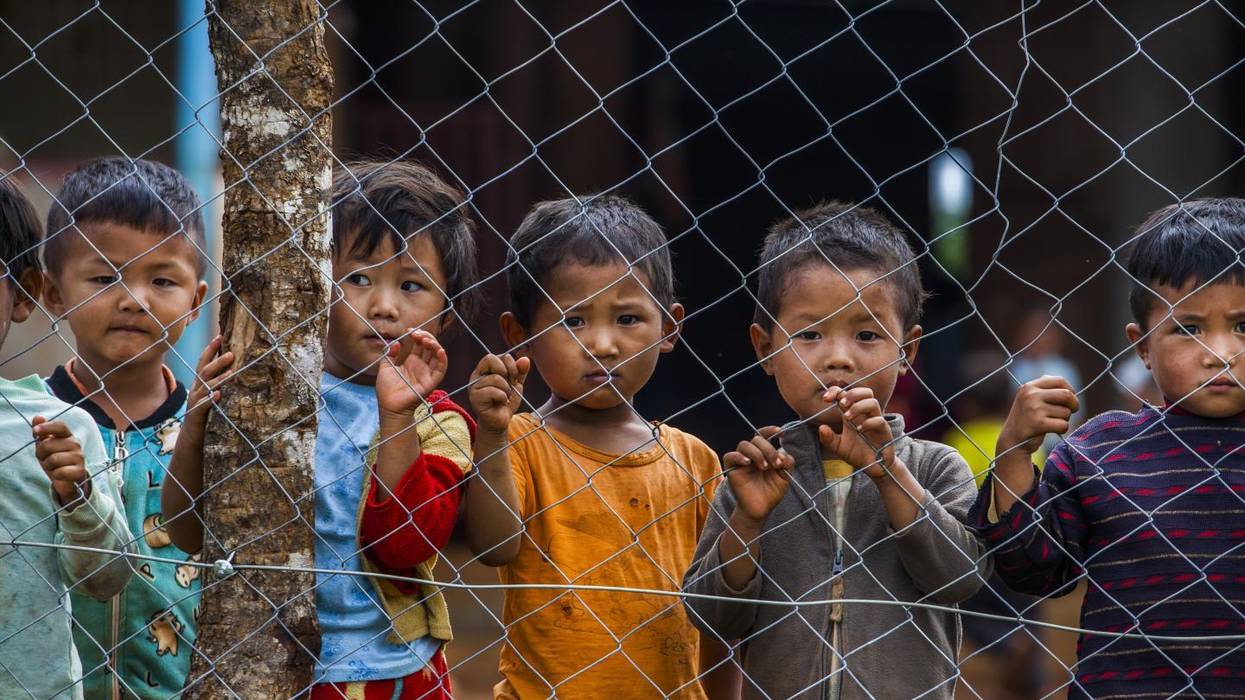
Sunday, June 20 marked the United Nations' World Refugee Day, a time to highlight refugees worldwide, applaud their courage, and highlight their contributions. This year's theme, "Heal, Learn, Shine," recognized the challenges of COVID-19, the need to uphold the right to education, and how refugees persevere despite the challenges presented to them. According to the UN, there are greater than 1.1 million refugees from my home country of Burma, making it one of the top five source countries of refugees worldwide. While many may celebrate World Refugee Day, those forced to flee Burma continue to witness repeated mass atrocities.
As the number of people fleeing the Burmese military's violence has only increased since the coup, seeking refuge in Thailand has proven increasingly difficult for Burma's ethnic minority refugees as Thai officials fear the spread of COVID-19 and strictly police their borders.
"Despite impossible conditions and a consistent lack of international support, there are numerous examples of how refugees from Burma impact communities around our world."
Estimates report that in March and April, close to 3,000 Karen internally displaced persons (IDPs) crossed the Salween River to seek refuge in Thailand, only to be held by Thai officials until conditions were deemed secure enough to turn them away. Similarly, more than 100,000 Karenni civilians escaping conflict in their home state were met with force at the Thai-Burma border, where officials attempted to push back thousands.
Safety and security for refugees are immensely rare, even on the occasion that they are accepted by host countries. Refugees are uniquely affected by a number of factors, and, during a pandemic, are disproportionately impacted by COVID-19. Often crammed into tight living situations with inadequate hygiene facilities, the ability to escape COVID-19's grip is almost impossible for Burma's refugees. With more than 1 million Rohingya refugees living in
Bangladesh, estimates report close to 1,369 cases of COVID-19 in Rohingya refugee camps. Vaccine supplies are also far from refugees' reach-- as of June 1, no COVID-19 vaccines have been distributed in Cox's Bazar.
Education remains unavailable to refugees from Burma and across the diaspora in Bangladesh, India, Thailand, and Malaysia. While some children are able to attend small, community-run schools, the general lack of educational opportunities forces entire generations from Burma to face their future unprepared. A May 2021 study reported that 68 percent of Rohingya families have at least one child, aged 5 to 17, that has been offered no opportunities to gain an education.
Despite impossible conditions and a consistent lack of international support, there are numerous examples of how refugees from Burma impact communities around our world. The Chin Human Rights Organization has empowered thousands of Chin refugees in India and Malaysia to help them reach their full potential. With help from the Rohingya Women Development Network, Rohingya women in Malaysia are taught about their rights and the key roles they play in society. Internally displaced Karenni and their refugee diaspora are supported by the collective work of the Karenni Civil Society Network, a Karenni-led effort that also speaks out against the human rights abuses experienced by ethnic minorities across Burma. While these efforts are worthy of celebration and highlight what refugees contribute to our communities, this impact would be amplified to the greatest extent if these individuals could bring their talent home to Burma for the benefit of all.
It is difficult for civilians in Burma to heal when the Burma army continues to brutalize its own people. However, despite their pain, refugees and IDPs are learning to empower themselves. However, they cannot do this alone. If the situation in Burma does not improve, the reported 175,000 internally displaced men, women, and children--a figure that is doubtlessly a conservative estimate--will likely become refugees.
The Burmese military's impunity weighs heavily on the minds of refugees in Southeast Asia and IDPs in Burma who look to their home country and wonder if their chance to safely return is slipping away. Refugees in camps and those resettled abroad are calling for the world to act, but is anyone listening? While everyone has the right to protection and freedom from the risk of death and torture, now more than ever, we need a world that will sustainably uphold the rights of all.
The international community should be compelled to take swift action to pressure the Burmese military to allow unconditional humanitarian access to internally displaced people. Cross-border aid is also essential and beyond crucial to the survival of the hundreds of thousands living in makeshift and refugee camps. Ending the illegal junta in Burma is the first step to securing human rights-based livelihoods for refugees and the millions of civilians who have long deserved peace and democratic rule. Only then can we collectively begin a new and more equitable process to heal, learn, and shine.

Blasting the continued imprisonment of detainees cleared for release at the U.S. military prison at Guantanamo Bay Naval Base as "outrageous and shameful," Amnesty International on Tuesday responded to news that the Biden administration has approved three more Gitmo inmates for release by repeating its long-standing call for the facility's closure.
"Amnesty International USA is calling on President Biden immediately to appoint a high-level official in his administration to take charge of closing Guantanamo."
--Daphne Eviatar,
Amnesty International
The Biden administration announced Monday that three detainees--none of whom has ever been charged with any crime--have been cleared for release from Guantanamo to countries that will agree to impose security restrictions upon the men, the New York Times reports.
One of men, Saifullah Paracha, is the oldest Gitmo prisoner. The 73-year-old Pakistani suffers from health problems including heart disease, diabetes, and high blood pressure. He has been imprisoned at Guantanamo without charge or trial for nearly 18 years.
Uthman Abdul al-Rahim Uthman, a 40-year-old Yemeni national who has been held without charge at Guantanamo since the prison opened in January 2002, was also cleared for release on Monday, as was Abdul Rabbani, a Pakistani.
Human rights defenders have long argued that piecemeal detainee releases only serve to prolong one of the darkest chapters in modern U.S. history.
Daphne Eviatar, director of the Security Within Human Rights program at Amnesty International USA, said in a statement responding to Monday's announcement that "it is not enough for the Biden administration to announce that more detainees are cleared for release when the government has not made any plans for how it will let cleared detainees finally experience freedom."
"Nine people are currently cleared for release at Guantanamo and some have been cleared for more than a decade, yet they are still stuck," she said. "This is an outrageous and shameful violation of human rights. President [Joe] Biden cannot have true credibility advocating for other countries to respect human rights if he does not prioritize closing Guantanamo."
"Amnesty International USA is calling on President Biden immediately to appoint a high-level official in his administration to take charge of closing Guantanamo and arranging the transfers of all detainees who are not charged with crimes, a critical first step to ending the indefinite detention of the detainees there," Eviatar added.
While the three detainees' new clearance does not mean their freedom is imminent, Paracha's attorney told the Associated Press that "there are no impediments to his return" to Pakistan, and that she believes he will be released within the next few months.
"Nine people are currently cleared for release at Guantanamo and some have been cleared for more than a decade, yet they are still stuck. This is an outrageous and shameful violation of human rights."
--Eviatar
According to the Times, the last known transfer of a Guantanamo detainee to Pakistan occurred in 2008 during the George W. Bush administration. The Barack Obama administration halted all homebound transfers of Yemeni Gitmo prisoners in 2010 due to concerns they might join al-Qaeda in the Arabian Peninsula as Yemen slid toward civil war.
There have been great delays and difficulties in finding suitable countries to relocate former Guantanamo prisoners, some of whom have described life after release as a different kind of prison. Some former Gitmo detainees have been relocated far from their homelands in countries where they have sometimes struggled to adjust to unfamiliar ways of life.
A small handful, like Mohamedou Ould Slahi--a Mauritanian citizen whose torturous 14-year Gitmo ordeal is the subject of an award-winning 2021 feature film--have found fame, even as they face severe restrictions on their freedom.
Others have returned--or in the case of the many Guantanamo prisoners who were innocent, have taken--to the battlefield as they seek revenge on their former captors and tormentors.
In 2003, Paracha, a businessman and legal U.S. resident, was lured from his home in Karachi, Pakistan to Bangkok, Thailand as part of an FBI entrapment operation in which American agents posed as representatives of the retail chain Kmart seeking a merchandising deal.
Instead of finding a deal, Paracha found himself hooded and shackled as he was flown to the U.S. air base at Bagram, Afghanistan, where multiple detainees in the so-called War on Terror were tortured to death in late 2002. There, Paracha learned he was being accused of aiding al-Qaeda fighters. He was subsequently sent to Guantanamo Bay, which was also the site of widespread U.S. torture at the time.
Although Paracha admits to holding $500,000 for al-Qaeda operatives including alleged 9/11 mastermind Khalid Sheikh Mohammed, he maintains he was unaware of their identities or ties to terrorism and was just helping them as he would any Muslim.
During the tenure of Obama--who ultimately failed to execute his order to close Guantanamo--Paracha was deemed too innocent to charge, yet too dangerous to release. Such prisoners were subjected to a Periodic Review Board, which in April 2016 again denied Paracha's release.
Asked in February whether the Biden administration will move to close the military prison at Guantanamo Bay, White House Press Secretary Jen Psaki said "that certainly is our goal and our intention." Last month, two dozen members of the Senate Democratic Caucus demanded Gitmo's closure in a letter blasting the prison--where 40 men remain imprisoned--as "a symbol of lawlessness and human rights abuses."