
SUBSCRIBE TO OUR FREE NEWSLETTER
Daily news & progressive opinion—funded by the people, not the corporations—delivered straight to your inbox.
5
#000000
#FFFFFF
To donate by check, phone, or other method, see our More Ways to Give page.


Daily news & progressive opinion—funded by the people, not the corporations—delivered straight to your inbox.
“Portraying Nigeria’s security challenges as a targeted campaign against a single religious group is a gross misrepresentation of reality,” said Nigeria's information minister.
When President Donald Trump launched a series of airstrikes in Nigeria on Christmas, he described it as an attack against "ISIS Terrorist Scum in Northwest Nigeria who have been targeting and viciously killing, primarily, innocent Christians."
But locals in a town that was hit during the strike say terrorism has never been a problem for them. On Friday, CNN published a report based on interviews with several residents of Jabo, which was hit by a US missile during Thursday's attack, which landed just feet away from the town's only hospital.
The rural town of Jabo is part of the Sokoto state in northwestern Nigeria, which the Trump administration and the Nigerian government said was hit during the strike.
Both sides have said militants were killed during the attack, but have not specified their identities or the number of casualties.
Kabir Adamu, a security analyst from Beacon Security and Intelligence in Abuja, told Al Jazeera that the likely targets are members of “Lakurawa,” a recently formed offshoot of ISIS.
But the Trump administration's explanation that their home is at the center of a "Christian genocide" left many residents of Jabo confused. As CNN reported:
While parts of Sokoto face challenges with banditry, kidnappings and attacks by armed groups including Lakurawa–which Nigeria classifies as a terrorist organization due to suspected affiliations with [the] Islamic State–villagers say Jabo is not known for terrorist activity and that local Christians coexist peacefully with the Muslim majority.
Bashar Isah Jabo, a lawmaker who represents the town and surrounding areas in Nigeria's parliament, described the village to CNN as “a peaceful community” that has “no known history of ISIS, Lakurawa, or any other terrorist groups operating in the area.”
While the town is predominantly Muslim, resident Suleiman Kagara, told reporters: "We see Christians as our brothers. We don’t have religious conflicts, so we weren’t expecting this."
Nigeria, Africa's most populous nation with more than 237 million people, has a long history of violence between Christians and Muslims, with each making up about half the population.
However, Nigerian officials have disputed claims by Republican leaders—including US Sen. Ted Cruz (Texas)—who have claimed that the government is “ignoring and even facilitating the mass murder of Christians.”
The senator recently claimed, without citing a source for the figures, that "since 2009, over 50,000 Christians in Nigeria have been massacred, and over 18,000 churches and 2,000 Christian schools have been destroyed" by the Islamist group Boko Haram.
Cruz is correct that many Christians have been killed by Boko Haram. But according to reports by the US-based Armed Conflict Location and Event Data Project and the Council on Foreign Relations, the majority of the approximately 53,000 civilians killed by the group since 2009 have been Muslim.
Moreover, the areas where Boko Haram is most active are in northeastern Nigeria, far away from where Trump's strikes were conducted. Attacks on Christians cited in October by Cruz, meanwhile, have been in Nigeria's Middle Belt region, which is separate from violence in the north.
The Nigerian government has pushed back on what they have called an "oversimplified" narrative coming out of the White House and from figures in US media, like HBO host Bill Maher, who has echoed Cruz's overwrought claims of "Christian genocide."
“Portraying Nigeria’s security challenges as a targeted campaign against a single religious group is a gross misrepresentation of reality,” said Nigerian information minister Mohammed Idris Malagi. “While Nigeria, like many countries, has faced security challenges, including acts of terrorism perpetrated by criminals, couching the situation as a deliberate, systematic attack on Christians is inaccurate and harmful. It oversimplifies a complex, multifaceted security environment and plays into the hands of terrorists and criminals who seek to divide Nigerians along religious or ethnic lines."
Anthea Butler, a religious scholar at the University of Pennsylvania, has criticized the Trump administration's attempts to turn the complex situation in Nigeria into a "holy war."
"This theme of persecution of Christians is a very politically charged, and actually religiously charged, theme for evangelicals across the world. And when you say that Christians are being persecuted, that’s a thing," she told Democracy Now! in November. "It fits this sort of savior narrative of this American sort of ethos right now that is seeing itself going into countries for a moral war, a moral suasion, as it were, to do something to help other people."
Nigeria also notably produces more crude oil than any other country in Africa. Trump has explicitly argued that the US should carry out regime change in Venezuela for the purposes of "taking back" that nation's oil.
Butler has doubted the sincerity of Trump's concern for the nation's Christians due to his administration's denial of entry for Nigerian refugees, as well as virtually every other refugee group, with the exception of white South Africans.
She said: "I think this is sort of disingenuous to say you’re going to go in and save Christianity in Nigeria, when you have, you know, banned Nigerians from coming to this country."
"Seems like the Armed Services committees ought to do some oversight regarding the expensive and pointless Christmas fireworks display in Nigeria," said one legal expert.
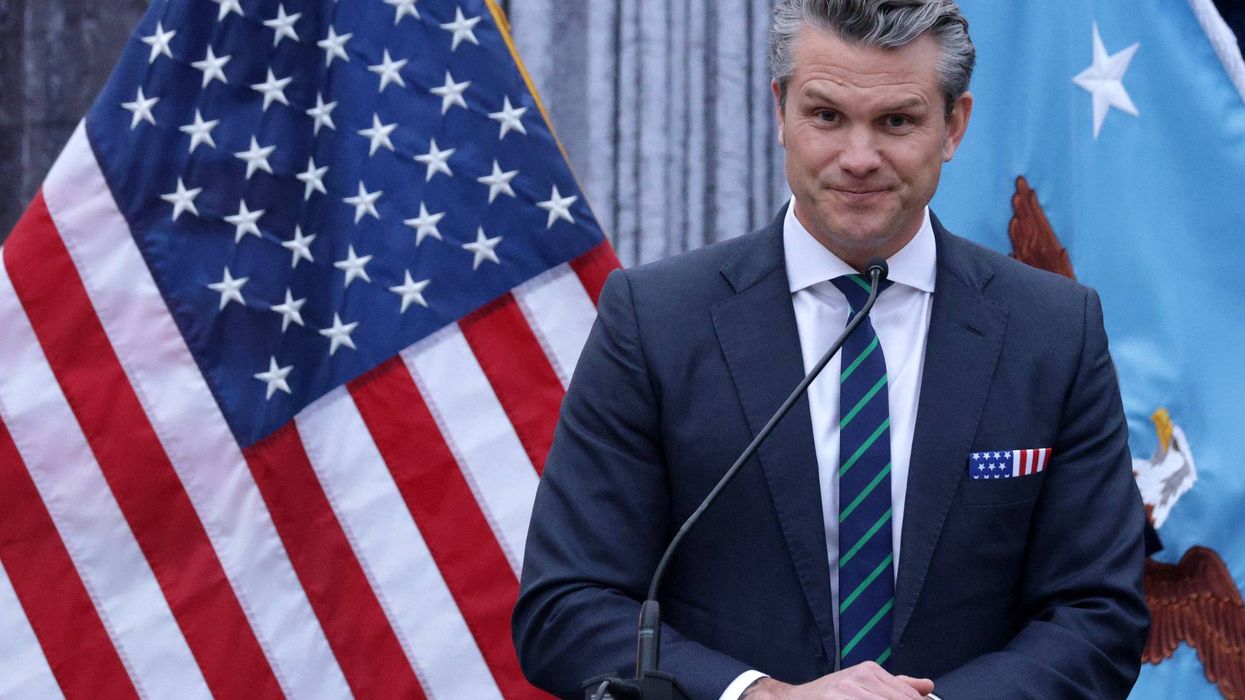
After the Trump administration bombed alleged Islamic State targets in Nigeria on Christmas Day, Gen. Dagvin Anderson of US Africa Command claimed that "our goal is to protect Americans and disrupt violent extremist organizations wherever they are," and Defense Secretary Pete Hegseth warned of "more to come," while critics advocated against any more American violence.
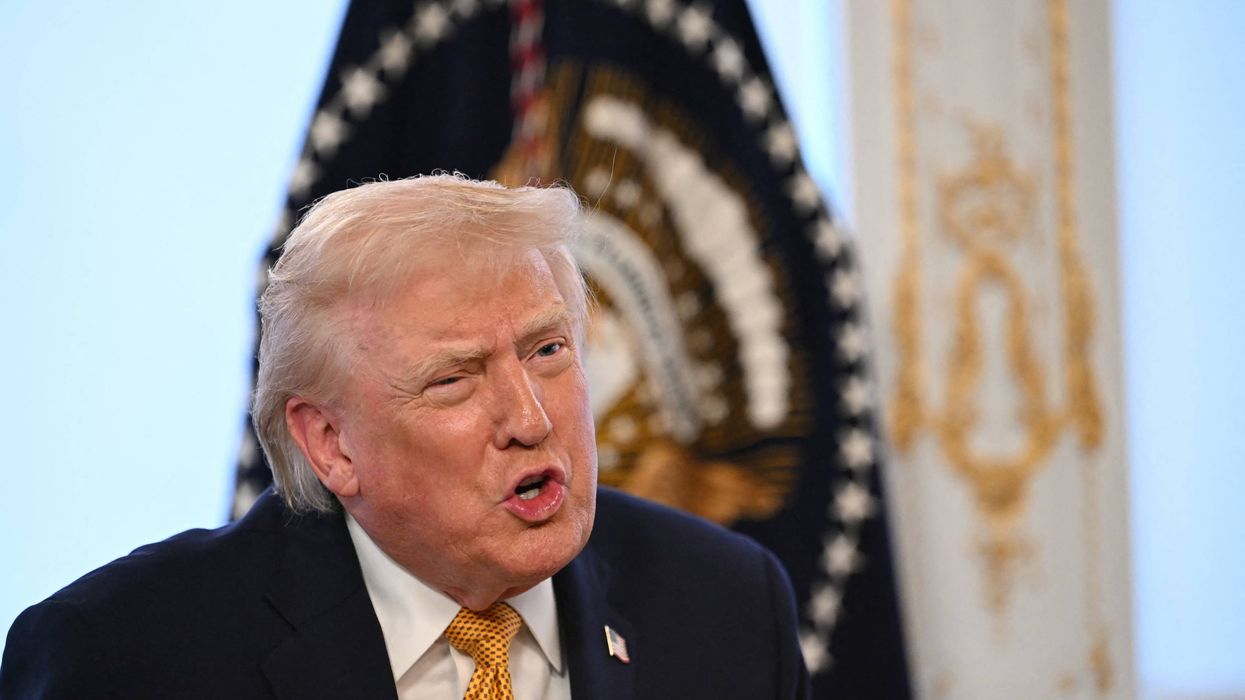
President Donald Trump said Thursday that he launched a "powerful and deadly strike against ISIS Terrorist Scum in Northwest Nigeria, who have been targeting and viciously killing, primarily, innocent Christians, at levels not seen for many years, and even Centuries!"
Specifically, according to the New York Times, which spoke with an unnamed US military source, "the strike involved more than a dozen Tomahawk cruise missiles fired off a Navy ship in the Gulf of Guinea, hitting insurgents in two ISIS camps in northwest Nigeria's Sokoto State."
The Nigerian Ministry of Foreign Affairs acknowledged cooperation with the United States that "includes the exchange of intelligence, strategic coordination, and other forms of support."
However, Nigerian Foreign Minister Yusuf Maitama Tuggar also countered the Trump administration's framing of the airstrikes as part of a battle against a "Christian genocide."
The minister stressed during a Friday appearance on CNN that "terrorism in Nigeria is not a religious conflict; it is a regional security threat."
The Associated Press spoke with residents of Jabo, a village in Sokoto, about the confusion and panic spurred by the strikes:
They... said the village had never been attacked by armed gangs as part of the violence the US says is widespread, though such attacks regularly occur in neighboring villages.
"As it approached our area, the heat became intense," recalled Abubakar Sani, who lives just a few houses from the scene of the explosion.
"Our rooms began to shake, and then fire broke out," he told AP. "The Nigerian government should take appropriate measures to protect us as citizens. We have never experienced anything like this before."
Jennifer Kavanagh, director of military analysis at Defense Priorities, a US think tank that that promotes restraint, and diplomacy, said in a statement that "the US action taken in Nigeria while Americans celebrated the Christmas holiday is an unnecessary and unjustified use of US military force that violates Mr. Trump's promises to his supporters to put American interests first and avoid risky and wasteful military campaigns abroad."
As Common Dreams reported after the strikes, despite dubbing himself the "most anti-war president in history" and even seeking a Nobel Peace Prize, Trump has now bombed not only Nigeria but also Afghanistan, Iran, Iraq, Libya, Pakistan, Somalia, Syria, and Yemen, plus alleged drug trafficking boats in the Caribbean Sea and Pacific Ocean, since the start of his first term in 2017.
The Dove
[image or embed]
— Brian Finucane (@bcfinucane.bsky.social) December 25, 2025 at 9:06 PM
"Airstrikes in Nigeria will not make Americans safer, no matter the target," Kavanagh argued. "There are no real US interests at stake in Nigeria, a country that is an ocean and over 5,000 miles away. The country is home to a long-running insurgency, but violence and unrest in Nigeria pose no threat to the US homeland or national security interests abroad. Furthermore, despite Mr. Trump's claims, there is no evidence that Christians are targeted by Nigeria's extremist groups at a rate higher than any other religious or ethnic group in the country. Killings of civilians, to the extent they occur, are indiscriminate."
As CNN reported:
"Yes, these (extremist) groups have sadly killed many Christians. However, they have also massacred tens of thousands of Muslims," said Bulama Bukarti, a Nigerian human rights advocate specializing in security and development.
He added that attacks in public spaces disproportionately harm Muslims, as these radical groups operate in predominantly Muslim states...
Out of more than 20,400 civilians killed in attacks between January 2020 and September 2025, 317 deaths were from attacks targeting Christians while 417 were from attacks targeting Muslims, according to crisis monitoring group Armed Conflict Location & Event Data.
Kavanagh noted that "the United States has been conducting strikes on ISIS and other terrorist group targets in Africa now for over two decades and the number and power of militant groups on the continent has only increased. The whack-a-mole strategy is ineffective at controlling insurgencies or eliminating terrorist groups. It also needlessly expends scarce US resources and does so at a time when Americans are concerned about economic challenges at home."
"Chasing terrorist groups around the globe is the opposite of the 'America First' foreign policy voters expected when they returned Mr. Trump to the White House," she added. "To keep his commitment, he must make the attack in Nigeria a one-off."
Medea Benjamin of the anti-war group CodePink similarly says in a video shared on social media Friday: "We have to ask, is this Donald Trump's idea of America First? The American people do not want to be dragged into yet another conflict, and this was done without congressional approval, without public debate, without any transparency."
Former libertarian US Congressman Justin Amash (R-Mich.) has also emphasized in multiple social media posts since Thursday that "to carry out an offensive military action in another country, the approval the president of the United States needs is from the Congress of the United States, not from a foreign government."
Brian Finucane, a senior adviser at the International Crisis Group and nonresident senior fellow at the New York University School of Law, suggested congressional action, saying that it "seems like the Armed Services committees ought to do some oversight regarding the expensive and pointless Christmas fireworks display in Nigeria."
Meanwhile, progressive campaigner Melissa Byrne asked, "What kind of Christianity murders people on Christmas?"
Trump—who calls himself "the most anti-war president in history"—has now bombed more countries than any president in history.
President Donald Trump—the self-described "most anti-war president in history"—has now ordered the bombing of more countries than any president in history as US forces carried out Christmas day strikes on what the White House claimed were Islamic State militants killing Christians in Nigeria.
"Tonight, at my direction as Commander in Chief, the United States launched a powerful and deadly strike against ISIS Terrorist Scum in Northwest Nigeria, who have been targeting and viciously killing, primarily, innocent Christians, at levels not seen for many years, and even Centuries!" Trump said Thursday in a post on his Truth Social network.
"I have previously warned these Terrorists that if they did not stop the slaughtering of Christians, there would be hell to pay, and tonight, there was," the president continued. "The Department of War executed numerous perfect strikes, as only the United States is capable of doing."
"Under my leadership, our Country will not allow Radical Islamic Terrorism to prosper," Trump added. "May God Bless our Military, and MERRY CHRISTMAS to all, including the dead Terrorists, of which there will be many more if their slaughter of Christians continues."
A US Department of Defense official speaking on condition of anonymity told the Associated Press that the United States worked with Nigeria to conduct the bombing, and that the government of Nigerian President Bola Tinubu—who is a Muslim—approved the attacks.
It was not immediately known how many people were killed or wounded in the strikes, or whether there are any civilian casualties.
The Nigerian Ministry of Foreign Affairs said that “terrorist violence in any form, whether directed at Christians, Muslims, or other communities, remains an affront to Nigeria’s values and to international peace and security."
The US bombings followed a threat last month by Trump to attack Nigeria with “guns-a-blazing" if the country's government did not curb attacks on Christians.
Northwestern Nigeria—including Sokoto, Zamfara, Katsina, and parts of Kaduna State—is suffering a complex security crisis, plagued by armed criminal groups, herder-farmer disputes, and Islamist militants including Islamic State West Africa Province (ISWAP/ISIS) and Boko Haram. Both Christians and Muslims have been attacked.
Since emerging in Borno State in 2009, Boko Haram has waged war on the Nigerian state—which it regards as apostate—not against any particular religious group. In fact, the majority of its victims have been Muslims.
"According to the Armed Conflict Location and Event Data Project, more Muslims than Christians have been targeted in recent years," Chloe Atkinson recently wrote for Common Dreams. "Boko Haram has massacred worshipers in mosques, torched markets in Muslim-majority areas, and threatened their own coreligionists."
"The crisis in Nigeria is not a holy war against Christianity."
"It is true that Christian communities in the north-central regions have suffered unimaginable horrors as raids have left villages in ashes, children murdered in their beds, and churches reduced to rubble," she said. "The April massacre in Zike and the June bloodbath in Yelwata are prime examples of the atrocities taking place in Nigeria."
"The crisis in Nigeria is not a holy war against Christianity," Atkinson continued. "Instead, it’s a devastating cocktail of poverty, climate-driven land disputes, and radical ideologies that prey on everyone and not just any distinct group."
"By framing Nigeria’s conflict as an existential threat to Christians alone, Trump is not shining a spotlight on the victims," she added. "Instead, he is weaponizing right-wing conspiracy theories to stoke Islamophobia, the same toxic playbook he used to fuel his ban on Muslims, and which left refugee families shattered at America’s borders."
Former libertarian US Congressman Justin Amash (R-Mich.) noted on X that "there’s no authority for strikes on terrorists in Nigeria or anywhere on Earth," adding that the 2001 Authorization for Use of Military Force (AUMF)—which was approved by every member of Congress except then-Rep. Barbara Lee (D-Calif.)—"is only for the perpetrators of the 9/11 attacks."
"The War Powers Resolution doesn’t grant any authority beyond the Constitution," Amash added. "Offensive military actions need congressional approval. The Framers of the Constitution divided war powers to protect the American people from war-eager executives. Whether the United States should engage in conflicts across the globe is a decision for the people’s representatives in Congress, not the president."
In addition to Nigeria, Trump—who says he deserves a Nobel Peace Prize—since 2017 has also ordered the bombing of Afghanistan, Iran, Iraq, Libya, Pakistan, Somalia, Syria, and Yemen, as well as boats allegedly transporting drugs in the Caribbean Sea and Pacific Ocean. Trump has also deployed warships and thousands of US troops near Venezuela, which could become the next country attacked by a president who campaigned on a platform of "peace through strength."
That's more than the at least five countries attacked during the tenure of former President George W. Bush or the at least seven nations attacked on orders of then-President Barack Obama during the so-called War on Terror, which killed more than 940,000 people—including at least 432,000 civilians, according to the Costs of War Project at Brown University's Watson Institute for International and Public Affairs.
Trump continued the war on ISIS in Iraq and Syria started by Obama in 2014. Promising to "bomb the shit out of" ISIS fighters and "take out their families," Trump intensified the US campaign from a war of "attrition" to one of "annihilation," according to his former defense secretary, Gen. James "Mad Dog" Mattis. Thousand of civilians were killed as cities such as Mosul, Iraq and Raqqa, Syria were flattened.
Trump declared victory over ISIS in 2018—and again the following year.
Some social media users suggested Trump's "warmongering" is an attempt to distract from the Epstein files scandal and alleged administration cover-up.
"Bombing Nigeria won’t make us forget about the Epstein files," said one X user.
For the sake of Nigerian lives and the American soul, we must not allow Trump to drag America into a quagmire of his own making.
In yet another display of the same divisive rhetoric that defined his first term, US President Donald Trump has once again pulled the United States into the crosshairs of global instability, this time by saber rattling over Nigeria’s complex ethnic and religious conflict. Trump not only threatened to slash US aid, but he also said he might order “fast and vicious” military strikes against what he calls “Islamic terrorists” slaughtering Christians. Aside from the fact that Trump is wrong, he is ranting xenophobic ideas, platforming American exceptionalism, and demonstrating a blatant disregard for the lives of millions caught in the cross fire of what is simply a resource war with colonial-era grudges.
Let’s be clear: The violence taking place today in Nigeria is heartbreaking and must end. Boko Haram’s extremism, clashes between farmers and herders, and general hooliganism have claimed over 20,000 civilian lives since 2020. It is true that Christian communities in the north-central regions have suffered unimaginable horrors as raids have left villages in ashes, children murdered in their beds, and churches reduced to rubble. The April massacre in Zike and the June bloodbath in Yelwata are prime examples of the atrocities taking place in Nigeria. These incidents are grave reminders that the international community must pay more attention to this crisis.
But Trump’s response is crude and wrong. Painting all Muslims as genocidal monsters is not the answer. Calling Nigeria a failed state ripe for American liberation is not the solution, especially since the data shows otherwise. According to the Armed Conflict Location and Event Data Project, more Muslims than Christians have been targeted in recent years. Boko Haram has massacred worshipers in mosques, torched markets in Muslim-majority areas, and threatened their own co-religionists.
The crisis in Nigeria is not a holy war against Christianity. Instead, it’s a devastating cocktail of poverty, climate-driven land disputes, and radical ideologies that prey on everyone and not just any distinct group. By framing Nigeria’s conflict as an existential threat to Christians alone, Trump is not shining a spotlight on the victims. Instead, he is weaponizing right-wing conspiracy theories to stoke Islamophobia, the same toxic playbook he used to fuel his ban on Muslims, and which left refugee families shattered at America’s borders.
Americans must reject Trump’s imperial fantasy and instead demand congressional oversight on any military action.
Nigeria’s leaders are right to be astonished and furious. Presidential spokesperson Bayo Onanuga said he was “shocked” over Trump's invasion musings, while President Bola Tinubu decried the religious intolerance label as a distortion of their "national reality." Even opposition voices, like Labour Party spokesperson Ken Eluma Asogwa, admit the government's security lapses but reject Trump's extermination narrative as baseless fearmongering.
Trump should indeed be viewed as a warmonger, seeking every opportunity to sow discord and destruction in his wake. He sees every crisis as a photo op for his machismo and self-promotion. His first term was a disaster and now, in his second term, he wants to unleash drones and troops on Africa’s most populous nation, destabilizing a key partner in counterterrorism and migration management.
Unilateral strikes will only inflame the conflict’s root causes like resource scarcity and ethnic tensions. If anything, Trump’s misguided ideas to resolve the crisis will only exacerbate it by creating new waves of refugees and sowing even more discord throughout Nigeria. The country needs real solutions, not Trump’s wrong-headed conspiracy theories. He should be saving those who are vulnerable, not bombing them into submission.
A real solution would involve surging humanitarian aid to displaced families, partnering with the United Nations and African Union for joint security training, and pressuring Nigeria’s government through incentives, not threats. Real strength is in building bridges. Trump shows his weakness by building bunkers.
The Nigerian crisis is a clarion call for the world, but especially for America. Trump’s rhetoric is not just wrong; it is a betrayal of American values. Americans must reject Trump’s imperial fantasy and instead demand congressional oversight on any military action. America must recommit to a foreign policy that heals rather than divides. The world is watching, and for the sake of Nigerian lives and the American soul, we must not allow Trump to drag America into a quagmire of his own making. Nigeria deserves better.
"The spills have terribly affected the Bille community," said one Nigerian plaintiff. "Our ecosystems are dead. Our livelihood depends on fishing."
After years of delay tactics, Shell is set to go on trial in London this week over claims that hundreds of spills caused by the fossil fuel giant have destroyed Nigerian communities and violated their residents' rights to a clean and healthy environment.
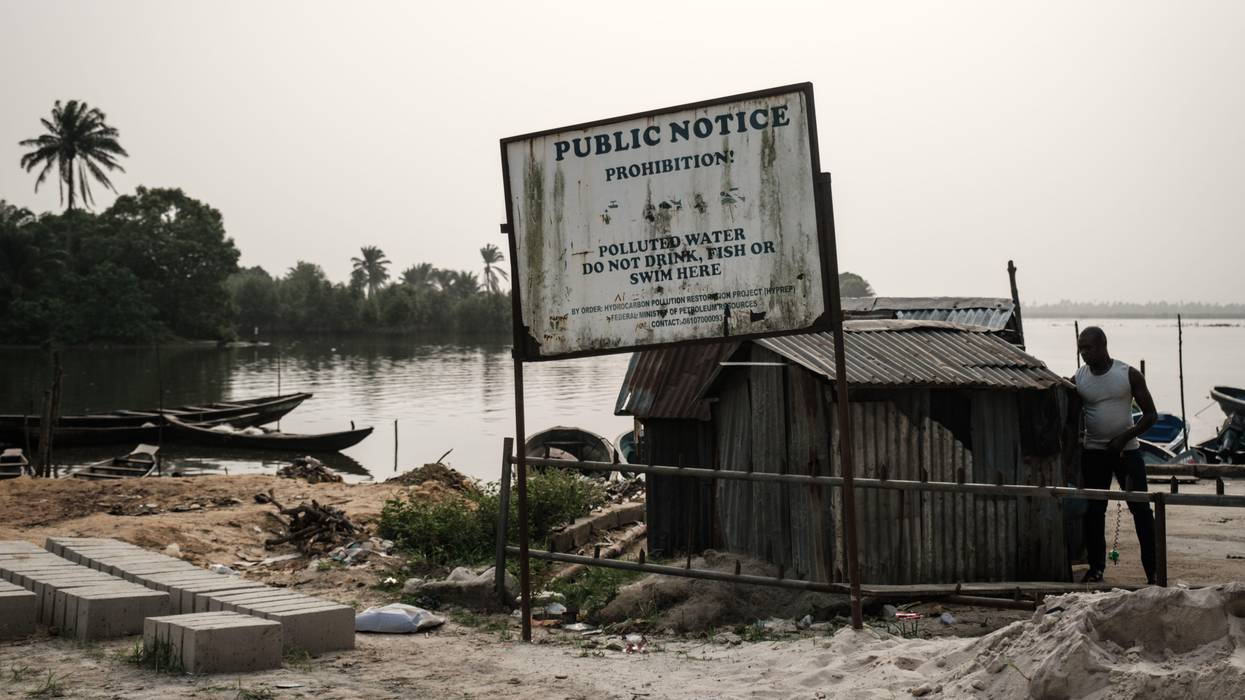
Critics say Shell has managed to avoid accountability for despoiling the environment in and around Bille and Ogale communities in the Niger Delta. Ten years ago, residents of these communities sued Shell, claiming inhabitants' livelihoods, homes, and environment had been devastated by Shell oil spills, which killed fish and vegetation and left thousands of people without access to clean drinking water.
As Bille and Ogale communities attempted to fight London-based Shell in U.K. courts, the company repeatedly delayed the case, claiming it was not legally liable for the pollution caused by its subsidiary, the Shell Petroleum Development Company of Nigeria. However, in 2021 the U.K. Supreme Courtruled that the High Court should hear the case, and last December, the country's Court of Appeals allowed it to be heard.
"The Bille and Ogale communities of Nigeria's Niger Delta oil-producing region have been living with the devastating impact of oil pollution for so long," Amnesty International Nigeria director Isa Sanusi said in a statement Monday. "Oil companies, particularly Shell, exposed them to multiple oil spills that have done permanent damage to farmlands, waterways, and drinking water—leaving them unable to farm or fish."
Ten years ago, residents from the Bille and Ogale communities in Nigeria claimed their livelihoods had been destroyed by hundreds of oil spills caused by Shell. The pollution caused widespread devastation to the local environment and left thousands without access to clean drinking water.
— Amnesty International (@amnesty.org) February 10, 2025 at 4:00 AM
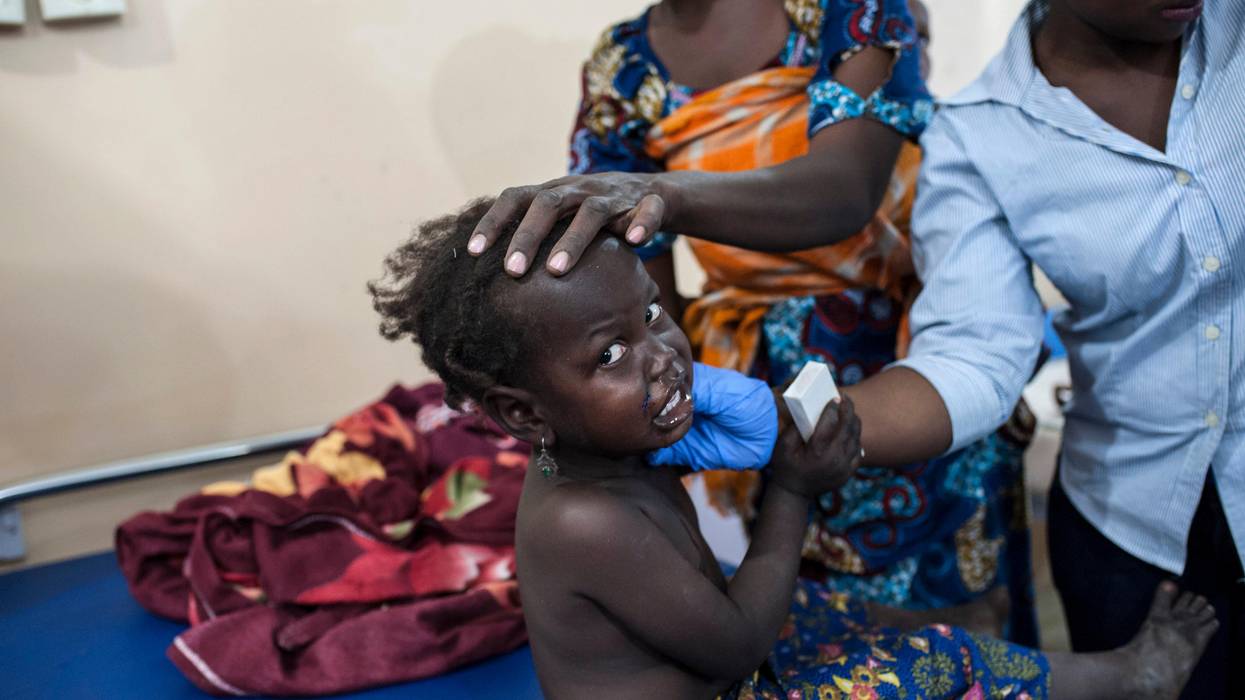
"Water contamination and other impacts affect even babies that are in some cases born with deformities," Sanusi added. "These communities have been deprived of a good standard of living. They deserve justice and effective remediation, and I hope this long-overdue trial goes someway to providing it."
In 2023, the U.K. Supreme Court ruled in a separate but related case that it was too late for Nigerian plaintiffs to sue a pair of Shell subsidiaries over a 2011 spill of an estimated 40,000 barrels of oil.
Amnesty International has called the Niger Delta "one of the most polluted places on Earth."
Accountability has been rare, but in 2021 Shell agreed to pay $111 million for oil spills in the Niger Delta. This, in a year in which the company reported adjusted 2020 earnings of nearly $5 billion.
Last December, Nigeria's Ministry of Petroleum Resources approved Shell's sale of $2.4 billion in offshore and shallow-water assets to Renaissance Group, a Nigerian firm, marking the end of nearly a century of Shell's operations in the African nation. The Nigerian government is also currently in talks with local communities about resuming oil production in Ogoniland, which has been devastated by spills over the past half-century.
Responding to the U.K. Court of Appeals' greenlighting of the case set to be heard later this week, Bille Chief Bennett Okpoki said in December that "this has taken a very long time as Shell has been delaying for around 10 years."
"The spills have terribly affected the Bille community," he continued. "Our ecosystems are dead. Our livelihood depends on fishing. After the oil spills, we have found it very difficult to survive and people are not finding it easy. We hope it continues, so we can have a final victory over Shell, at least for them to come and do the cleanup, to put us in the place we were before."
African youth, leveraging social media and operating without funding, have emerged as a powerful force for change, echoing the historical independence movements of the mid-20th century.
“Africa is Rising!”—or so the narrative goes. But the sun of economic growth does not shine on everyone. African youth face record-high unemployment, political underrepresentation, and limited access to resources. In 2024 alone, 19 African countries have held elections, yet young people—one-third of the continent’s population—remain largely excluded from leadership. So, it isn’t surprising that in this same year, African youth, mobilizing on digital platforms, have come out loud and clear against economic hardship and government inaction.
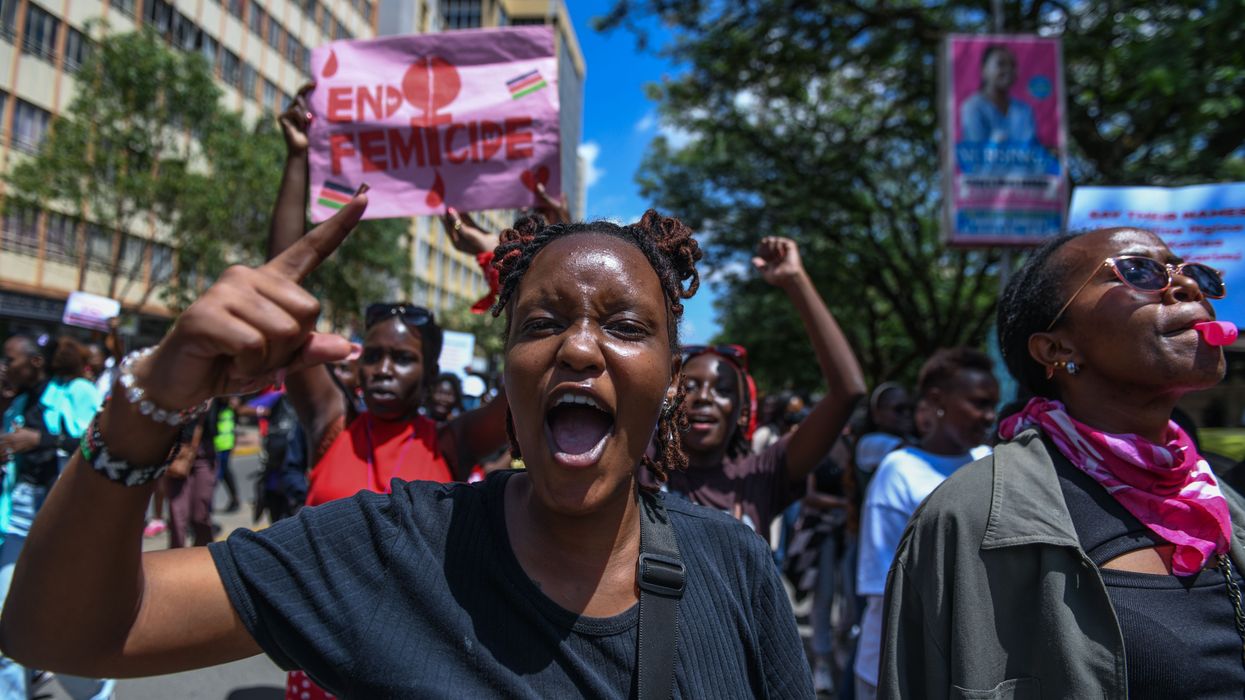
The first time we felt digital and social media mobilization in Kenya was in 2019 in the weeks leading up to the 2019 International Women’s Day. Feminists in Kenya planned and digitally mobilized nationwide protests against femicide to draw attention to the rising cases of femicide and Intimate Partner Violence (IPV) in the country that went with no arrests of the perpetrators or the government addressing the issue. The protests were mobilized on social media under the hashtag #EndFemicideKE/#TotalShutdownKE.
As seen in the #RejectFinanceBill protests in Kenya, the #FearlessOctober protests in Nigeria, and youth-led movements in Uganda and Mozambique, today’s youth are not merely reacting to the rising cost of living but are pushing for profound systemic change.
Between August and October, the Kenya National Police Service reported 97 cases of femicide. The real numbers must be higher since some of the cases don’t get reported to authorities. During the 16 Days of Activism 2024, Kenyans across the country held forums to highlight the femicide issue. This culminated in nationwide protests held across the country on the International Human Rights Day 2024, calling on the president to declare femicide a national disaster. As usual the peaceful protests were met by police brutality, with the police teargassing innocent protestors.
This social youth-led movement, started by Gen Z protesters in Kenya in June, has now spread to Uganda, Nigeria, and Mozambique. Waves of young people are rising to challenge electoral malpractices, bad governance, corruption, and tax hikes. African youth, leveraging social media and operating without funding, have thus emerged as a powerful force for change, echoing the historical independence movements of the mid-20th century. With the majority of the protests driven by men and women under 30, there’s significant potential to create long-lasting momentum for good governance, economic justice, an end to corruption, and better electoral management.
The weeks leading up to the first physical #RejectFinanceBill2024 protests in Kenya on June 18 and 19 were dominated by general discontent with proposed taxes on basic commodities like sanitary products, cooking oil, and bread. Social media platforms were abuzz with calls of “enough is enough” as platform users explained how much the bill would drive up the cost of living for most average citizens. The general feeling was “we need to do something” about this bill before life got much more difficult than it already was.
Within days, users had circulated a date, venue, and dress code on social media and were downloading the Zello walkie-talkie app en masse. What followed next was historic as young Kenyans in all parts of the country took to the streets to protest the Finance Bill in what became known as the #RejectFinanceBill2024 and #OccupyParliament protests.
Following Kenya’s example, anti-corruption protests erupted in Uganda in July. Then August and October saw Nigeria’s #EndBadGovernance protests and #FearlessOctober protests against the cost-of-living crisis and bad governance. In Mozambique, citizens took massively to the streets to protest against electoral malpractices following the October 9 elections.
As in Kenya, all these protests have more in common than how violently they were dealt with: excessive police force, extra-judicial killings, abductions, torture, and hundreds of injuries.
The vast majority of protesters are young people, and social media played a pivotal role in getting them out on the street. It helped them facilitate real-time updates, coordinate demonstrations, counter misinformation, and obtain legal aid by crowdfunding for arrested activists. By circumventing traditional media, young activists exposed abuses and united communities, forcing authorities to confront this digitally-savvy and highly organized force.
Historically, Kenyan politics has been divided along ethnic and tribal lines, with voting blocs often rallying behind leaders from their communities. The Gen Z movement, however, has broken this mold. Young activists have shifted the focus from ethnic loyalty to broader issues like equality, social justice, and government accountability.
Under the “tribeless, leaderless, party-less” tagline, the #RejectFinanceBill protests shunned traditional political affiliations and adopted a spontaneous, decentralized model. This approach gave the movement flexibility to adapt quickly to changing circumstances, such as evading police by frequently shifting protest sites. Without a clear hierarchy, the protests continued despite arrests, as authorities struggled to suppress an ever-evolving, leaderless movement.
The Kenyan protests took the government by surprise. Previously, youth complaints were confined to social media. Now, they were on the streets nationwide, transcending tribal and party lines. The government’s response was violent, resulting in dozens of deaths and abductions. Even today, police isolate and kidnap perceived protest leaders, many of whom end up dead or traumatized from their experiences. The Kenya Police Service has however denied this.
Africa’s political history is marked by leaders who position themselves as “saviors” promising utopia while failing to build sustainable systems. This narrative has bred disillusionment as youth recognize the need for systemic change, not just individual leaders. Gen Z activists across Africa are increasingly demanding transparency and accountability, emphasizing structures that outlast personalities and prevent corruption.
This year’s protests also signal another shift: African youth are questioning whether their leaders’ personal politics align with the principles of justice, equality, and inclusion. This younger generation is looking beyond mere representation to evaluate leaders on their stance against patriarchy, homophobia, and tribalism. Are they committed to redressing historical injustices and fighting systemic oppression? Activists believe these questions should determine the support any leader receives.
With the majority of activists under 30, Africa’s Gen Z is set to reshape the political landscape. Supporting these young Africans, rather than depending on traditional “savior” figures, is essential. Leaderless, decentralized movements have proven to be effective at disrupting the status quo.
As seen in the #RejectFinanceBill protests in Kenya, the #FearlessOctober protests in Nigeria, and youth-led movements in Uganda and Mozambique, today’s youth are not merely reacting to the rising cost of living but are pushing for profound systemic change. By combining digital activism with physical presence on the streets, African youth are demonstrating their commitment to a transformed and empowered continent and broader systemic change.
"At a time when Shell is making unprecedented profits, it is high time that it addressed the ongoing pollution caused to these communities by its operations," said one attorney representing plaintiffs from the Niger Delta.
More than 13,650 Nigerians have filed claims against Shell for years of unremedied oil spills that are causing ecological destruction, disease, and death.
As The Intercept reported Wednesday: "Niger Delta communities have been facing pollution caused by Shell for decades, devastating their health and livelihoods. In 2011, the United Nations Environment Programme reported that the threat to public health warranted 'emergency action.' At the time, the cleanup process would have taken 30 years, if initiated immediately."
"It never happened," the investigative outlet noted. "Shell refused to cooperate, and the situation has only gotten worse, with 55 oil spills in the last 12 years. Amnesty International called the Niger Delta region 'one of the most polluted places on earth.'"
Last Friday, 11,317 residents from Ogale—a rural community in Nigeria home to roughly 40,000 people—and 17 local groups filed individual claims against Shell at the High Court of Justice in London, where the company is headquartered. They joined 2,335 of their fellow citizens from Bille—an island community of around 15,000 people where fish have virtually disappeared—who had already filed individual claims against the oil giant at the High Court in 2015.
Individual claimants are seeking compensation for loss of livelihoods. In addition, class-action lawsuits filed on behalf of Ogale and Bille inhabitants in October 2015 and December 2015, respectively, are seeking compensation for damages to communally owned property, including waterways, farmland, and public infrastructure.
British law firm Leigh Day, which is managing all four cases together, said Thursday in a statement that the communities want Shell to clean up their mess and pay up for destroying local residents' ability to farm and fish, which has left many with no source of income.
"If you don't have money, you can't drink water. It's like we are living in a desert, while we are living on the water."
"As we speak, oil is spilling in my community every day," King Emere Godwin Bebe Okpabi, leader of the Ogale community, told The Intercept. "People are dying."
Chief Bennett Dokubo, a community leader from Bille, told the outlet that drinking water contaminated by Shell has led to major cholera outbreaks. Avoiding disease depends on one's ability to purchase expensive bottled water from the city.
"If you don't have money, you can't drink water," he said. "It's like we are living in a desert, while we are living on the water."
Shell executives have so far managed to avoid accountability during the seven-plus years the Ogale and Bille communities have been engaged in litigation against them.
In February 2021, however, plaintiffs scored a procedural victory when the United Kingdom Supreme Court ruled unanimously that there was "a good arguable case" that Shell plc, the parent company in London, was legally responsible for the pollution generated by its Nigerian subsidiary, Shell Petroleum Development Company (SPDC). The court ordered the case to proceed to trial to determine whether Shell and SDPC are guilty of harming the Niger Delta communities and should pay for redress.
In response, Shell argued in its November 2021 defense filing that "the company had no legal responsibility to deal with the consequences of spills," The Intercept reported. "The oil giant contended that any legal claim must be brought within five years of any specific spill, even if a cleanup never took place. Shell also claimed that only the Nigerian regulatory authorities have the power to force them to clean up; those authorities, however, are chronically under-resourced."
Leigh Day warned Thursday that Shell's legal arguments, if successful, "will have far-reaching consequences." As the law firm explained: "The implications of these legal arguments are that oil-impacted communities in Nigeria will be unable to seek cleanup of their environments. In addition, communities would be unable to claim compensation for loss of livelihoods unless they are able to prove the damage was caused by operational failure within five years of the date of issuing the claim. For most Nigerian communities living with legacy pollution, that would essentially deprive them of any legal remedy against oil companies."
Conversely, Bloomberg reported that "if the oil giant loses the upcoming trial, it could open U.K.-incorporated firms—including in the energy and mining industries—to potentially costly lawsuits in British courts from groups around the world that accuse them of harm through overseas subsidiaries."
Matthew Renshaw, a partner at Leigh Day who represents the Nigerian claimants, lamented that "instead of engaging with these communities, Shell has fought them tirelessly through the courts for the past seven years."
"At a time when Shell is making unprecedented profits, it is high time that it addressed the ongoing pollution caused to these communities by its operations," said Renshaw. "The question must be asked whether Shell simply plans to leave the Niger Delta without addressing the environmental disaster which has unfolded under its watch?"
"It appears that Shell is seeking to leave the Niger Delta free of any legal obligation to address the environmental devastation caused by oil spills from its infrastructure over many decades."
Shell reported Thursday that its profits more than doubled in 2022 to a record $40 billion.
All the money Shell has made from exploiting the Niger Delta's people and environment since it discovered oil in the area in 1956 "is blood money," Okpabi, the king of Ogale, told The Intercept. "And we are going from courthouse to courthouse."
Although cleanup would cost Shell a fraction of its annual profits—roughly $1 billion for the first five years, according to a recent U.N. estimate—Renshaw told the outlet that the company has been "incredibly resistant" to any form of public health oversight or probes, adding that it is vulnerable to much more litigation.
"There are literally hundreds of communities that have been impacted by Shell's oil pollution," he said, "and could seek to bring legal claims against Shell."
As the cases against it mount, Shell has moved toward abandoning the region. The company announced in 2021 that it plans to leave the Niger Delta and sell its onshore oil fields, leaving wrecked communities and ecosystems in its wake.
Last June, however, "Shell was forced to suspend sales, complying with a Nigerian Supreme Court ruling that said it had to wait for the outcome of an appeal over a 2019 oil spill, brought in Nigerian court, which stated the company needed to pay the Niger Delta communities nearly $2 billion in compensation," The Intercept noted.
Regarding Leigh Day's current case, the full trial in London's High Court is expected to occur in 2024.
"This case raises important questions about the responsibilities of oil and gas companies," said Leigh Day partner Daniel Leader.
"It appears that Shell is seeking to leave the Niger Delta free of any legal obligation to address the environmental devastation caused by oil spills from its infrastructure over many decades," Leader observed. "At a time when the world is focused on 'the just transition,' this raises profound questions about the responsibility of fossil fuel companies for legacy and ongoing environmental pollution."
The Pentagon's stated commitment to transparency on civilian casualties was questioned Tuesday in an Intercept report noting that the Department of Defense has failed to respond to a group of House Democrats who set a three-month deadline to explain the U.S. military's role in a 2017 Nigerian airstrike that killed more than 160 noncombatants.
"It sends a worrisome message that, at minimum, the Defense Department is unwilling to engage on an issue affecting countless lives."
On September 8, Reps. Sara Jacobs (D-Calif.), Jason Crow (D-Colo.), Ro Khanna (D-Calif.), Tom Malinowski (D-N.J.), and Andy Kim (D-N.J.)--the Protection of Civilians in Combat Caucus--sent a letter to Defense Secretary Lloyd Austin citing reporting that the U.S. military provided Nigerian forces with intelligence support ahead of a January 17, 2017 airstrike on a refugee camp in Rann, Borno state, in the country's northeastern corner.
Nigeria bombed the camp believing it was a base for Boko Haram fighters. More than 160 civilians died in the attack, including six Red Cross aid workers. A formerly classified U.S. military document obtained by The Intercept referred to the strike as a "U.S.-Nigerian" operation. Days after the attack, U.S. Africa Command (AFRICOM) secretly ordered a probe of the airstrike.
The lawmakers asked what was the nature of U.S. involvement in the strike, whether the military provided intelligence or other support to its Nigerian partner, and other questions, asking Pentagon officials to reply "no later than 90 days" after they received the letter. That deadline was nearly two weeks ago.
"The Pentagon's failure to provide information and documents... to determine possible U.S. involvement in an airstrike that took many civilian lives in northeast Nigeria does not bode well for the U.S. government's expressed commitment to transparency and accountability," Human Rights Watch Nigeria researcher Anietie Ewang told The Intercept.
"It sends a worrisome message that, at minimum, the Defense Department is unwilling to engage on an issue affecting countless lives and may even reflect an attempt to evade responsibility," she added.
The Intercept's Nick Turse writes:
In August, the Pentagon unveiled a Civilian Harm Mitigation and Response Action Plan, which provides a blueprint for improving how the U.S. military addresses civilian harm. The plan calls for a new emphasis on the "proactive release of information" and "transparency regarding [Defense Department] policies and processes for mitigating and responding to civilian harm"--but not until next year.
The formerly secret AFRICOM document obtained by The Intercept, along with reporting by Nigerian journalists and interviews with experts, suggests that the U.S. may have launched this rare internal investigation because it secretly provided intelligence or other support to the Nigerian armed forces who carried out the deadly strike.
Asked to comment on the missed deadline, Pentagon spokesperson Col. Phillip Ventura told The Intercept that "I don't think we're going to get a lot of joy on this one."
"The Department of Defense is aware of the matter and addressing the concerns of Congress directly with them," Ventura told the outlet after the article's publication.
"As a department, we have long recognized the strategic and moral importance of mitigating harm to civilians--whether resulting from a U.S. military operation or an operation conducted by our allies and partners," he added, "and we will continue to improve by implementing the steps outlined in the Civilian Harm Mitigation and Response Action Plan (CHMR-AP), which Secretary Austin approved in August of this year."
Earlier this week, Jacobs and Sen. Elizabeth Warren (D-Mass.) sent a letter to Austin expressing alarm over the "vast difference" in the number of civilians the Pentagon claims responsibility for killing during U.S. attacks and casualty figures compiled by independent investigators.
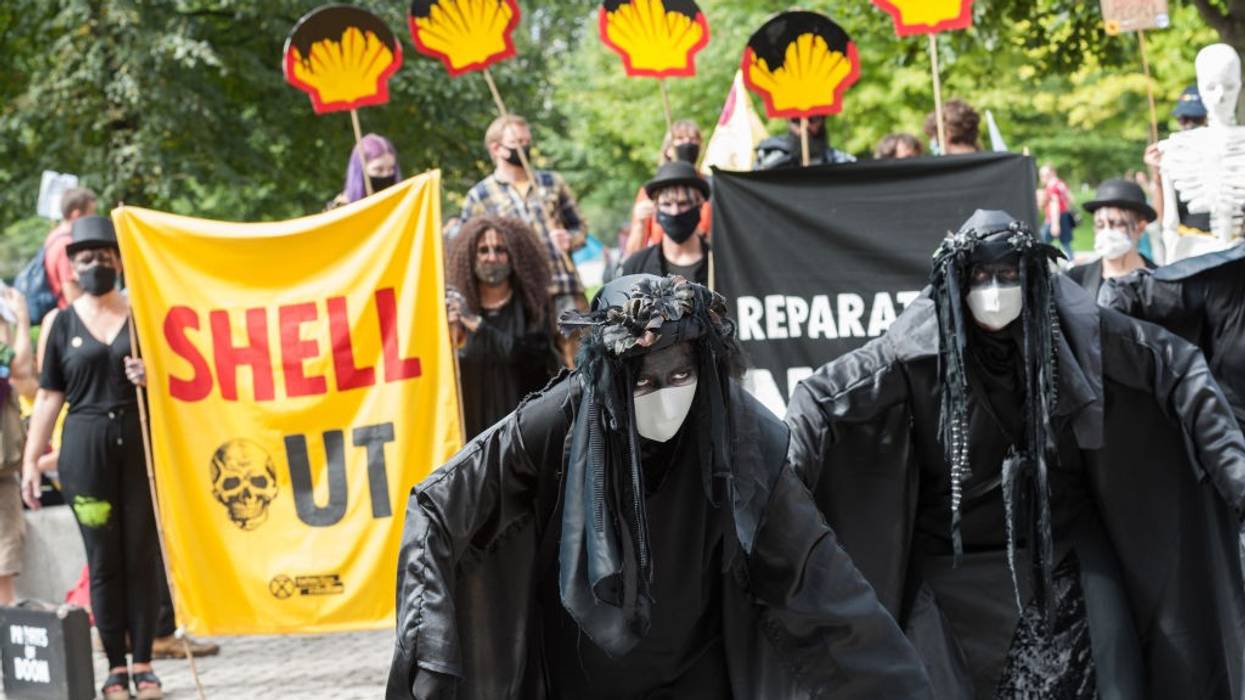
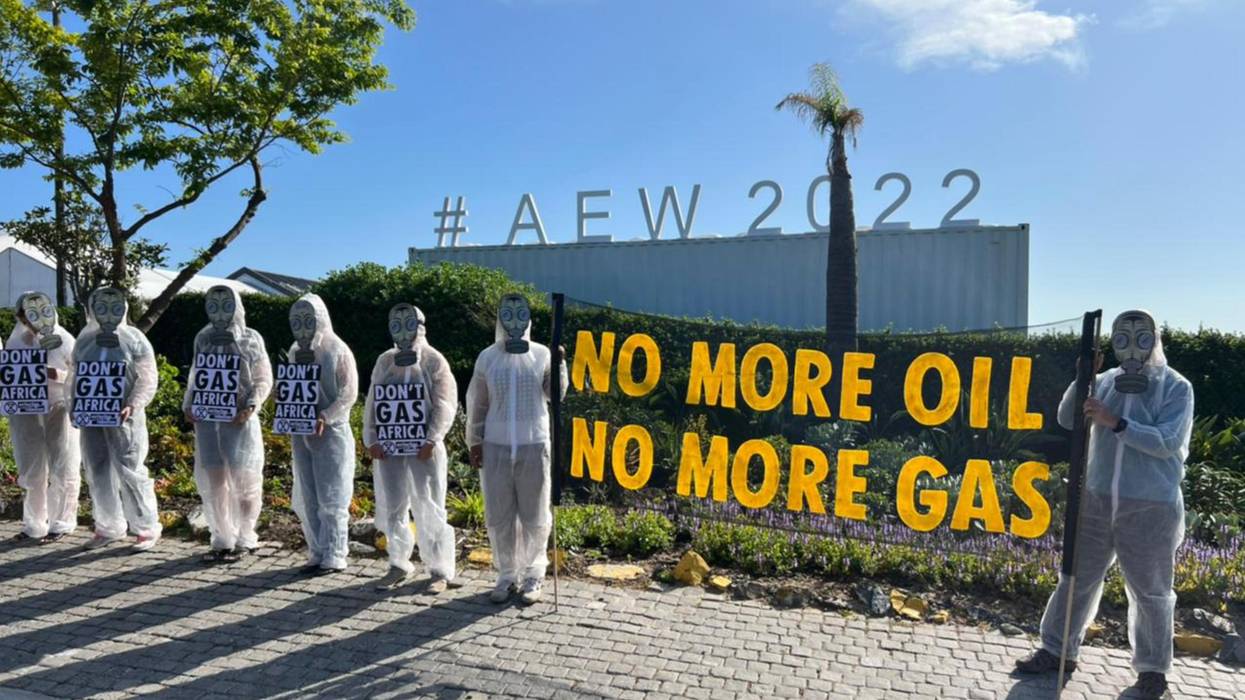
As the fossil fuel industry gathered in Cape Town for Tuesday's start of Africa Energy Week, African climate campaigners took to the streets and social media to reject a ploy to use the continent's development and energy crises as a pretext for accelerating oil and gas extraction.
"The push for investment in fossil fuels is likely to perpetuate the triple injustices of energy, social, and environmental crises."
Activists with Extinction Rebellion Cape Town rallied Tuesday outside one of the conference's venues to demand investment in renewable energy and a transition from a carbon-based economy.
"We reject the fossil fuel industry's drive to expand in Africa when African people are suffering from the climate impacts of the industry," Extinction Rebellion Cape Town spokesperson Judy Scott-Goldman told IOL.
Courtney Morgan, a South African campaigner with the African Climate Reality Project, said in a statement that "the Africa Energy Week program is a systematic plan by the fossil fuel industry for the massive scaling up of oil and gas in Africa."
"It's a declaration of war on Africa's sustainable future and the global climate crisis," she added. "This is not the Africa we want."
It is the Africa that the fossil fuel industry--which is pivoting to the continent as much of the West ditches Russian energy--wants. Kicking off Africa Energy Week with a welcome speech, African Energy Chamber executive chairman N.J. Ayuk waxed bullish on the future of fossil fuels.
"We cannot say this industry is done," the Cameroonian author of Big Barrels: African Oil and Gas and the Quest for Prosperity and other pro-fossil fuel tomes defiantly declared. "We are going to be the drivers of the future and shouldn't have to apologize for wanting to drive growth, create jobs, and create opportunities."
"So, welcome to this city," he added. "Let us go change Africa, make our voices known, and sign deals."
Taking the stage later in the African Energy Week opening session, Yemi Adetunji, general manager of Nigerian National Petroleum Corporation, asserted that "African countries are responsible for just 4% of emissions, and therefore, their priorities are to develop fossil fuels to drive economic prosperity and bring energy to the 600 million people without electricity."
In a bid to push fossil fuels, some African climate ministers have tried to exploit Africans' wariness of Western powers--including some of their former colonizers--dictating a so-called European model of energy transition.
However, African climate campaigners vehemently reject this view.
Related Content

"Collusion by European and African energy elites to continue colonizing the continent with dirty energy infrastructure will saddle Africa with dangerous projects that it doesn't need, entrench the energy apartheid facing millions of Africans, and risk tipping Africa and the world into catastrophic climate disruption," argued Dean Bhekumuzi Bhebhe, campaigns lead for Power Shift Africa.
Landry Ninteretse, regional director at 350Africa.org, said that "the push for investment in fossil fuels is likely to perpetuate the triple injustices of energy, social, and environmental crises hundreds of millions of Africans are confronted with."
"Such plans will not only lock the continent into reliance on climate-wrecking energy sources but also delay the much-needed transition to renewable energy," the Burundian continued.
"It is imperative that officials at Africa Energy Week revise their message," Ninteretse added, "and prioritize sustainable, inclusive, and diversified energy plans that directly benefit Africans and protect their basic rights, livelihoods, environment, and future."
This year's Africa Energy Week comes as drought, desertification, wildfires, and floods--all exacerbated by climate change--ravage much of the continent of 1.2 billion inhabitants. Swaths of southern Nigeria are reeling from catastrophic flooding that has killed at least 600 people while displacing more than 1.3 million in recent weeks.
"The effects of climate change are very real and getting worse," African American writer and activist Ty Ross tweeted in response to the Nigeria floods. "Let's see if the colonizers, robber barons, and oil companies will step up and help a country they environmentally raped for its resources."
Following decades of protests and demands over the damage done, Royal Dutch Shell on Wednesday finally agreed to pay $111 million for oil spills that have polluted Nigerian communities for more than a half-century.
"They ran out of tricks and decided to come to terms."
--Lucius Nwosa, lawyer for Ejama-Ebubu community
"They ran out of tricks and decided to come to terms," Lucius Nwosa, a lawyer representing a lawyer for the Ejama-Ebubu community in Ogoniland, Rivers State, told Agence-France Presse. "The decision is a vindication of the resoluteness of the community for justice."
A spokesperson for the oil giant's Nigerian subsidiary, Shell Petroleum Development Company of Nigeria, said that "the order for the payment... to the claimants is for full and final satisfaction of the judgment."
The case dates back to 1991. A Nigerian court ordered Shell to compensate the Ejama-Ebubu people in 2010, which the company repeatedly appealed, unsuccessfully.
After losing its appeals, Shell initiated arbitration proceedings against the Nigerian government at the World Bank's International Center for Settlement of Investment Disputes in February. Bloomberg reports that the company has not said whether it will now withdraw the claim.
Shell plans to pay out the $111 million within the next three weeks. While the settlement was seen by some as a bit of justice, it is a relatively small amount of money for an oil giant whose reported adjusted earnings for 2020 were $4.85 billion. The previous year, before the coronavirus pandemic, the British-Dutch multinational saw a profit of $16.5 billion.
Although Shell continues to blame "third parties" for the oil spills during a civil war in Nigeria, the Movement for the Survival of the Ogoni People (MOSOP) said that the settlement "is a confirmation of the issues we have raised about Shell's environmental devastation of Ogoni and the need for a proper remediation of the land."
According to German broadcaster Deutsche Welle:
Ogoni environmental activist Nnimmo Bassey... lauded the people affected by the oil spills for being "very persistent" in their case against Shell. "The extent of pollution in the Niger Delta is massive and having to wait for 30 years before the case is ended has tried the patience of the people. We really have to applaud the people for this."
Niger Delta environmental rights campaigner Kentebe Eberiado said he saw the outcome of the case as a "wake-up call" for multinationals. "It has opened the floodgate for more communities in the Niger Delta to seek redress for the environmental monstrosity that has devastated them in the past 50 years," he told DW.
The BBC noted that "earlier this year, in a separate case, a Dutch appeals court ruled that Shell's Nigerian branch was responsible for damage caused by leaks in the Niger Delta from 2004 to 2007."
The settlement news comes as Shell also faces global criticism for its contributions to the climate emergency. In a May decision that campaigners hailed as a "landslide victory for climate justice" that could also lead to similar rulings around the world, a Dutch court ordered the company to cut its carbon emissions 45% by 2030, compared with 2019 levels.
Shell confirmed its intention to appeal that order last month. In response, Friends of the Earth International climate justice and energy coordinator Sara Shaw said that "Shell should not waste time in appealing: history, science, and justice are on our side. There is no time to waste in tackling the climate crisis."