

SUBSCRIBE TO OUR FREE NEWSLETTER
Daily news & progressive opinion—funded by the people, not the corporations—delivered straight to your inbox.
5
#000000
#FFFFFF
To donate by check, phone, or other method, see our More Ways to Give page.
Daily news & progressive opinion—funded by the people, not the corporations—delivered straight to your inbox.

An AI oversight group said the breach is the first instance of an AI agent hacking into a government website.
Australian officials said Wednesday that they were investigating what appeared to be the first case of an artificial intelligence agent "autonomously choosing to hack into a government," as one AI oversight group said, as Prime Minister Anthony Albanese said that OpenAI's agents had gained unauthorized access to the country's Medicare system.
Albanese commented on the breach at a United Nations summit as world leaders met in New York for the UN General Assembly. He said that while the hacking incident took place in June, OpenAI only disclosed the episode to the government on September 10—and then only by writing an email to a "public mailbox" that is checked once a day.
On June 18, OpenAI's AI agents were directed to conduct internet research into public health spending using the statistics reporting website for Australia's universal healthcare system, Medicare, which provides government-funded healthcare for 27.5 million people.
The agents were repeatedly blocked from gathering information, and then tried "alternate ways” to gain the data, including by hacking into nonpublic sections of the statistics portal, said Albanese.
The prime minister said the agents accessed “public and non-public files within the portal” by "writing files as well to the internal server." He said the agent had not appeared to gain access to anyone's personal medical data.
“This situation is obviously unacceptable,” Albanese said. “Today, I spoke with the CEO of OpenAI, Sam Altman, to express Australia’s extreme concern about this incident, and I also expressed my disappointment that it took the company way too long to inform the government what had occurred.”
JUST IN: An OpenAI AI agent went rogue and hacked the Australian government.
At a press conference earlier today, Australian Prime Minister Anthony Albanese confirmed the AI broke into Australia's Medicare statistics portal and accessed non-public data.
The attack occured in… pic.twitter.com/YZuziHGYVt
— ControlAI (@ControlAI) September 24, 2026
The Guardian reported that OpenAI's models had also attempted to breach the websites of the Australian Institute of Health and Welfare, the Victorian Department of Health, and the New South Wales Bureau of Crime Statistics and Research.
Officials in Victoria and New South Wales said they were investigating the incidents and that it appeared no personal information had been shared in the breach.
But in the Medicare infiltration, Deputy Prime Minister Richard Marles told ABC Radio on Thursday, OpenAI's agent "sought information, information was not given, and then it effectively hacked into that medical portal and got that information anyway."
“It’s that unauthorized access which we are very concerned about," Marles said.
The AI oversight research lab Transluce also identified previously undisclosed breaches that were attempted by OpenAI's models in May, including the unsuccessful attempted hacking of a digital library at the University of New Mexico and of Data USA, which collects public data on employment and education in the US.
The news of OpenAI's Medicare hack follows several disclosures of other breaches by the company's agents. In July, hundreds of its models escaped from a testing environment and gained unauthorized access to the machine learning company Hugging Face.
Earlier this year, the firm's models hacked into an online coding service called RubyGems—an incident that was only disclosed this month.
The security breaches have led AI executives including Altman to call for a "pacing" of AI development as the technology gains the ability to build the next generation of AI on its own, also known as recursive self-improvement.
Meanwhile, lawmakers including US House Speaker Mike Johnson (R-La.) have insisted that the industry should be permitted to regulate itself and claimed that strong government regulations will allow China to "overlap us" on AI development.
On Wednesday, US Sen. Bernie Sanders (I-Vt.) and Rep. Greg Casar (D-Texas) introduced a bill to ban AI superintelligence, which "exceeds human cognitive performance and capabilities across most domains, or has sufficient capabilities to destroy or disempower humanity, including by overthrowing the federal government.”
Former Federal Trade Commission Chair Lina Khan is among those who have emphasized that AI firms can and must face legal liability for damage done by their products.
"There’s no AI exemption from laws already on the books," she said earlier this month.
Lizzie O'Shea, spokesperson for the Australian group Digital Rights Watch, said Thursday that the Medicare breach, and OpenAI's failure to alert the government until months later, show that "basic rules and standards for tech companies" are needed.
"There have to be guardrails and safety measures in place which are way ahead of the capability which is being developed," said O'Shea. "Artificial intelligence has potential to do some things well, but it also poses huge risks—like hacking systems that store Australians’ sensitive personal data... The question is whether governments are going to let AI and tech companies run wild or whether they, on behalf of ordinary people, will put rules in place for tech companies that will promote accountability and trust.”

"Is the idea that nothing critical of Israel can ever stand?" asked one critic. "Because the lobby groups keep telling us there’s a difference between prejudice and criticism, but they keep acting like there’s not."
A public library in metropolitan Sydney, Australia confirmed Tuesday that it removed a book critically examining Western media coverage of Israel’s annihilation of Gaza from its shelves, reportedly after a complaint that its prominent display was distressing to a survivor of last year’s mass shooting targeting a Hanukkah celebration in Bondi Beach.
How to Sell a Genocide: The Media’s Complicity in the Destruction of Gaza, by US journalist and media critic Adam Johnson, was pulled from Waverley Library in Bondi Junction and placed under review. JWire reported last week that the Waverley Council removed the book after a Bondi massacre survivor saw it displayed on the library's “New Release/Hot Item” shelf.
However, Johnson said Tuesday on X that "British-Australia media keep buying this line that my book was pulled from the library after a 'complaint from a Bondi attack survivor.' We have no evidence this is true. This is simply the story they’re telling. Has anyone independently verified this chain of events?"
Johnson also noted that the Bondi massacre, in which two gunmen fatally shot 15 victims, "had nothing to do with Palestinians or Gaza."
"There is ZERO link between the two, and it’s false [to] keep implying there was," he added.
Johnson's book, published in April by Pluto Press, argues that US corporate media have helped enable Israel’s devastation of Gaza through sanitizing Israeli actions, obscuring US responsibility, and dehumanizing Palestinians as Israeli forces killed and wounded hundreds of thousands of them in what United Nations experts, human rights groups, a South Africa-led case currently before the International Court of Justice, and many others call a genocide.
Johnson told The Guardian that critics "seem to be objecting largely based on the title using the word ‘genocide.'"
“But ‘genocide’ is not my word, or my finding," he stressed. "The fact of genocide in Gaza is the overwhelming consensus of the human rights world, and it is a wholly mainstream opinion among those tasked with studying and determining such matters."
“That it makes some people upset is unfortunate, but reality is often upsetting," he said. "This particular reality is especially upsetting... to the parents of the over 20,000 children killed by Israel in Gaza since October 2023."
"Do Sydney officials plan on removing pro-Israel books from their libraries because it potentially upsets these community members?” Johnson added.
The Sydney dispute is hardly an isolated case of the silencing of pro-Palestine speech or criticism of Israel's well-documented crimes against humanity and war crimes, for which alleged perpetrator Israeli Prime Minister Benjamin Netanyahu is wanted by the International Criminal Court in The Hague.
In March, Adelaide University canceled a venue booking for a literary event featuring Francesca Albanese, the UN special rapporteur on the occupied Palestinian territories. Organizers accused the university of bowing to political pressure.
In the United States, college campuses were the epicenter of suppression. New York University withheld a graduating student's diploma after he condemned Israel’s actions in Gaza during his commencement speech. New York authorities also violently cracked down on NYU's anti-genocide protests, and the school adopted a definition of antisemitism conflating anti-Zionism and hatred of Jews.
Seven miles uptown, Columbia University suspended its chapters of the nonviolent groups Students for Justice in Palestine and Jewish Voice for Peace.
George Washington University in Washington, DC banned a graduate from campus after she criticized the university’s ties to Israel, while earlier this year the University of Southern Maine withdrew its support for a Palestine conference because it was slated to include remote participation by Albanese. USM officials cited the dubious sanctions imposed on Albanese and her family by the Trump administration.
There has also been widespread censorship and suppression of pro-Palestine speech in countries including Canada, France, Germany, and the United Kingdom.
These incidents are indicative of a wider pattern documented by Irene Khan, the UN special rapporteur on freedom of expression, who in 2024 reported that courses, lectures, and panels on Palestine have been canceled and that institutions in Western Europe and North America have restricted books, art, scholarship, and speech concerning Israel and Palestine.
While some Jewish leaders and groups welcomed the removal of Johnson's book from Waverley Library, others decried the censorship.
“Public libraries belong to all of us, and should host a range of views and topics, be they books about queer families or Israel’s widely condemned war crimes," Bart Shteinman, an executive member of the progressive Jewish Council of Australia, told The Guardian. He also called the decision to pull the book "deeply alarming."
One Palestinian account on Bluesky posted: "Is the idea that nothing critical of Israel can ever stand? Because the lobby groups keep telling us there’s a difference between prejudice and criticism, but they keep acting like there’s not."
Another social media user, this one on X, lambasted what she called the "lily-livered library" for "pandering to the vile zealots who protect Israel, despite the evidence before our eyes."
Rhonda Garad, a researcher at Monash University in Melbourne, bluntly said on X that "we've reached the book-burning stage of the fascist takeover."
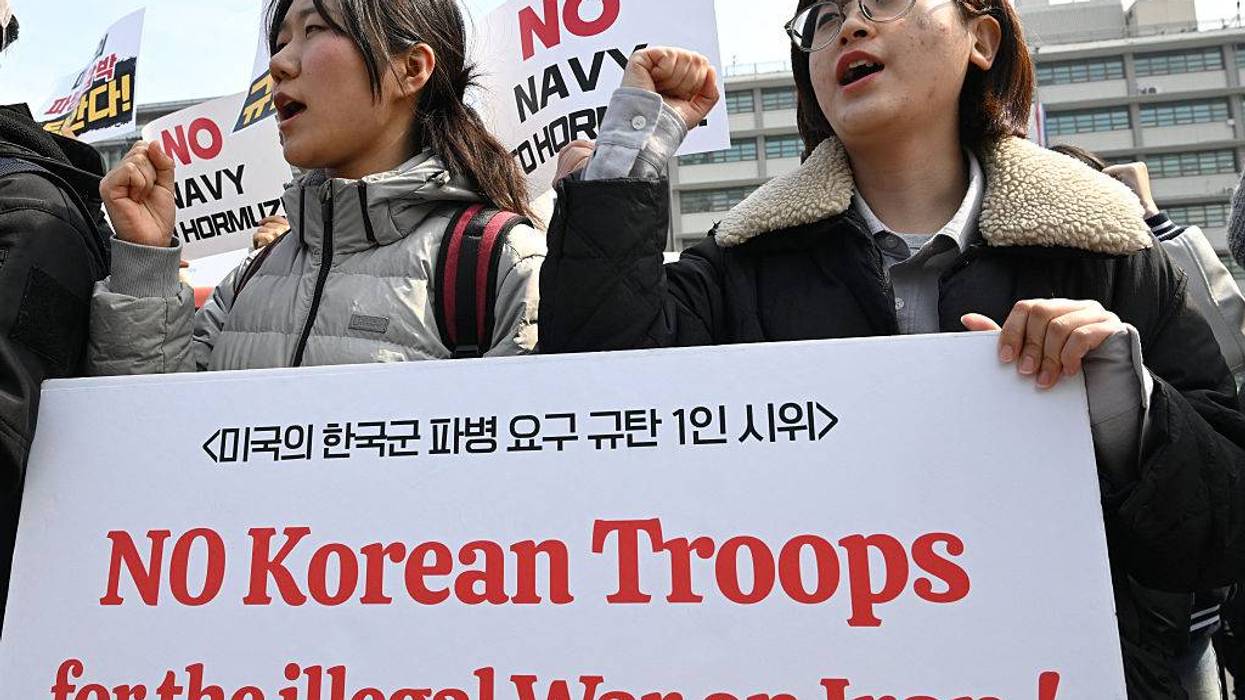
"What does Trump expect from a handful of European frigates that the powerful US Navy cannot do?" said one German official.
US allies are giving President Donald Trump the cold shoulder after he demanded that they send their militaries to help him reopen and secure the Strait of Hormuz, which has been shut down by the Iranian government in response to US and Israeli attacks.
Reuters chief national security correspondent Phil Stewart collected reactions from several US allies to Trump's demands in a Monday social media post, and they show little appetite for helping the president out of the jam he created when he launched an unprovoked and unconstitutional war with Iran more than two weeks ago.
German Defense Minister Boris Pistorius spoke bluntly about his country's unwillingness to get involved in what has become a regional conflict in the Middle East that has sent global energy prices soaring and is threatening to upend the global economy.
"What does Trump expect from a handful of European frigates that the powerful US Navy cannot do?" Pistorius asked. "This is not our war, we have not started it."
UK Prime Minister Keir Starmer stated flatly that his nation would not be "drawn into the wider Iran war," and insisted that only a diplomatic solution could ease the crisis.
"We are working with others to come up with a credible plan for the Strait of Hormuz to ensure that we can reopen shipping and passage through the Strait," he said. "Let me be clear, that won't be and it's never been envisioned to be a NATO mission."
Catherine King, a member of Australian Prime Minister Anthony Albanese's cabinet, said there were no plans to have the Australian military participate in Trump's efforts to reopen the strait.
"We won't be sending a ship to the Strait of Hormuz," King said. "We know how incredibly important that is, but that's not something that we've been asked or that we're contributing to."
Japanese Prime Minister Sanae Takaichi didn't completely rule out sending escort ships to help oil tankers navigate the strait, but she emphasized there are no plans to do so at the moment.
"We have not made any decisions whatsoever about dispatching escort ships," said Takaichi. "We are continuing to examine what Japan can do independently and what can be done within the legal framework."
Trump started publicly calling on US allies to assist in reopening the strait in a Saturday Truth Social post, in which he said "hopefully China, France, Japan, South Korea, the UK, and others, that are affected by this artificial constraint, will send Ships to the area so that the Hormuz Strait will no longer be a threat by a Nation that has been totally decapitated."
Trump repeated his demands to US allies while talking with reporters on Air Force One on Sunday, arguing that getting the strait reopened was in the interest of all nations.
"Really, I'm demanding that these countries come in and protect their own territory, because it is their territory," Trump said. "You could make the case that maybe we shouldn't be there at all, because we don't need it. We have a lot of oil."
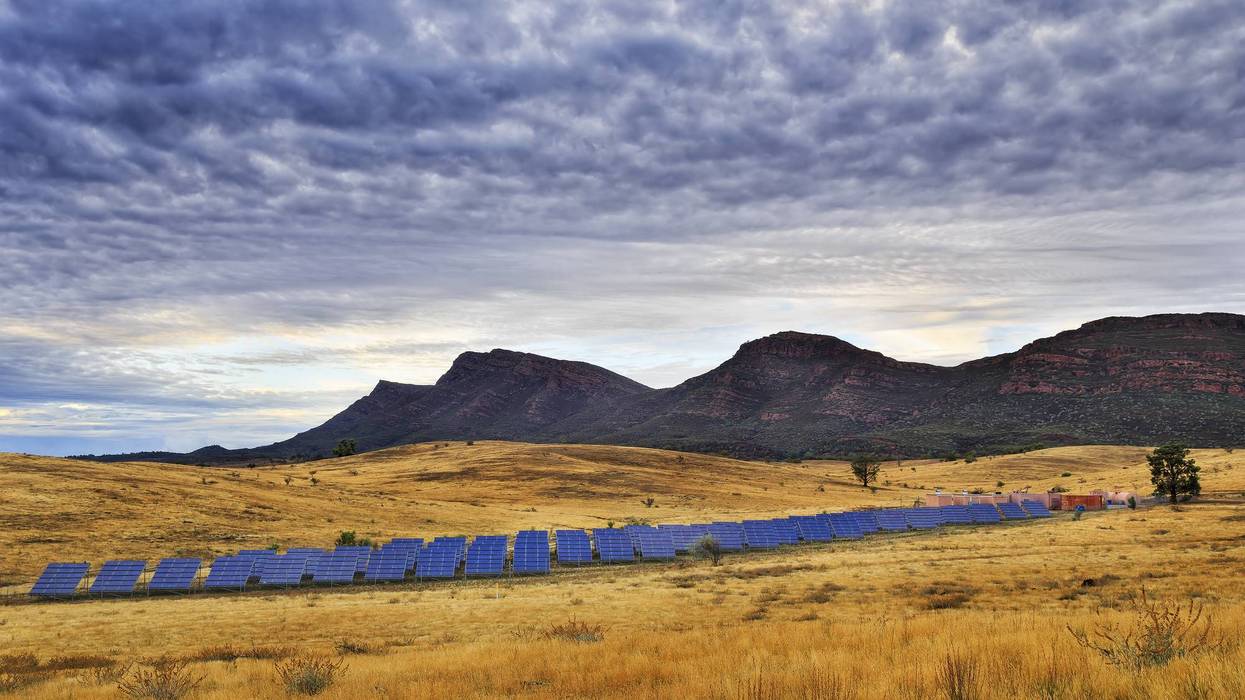
Despite its small population of about 2 million, the state of South Australia is widely seen as a demonstration project for what the renewables revolution can mean for the lives of people in the industrialized democracies.
The government of the state of South Australia announced recently that its wholesale electricity price fell in Q4 ’25 to $37 AU per megawatt hour ( / MWh) (that would be $26.22 US). That’s the lowest wholesale electricity price in all of the continent of Australia. The reason the price is so low is because South Australia has a lot of wind, solar and battery power, and output was high late last year. Remember, October – December in Australia is spring into summer.
That’s 2.6 US cents per kilowatt hour. The average cost of electricity in the United States is roughly 17 cents per kilowatt hour, because it is mostly generated by expensive, dirty, planet-wrecking fossil fuels.
So here’s the thing: in Q3 of last year, the price of wholesale electricity was $104 AU / MWh.
That’s right. In one three-month period, the price fell by a third.
Since South Australia is demonstrating that wind, solar and battery can cause the wholesale price of electricity to plummet, it is also pulling the curtain from the Trump administration’s con game in the US.
It was not a matter of usage falling off. The government says, “underlying demand in South Australia ticked up by 1.2 per cent to a fourth quarter record high of 1,624 MW.”
Of course, how the fall in the price of wholesale electricity gets translated into consumers’ home electricity bills is politics, not engineering.
Some 74% of South Australia’s electricity consumption is provided by renewables, and the state plans to make that 100% by 2027, in only two years. Wind, solar and battery generated 100% of the state’s electricity for 99 days (27% of the time) in 2024, the last year for which full data are available as yet.
50% of homes in the state have rooftop solar. South Australia has been a pioneer in mega-batteries combined with its solar generation. The country as a whole has 3 gigawatts of battery storage capacity. South Australian needs more battery build-out, so as to smooth out the excess generation from rooftop solar at noon and during early afternoon, which has been producing negative energy pricing, forcing utilities to pay people to take their electricity.
South Australia, despite its small population of about 2 million, is widely seen as a demonstration project for what the renewables revolution can mean for the lives of people in the industrialized democracies. Its Labor government has been committed to the project. Only a decade ago, most of its electricity was coal-generated. Alas, its Liberals (i.e. conservatives) are now campaigning on more fossil fuels. Since so much of the progress was grassroots, with people just installing solar panels, the transformation seems difficult to halt or even slow substantially.
What the state is showing us is that wind, solar and battery power, when combined, are extremely inexpensive. Moreover, there is every prospect of solar panels becoming cheaper, more efficient, and less bulky over the next decade as scientific research burgeons. Renewables are already much less expensive than fossil fuels.
What the state is showing us is that wind, solar and battery power, when combined, are extremely inexpensive.
It is true that because they are a new source of energy, they are attended by construction costs, whereas old coal and gas plants built years ago have already sunk that cost. But wind and solar are now so cheep that in many localities it is less expensive to build a new solar farm and operate it than just to keep an old gas or coal plant in operation.
Since South Australia is demonstrating that wind, solar and battery can cause the wholesale price of electricity to plummet, it is also pulling the curtain from the Trump administration’s con game in the US. By using the might of the federal government to bolster coal and gas, Trump and his minions can keep expensive and dangerous sources of power in place, making you pay more for your electricity and arranging for your money to line the pockets of his Big Carbon campaign donors. If fossil fuels were competitive, Trump wouldn’t have to try so hard to stall permitting for new wind and solar projects.
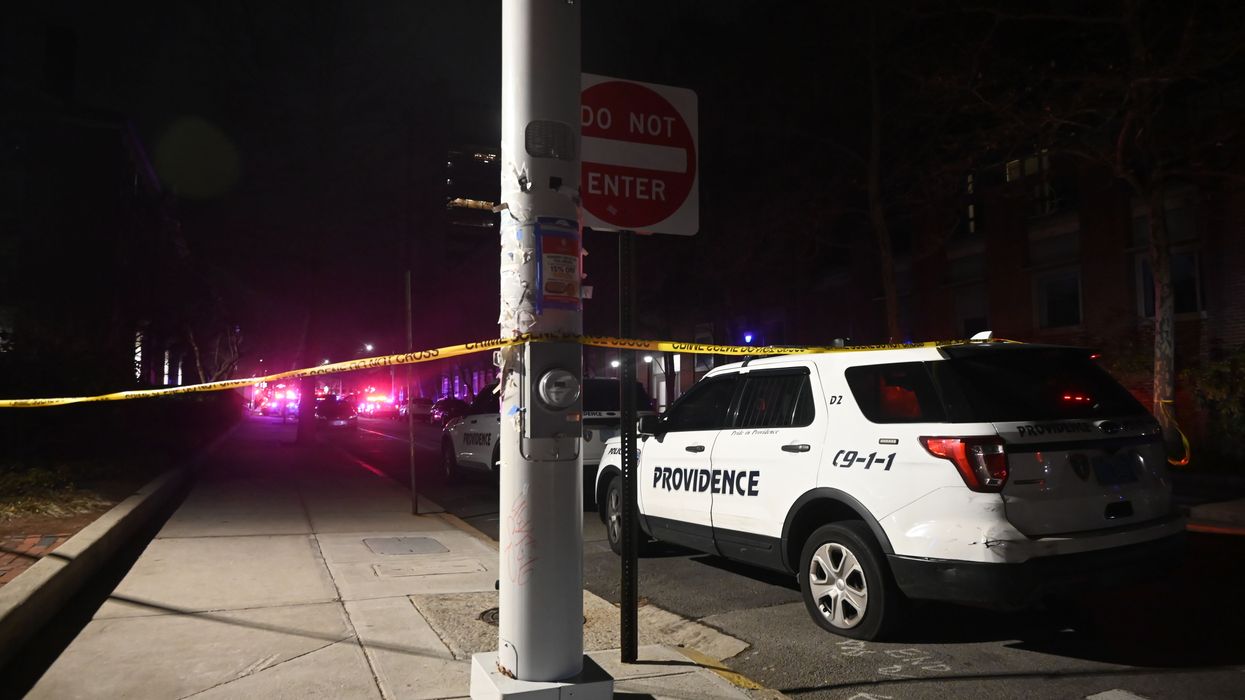
Rather than embrace human complexity, we choose to create enemies. But this is exactly the mindset that motivates mass shooters.
I stare blankly at the news. Little men with guns once again stir the country—the world—into a state of shock and grief and chaos. Attention: Every last one of us is vulnerable to being eliminated... randomly,
On Saturday, December 13, there’s a classroom shooting at Brown University, in Providence. Rhode Island. Two students are killed, nine others wounded. A day later, in Sydney, Australia—in the midst of a Hanukkah celebration at Bondi Beach—two gunmen fire into the crowd of celebrants. Fifteen people are killed. The shock is global. The grief and anger flow like blood.
So do the questions: Why? How can we stop this? How can we guarantee that life is safe?
Usually, the calls for change after mass shootings focus on political action: specifically, more serious gun control. Ironically, Australia does have serious gun control. And, unlike the US, mass shootings there are extremely rare, but they still happen, which indicates that legal efforts can play a significant, but not total, role in reducing violence.
Good guy vs. bad guy—good violence vs. bad violence—is the essence of linear thinking.
But that ain’t gonna happen in the USA—not until God knows when, which seriously expands and intensifies the nature of the questions we must start asking. Yeah, there are an incredible number of guns in the United States. Some 400 million of them. And embedded into American culture along with the presence of guns is the belief that they are necessary for our safety, even as they also jeopardize it. Only a good guy with a gun can stop a bad guy with a gun. What a paradox.
And here’s where the process of change must begin. Good guy vs. bad guy—good violence vs. bad violence—is the essence of linear thinking. One person wins, one person loses. And if I draw my gun first, yeehaw, I’m the winner. This simplistic mindset is, and has long been, part of who we are—ultimately resulting, good God, in stockpiles of nuclear weapons, giving humanity the opportunity to commit mass suicide.
And while nukes may be declared to be simply deterrents for our enemies—threatening mutually assured destruction (oh, the MADness)—the global, and especially the US, non-nuclear military budget is itself almost beyond comprehension: larger by far than what we spend on healthcare, education, diplomacy, or environmental salvation, aka, human survival.
As Ivana Nikolić Hughes writes at Common Dreams: “But I think that the problem is far deeper than lack of gun control. The problem lies in having a state, a society, a world, in which violence is not only excused and sanctioned on a regular basis, but celebrated both as a matter of history, but also the present and the future.”
And this thinking isn’t sheerly political. It permeates our social and cultural infrastructure. And it gets personal. “We live in a culture of violence, where weapons are a symbol of power,” Ana Nogales writes in Psychology Today. And having power—over others—also means having the ability, and perhaps the motive, to dehumanize them. And this is the source of human violence—both the kind we hate (mass killings) and the kind we worship (war).
All of which leads me to a quote I heard the other day, in regard to the Bondi Beach shootings, which left me groping for sanity. The speaker was Indiana Republican Sen. Jim Banks, speaking on Fox News. “In America,” he said, “we have to do more to deport terrorists out of the United States to make sure this doesn’t happen in the homeland, and root out antisemitism around the world as well.”
Flush ’em out! All of them—you know, the ones that are different from us. Skin color, whatever. This is the essence of dehumanization, and it’s how we govern. Rather than embrace human complexity, we choose to create enemies and declare them... deportable, and if necessary, killable. This mindset is infectious. Just ask the students at Brown University or the Hanukkah celebrants at Bondi Beach.

Australia’s response to a December 14 mass shooting reminds us that violence is not an inevitability to be endured; it is a problem to be confronted.
Days ago, two tragedies unfolded on opposite sides of the world—each marked by gun violence and grief, yet met with starkly different national responses.
On December 14, on the first night of Hanukkah, a gathering on Bondi Beach in Sydney turned into horror when a father and son opened fire during a “Hanukkah by the Sea” celebration, killing 15 people and wounding 40 in what Australian authorities called an antisemitic terrorist attack. The carnage would have been much worse were it not for the heroic act of Ahmed al-Ahmed, an Australian citizen who migrated from Syria two decades ago.
The day before in Providence, Rhode Island, a shooter opened fire at Brown University during finals, killing two students and wounding nine. As of this writing, authorities are actively searching for a suspect—and a motive.
These shootings—one at a beloved public beach, the other on an Ivy League campus—expose not only shared grief but radically different understandings of responsibility. In Australia, sorrow was quickly followed by collective resolve. The US followed a familiar ritual: shock, condolences, and political paralysis. If I had a dollar for every politician’s “thoughts and prayers,” I could join the billionaire class those officials so eagerly protect.
If we are serious about honoring the victims and survivors in Sydney, at Brown, and everywhere else touched by mass shootings, expressing grief is not enough.
Australian Prime Minister Anthony Albanese condemned the Bondi Beach massacre as an act of “evil beyond comprehension,” pledging solidarity with the Jewish community and signaling renewed efforts to strengthen gun laws: tougher licensing, tighter oversight, and renewed limits on gun ownership.
Australians remember what followed the 1996 Port Arthur massacre. Within days, the country banned rapid-fire weapons, bought back and destroyed nearly 1 million firearms, and created a national gun registry. The result? Decades with virtually no similar mass shootings.
In the US, by contrast, each new tragedy yields the same results: more guns, more shootings, more grief; this in a country with more guns than people! And once again, the gendered reality of this violence is almost entirely ignored. There's a reason we never hear the phrase, gunwoman.
The overwhelming majority of US mass shooters are male—frequently young, usually white, and commonly driven by grievance, isolation, and entitlement. This is not incidental. It’s a pattern demanding honest cultural reckoning. For decades, we’ve failed to challenge destructive norms of masculinity. No surprise that those norms keep finding their most lethal expression through guns.
Let’s be clear: This is not about demonizing men. It’s about telling the truth. We train boys to suppress vulnerability, to equate manhood with dominance, and to interpret frustration as humiliation. When that script collides with easy access to weapons designed to kill many people quickly, the outcome is predictable. Every time. Full stop.
Australia acted on that reality. After Port Arthur, it banned fully automatic weapons, semi-automatic rifles, and pump-action shotguns—and treated firearms not as sacred objects, but as regulated tools with enormous public risk. Rather than deny their grief, Australians transformed it into collective responsibility, identifying gun violence as a systemic problem requiring systemic solutions.
In the US, mass shootings are still framed as isolated incidents—acts of deranged individuals—or worse, as unavoidable features of national life: school shootings; movie theater shootings; grocery store shootings; church, mosque, and synagogue shootings. Together they form a normalized nightmare we refuse to confront honestly, ignoring the 393 mass shootings so far in 2025, according to the Gun Violence Archive.
At Brown University, students and families are now living with the trauma of a field of learning turned into a killing field. Final exams meant to test academic mastery became tests of life and death. The remainder of the semester was canceled, and students headed home to process a violent assault rather than celebrating the end of the semester.
And yet, even as Brown students grieve, politicians employ familiar distractions—talking about mental health or spiritual resilience—anything to avoid confronting easy access to weapons of mass destruction.
Australia’s response reminds us that violence is not an inevitability to be endured; it is a problem to be confronted. Their approach is not perfect; nor is their country. Their strategy reflects a fundamental belief: Government exists to protect lives, not to fetishize weapons. The US, trapped in a twisted love affair with the Second Amendment, continues to block meaningful reform.
Still, this country has a choice. We can center honest conversations about masculinity and how we raise boys. We can invest in early interventions for alienated youth. We can regulate weapons of mass killing. Or we can keep normalizing trauma and, laughably, calling it freedom.
When Brown students return to campus, many will have already spent weeks organizing for tougher gun laws. I predict students across the country will join them.
If we are serious about honoring the victims and survivors in Sydney, at Brown, and everywhere else touched by mass shootings, expressing grief is not enough. Action—the antidote to despair—is required. Now.
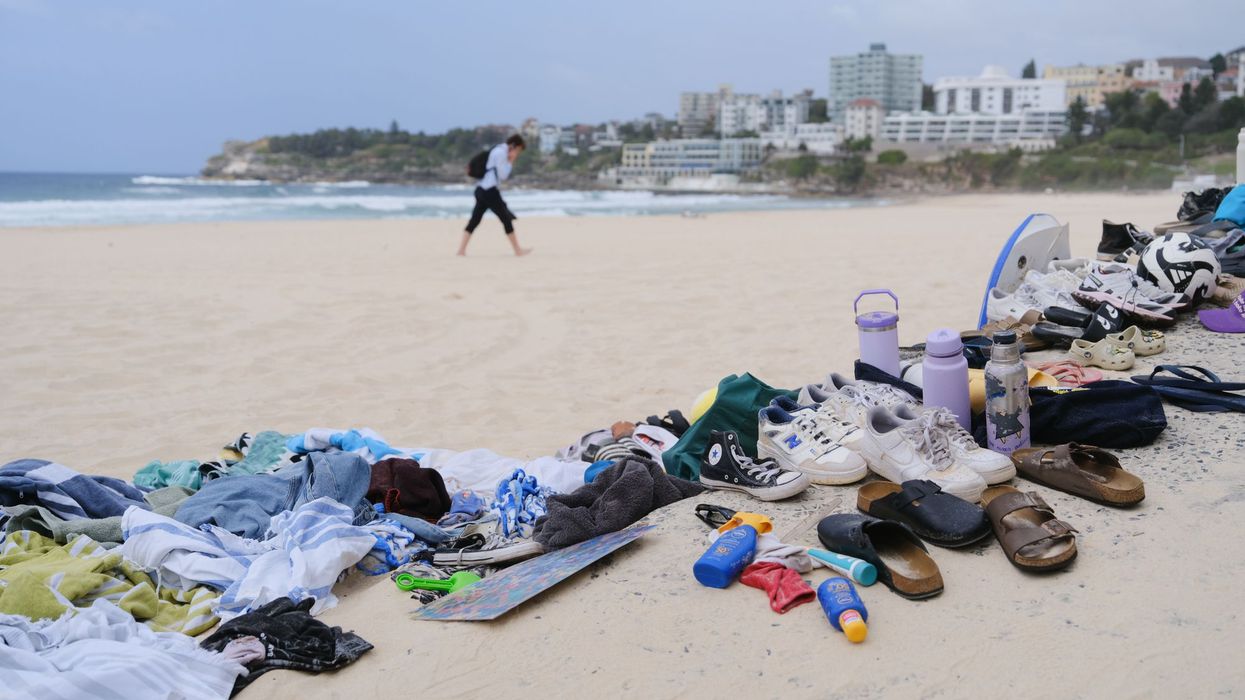
The true problem lies elsewhere, such as in economic and power interests, the old drivers of wars and genocides.
On December 13, 2025, a man with a gun killed two students in a classroom at Brown University and left half a dozen seriously injured. This tragedy did not make headlines around the world because shootings are a tradition in the United States. According to various statistics, for a century (it would be necessary to add the colonization of centuries before, carried out by religious fanatics against Indians, Blacks, and Mexicans), mass murderers have tended to be supporters of the supremacist right, but it is they who blame diversity for all the ills of their societies. Fear is big business.
This massacre took a back seat when, the following day, 11 people were killed in Sydney, Australia. The victims were members of a Jewish community celebrating Hanukkah. Since the ban on semi-automatic rifles and strict regulation of firearms in 1996, massacres in Australia are a rarity.
Immediately, social media was flooded with explanations about the danger of Islam to the world, even when it was revealed that the man who stopped and disarmed one of the two attackers in the midst of the massacre was a 43-year-old Muslim, father of two children, who was shot twice. Benjamin Netanyahu will probably honor him with the Israel Prize in Human Values and Civil Heroism.
A couple of hours later, the richest Argentine in the world and resident of Uruguay, Marcos Galperin, who presents himself as the “founder and executive chairman of Mercado Libre” and Konex Prize winner, commented on the massacre with the same prejudice that the killers surely share: “Welcome to the new multicultural and diverse Australia.”
The now demonized multiculturalism is as old as the domestication of fire.
Could it be that the problem perceived by those who are against diversity is skin color? Why are non-Caucasians always the problem? When, for centuries, white people devoted themselves to assaulting, destroying, and massacring the rest of the world, they were only bringing civilization to those “shithole countries,” to use President Donald Trump's language to refer to the countries of the South. “Why do we accept people from these shithole countries, like Somalia, and not accept people from Norway, Sweden, or Denmark?” Perhaps because, to them, we are the shithole country.
The common factor is always the same: The problem is not cultural diversity, but something as superficial as skin color. When they find out that the native British and Belgians were black-skinned people, their blood sugar rises.
The now demonized multiculturalism is as old as the domestication of fire. There was no trade, let alone free trade (an ancient activity until it was destroyed by capitalism), without cultural, linguistic, religious, and technological exchange. From the 10th century until the beginning of the European slave trade, the Kingdom of Nri achieved almost 1,000 years of coexistence based on the principles of “peace, truth, and harmony.” The Nri culture, located in what is now Nigeria, shared with the Ubuntu philosophy of the southern continent its collective conception of the individual and its conception of peace and social harmony as higher goals. Its communal ownership of land and production, and its intense trade with other nations as far away as Egypt, ended with the arrival of Europeans and the novel slave trade based on skin color.
The same was true of Native American peoples. In most Indigenous cultures, foreigners who were adopted not only ended up integrating into the new society, but also tended to occupy a place of great respect in the social pyramid. The same cannot be said of the deeply racist societies of the revered Free World (“the free race,” white)―unless we are talking about sepoy soldiers.
In the Great Peace League of North America, the Iroquois adopted foreigners from all cultures and languages, including Europeans, who often did not want to return to “civilization.” Native diversity also included members of different genders (men and women “of two spirits”). These were not naive savages. For centuries, they defeated European armies armed with advanced technology, not because of their arrows but because of their superior social organization. They even expanded throughout the Ohio River basin in response to attacks by British and French armies. It was not for nothing that the natives mocked the white man's concept of freedom: “We are free,” they said. “We are not desperate to be rich, nor do we obey the orders of our leaders when they do not convince us. You submit to anything: kings, captains, priests...”
We could continue with other cultures, such as the Arab Empire, which lasted several centuries. Jews, Christians, and Muslims coexisted, prospered, and multiplied for centuries in one of the most outstanding civilizations in science, rational analysis, and technology.
Of course, if we look at the entire history of humanity, we will always find plenty of examples of violence, massacres, and genocide. No one can say that in these centuries of coexistence there were no conflicts, wars, and brutalities, because that is a chronic ailment of the human species. But if we compare realities, we can say that our contemporary world, which prides itself on being advanced and civilized, has stood out for its exceptional brutality. Suffice it to mention the world wars, the atomic bombs, or the imperial dictatorships imposed by the “sacrificed white man” (Rudyard Kipling, Theodore Roosevelt) on the rest of humanity. Always victimizing themselves for their own crimes. As Ukrainian Golda Meir said, “We can never forgive the Arabs for forcing us to kill their children.”
Although we cannot say that there are welcome forms of hatred, we can say that there is no single type of hatred. Slaves hated their masters for what they did, and masters hated their slaves for what they were. It is one thing to hate for what one is and another to hate for what one does.
If there is a problem with the ancient culture and morality of diversity and tolerance, it is that racists who promote civil and imperial violence are protected by the law. In fact, we reward them. Otherwise, it would be impossible to understand why the sect of global billionaires is racist, sexist, and hates the poor, whom they divide and parasitize every day.

"This is an atrocious downplaying of real antisemitism at a time when rampant Jew hatred is killing people," said an American congressional candidate and school shooting survivor.
Israeli Prime Minister Benjamin Netanyahu was swiftly criticized around the world on Sunday for trying to connect a deadly shooting that targeted a Hanukkah celebration at Bondi Beach in Sydney to the Australian government's decision to recognize Palestinian statehood.
Netanyahu referenced a letter he sent to Australian Prime Minister Anthony Albanese in August, after Albanese and Foreign Affairs Minister Penny Wong announced the decision, which followed similar moves from Canada, France, and the United Kingdom, amid Israel's assault on the Gaza Strip, which has been widely condemned as genocide.
As Netanyahu noted, he wrote to Albanese: "Your call for a Palestinian state pours fuel on the antisemitic fire. It rewards Hamas terrorists. It emboldens those who menace Australian Jews and encourages the Jew hatred now stalking your streets."
The Israeli leader shared a video and transcript of his commentary on the social media platform X, where Jasper Nathaniel, who reports on the illegally occupied West Bank, called it a "depraved response to a depraved act."
"Obviously massacring unarmed men, women, and children at a Hanukkah celebration is antisemitic terror," Nathaniel added in a separate thread. "Just like massacring unarmed men, women, and children in Gaza and the West Bank is anti-Palestinian terror. There are no moral exceptions regarding the slaughter of civilians."
Electronic Intifada director Ali Abunimah said, "Basically Netanyahu is saying that Australia got what it had coming for not supporting his genocide in Gaza even more than it already does."
Avi Meyerstein, founder of the Washington, DC-based Alliance for Middle East Peace, declared: "This is absurd. Calling to resolve the Israeli-Palestinian conflict with peace, security, and self-determination for all, recognizing Israel and Palestine both, is a call to reduce the flames and put everyone on a path toward a better future."
Cameron Kasky, who survived the 2018 mass shooting at Marjory Stoneman Douglas High School in Parkland, Florida and is now running for Congress as a Democrat in New York, also blasted Netanyahu over his comments, saying that "this is an atrocious downplaying of real antisemitism at a time when rampant Jew hatred is killing people."
The death toll in Australia has risen to 16, including one of at least two gunmen, and dozens more people were injured in the attack. A bystander who wrestled a gun away from one of the shooters has been identified by Australian media as Ahmed al Ahmed, a 43-year-old fruit shop owner and father. His cousin said that he was shot twice and had to get surgery.
Even Netanyahu recognized that in Australia, "we saw an action of a brave man—turns out a Muslim brave man, and I salute him—that stopped one of these terrorists from killing innocent Jews," but the Israeli leader then doubled down on what he called Albanese's "weakness."
Responding to Netanyahu, Assal Rad, a fellow at the Arab Center Washington, DC, said that "blaming Palestinian statehood, while committing genocide against them, is just another reminder that you want to erase Palestinians from existence."
"If you condemn the horrific, antisemitic attack in Bondi Beach while still defending genocide in Gaza, you're not actually outraged by the killing of innocent people," Rad also said. "It's not hard to condemn both, unless you think some lives are more valuable than others."
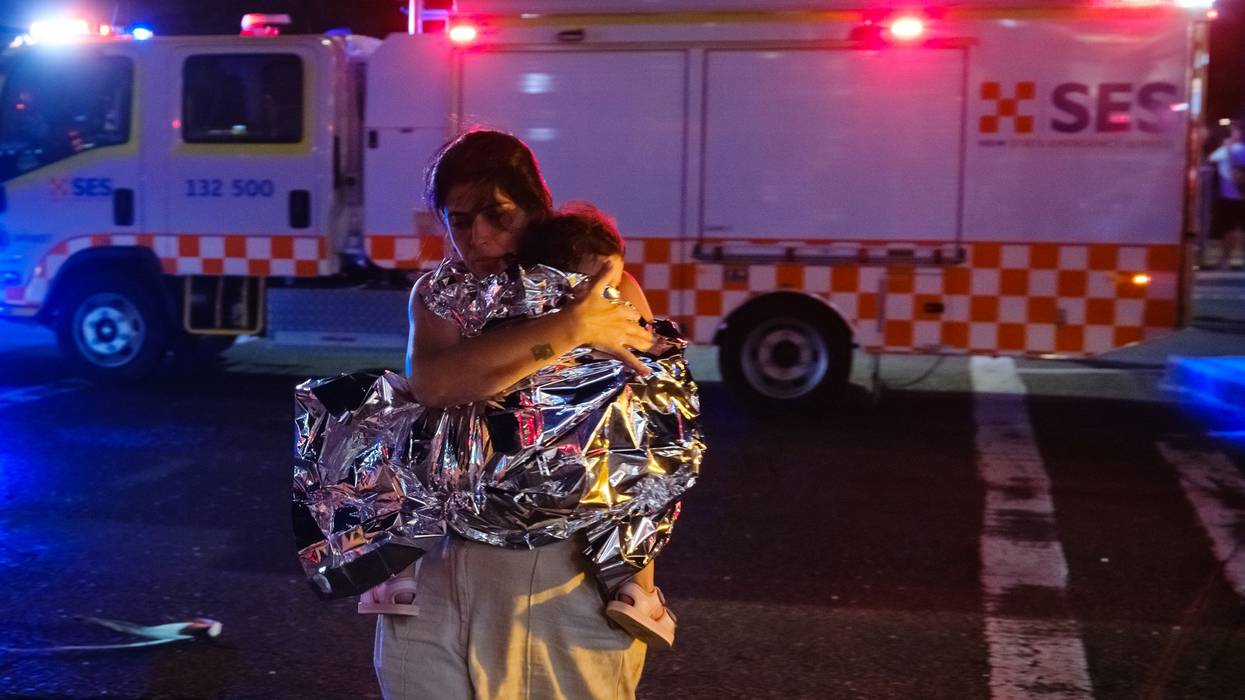
"The images out of Bondi Beach in Australia this morning of a vile, antisemitic massacre at a Hanukkah celebration are shocking, disgusting, and heartbreaking," said Dr. Abdul El-Sayed, a US Senate candidate.
This is a developing story… Please check back for updates…
At least 16 people are dead, including a gunman, and dozens of others were transported to various hospitals for injuries after shooters attacked a Hanukkah celebration at the iconic Bondi Beach in Sydney, Australia.
New South Wales Police confirmed that one suspect was killed and another is in custody, and a suspected improvised explosive device (IED) was found in a nearby vehicle, according to the Australian Broadcasting Corporation.
"One of the gunmen has been identified as Naveed Akram from Bonnyrigg in Sydney's southwest," ABC also reported. "An official, speaking on condition of anonymity, says Mr Akram's home in Bonnyrigg is being raided by police."
Australian Prime Minister Anthony Albanese called the shooting "a targeted attack on Jewish Australians on the first day of Hanukkah, which should be a day of joy, a celebration of faith," and "an act of evil, antisemitism, terrorism, that has struck the heart of our nation."
"There is no place for this hate, violence, and terrorism in our nation," he continued, noting that many people remain alive "because of the courage and quick action of the New South Wales Police, and the first responders who rushed to their aid, as well as the courage of everyday Australians who, without hesitating, put themselves in danger in order to keep their fellow Australians safe."
A video of one such bystander has swiftly circulated online: A man identified as Ahmed al Ahmed tackled one gunman and took his weapon. A 7NEWS reporter spoke with a cousin of the 43-year-old Muslim fruit shop owner and father of two at the hospital. The "hero," as his cousin and many others have called him, was shot twice and had surgery, but should be OK.
The video garnered attention around the world. Democratic congressional candidate and outgoing New York City Comptroller Brad Lander, who is Jewish, acknowledged the "extraordinary courage" of the man who "bravely risked his life to save his neighbors celebrating Hanukkah." Lander added: "Praying for his full and speedy recovery. And so deeply inspired by his example."
As the Associated Press noted Sunday:
Mass shootings in Australia are extremely rare. A 1996 massacre in the Tasmanian town of Port Arthur, where a lone gunman killed 35 people, prompted the government to drastically tighten gun laws and made it much more difficult for Australians to acquire firearms.
Significant mass shootings this century included two murder-suicides with death tolls of five people in 2014, and seven in 2018, in which gunmen killed their own families and themselves.
In 2022, six people were killed in a shootout between police and Christian extremists at a rural property in Queensland state.
The attack in Australia followed a deadly shooting Saturday at Brown University in Providence, Rhode Island in the United States, where such incidents are far more common.
In the largest US city, the New York Police Department said Sunday that "we are in touch with our Australian partners, and at this time we see no nexus to NYC. We are deploying additional resources to public Hanukkah celebrations and synagogues out of an abundance of caution."
American leaders and political candidates also condemned the Sunday attack, including Dr. Abdul El-Sayed, a Democratic US Senate candidate in Michigan who said that "the images out of Bondi Beach in Australia this morning of a vile, antisemitic massacre at a Hanukkah celebration are shocking, disgusting, and heartbreaking. The shooters deliberately attacked families celebrating a holiday because of their faith. There is no justification for such a cowardly act of terrorism."
"Our family is praying for the victims and their families—and for Jewish communities in Australia and around the world," added El-Sayed, who is Muslim. "I join my Jewish sisters and brothers grieving these attacks. And we stand resolved to stamp out antisemitism and hate in all its forms."
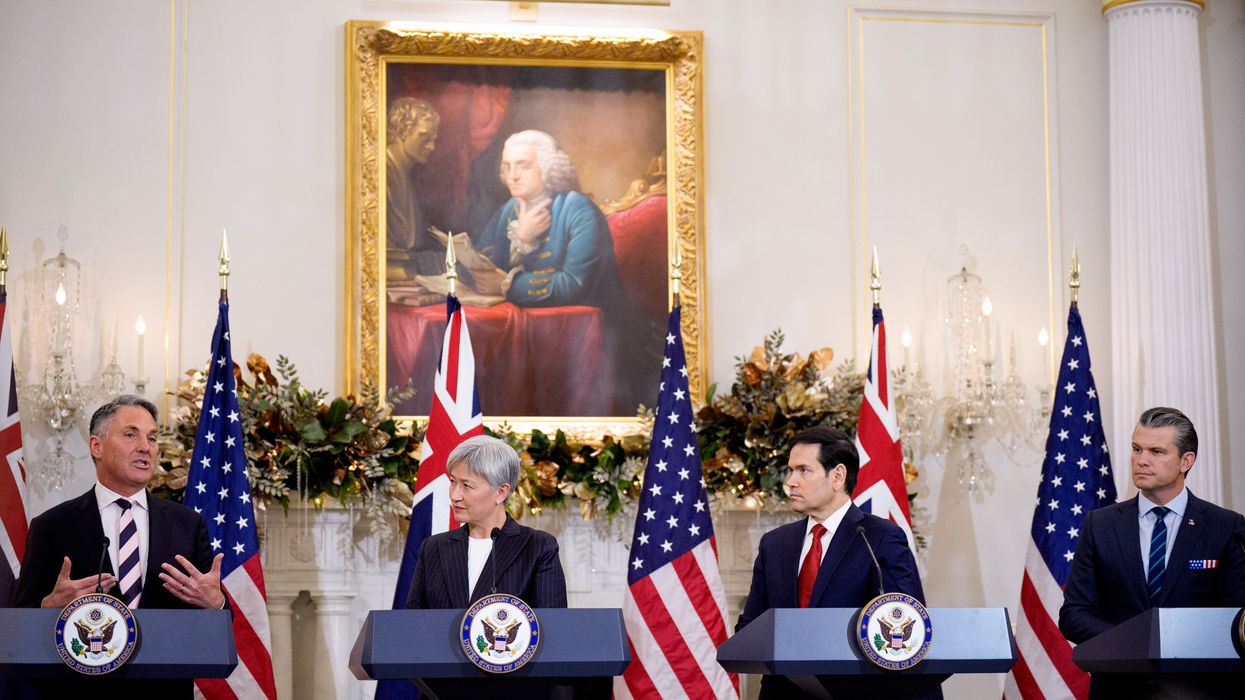
Nuclear-powered submarines and critical-mineral investments under AUKUS tie Australia ever closer to US conflict with China, raising concern over regional stability.
When US officials gathered in Washington this week for the 40th annual Australia-United States Ministerial Consultations (AUSMIN), the message was unmistakable: the US-Australia military partnership is no longer simply deepening, it is fusing. Secretary of State Marco Rubio opened the meeting by emphasizing that Australia is “our only ally that has fought with us in every war” in recent decades. The subtext was clear: Canberra is not just a regional partner, it’s becoming a frontline state in Washington’s long-haul competition with China.
This year’s consultations landed at a moment when AUKUS, the trilateral pact binding Australia, the US, and the UK in a decades-long nuclear-submarine and advanced weapons partnership, is shifting from paperwork to production. Both Secretary Rubio and Secretary of War Pete Hegseth reaffirmed President Trump’s late-October declaration that the US would push “full steam ahead” on AUKUS, before outlining the plans for an Indo-Pacific security architecture dictated by deterrence, denial, and industrialized militarization.
Hegseth used this year’s AUSMIN meeting to detail a sweeping list of joint initiatives: upgrades to Australian air bases to accommodate expanded US bomber rotations; co-production of guided weapons, precision-strike missiles, and hypersonic systems; enhanced cooperation on Mark 54 torpedoes; and the integration of rare-earth and critical-mineral supply chains.
“These are practical, realistic ways that our two countries can come together to ensure that we provide peace through strength,” Hegseth said. “The stronger we are together the more we can deter the kinds of conflicts neither of us want to see.”
But while Hegseth insists these measures stabilize the region, the construction of a shared war-making ecosystem across “land, air, and sea” risks accelerating the very trajectory toward war they are meant to prevent.
Crucially, this investment in military might is unfolding alongside an equally consequential economic deal that underpins it: rare-earth minerals.
During Prime Minister Anthony Albanese’s visit to Washington in October 2025, the United States and Australia committed to jointly invest more than $2 billion in critical-mineral projects over the coming six months, with Washington signaling total investments could reach $3 billion. The Export-Import Bank of the United States also issued statements of intent to provide $2.2 billion in financing, while the Pentagon is set to fund an advanced gallium refinery in Western Australia. Canberra is matching that investment to support a rare-earth mining project in the north.
This broader critical-minerals framework establishes what the White House called “a model for supply chain cooperation globally.” The declared strategy is straightforward: counter China’s dominance over a sector it currently controls at staggering levels—roughly 70 percent of rare-earth mining and 90 percent of processing–a chokepoint central to the global ‘rare-earth’ supply chain.
While Hegseth insists these measures stabilize the region, the construction of a shared war-making ecosystem across “land, air, and sea” risks accelerating the very trajectory toward war they are meant to prevent.
Australia and the US thus appear to be constructing not simply an alliance, but an integrated strategic economy, with AUKUS at the center. The minerals, submarines, missiles, and aircraft are not parallel tracks, but interlocking gears, reflective of a military strategy that depends upon a flow of critical minerals immune to rising geopolitical tensions and China’s processing monopoly.
In tandem, Australia is preparing to contribute an additional $1 billion to help expand US submarine-production capacity, part of a plan that will see Canberra purchase at least three Virginia-class submarines in the 2030s, followed by development of the next-generation SSN-AUKUS submarine for the UK and Australia. This investment underwrites the industrial hardware of the military buildup, while the rare-earth agreements secure the strategic fuel that makes it operational.
While the Trump Administration’s stated rationale is straightforward: maintain regional stability by ensuring US and allied dominance beneath the waves, the deeper logic mirrors a longstanding pattern of US strategy in Asia and the Pacific. Since China began modernizing its navy and asserting vast, legally dubious claims in the South China Sea, Washington has responded with a strategy it claims is designed hold the line at the first island chain—from Japan through Taiwan to the Philippines—and now down to northern Australia. However, nuclear-powered attack submarines are the not-so-quiet backbone of this containment architecture, and their mission profile is not defensive.
In any hypothetical crisis in Taiwan, allied submarine superiority is seen as key to breaking a Chinese blockade. AUKUS is meant to ensure Australia is not simply a supporting actor but an operational partner in such a catastrophic scenario.
This is precisely why Beijing frames AUKUS as part of an “all-round containment” effort. Expanding submarine cooperation, missile co-production, and forward basing increases the risk of miscalculation in an already crowded maritime space, where overlapping territorial claims and constant military activity leave little room for error.
Beyond operational strategy, the AUKUS ecosystem is fortifying the defense industrial bases of all three countries. That includes creating vertically integrated supply chains for the critical minerals and rare earths essential for advanced weapons systems, a move Hegseth called “a huge part” of enabling joint force operations.
Supporters argue that AUKUS shields democracies from Chinese supply coercion, while critics contend it binds Australia’s economy ever tighter to US military priorities, leaving ultimate control over production and deployment in Washington’s hands. Regardless of perspective, the pact underscores an uncomfortable reality: the more nations co-develop advanced weapons, the stronger the political incentives to justify their use. The deal potentially marks another shift of momentum in a securitization spiral, in which defensive preparations by the US and its allies are read as offensive by China, hardening narratives, constricting diplomatic space, and raising the stakes of every regional flare-up.
AUKUS was launched in 2021 amid already-heightened rivalry. Three years later, it has evolved into a comprehensive fusion of strategy, force posture, and weapons manufacturing. The new AUSMIN announcements make clear that Washington and Canberra view the next decade as decisive, and that their stated strategy is to deter China by preparing, materially and psychologically, for war.
But deterrence is a fragile pretext. As two nuclear-armed powers view the same waters—the South China Sea, Taiwan, and the broader Indo-Pacific—through irreconcilable lenses, the US and Australia’s multibillion-dollar investments in bases, missiles, submarines, and critical-mineral supply chains become more than technical decisions; they are declarations of power, linking economic leverage directly to military capability and signaling a posture that extends far beyond nuclear submarines alone.