

SUBSCRIBE TO OUR FREE NEWSLETTER
Daily news & progressive opinion—funded by the people, not the corporations—delivered straight to your inbox.
5
#000000
#FFFFFF
To donate by check, phone, or other method, see our More Ways to Give page.
Daily news & progressive opinion—funded by the people, not the corporations—delivered straight to your inbox.

The ACLU Foundation of Louisiana, Forum for Equality Foundation, and 6 individual plaintiffs today filed suit challenging Governor Bobby Jindal's "Marriage and Conscience Order," signed on May 19, because it goes beyond his constitutional authority as governor. The lawsuit asserts that the "Marriage and Conscience Order" creates a class of persons who are protected over others due to their belief that same-sex couples should be denied marriage equality.
The ACLU Foundation of Louisiana, Forum for Equality Foundation, and 6 individual plaintiffs today filed suit challenging Governor Bobby Jindal's "Marriage and Conscience Order," signed on May 19, because it goes beyond his constitutional authority as governor. The lawsuit asserts that the "Marriage and Conscience Order" creates a class of persons who are protected over others due to their belief that same-sex couples should be denied marriage equality.
Prominent New Orleans law firm Herman Herman & Katz have joined in filing suit. The "Marriage and Conscience Order" sends the message that same-sex couples, their families and friends, and supportive employers should avoid living, working or visiting Louisiana, according to Herman Herman & Katz partner Steve Herman.
Under the Louisiana Constitution, the governor is not authorized to create a substantive right by executive order. The "Marriage and Conscience Order" creates substantive rights in favor of those who oppose marriage equality, and therefore is invalid. ACLU of Louisiana's Executive Director Marjorie Esman said, "Governor Jindal has violated the Louisiana Constitution by setting up special protections for those who share his belief system. In our country no one is above the law, including the Governor. He swore to uphold the laws of Louisiana. This lawsuit seeks to hold him to that oath." The plaintiffs in this lawsuit all believe differently from Governor Jindal on the issue of marriage equality, and need protection for their beliefs just as those whom he favors are now privileged by the order's special protection.
Additionally, according to Esman, it has not gone unnoticed that Governor Jindal not only issued his "Marriage and Conscience Order" just hours after the House Civil Law and Procedure Committee voted to not advance an identical bill, but also one day after announcing an exploratory committee to prepare for a presidential run.
Both Esman and Herman agree that this executive order demonstrates a reckless disregard for both the law and interests of the people and businesses of Louisiana by interfering with the legislature's powers and duties without authority, and contrary to the Louisiana Constitution.
A copy of the petition may be found here:
https://laaclu.org/resources/2015/jindal/063015ACLUvJindal-Complaint.pdf
The American Civil Liberties Union was founded in 1920 and is our nation's guardian of liberty. The ACLU works in the courts, legislatures and communities to defend and preserve the individual rights and liberties guaranteed to all people in this country by the Constitution and laws of the United States.
(212) 549-2666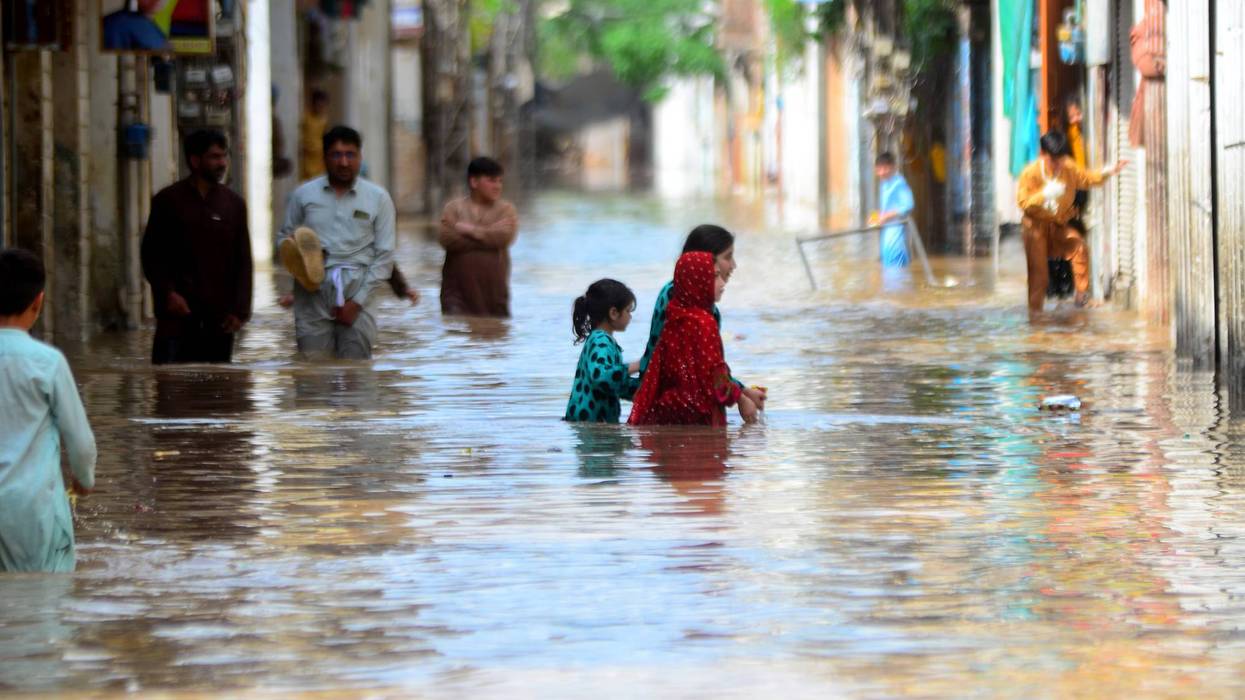
A new United Nations report finds that well over half of the world's children live in areas facing drought, 1.5 billion face heatwaves, and 370 million are exposed to flooding.
As global fossil fuel giants report windfall profits from the US-Israeli war on Iran and President Donald Trump pushes to continue oil, gas, and coal extraction despite the clear risks to the planet, the United Nations children's welfare agency on Tuesday provided "the most detailed global picture to date" of how children across the world—in low-, middle-, and high-income countries—are being impacted by the fossil-fueled climate emergency.
According to the Children’s Climate Risk Report 2026 by the UN Children's Fund (UNICEF), nearly every child in the world is now exposed to at least one climate hazard, including riverine or coastal flooding, dangerous heatwaves, severe storms, or drought—all extreme weather events that scientists say are being made more hazardous by continued greenhouse gas emissions, which are pushing the goal of limiting planetary heating to 1.5°C further out of reach, according to experts.
There were 2.4 billion children on Earth in 2025, and according to the report, 2.3 billion of them are estimated to live in areas with air pollution—identified in the report as is "not primarily driven by Earth’s climate but... highly sensitive to and compounded by it."
Well over half of the world's children, 1.8 billion, are exposed to drought, and 1.5 billion are living in areas facing heatwaves that have grown longer and more severe as fossil fuel extraction has continued despite scientists' and energy experts' warnings.
About 1.2 billion children are exposed to extreme heat where they live, while about 370 million live in areas affected by either riverine flooding or coastal flooding—which have been driven by more severe tropical storms, affecting 662 million children worldwide and frequently disrupting homes, schools, and health services.
Children in sub-Saharan Africa were identified as the most vulnerable to climate hazards, with communities facing extreme heat, drought, and heatwaves.
Children in South Asian countries, such as Bangladesh and Pakistan, were found to have the most children exposed to multiple hazards at the highest intensities, such as flooding and extreme heatwaves.
"The climate crisis does not manifest as a single event. For millions of children, the reality is a complex and dangerous cascade of multiple, overlapping hazards," reads the report's executive summary. "This compounding of threats overwhelms the capacity of unprepared social services and undermines the resilience of families and communities. For instance, intense droughts can devastate crops and worsen food insecurity. Dry vegetation left behind by a drought can fuel wildfires, which in turn exacerbate air pollution and leave the land vulnerable to flash floods later in the year. These floods can destroy infrastructure such as homes, schools and hospitals, displace communities, and spread waterborne diseases."
"These effects can create a vicious cycle: Destroyed homes can lead to displacement, which can result in a lack of shelter, depriving children of protection from additional impacts and making them even more susceptible to future hazards," continues the report. "Disrupted education can have lifelong consequences, making it harder for children to build a stable future and break free from hardship."
The report calls on governments to reduce fossil fuel emissions and "take ambitious action" to secure a just transition toward renewable energy; protect children through inclusive climate adaptation and loss and damage funding; and invest in climate education to ensure that "children’s needs and perspectives are reflected in local, national, regional, and global decision-making on climate policy and climate finance."
UNICEF emphasized that "we know what works: installing solar power to keep children learning during power outages, switching to groundwater aquifers for drinking water as surface water sources dry up, upgrading sanitation systems to recycle water for farming, and building shelters to protect children and their families from tropical storms."
Specific recommendations in the report include:
Tom Slaymaker, a monitoring specialist for a joint UNICEF and World Health Organization program focused on water supply, sanitation, and hygiene, said the message in the report "is clear."
"Climate change is not only changing the planet, but also children," said Slaymaker. "Without urgent, child-focused climate action, the shocks they face today will only intensify. But with the right investment and political will, we can reduce risks, strengthen systems, and give children the chance to survive and thrive.”
Catherine Russell, executive director of UNICEF, said the agency's analysis "can help governments and decision-makers plan better and invest more effectively in resilient services."
"When we strengthen health and education systems, and improve infrastructure with children in mind," said Russell, "we protect them from today’s climate threats and help secure their future.”

"The American people need to know if this merger was approved as a political favor," said Sen. Elizabeth Warren.
The leadership of President Donald Trump's Justice Department shut down an investigation into Paramount's widely criticized bid to acquire Warner Bros. Discovery and issued a statement supporting the merger before career antitrust attorneys could finish scrutinizing the proposal, The Wall Street Journal reported on Monday.
According to the Journal, which cited unnamed people familiar with the matter, "a team of career lawyers who had spent months scrutinizing the deal were leaning toward recommending a lawsuit challenging it on the grounds that the combination of the two movie studios would be anticompetitive and violate antitrust law." The newspaper reported that the antitrust staffers who investigated the $111 billion merger proposal "didn't participate in writing" the Justice Department statement greenlighting the deal.
“When we said this is what corruption looks like, this is what we meant," the Block the Merger coalition, an alliance of dozens of organizations opposed to the deal, said in a statement late Monday.
DOJ leadership's move to clear the deal was just the latest in a string of merger approvals that have drawn suspicion, given that the Justice Department has been accused of giving corporate lobbyists free rein over antitrust policy. The DOJ's antitrust section is currently headed by Associate Attorney General Stanley Woodward, who—according to a fired antitrust official—"perverted justice and acted inconsistent with the rule of law" during a separate merger investigation.
"The American people need to know if this merger was approved as a political favor," Sen. Elizabeth Warren (D-Mass.) wrote in response to the Journal's reporting. "This reeks of corruption."
Unreal. Justice Department staff were railroaded again by political interference in the Paramount-Warner Bros merger review.
None of the investigators on the deal had any role in writing the unprecedented clearance statement issued by DOJ last Friday. pic.twitter.com/yYcKUpuos3
— Lee Hepner (@LeeHepner) June 15, 2026
If finalized, Paramount Skydance's proposed acquisition of Warner Bros. would leave CBS, CNN, HBO, and other major media properties under the control of the son of billionaire Trump megadonor Larry Ellison, posing what one coalition called "an existential threat to the free press." David Ellison, the CEO of Paramount Skydance, dined with the president in April at an event "honoring the Trump White House."
The proposed merger is still facing antitrust scrutiny in Europe and from state attorneys general in the US.
The Journal reported that "some staffers" in the DOJ's antitrust division believe the Justice Department's statement backing the merger and getting it over a major regulatory hurdle "was designed to make it harder for state attorneys general to challenge the deal in court." In the statement, the DOJ declared that "the transaction is not likely to result in harm to competition or American consumers."
Rob Bonta, California's attorney general, said in response to the Justice Department's decision that "the merger of Warner Bros and Paramount is not a done deal and remains under investigation by my office."
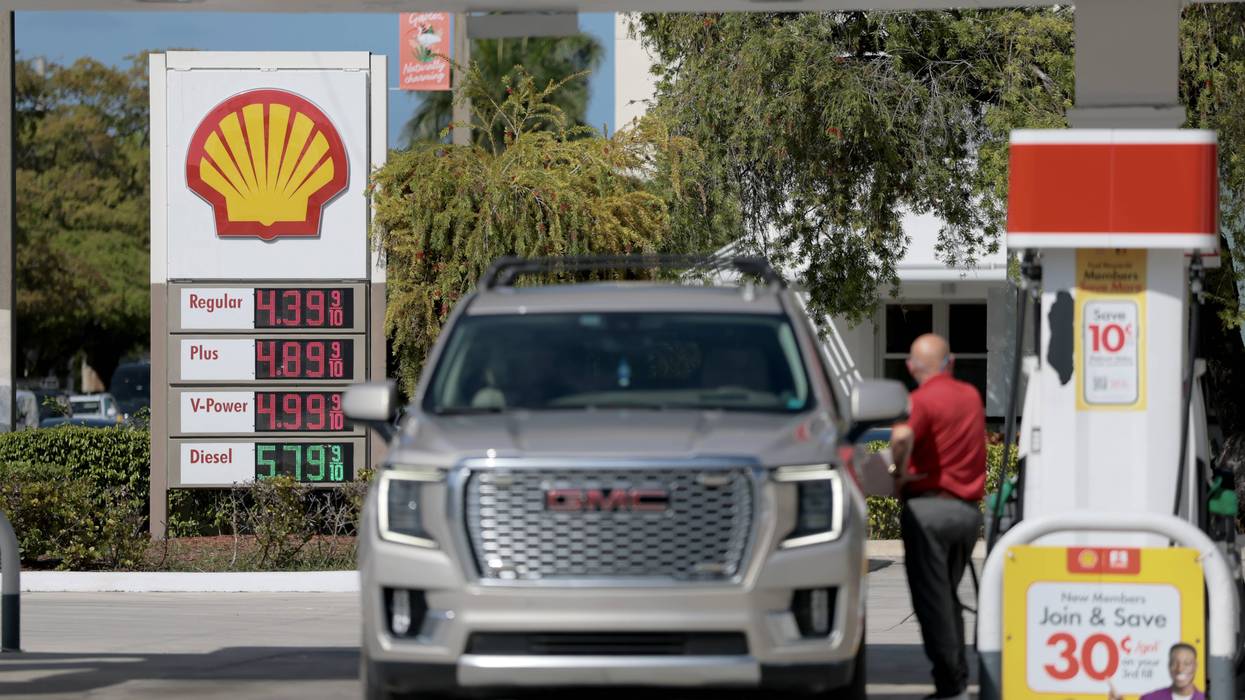
"While Americans suffer from high prices and the Iran War imposes tens of billions of dollars of new costs on the American public, the oil industry wins big."
As President Donald Trump reached an interim peace deal with the Iranian government and Oxfam International revealed that 41 energy industry tycoons collectively increased their wealth by $23.5 billion since the war was launched in late February, a pair of US senators on Monday released their letters demanding answers from fossil fuel giants about their windfall profits and soaring gasoline prices during the conflict.
Senate Banking Committee Ranking Member Elizabeth Warren (D-Mass.) and Committee on Environment and Public Works Ranking Member Sheldon Whitehouse (D-RI) last Thursday wrote to BP America chair and president Orlando Alvarez, Chevron chair and CEO Mike Wirth, ConocoPhillips chair and CEO Ryan Lance, Continental Resources president and CEO Robert Lawler, ExxonMobil chair and CEO Darren Woods, Occidental Petroleum president and CEO Richard Jackson, and Shell USA president Colette Hirstius.
"We write to question why American families are paying egregiously high prices at the pump while the fossil fuel industry collects massive windfall profits thanks to the Trump administration's war in Iran," Warren and Whitehouse wrote amid peace talks last week, noting that Iran's closure of the Strait of Hormuz, a key shipping route for fossil fuels, led to what that the International Energy Agency (IEA) called "the largest supply disruption in the history of the global oil market."
"Gasoline prices rapidly increased by as much as 52%," the pair highlighted. "Before the Iran War, oil cost $71.32 per barrel. Since then, it has cost as much as $138.21 and currently sits at $98.29 per barrel. The Iran War has allowed 27 oil and gas companies to rake in over $40 billion in profit since the Iran War began."
Warren and Whitehouse also emphasized that "the opportunity to profit from high oil prices did not occur in a political vacuum. In April 2024, then-candidate Trump solicited a billion dollars from fossil fuel executives at a private dinner at Mar-a-Lago, promising in exchange to roll back environmental regulations, issue desired permits, and expand drilling opportunities."
Also pointing to Trump's invasion of Venezuela, abduction of President Nicolás Maduro, and takeover of the country's nationalized oil industry, the senators said that "the pattern is consistent: While Americans suffer from high prices and the Iran War imposes tens of billions of dollars of new costs on the American public, the oil industry wins big."
The pair requested answers to their questions on profits, pricing, federal policy, and communications with the Trump administration about the Iran War by June 25, They explained that the information "will aid our assessment of the appropriate scope, rate structure, and enforcement mechanisms as we actively consider the Big Oil Windfall Profits Tax Act," reintroduced by Whitehouse and Rep. Ro Khanna (D-Calif.) in March, just weeks in to the war.
The information will also assist with investigations into "the extent to which Trump administration military, regulatory, and policy decisions benefited the oil industry and the extent to which any of these were the product of quid pro quo solicitations," as well as "whether oil and gas companies had advance knowledge of or ability to shape the administration's decision to go to war in Iran."
"Congress has a constitutional duty to investigate each of these matters and to legislate as necessary to protect the American people," the pair added. Both chambers are controlled by the GOP and have refused—largely along party lines—to pass war powers resolutions intended to prevent or end Trump and Israeli Prime Minister Benjamin Netanyahu's illegal assault on Iran.
In response to Trump's new deal with Iran to extend a ceasefire reached in April and reopen the strait, oil prices dropped and the stock market rallied. Specifically, as The Associated Press detailed, "the S&P 500 rose 1.7%," while "the Dow Jones Industrial Average climbed 468 points, or 0.9%, to a record, and the Nasdaq composite jumped 3.1%."
Allie Rosenbluth, US program manager at the advocacy group Oil Change International, said Monday that "any agreement that reduces further violence is welcome. But this announcement should not be mistaken as the end to the crisis, given Israel has vowed to remain in occupied areas of southern Lebanon indefinitely, while violence continues in Gaza and the West Bank. As attention turns to the reopening of the Strait of Hormuz and falling oil prices, we should not lose sight of the devastating human toll this conflict has inflicted across the region, nor the profound economic disruption it continues to cause around the world."
Rosenbluth continued:
The rapid rise and fall of oil prices in response to military escalation and diplomatic announcements is a reminder of how exposed the global economy is to fossil fuel volatility. For millions of people, this crisis has meant loss, displacement, food insecurity, and higher cost of living. For fossil fuel companies, it has meant windfall profits.
Oil Change International estimates that if US oil prices average around $90 per barrel through the end of the year, US oil companies could make an additional $38 billion in windfall revenues from crude oil exports alone as a result of Trump and Netanyahu's war on Iran. While households around the world have been hit by higher fuel, energy, and food costs, oil companies are cashing in billions.
The Strait of Hormuz may be reopening, but this crisis has once again exposed fossil fuels as a source of conflict, chaos, volatility, and disruption. While communities bear the costs, oil companies profit from the instability. Once renewables are installed, sunlight or wind does not become more expensive because of geopolitical conflict. The most durable form of energy security is reducing exposure to fossil fuels altogether, and making a just transition to renewable energy.
As Group of Seven leaders, including Trump, gathered in France on Monday, and Oxfam International released its report about how G7 energy billionaires have pocketed $300 million per day since the start of the Iran War, the organization's executive director, Amitabh Behar, argued that representatives from the other six countries, or G6, "can't plead powerlessness."
"They can cancel debt. They can tax windfall profits and extreme wealth. They can advocate for a new issuance of special drawing rights. They can provide poorer countries with aid," Behar added. "Refusing to act simply because Washington will not join them is not diplomacy, it is cowardice. And it will only accelerate the G6's slide into global irrelevance."