

SUBSCRIBE TO OUR FREE NEWSLETTER
Daily news & progressive opinion—funded by the people, not the corporations—delivered straight to your inbox.
5
#000000
#FFFFFF
To donate by check, phone, or other method, see our More Ways to Give page.
Daily news & progressive opinion—funded by the people, not the corporations—delivered straight to your inbox.
Michael Mariotte, NIRS, 301-270-6477
Groups participating in the federal licensing
process of the proposed
Calvert Cliffs-3 nuclear reactor on the Chesapeake Bay
filed a new contention late Friday, June 25, 2010.
The contention charges that the NRC's Draft
Environmental Impact
Statement (DEIS) undercuts assertions filed in the license application
by the
proposed reactor's owner, UniStar Nuclear, that electricity from Calvert
Cliffs-3 would be produced for 3.1 to 4.6 cents per kilowatt/hour.
According to
UniStar's license application, that cost number was derived from a 2004
study that put the construction cost of a reactor at $1200-1800 per
kilowatt.
But the DEIS-using more recent estimates
supplied by UniStar-put
the estimated construction cost 300-500% higher, at $7200-9600 per
kilowatt.
"UniStar has attempted to mislead the NRC-and
the
public-about the costs of Calvert Cliffs-3 both in absolute terms and in
comparison to other possible sources of electricity," charged Michael
Mariotte, executive director of Nuclear
Information and Resource Service, one of four organizations
participating in
the NRC licensing hearings.
"UniStar uses these grossly underestimated cost
projections eight
separate times in its application when comparing projected costs of
electricity
from Calvert Cliffs-3 to alternatives like wind and solar power,"
explained Mariotte. "Even if it thought those numbers were correct when
they first submitted their application in 2007, they are now on their
sixth
revision of the application and they've never updated those numbers.
That's probably because they know no one in Maryland would support the
reactor if they
were aware how much electricity from it would cost."
The groups also pointed out that the DEIS-as
well as
UniStar's license application-completely ignores the potential
contribution of offshore wind power to the region's electrical system,
even though a company called Bluewater Wind has proposed building a 600
Megawatt wind farm off the Maryland coast, as well as large wind farms
off the
New Jersey and Delaware coasts.
The groups further charged that the DEIS failed
to even attempt to
quantify the possible contribution of solar photovoltaic power in the
region,
and that the DEIS failed to account for the decline in electrical demand
in the
region over the past three years and the impact of energy efficiency
programs-thus
overstating future need for electricity.
The DEIS and the license application are
required by law to show a need
for the project and to examine alternatives to the proposed project as
well as
provide a cost-benefit analysis.
"It's easy to show a benefit if you understate
your costs
by 300-500%, disregard the generation potential of your competitors and
overstate the need for your project," said Mariotte. "But
Marylanders-and U.S.
taxpayers, who will be called on to loan the money to build this
reactor-deserve better. An honest, defensible examination of the costs
of
this reactor, the actual need for its electricity, and potential
alternative
sources of electricity will show that Calvert Cliffs-3 is unnecessary,
too
expensive, and plenty of clean sources of electricity exist to meet
whatever
need for power does exist," said Mariotte. "That's why we
submitted this contention-in the hope that the NRC will heed the warning
signs and hold that honest hearing."
The groups involved in the licensing proceeding
are NIRS, Public
Citizen, Beyond Nuclear and Southern Maryland CARES.
The full text of the contention is available
at: https://www.nirs.org/nukerelapse/calvert/contention1062510.pdf
Nuclear Information and Resource Service is the information and networking center for people and organizations concerned about nuclear power, radioactive waste, radiation, and sustainable energy issues.
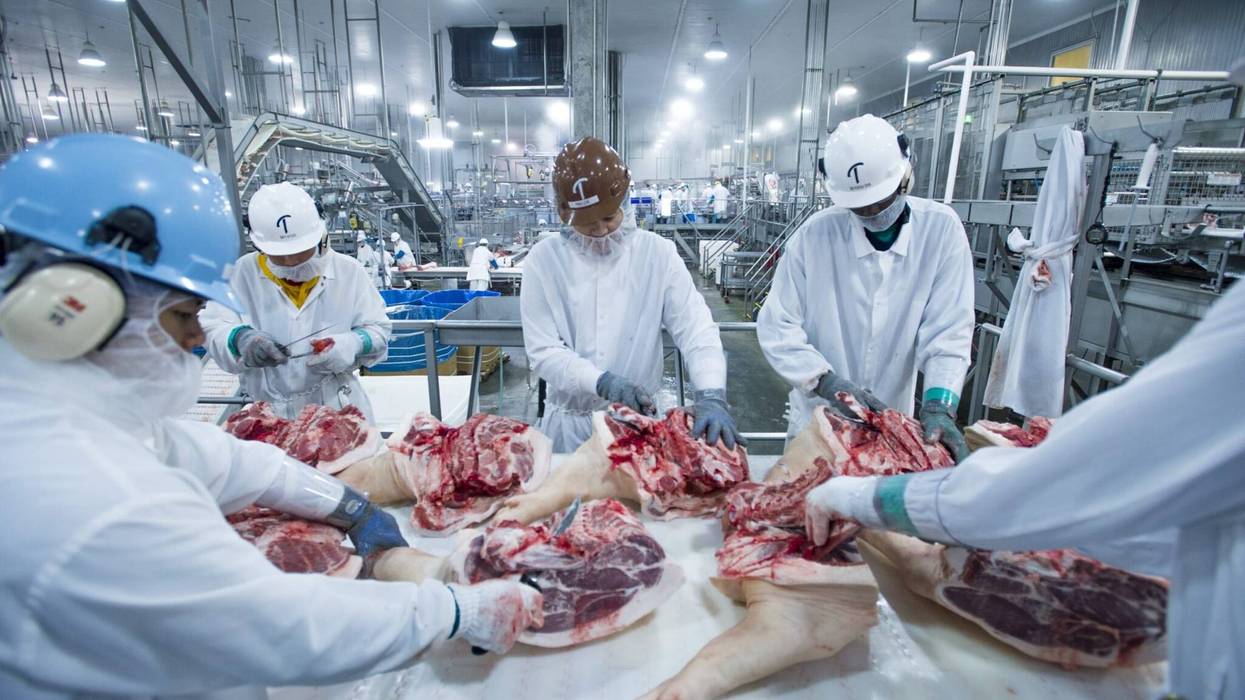
"We need robust enforcement of antitrust and fair trade practice laws to finally protect producers from meatpackers’ fundamentally unfair and illegal practices," said one campaigner.
A leading government accountability watchdog group on Monday ripped the Trump administration's move to rescind Biden-era rules enacted to protect ranchers and farmers from abuse by meatpacking corporations and boost competition in the key industry.
The US Department of Agriculture (USDA) has announced the reversal of three Biden administration rules under the Packers and Stockyards Act of 1921. One of the rules prohibits meatpackers, swine contractors, and poultry companies from retaliating against producers for actions like joining associations, speaking with regulators, or seeking other buyers.
Another rule mandated improved transparency in poultry grower contracts. The third rule‚ which was set to take effect this month, would have limited how poultry companies use the tournament payment system.
USDA said it plans to start the revocation process with proposed rulemakings scheduled for later this month and October.
Farm groups and antitrust advocates argue the move removes protections against monopolistic, deceptive, and retaliatory practices by dominant meatpacking and poultry companies.
“For years, meat corporations have abused hardworking farmers and ranchers. Now, the Trump administration is proposing to undo long-overdue progress made to level the playing field," Emily Miller, staff attorney at Food & Water Watch, said Monday in a statement. "This move is a slap in the face to all those who have long fought for fair treatment in livestock and poultry markets."
The USDA's move comes amid increased meat sector consolidation, which studies by Food & Water Watch, More Perfect Union, and others have found results in higher consumer prices and lower farmer profits.
Over the course of his two terms in office, Trump has boosted the meatpacking industry at the expense of worker rights, competition, and public health. His administration refused to issue binding rules requiring businesses to institute safety measures amid the Covid-19 pandemic, and he invoked the Defense Production Act to classify meatpacking plants as critical infrastructure and force them to stay open even as the coronavirus ravaged industry workers.
Trump has also supported corporate monopolization in meatpacking, and his administration has shut down a Department of Justice antitrust probe of alleged industry collusion. Just four meatpackers control approximately 80% of the market. Meanwhile, cattle producers who in 1980 received 63 cents for every dollar paid by consumers for beef were receiving just 37 cents four decades later.
"We need robust enforcement of antitrust and fair trade practice laws to finally protect producers from meatpackers’ fundamentally unfair and illegal practices," Miller said on Monday. "These rollbacks will do the opposite. We won’t rest until USDA does its job by putting producers above corporations.”
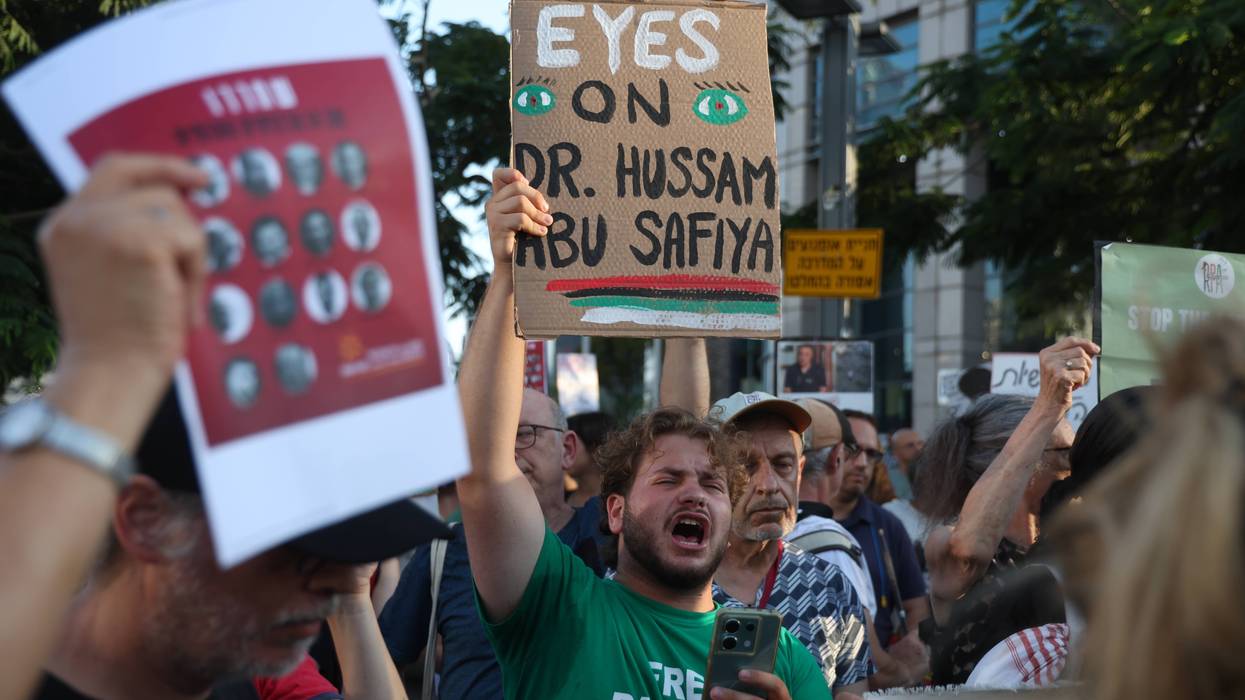
The panel found that the imprisoned doctor's detention is "arbitrary."
A United Nations rights body said Monday that the detention of Palestinian Dr. Hussam Abu Safiya by Israel was "arbitrary" and likely an indication of "a widespread or systematic practice of arbitrary detention in the country" as it demanded the physician be released immediately.
“The appropriate remedy would be to release [him] immediately and accord him an enforceable right to compensation and other reparations, in accordance with international law,” said the UN Working Group on Arbitrary Detention, warning that Israel has violated multiple articles of the Universal Declaration of Human Rights and the International Covenant on Civil and Political Rights by holding the doctor in detention since December 2024, when he was captured along with staff and patients at Kamal Adwan Hospital in Gaza.
Abu Safiya has been held without charge ever since, as Israel has accused the doctor of being a member of Hamas, pointing to Gaza's Military Medical Services records that show him listed as a "colonel" and a photo of him seated next to members of the group.
But medical and human rights groups note that there is no evidence that Abu Safiya has had a command combat role and that Hamas, which announced the dissolution of its government on Monday, has governed Gaza through its political wing, likening Abu Safiya's role to that of the US surgeon general.
The working group issued the call following Abu Safiya's recent transfer to the underground Rakefet interrogation facility at Nitzan Prison, which is known for abuse of prisoners.
The doctor recently told his lawyer, Nasser Odeh, after being transferred on June 24: "This is the last time you will see me… They brought me here to kill me. I don't see myself surviving. This is the end."
Odeah reported after visiting the prison on July 2 that Abu Safiyah was nearly unrecognizable and had suffered injuries to his "head, eyes, ears, and neck" and was having trouble breathing. He was "in a state of extreme weakness and was constantly on the verge of losing consciousness mid-conversation," according to his lawyer's account.
"I have visited Dr. Abu Safiya several times since his detention, but the individual I encountered during this latest visit was not the same person I had previously met," said Odeh in a statement. "His physical and psychological state, the severe injuries visible on his body, and his personal testimony leave no room for doubt: his life is in immediate danger. He must be transferred out of the Rakefet facility immediately and granted an urgent, independent examination."
On Monday, the American Human Rights Council (AHRC) was among those demanding Abu Safiya's immediate release, pointing to reports from his legal team that he is in "imminent danger" and potentially at risk of death if he remains in Israeli detention.
"Since his arrest on December 27, 2024, Dr. Abu Safiya has reportedly been subjected to torture, abuse, and prolonged solitary confinement," said the group. "His health continues to deteriorate, and he has been denied communication with his family and legal team. Reports indicate he was recently transferred to an isolated cell, raising further alarm about his safety and wellbeing."
AHRC noted that Abu Safiya placed "his patients’ lives above his own safety" as he continued to provide medical care and to publicly call on Israel not to target healthcare facilities during the Israeli assault on Gaza that began in October 2023.
"He refused to abandon the hospital or leave the wounded behind despite repeated Israeli demands and threats," said AHRC. "He continued his humanitarian mission under bombardment, siege, and near-total depletion of medical supplies."
Imad Hamad, executive director of the group, called on physicians' groups and international medical associations to urgently demand Abu Safiya's release, as hundreds of people in Tel Aviv also assembled in solidarity with the doctor.
"We urge everyone to take a stand and push for the good doctor's release," said Hamad. "This is not about politics; this is about medicine and human rights."
At Amnesty International, Erika Guevara Rosas, the senior director for research, advocacy, policy, and campaigns, called the details that have emerged recently about Abu Safiya's condition "truly horrifying."
"It is unconscionable that a pediatrician, who has dedicated his life to saving others in the occupied Gaza Strip, is being subjected to torture and other ill-treatment—including severe physical and psychological abuse and prolonged solitary confinement—while being detained without any justification," said Guevara Rosas.
She added that Odeh's account "must serve as an urgent wake-up call for states around the world, particularly Israel’s allies," such as the US.
"It is utterly reprehensible that a doctor who refused to abandon his patients, and who became one of the most prominent voices denouncing the devastation of Gaza’s healthcare system, remains arbitrarily and unlawfully detained under Israel’s baseless designation as an ‘unlawful combatant,'" said Guevara Rosas. "He continues to be deprived of his most fundamental rights, including the right to be protected against torture and other ill-treatment, and his rights to a fair trial and due process."
"Expressions of concern alone are little more than a cynical fig leaf for states’ inaction in the face of Israel’s crushing of Palestinians’ human rights," she added. "Amnesty, alongside other human rights organizations, is not simply calling for Dr. Hussam Abu Safiya’s immediate release. This is a call for urgent and effective intervention to save his life.”
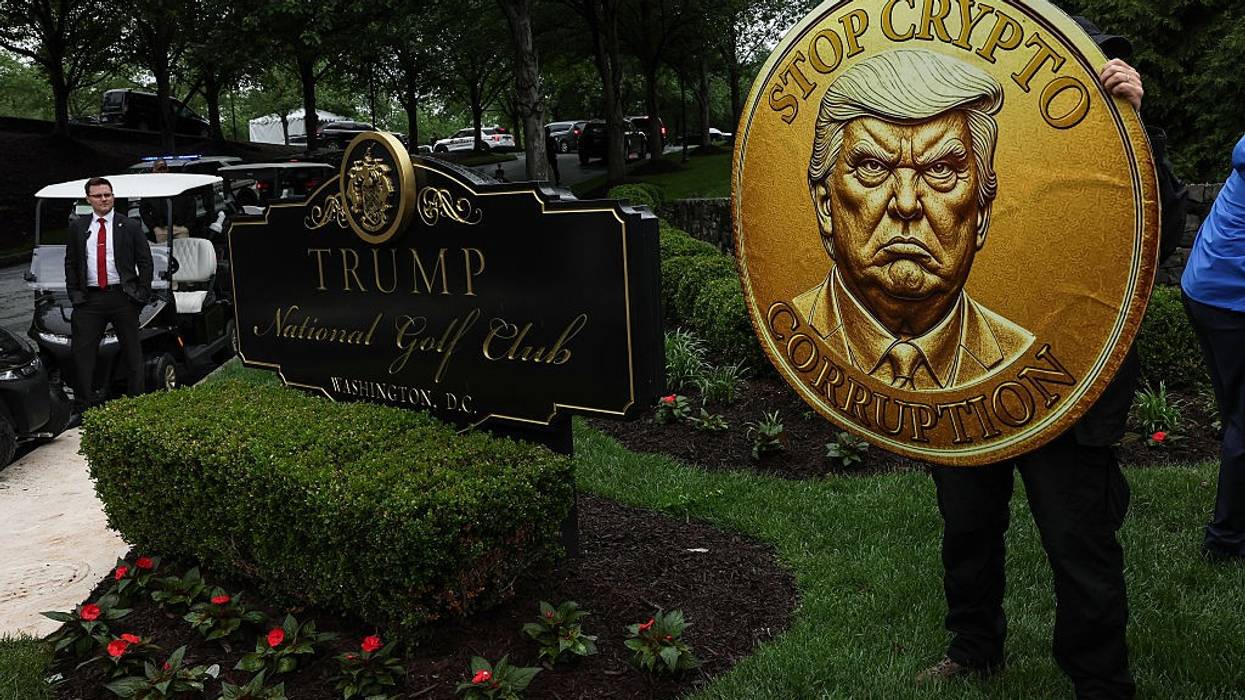
"The Trump family has made over $5 BILLION in corrupt crypto deals," said Rep. Greg Casar. "Now Trump is openly bragging that his government won’t investigate cryptocurrency-related crimes."
President Donald Trump on Monday boasted about how lax his administration has been in pursuing investigations into the cryptocurrency industry.
Speaking at the White House, Trump attacked former President Joe Biden's administration for prosecuting cryptocurrency industry figures for a wide variety of crimes related to money laundering and fraud.
"They were very violently against [the crypto industry]," Trump said. "They were putting people in jail. What they were doing to the crypto world, it was horrible. It's amazing that it survived that onslaught, it was a weaponization of government."
Trump then explained how he drew support from the industry by coming out in favor of it during the 2024 presidential campaign, adding that "every time I see a crypto guy where they dropped an investigation, I said, 'You're lucky I'm president.'"
Trump: "Every time I see a crypto guy where they dropped an investigation, I said, 'You're lucky I'm president.'" pic.twitter.com/7Jgg0ffgq7
— Aaron Rupar (@atrupar) July 6, 2026
During his second term, Trump has not only taken a hands-off approach to the crypto industry, but also pardoned Changpeng Zhao, the founder of cryptocurrency exchange Binance, who pleaded guilty to money-laundering charges in 2023.
This pardon drew allegations of corruption given that Binance has been a major financial booster of World Liberty Financial, the crypto venture backed by the Trump family that has added billions of dollars to their total wealth.
Even as Trump has personally raked in money from selling his own memecoin, many of his supporters who invested in it have lost significant sums of money.
A Sunday report in The New York Times revealed that nearly 1 million people who invested in the Trump memecoin have recorded losses totaling $3.8 billion since its launch in 2025.
As the Times noted, "Trump profited whether the price of his memecoin went up or down" because he "collected returns whenever anyone traded the tokens, as he repeatedly pushed his followers to do, using his Truth Social account to promote the coin."
Rep. Greg Casar (D-Texas), chair of the Congressional Progressive Caucus, ripped the president for openly boasting about going easy on the industry that he's personally profiting from.
"The Trump family has made over $5 BILLION in corrupt crypto deals," Casar wrote in a social media post. "Now Trump is openly bragging that his government won’t investigate cryptocurrency-related crimes. Corruption, plain and simple."