Whatever You Paid to Watch Netflix Last Month Was More Than It Paid in Income Taxes All Last Year: $0
"Netflix posted its largest-ever U.S. profit in 2018—$845 million—on which it didn't pay a dime in federal or state income taxes," writes ITEP senior fellow Matthew Gardner. In fact, the streaming giant received a $22 million return.

Whether you paid $8.99 for basic, $12.99 for standard, or splurged for the $15.99 premium package so you would have the privilege of watching endless streaming shows and movies on Netflix last month, a new analysis shows you still paid much, much more than the company paid in federal and local income taxes for the entire year.
"When hugely profitable corporations avoid tax, that means smaller businesses and working families must make up the difference." --Matthew Gardner, ITEP senior fellowAccording to Matthew Gardner, senior fellow at the Institute on Taxation and Economic Policy (ITEP), "The popular video streaming service Netflix posted its largest-ever U.S. profit in 2018--$845 million--on which it didn't pay a dime in federal or state income taxes."
Not a dime. Not one penny.
"In fact," noted Gardner in a blog post on ITEP's website on Tuesday, "the company reported a $22 million federal income tax rebate." So even if you paid Netflix nothing last month because you chose not to subscribe--or maybe you were enjoying an introductory free-month trial--you still didn't make out better than the online giant.
Citing the specific impact of the Tax Cuts and Jobs Act, which the Republicans in Congress passed and Trump signed into law in December of 2017, Gardner explains that because companies are finally releasing their complete 2018 earnings reports--which Netflix did last month--the public is finally getting a look at just how well some of the nation's most profitable corporations are making out.
While GOP leaders like former House Speaker Paul Ryan sold the bill to the voting public by promising lower corporate rates would be offset by the closure of loopholes, Gardner says Netflix is a test case for how bogus those promises were. "Many corporations are still able to exploit loopholes and avoid paying the statutory tax rate," he explains, "only now, that rate is substantially lower."
He continues:
Netflix's tax avoidance should come as no surprise to those who followed the debate leading up to the passage of the new tax law: A 2017 ITEP report identified Netflix as one of 100 profitable Fortune 500 corporations that paid a 0 percent federal income tax rate in at least one profitable year between 2008 and 2015. In fact, Netflix did it twice, and paid an average tax rate of 13.6 percent over the eight-year period, meaning that the company sheltered more than half of its profits from the 35 percent federal income tax rate in effect at the time.
Leading up to the 2017 tax battle, the hope of reformers was that Congress would take a fiscally responsible approach and weed out loopholes that made Netflix's tax avoidance possible. Instead, GOP leaders who championed the law and President Trump chose to focus on cutting the corporate tax rate as far as possible--from 35 to 21 percent--while leaving in place special breaks and loopholes.
"Netflix appears to be every bit as unaffected by corporate tax laws now as it was before President Trump's 'reform,'" Gardner concludes. "This is especially troubling because Netflix is precisely the sort of company that should be paying its fair share of income taxes. With a record number of subscribers, the company's profit last year equaled its haul in the previous four years put together. When hugely profitable corporations avoid tax, that means smaller businesses and working families must make up the difference."
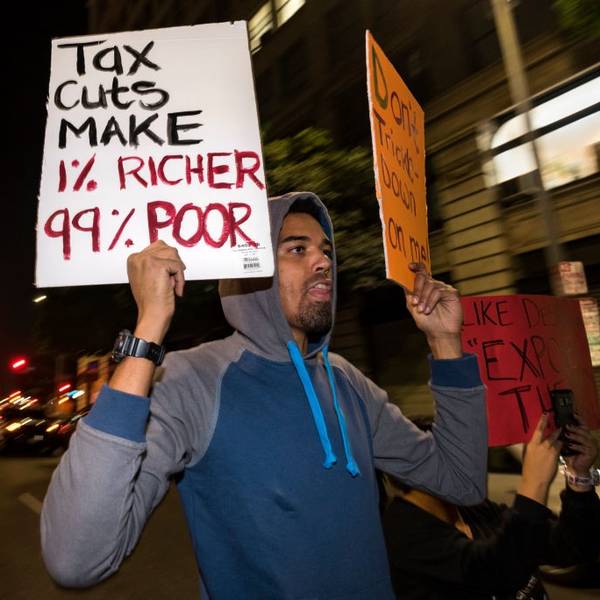
FINAL DAY! This is urgent.
Dear Common Dreams reader, It’s been nearly 30 years since I co-founded Common Dreams with my late wife, Lina Newhouser. We had the radical notion that journalism should serve the public good, not corporate profits. It was clear to us from the outset what it would take to build such a project. No paid advertisements. No corporate sponsors. No millionaire publisher telling us what to think or do. Many people said we wouldn't last a year, but we proved those doubters wrong. Together with a tremendous team of journalists and dedicated staff, we built an independent media outlet free from the constraints of profits and corporate control. Our mission from the outset was simple. To inform. To inspire. To ignite change for the common good. Building Common Dreams was not easy. Our survival was never guaranteed. When you take on the most powerful forces—Wall Street greed, fossil fuel industry destruction, Big Tech lobbyists, and uber-rich oligarchs who have spent billions upon billions rigging the economy and democracy in their favor—the only bulwark you have is supporters who believe in your work. But here’s the urgent message from me today. It’s never been this bad out there. And it’s never been this hard to keep us going. At the very moment Common Dreams is most needed and doing some of its best and most important work, the threats we face are intensifying. Right now, with just hours left in our Spring Campaign, we're still falling short of our make-or-break goal. When everyone does the little they can afford, we are strong. But if that support retreats or dries up, so do we. Can you make a gift right now to make sure Common Dreams not only survives but thrives? There is no backup plan or rainy day fund. There is only you. —Craig Brown, Co-founder |

Whether you paid $8.99 for basic, $12.99 for standard, or splurged for the $15.99 premium package so you would have the privilege of watching endless streaming shows and movies on Netflix last month, a new analysis shows you still paid much, much more than the company paid in federal and local income taxes for the entire year.
"When hugely profitable corporations avoid tax, that means smaller businesses and working families must make up the difference." --Matthew Gardner, ITEP senior fellowAccording to Matthew Gardner, senior fellow at the Institute on Taxation and Economic Policy (ITEP), "The popular video streaming service Netflix posted its largest-ever U.S. profit in 2018--$845 million--on which it didn't pay a dime in federal or state income taxes."
Not a dime. Not one penny.
"In fact," noted Gardner in a blog post on ITEP's website on Tuesday, "the company reported a $22 million federal income tax rebate." So even if you paid Netflix nothing last month because you chose not to subscribe--or maybe you were enjoying an introductory free-month trial--you still didn't make out better than the online giant.
Citing the specific impact of the Tax Cuts and Jobs Act, which the Republicans in Congress passed and Trump signed into law in December of 2017, Gardner explains that because companies are finally releasing their complete 2018 earnings reports--which Netflix did last month--the public is finally getting a look at just how well some of the nation's most profitable corporations are making out.
While GOP leaders like former House Speaker Paul Ryan sold the bill to the voting public by promising lower corporate rates would be offset by the closure of loopholes, Gardner says Netflix is a test case for how bogus those promises were. "Many corporations are still able to exploit loopholes and avoid paying the statutory tax rate," he explains, "only now, that rate is substantially lower."
He continues:
Netflix's tax avoidance should come as no surprise to those who followed the debate leading up to the passage of the new tax law: A 2017 ITEP report identified Netflix as one of 100 profitable Fortune 500 corporations that paid a 0 percent federal income tax rate in at least one profitable year between 2008 and 2015. In fact, Netflix did it twice, and paid an average tax rate of 13.6 percent over the eight-year period, meaning that the company sheltered more than half of its profits from the 35 percent federal income tax rate in effect at the time.
Leading up to the 2017 tax battle, the hope of reformers was that Congress would take a fiscally responsible approach and weed out loopholes that made Netflix's tax avoidance possible. Instead, GOP leaders who championed the law and President Trump chose to focus on cutting the corporate tax rate as far as possible--from 35 to 21 percent--while leaving in place special breaks and loopholes.
"Netflix appears to be every bit as unaffected by corporate tax laws now as it was before President Trump's 'reform,'" Gardner concludes. "This is especially troubling because Netflix is precisely the sort of company that should be paying its fair share of income taxes. With a record number of subscribers, the company's profit last year equaled its haul in the previous four years put together. When hugely profitable corporations avoid tax, that means smaller businesses and working families must make up the difference."

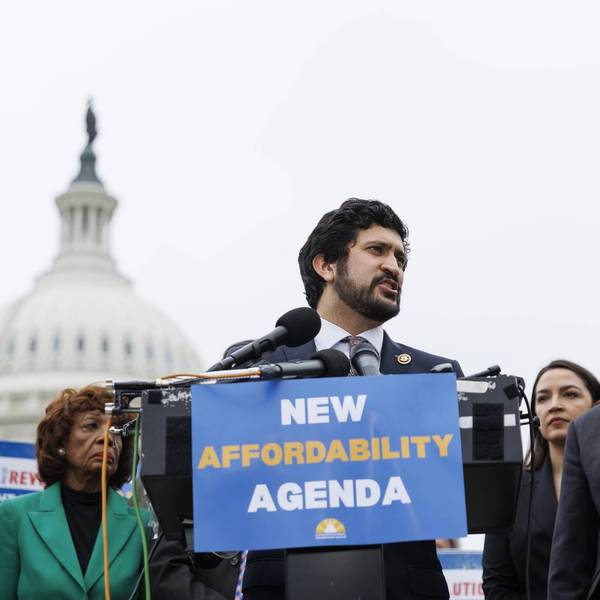
Whether you paid $8.99 for basic, $12.99 for standard, or splurged for the $15.99 premium package so you would have the privilege of watching endless streaming shows and movies on Netflix last month, a new analysis shows you still paid much, much more than the company paid in federal and local income taxes for the entire year.
"When hugely profitable corporations avoid tax, that means smaller businesses and working families must make up the difference." --Matthew Gardner, ITEP senior fellowAccording to Matthew Gardner, senior fellow at the Institute on Taxation and Economic Policy (ITEP), "The popular video streaming service Netflix posted its largest-ever U.S. profit in 2018--$845 million--on which it didn't pay a dime in federal or state income taxes."
Not a dime. Not one penny.
"In fact," noted Gardner in a blog post on ITEP's website on Tuesday, "the company reported a $22 million federal income tax rebate." So even if you paid Netflix nothing last month because you chose not to subscribe--or maybe you were enjoying an introductory free-month trial--you still didn't make out better than the online giant.
Citing the specific impact of the Tax Cuts and Jobs Act, which the Republicans in Congress passed and Trump signed into law in December of 2017, Gardner explains that because companies are finally releasing their complete 2018 earnings reports--which Netflix did last month--the public is finally getting a look at just how well some of the nation's most profitable corporations are making out.
While GOP leaders like former House Speaker Paul Ryan sold the bill to the voting public by promising lower corporate rates would be offset by the closure of loopholes, Gardner says Netflix is a test case for how bogus those promises were. "Many corporations are still able to exploit loopholes and avoid paying the statutory tax rate," he explains, "only now, that rate is substantially lower."
He continues:
Netflix's tax avoidance should come as no surprise to those who followed the debate leading up to the passage of the new tax law: A 2017 ITEP report identified Netflix as one of 100 profitable Fortune 500 corporations that paid a 0 percent federal income tax rate in at least one profitable year between 2008 and 2015. In fact, Netflix did it twice, and paid an average tax rate of 13.6 percent over the eight-year period, meaning that the company sheltered more than half of its profits from the 35 percent federal income tax rate in effect at the time.
Leading up to the 2017 tax battle, the hope of reformers was that Congress would take a fiscally responsible approach and weed out loopholes that made Netflix's tax avoidance possible. Instead, GOP leaders who championed the law and President Trump chose to focus on cutting the corporate tax rate as far as possible--from 35 to 21 percent--while leaving in place special breaks and loopholes.
"Netflix appears to be every bit as unaffected by corporate tax laws now as it was before President Trump's 'reform,'" Gardner concludes. "This is especially troubling because Netflix is precisely the sort of company that should be paying its fair share of income taxes. With a record number of subscribers, the company's profit last year equaled its haul in the previous four years put together. When hugely profitable corporations avoid tax, that means smaller businesses and working families must make up the difference."

