SUBSCRIBE TO OUR FREE NEWSLETTER
Daily news & progressive opinion—funded by the people, not the corporations—delivered straight to your inbox.
5
#000000
#FFFFFF
To donate by check, phone, or other method, see our More Ways to Give page.
Daily news & progressive opinion—funded by the people, not the corporations—delivered straight to your inbox.
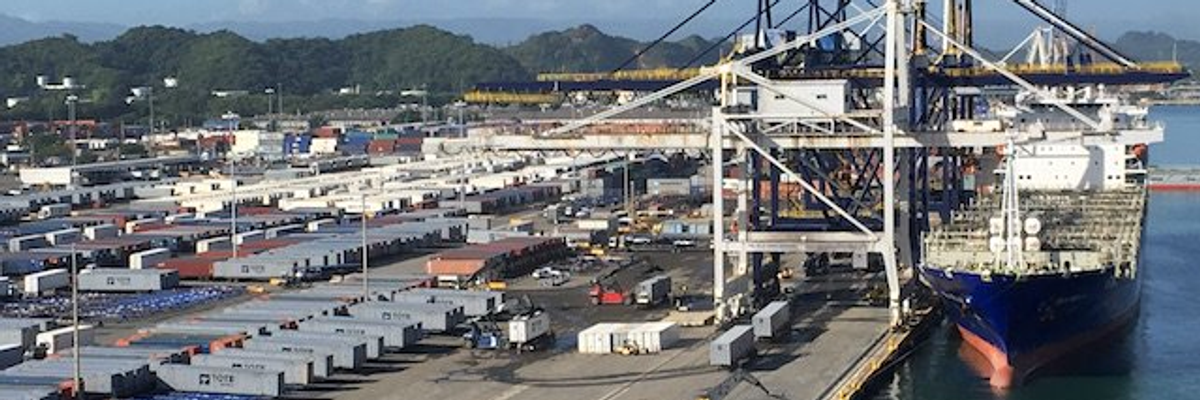
Despite calls for the lifting of the Jones Act amid Puerto Rico's ongoing recovery from Hurricane Katrina, President Trump announced he would not extend a waiver of the shipping law. (Photo: RedTRaccoon/Twitter)
Amid desperate calls for more supplies from the mayor of San Juan, the White House allowed the 10-day waiver it issued on September 28 for the Jones Act, to expire on Monday.
The 1920 shipping rule prohibits foreign ships from carrying cargo between U.S. ports, citing tariffs, and was the subject of outcry last month as the Trump administration raised alarm with its slow response to Hurricane Maria's devastation of Puerto Rico.
Despite President Donald Trump's statements about the strong recovery Puerto Rico has made and his declaration that Maria was not "a real catastrophe like Katrina," nearly half of the island's 3.4 million people are still without drinking water and 85 percent of the territory is without power. Only 25 of Puerto Rico's 67 hospitals have electricity. The recovery is expected to go on for months.
The death toll, which was reported as 16 for several days without being updated, has gone up to 36--and that number is expected to rise as rescue crews make it to areas of the island that have been isolated since the hurricane struck on September 20.
Critics say an indefinite lifting of the Jones Act would allow the U.S. to deliver gasoline and other supplies more quickly to speed along the recovery without imposing the high costs of American-owned ships on the island, which declared bankruptcy earlier this year.
Dear Common Dreams reader, It’s been nearly 30 years since I co-founded Common Dreams with my late wife, Lina Newhouser. We had the radical notion that journalism should serve the public good, not corporate profits. It was clear to us from the outset what it would take to build such a project. No paid advertisements. No corporate sponsors. No millionaire publisher telling us what to think or do. Many people said we wouldn't last a year, but we proved those doubters wrong. Together with a tremendous team of journalists and dedicated staff, we built an independent media outlet free from the constraints of profits and corporate control. Our mission has always been simple: To inform. To inspire. To ignite change for the common good. Building Common Dreams was not easy. Our survival was never guaranteed. When you take on the most powerful forces—Wall Street greed, fossil fuel industry destruction, Big Tech lobbyists, and uber-rich oligarchs who have spent billions upon billions rigging the economy and democracy in their favor—the only bulwark you have is supporters who believe in your work. But here’s the urgent message from me today. It's never been this bad out there. And it's never been this hard to keep us going. At the very moment Common Dreams is most needed, the threats we face are intensifying. We need your support now more than ever. We don't accept corporate advertising and never will. We don't have a paywall because we don't think people should be blocked from critical news based on their ability to pay. Everything we do is funded by the donations of readers like you. When everyone does the little they can afford, we are strong. But if that support retreats or dries up, so do we. Will you donate now to make sure Common Dreams not only survives but thrives? —Craig Brown, Co-founder |
Amid desperate calls for more supplies from the mayor of San Juan, the White House allowed the 10-day waiver it issued on September 28 for the Jones Act, to expire on Monday.
The 1920 shipping rule prohibits foreign ships from carrying cargo between U.S. ports, citing tariffs, and was the subject of outcry last month as the Trump administration raised alarm with its slow response to Hurricane Maria's devastation of Puerto Rico.
Despite President Donald Trump's statements about the strong recovery Puerto Rico has made and his declaration that Maria was not "a real catastrophe like Katrina," nearly half of the island's 3.4 million people are still without drinking water and 85 percent of the territory is without power. Only 25 of Puerto Rico's 67 hospitals have electricity. The recovery is expected to go on for months.
The death toll, which was reported as 16 for several days without being updated, has gone up to 36--and that number is expected to rise as rescue crews make it to areas of the island that have been isolated since the hurricane struck on September 20.
Critics say an indefinite lifting of the Jones Act would allow the U.S. to deliver gasoline and other supplies more quickly to speed along the recovery without imposing the high costs of American-owned ships on the island, which declared bankruptcy earlier this year.
Amid desperate calls for more supplies from the mayor of San Juan, the White House allowed the 10-day waiver it issued on September 28 for the Jones Act, to expire on Monday.
The 1920 shipping rule prohibits foreign ships from carrying cargo between U.S. ports, citing tariffs, and was the subject of outcry last month as the Trump administration raised alarm with its slow response to Hurricane Maria's devastation of Puerto Rico.
Despite President Donald Trump's statements about the strong recovery Puerto Rico has made and his declaration that Maria was not "a real catastrophe like Katrina," nearly half of the island's 3.4 million people are still without drinking water and 85 percent of the territory is without power. Only 25 of Puerto Rico's 67 hospitals have electricity. The recovery is expected to go on for months.
The death toll, which was reported as 16 for several days without being updated, has gone up to 36--and that number is expected to rise as rescue crews make it to areas of the island that have been isolated since the hurricane struck on September 20.
Critics say an indefinite lifting of the Jones Act would allow the U.S. to deliver gasoline and other supplies more quickly to speed along the recovery without imposing the high costs of American-owned ships on the island, which declared bankruptcy earlier this year.