SUBSCRIBE TO OUR FREE NEWSLETTER
Daily news & progressive opinion—funded by the people, not the corporations—delivered straight to your inbox.
5
#000000
#FFFFFF
To donate by check, phone, or other method, see our More Ways to Give page.
Daily news & progressive opinion—funded by the people, not the corporations—delivered straight to your inbox.
The primary responsibilities of the Federal Election Commission (FEC) are to ensure full disclosure of campaign money and fair enforcement of election law, former chair Ann M. Ravel said Monday, before declaring: "Citizens deserve to know it does neither."
In an op-ed published at the New York Times, Ravel blamed the dysfunction on "a controlling bloc of three Republican commissioners who are ideologically opposed to the FEC's purpose [that] regularly ignores violations or drastically reduces penalties."
"The resulting paralysis," she wrote, "has allowed over $800 million in 'dark money' to infect our elections since Citizens United, the 2010 Supreme Court decision that allowed corporations and unions to spend unlimited sums to elect or defeat candidates."
She continued:
Last year, for instance, those three commissioners stopped the agency from even investigating allegations of pervasive workplace political coercion. These same commissioners also blocked enforcement actions against donors who admitted setting up sham limited liability corporations for the sole purpose of pumping anonymous campaign money into elections.
And even when the head of Carolina Rising, a supposed "social welfare" nonprofit organization, appeared on television boasting about the millions his organization spent backing a winning Senate candidate, which constituted 97 percent of the group's total spending that year, the three blocked any investigation into whether this violated the clear law that political committees must register and disclose their political spending.
So what we are left with is an agency mandated to ensure transparency and disclosure that is actually working to keep the public in the dark.
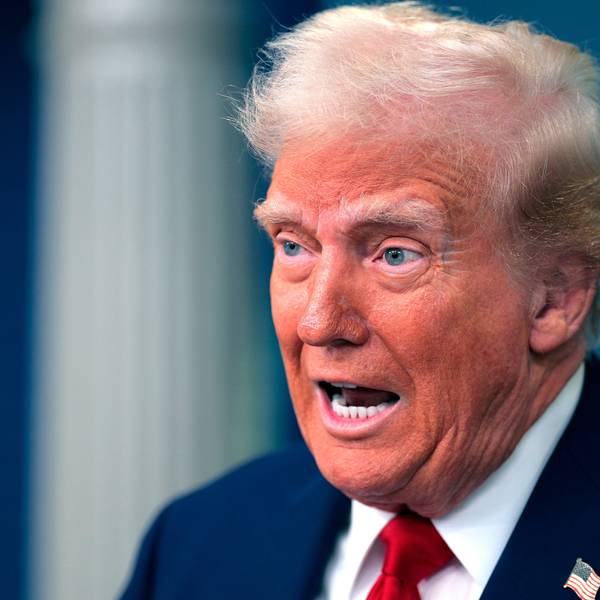
Ravel, who was appointed to the commission in 2013 and served as its chair in 2015, appears to have had enough. In a letter she posted publicly at Medium, Ravel told President Donald Trump on Sunday that she will resign effective March 1.
Noting Trump's own past statements on the campaign finance system, as well as the American public's hunger to get big money out of politics, Ravel urged the president to "prioritize campaign finance reform to remedy the significant problems identified during the last election cycle."
"Disclosure laws need to be strengthened; the mistaken jurisprudence of Citizens United reexamined; public financing of candidates ought to be expanded to reduce reliance on the wealthy; and commissioners who will carry out the mandates of the law should be appointed to the expired terms of the FEC," she wrote. The New York Times reports that due to "the difficulty in agreeing on replacements," all the FEC's current members are serving well beyond their terms.
Now, according to the Times, Ravel's "departure will probably set off an intense political fight over how a new commissioner should be picked. By tradition, Senate Democrats would be allowed to select the replacement, but, by law, the choice belongs to the president, and Mr. Trump has shown little interest in Washington customs."
The newspaper continued:
Mr. Trump can pick a nominee himself so long as he does not choose a registered Republican, said Richard L. Hasen, an election law scholar at the University of California, Irvine. The panel, which already has three Republicans, cannot have more than three members from any political party. Mr. Hasen said he would not be surprised if Mr. Trump made the pick himself, especially because his White House counsel, Donald F. McGahn II, was an election commissioner himself and has pushed fiercely for deregulating campaign finance.
"It would be transformative," Mr. Hasen said, if the president nominated someone more aligned with the panel's Republican members to push for even further deregulation.
Ravel also published a report on her way out the door, entitled Dysfunction and Deadlock: The Enforcement Crisis at the Federal Election Commission Reveals the Unlikelihood of Draining the Swamp (pdf). It outlines many of the same problems she raises in her op-ed and resignation letter, and states that "these trends could accelerate in 2017."
According to the Center for Public Integrity, Ravel's "immediate plans include teaching at the University of California, Berkeley, School of Law, and joining the boards of "several" nonprofit organizations, two of which primarily advocate for campaign finance reforms."
She told the outlet: "Don't worry. I'm not going away."
Dear Common Dreams reader, It’s been nearly 30 years since I co-founded Common Dreams with my late wife, Lina Newhouser. We had the radical notion that journalism should serve the public good, not corporate profits. It was clear to us from the outset what it would take to build such a project. No paid advertisements. No corporate sponsors. No millionaire publisher telling us what to think or do. Many people said we wouldn't last a year, but we proved those doubters wrong. Together with a tremendous team of journalists and dedicated staff, we built an independent media outlet free from the constraints of profits and corporate control. Our mission has always been simple: To inform. To inspire. To ignite change for the common good. Building Common Dreams was not easy. Our survival was never guaranteed. When you take on the most powerful forces—Wall Street greed, fossil fuel industry destruction, Big Tech lobbyists, and uber-rich oligarchs who have spent billions upon billions rigging the economy and democracy in their favor—the only bulwark you have is supporters who believe in your work. But here’s the urgent message from me today. It's never been this bad out there. And it's never been this hard to keep us going. At the very moment Common Dreams is most needed, the threats we face are intensifying. We need your support now more than ever. We don't accept corporate advertising and never will. We don't have a paywall because we don't think people should be blocked from critical news based on their ability to pay. Everything we do is funded by the donations of readers like you. When everyone does the little they can afford, we are strong. But if that support retreats or dries up, so do we. Will you donate now to make sure Common Dreams not only survives but thrives? —Craig Brown, Co-founder |
The primary responsibilities of the Federal Election Commission (FEC) are to ensure full disclosure of campaign money and fair enforcement of election law, former chair Ann M. Ravel said Monday, before declaring: "Citizens deserve to know it does neither."
In an op-ed published at the New York Times, Ravel blamed the dysfunction on "a controlling bloc of three Republican commissioners who are ideologically opposed to the FEC's purpose [that] regularly ignores violations or drastically reduces penalties."
"The resulting paralysis," she wrote, "has allowed over $800 million in 'dark money' to infect our elections since Citizens United, the 2010 Supreme Court decision that allowed corporations and unions to spend unlimited sums to elect or defeat candidates."
She continued:
Last year, for instance, those three commissioners stopped the agency from even investigating allegations of pervasive workplace political coercion. These same commissioners also blocked enforcement actions against donors who admitted setting up sham limited liability corporations for the sole purpose of pumping anonymous campaign money into elections.
And even when the head of Carolina Rising, a supposed "social welfare" nonprofit organization, appeared on television boasting about the millions his organization spent backing a winning Senate candidate, which constituted 97 percent of the group's total spending that year, the three blocked any investigation into whether this violated the clear law that political committees must register and disclose their political spending.
So what we are left with is an agency mandated to ensure transparency and disclosure that is actually working to keep the public in the dark.
Ravel, who was appointed to the commission in 2013 and served as its chair in 2015, appears to have had enough. In a letter she posted publicly at Medium, Ravel told President Donald Trump on Sunday that she will resign effective March 1.
Noting Trump's own past statements on the campaign finance system, as well as the American public's hunger to get big money out of politics, Ravel urged the president to "prioritize campaign finance reform to remedy the significant problems identified during the last election cycle."
"Disclosure laws need to be strengthened; the mistaken jurisprudence of Citizens United reexamined; public financing of candidates ought to be expanded to reduce reliance on the wealthy; and commissioners who will carry out the mandates of the law should be appointed to the expired terms of the FEC," she wrote. The New York Times reports that due to "the difficulty in agreeing on replacements," all the FEC's current members are serving well beyond their terms.
Now, according to the Times, Ravel's "departure will probably set off an intense political fight over how a new commissioner should be picked. By tradition, Senate Democrats would be allowed to select the replacement, but, by law, the choice belongs to the president, and Mr. Trump has shown little interest in Washington customs."
The newspaper continued:
Mr. Trump can pick a nominee himself so long as he does not choose a registered Republican, said Richard L. Hasen, an election law scholar at the University of California, Irvine. The panel, which already has three Republicans, cannot have more than three members from any political party. Mr. Hasen said he would not be surprised if Mr. Trump made the pick himself, especially because his White House counsel, Donald F. McGahn II, was an election commissioner himself and has pushed fiercely for deregulating campaign finance.
"It would be transformative," Mr. Hasen said, if the president nominated someone more aligned with the panel's Republican members to push for even further deregulation.
Ravel also published a report on her way out the door, entitled Dysfunction and Deadlock: The Enforcement Crisis at the Federal Election Commission Reveals the Unlikelihood of Draining the Swamp (pdf). It outlines many of the same problems she raises in her op-ed and resignation letter, and states that "these trends could accelerate in 2017."
According to the Center for Public Integrity, Ravel's "immediate plans include teaching at the University of California, Berkeley, School of Law, and joining the boards of "several" nonprofit organizations, two of which primarily advocate for campaign finance reforms."
She told the outlet: "Don't worry. I'm not going away."
The primary responsibilities of the Federal Election Commission (FEC) are to ensure full disclosure of campaign money and fair enforcement of election law, former chair Ann M. Ravel said Monday, before declaring: "Citizens deserve to know it does neither."
In an op-ed published at the New York Times, Ravel blamed the dysfunction on "a controlling bloc of three Republican commissioners who are ideologically opposed to the FEC's purpose [that] regularly ignores violations or drastically reduces penalties."
"The resulting paralysis," she wrote, "has allowed over $800 million in 'dark money' to infect our elections since Citizens United, the 2010 Supreme Court decision that allowed corporations and unions to spend unlimited sums to elect or defeat candidates."
She continued:
Last year, for instance, those three commissioners stopped the agency from even investigating allegations of pervasive workplace political coercion. These same commissioners also blocked enforcement actions against donors who admitted setting up sham limited liability corporations for the sole purpose of pumping anonymous campaign money into elections.
And even when the head of Carolina Rising, a supposed "social welfare" nonprofit organization, appeared on television boasting about the millions his organization spent backing a winning Senate candidate, which constituted 97 percent of the group's total spending that year, the three blocked any investigation into whether this violated the clear law that political committees must register and disclose their political spending.
So what we are left with is an agency mandated to ensure transparency and disclosure that is actually working to keep the public in the dark.
Ravel, who was appointed to the commission in 2013 and served as its chair in 2015, appears to have had enough. In a letter she posted publicly at Medium, Ravel told President Donald Trump on Sunday that she will resign effective March 1.
Noting Trump's own past statements on the campaign finance system, as well as the American public's hunger to get big money out of politics, Ravel urged the president to "prioritize campaign finance reform to remedy the significant problems identified during the last election cycle."
"Disclosure laws need to be strengthened; the mistaken jurisprudence of Citizens United reexamined; public financing of candidates ought to be expanded to reduce reliance on the wealthy; and commissioners who will carry out the mandates of the law should be appointed to the expired terms of the FEC," she wrote. The New York Times reports that due to "the difficulty in agreeing on replacements," all the FEC's current members are serving well beyond their terms.
Now, according to the Times, Ravel's "departure will probably set off an intense political fight over how a new commissioner should be picked. By tradition, Senate Democrats would be allowed to select the replacement, but, by law, the choice belongs to the president, and Mr. Trump has shown little interest in Washington customs."
The newspaper continued:
Mr. Trump can pick a nominee himself so long as he does not choose a registered Republican, said Richard L. Hasen, an election law scholar at the University of California, Irvine. The panel, which already has three Republicans, cannot have more than three members from any political party. Mr. Hasen said he would not be surprised if Mr. Trump made the pick himself, especially because his White House counsel, Donald F. McGahn II, was an election commissioner himself and has pushed fiercely for deregulating campaign finance.
"It would be transformative," Mr. Hasen said, if the president nominated someone more aligned with the panel's Republican members to push for even further deregulation.
Ravel also published a report on her way out the door, entitled Dysfunction and Deadlock: The Enforcement Crisis at the Federal Election Commission Reveals the Unlikelihood of Draining the Swamp (pdf). It outlines many of the same problems she raises in her op-ed and resignation letter, and states that "these trends could accelerate in 2017."
According to the Center for Public Integrity, Ravel's "immediate plans include teaching at the University of California, Berkeley, School of Law, and joining the boards of "several" nonprofit organizations, two of which primarily advocate for campaign finance reforms."
She told the outlet: "Don't worry. I'm not going away."