Nobel Hypocrisy as Colombia Marxists Excluded from Prestigious Peace Prize
Breaking precedent, annual award only given to leader on one side of peace agreement, Colombia's conservative President Juan Manuel Santos
The announcement that FARC rebels were excluded from the Nobel Peace Prize awarded to Colombian President Juan Manuel Santos on Friday was met with some shock and outrage by observers who argued it was a "cowardly" move on the part of the committee.
The Norwegian Nobel Committee awarded the prize to the conservative president for his efforts "to bring the country's more than 50-year-long civil war to an end."
While not naming FARC leader Rodrigo Londono Echeverri (also known as "Timochenko"), the committee said that the award should "be seen as a tribute to the Colombian people who, despite great hardships and abuses, have not given up hope of a just peace, and to all the parties who have contributed to the peace process."
"The only prize we aspire to is #PeaceWithSocialJustice for a #Colombia free of paramilitary violence, revenge and lies #PeaceTakeTheStreets."
--Timochenko
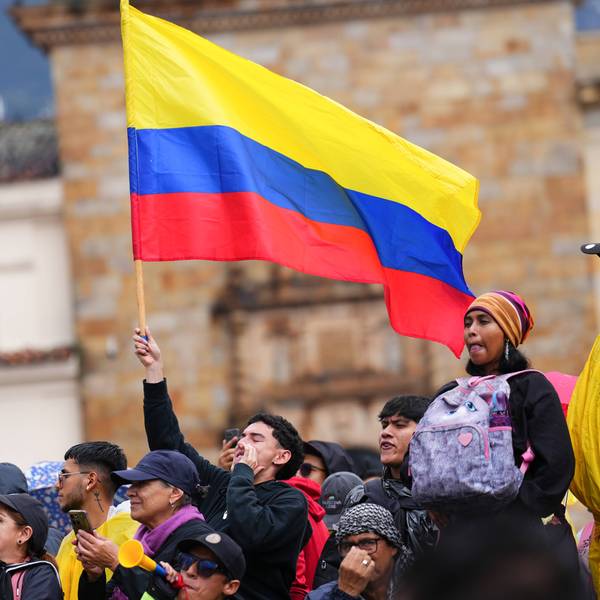
The announcement comes just days after voters rejected the landmark peace accord, though both the conservative president and the Marxist rebel group have said they remain committed to the process.
As Slate columnist Joshua Keating observed, "In past awards given in recognition of peace deals, the leaders of both sides have typically been awarded." But including Timochenko would have "enraged" those "who see the deal as too lenient."
The successful campaign against the peace agreement was led by a ruling elite, which included former president Alvaro Uribe and big landowners. As Jacobin's Ronan Burtenshaw noted on social media after the vote, "Colombia's right is not afraid of FARC, it's afraid popular demands on land reform, resources & trade deals no longer countered by violence."
While some argued that overlooking Timochenko was a "tactical" move on the part of the Nobel Committee--which specifically said it hoped the award would "encourage all those who are striving to achieve peace, reconciliation and justice in Colombia"--others called it a "cowardly maneuver," and worse.
International journalists took to social media to voice their thoughts:
In a string of tweets, London-based freelancer Ellie Mae O'Hagan argued that the committee had ignored Santos' crimes and that leftist leaders Timochenko and Cuba's Raul Castro are more deserving of the award.
As for the ongoing negotiations, the Guardian reported Friday:
After promising in the wake of the shock result that he would "not give up," Santos said this week that a ceasefire would end on 31 October, raising the stakes for a peace deal to be salvaged despite the vote.
Londono said after the vote that peace was "here to stay," but the FARC interpreted Santos's ceasefire deadline as an "ultimatum" and ordered its troops, which had been preparing to demobilize, to take up secure positions.
The president met Uribe for the first time in more than five years on Wednesday in a bid to find a way forward to peace.
After more than three hours of talks the two expressed willingness to seek an end to the war, with Uribe--who has long argued that the peace plan gives too many concessions to the rebels--emphasizing the need for "adjustments and proposals" to ensure the deal includes all Colombians.
The deal now seems to hang on whether the FARC will accept tougher conditions for demobilization, perhaps combined with a softening of Uribe's hard-line demands. The rebel commanders have said they will remain "faithful" to the accord.
For his part, the FARC leader wrote on his Twitter account following the Nobel announcement: "The only prize we aspire to is #PeaceWithSocialJustice for a #Colombia free of paramilitary violence, revenge and lies #PeaceTakeTheStreets."
We are at a crossroads
This country and this world are at a monumental crossroads. In a few short weeks, US voters will have an opportunity to beat back the forces of fascism and confront the billionaires who are rigging the economy, our media system, and our democracy, making it increasingly impossible for ordinary people to get by. We’re not just talking about the election. We’re talking about what must be done once these fascist elements are vanquished from power. We need a bolder set of solutions than what either major party has so far been willing to offer and a working-class movement ready to fight like hell for it. Trump didn't emerge from nowhere. The conditions that fueled MAGA authoritarianism were created by decades of radical neoliberal economic policies and a corrupt political system dominated by corporate interests. They slashed taxes on the super-rich, promising that the benefits would trickle down. They said giveaways to the corporate titans would make life more affordable for the rest of us. It was all bullshit. And when a bitter, betrayed populace searches for someone to blame, right-wing demagogues have little trouble finding scapegoats. People know when they're being lied to, but you won't hear any of this from the corporate media. Only independent journalism—powered and funded by people who believe in building a better world—can deliver truly trustworthy daily news. Our Fall Campaign is underway, and we need your help. To power our newsroom through the rest of the year, we need to raise $125,000 by midnight on October 31. So if you share our vision, please contribute whatever you can to sustain our work. |
The announcement that FARC rebels were excluded from the Nobel Peace Prize awarded to Colombian President Juan Manuel Santos on Friday was met with some shock and outrage by observers who argued it was a "cowardly" move on the part of the committee.
The Norwegian Nobel Committee awarded the prize to the conservative president for his efforts "to bring the country's more than 50-year-long civil war to an end."
While not naming FARC leader Rodrigo Londono Echeverri (also known as "Timochenko"), the committee said that the award should "be seen as a tribute to the Colombian people who, despite great hardships and abuses, have not given up hope of a just peace, and to all the parties who have contributed to the peace process."
"The only prize we aspire to is #PeaceWithSocialJustice for a #Colombia free of paramilitary violence, revenge and lies #PeaceTakeTheStreets."
--Timochenko
The announcement comes just days after voters rejected the landmark peace accord, though both the conservative president and the Marxist rebel group have said they remain committed to the process.
As Slate columnist Joshua Keating observed, "In past awards given in recognition of peace deals, the leaders of both sides have typically been awarded." But including Timochenko would have "enraged" those "who see the deal as too lenient."
The successful campaign against the peace agreement was led by a ruling elite, which included former president Alvaro Uribe and big landowners. As Jacobin's Ronan Burtenshaw noted on social media after the vote, "Colombia's right is not afraid of FARC, it's afraid popular demands on land reform, resources & trade deals no longer countered by violence."
While some argued that overlooking Timochenko was a "tactical" move on the part of the Nobel Committee--which specifically said it hoped the award would "encourage all those who are striving to achieve peace, reconciliation and justice in Colombia"--others called it a "cowardly maneuver," and worse.
International journalists took to social media to voice their thoughts:
In a string of tweets, London-based freelancer Ellie Mae O'Hagan argued that the committee had ignored Santos' crimes and that leftist leaders Timochenko and Cuba's Raul Castro are more deserving of the award.
As for the ongoing negotiations, the Guardian reported Friday:
After promising in the wake of the shock result that he would "not give up," Santos said this week that a ceasefire would end on 31 October, raising the stakes for a peace deal to be salvaged despite the vote.
Londono said after the vote that peace was "here to stay," but the FARC interpreted Santos's ceasefire deadline as an "ultimatum" and ordered its troops, which had been preparing to demobilize, to take up secure positions.
The president met Uribe for the first time in more than five years on Wednesday in a bid to find a way forward to peace.
After more than three hours of talks the two expressed willingness to seek an end to the war, with Uribe--who has long argued that the peace plan gives too many concessions to the rebels--emphasizing the need for "adjustments and proposals" to ensure the deal includes all Colombians.
The deal now seems to hang on whether the FARC will accept tougher conditions for demobilization, perhaps combined with a softening of Uribe's hard-line demands. The rebel commanders have said they will remain "faithful" to the accord.
For his part, the FARC leader wrote on his Twitter account following the Nobel announcement: "The only prize we aspire to is #PeaceWithSocialJustice for a #Colombia free of paramilitary violence, revenge and lies #PeaceTakeTheStreets."
The announcement that FARC rebels were excluded from the Nobel Peace Prize awarded to Colombian President Juan Manuel Santos on Friday was met with some shock and outrage by observers who argued it was a "cowardly" move on the part of the committee.
The Norwegian Nobel Committee awarded the prize to the conservative president for his efforts "to bring the country's more than 50-year-long civil war to an end."
While not naming FARC leader Rodrigo Londono Echeverri (also known as "Timochenko"), the committee said that the award should "be seen as a tribute to the Colombian people who, despite great hardships and abuses, have not given up hope of a just peace, and to all the parties who have contributed to the peace process."
"The only prize we aspire to is #PeaceWithSocialJustice for a #Colombia free of paramilitary violence, revenge and lies #PeaceTakeTheStreets."
--Timochenko
The announcement comes just days after voters rejected the landmark peace accord, though both the conservative president and the Marxist rebel group have said they remain committed to the process.
As Slate columnist Joshua Keating observed, "In past awards given in recognition of peace deals, the leaders of both sides have typically been awarded." But including Timochenko would have "enraged" those "who see the deal as too lenient."
The successful campaign against the peace agreement was led by a ruling elite, which included former president Alvaro Uribe and big landowners. As Jacobin's Ronan Burtenshaw noted on social media after the vote, "Colombia's right is not afraid of FARC, it's afraid popular demands on land reform, resources & trade deals no longer countered by violence."
While some argued that overlooking Timochenko was a "tactical" move on the part of the Nobel Committee--which specifically said it hoped the award would "encourage all those who are striving to achieve peace, reconciliation and justice in Colombia"--others called it a "cowardly maneuver," and worse.
International journalists took to social media to voice their thoughts:
In a string of tweets, London-based freelancer Ellie Mae O'Hagan argued that the committee had ignored Santos' crimes and that leftist leaders Timochenko and Cuba's Raul Castro are more deserving of the award.
As for the ongoing negotiations, the Guardian reported Friday:
After promising in the wake of the shock result that he would "not give up," Santos said this week that a ceasefire would end on 31 October, raising the stakes for a peace deal to be salvaged despite the vote.
Londono said after the vote that peace was "here to stay," but the FARC interpreted Santos's ceasefire deadline as an "ultimatum" and ordered its troops, which had been preparing to demobilize, to take up secure positions.
The president met Uribe for the first time in more than five years on Wednesday in a bid to find a way forward to peace.
After more than three hours of talks the two expressed willingness to seek an end to the war, with Uribe--who has long argued that the peace plan gives too many concessions to the rebels--emphasizing the need for "adjustments and proposals" to ensure the deal includes all Colombians.
The deal now seems to hang on whether the FARC will accept tougher conditions for demobilization, perhaps combined with a softening of Uribe's hard-line demands. The rebel commanders have said they will remain "faithful" to the accord.
For his part, the FARC leader wrote on his Twitter account following the Nobel announcement: "The only prize we aspire to is #PeaceWithSocialJustice for a #Colombia free of paramilitary violence, revenge and lies #PeaceTakeTheStreets."