Repression Rains Down on Pro-Democracy Demonstrators in Brazil
"We're here to show that the people still have power and that despite the coup, we are here in the street to bring down the government and call for a new election"
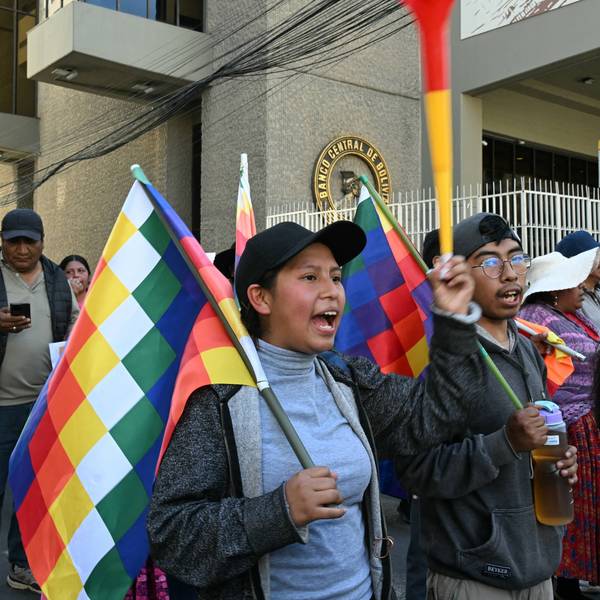
Protests took place in multiple Brazilian cities on Sunday, in support of ousted president Dilma Rousseff and against the now-officially installed government of her successor, Michel Temer.
Agence France-Presse reported from Sao Paulo:
Demonstration organizers--who have rejected Temer's ascendancy as a "coup"--said some 100,000 protestors filled the major artery Paulista Avenue, many holding banners that read "Out with Temer!" and "Direct elections now!"
"We're here to show that the people still have power and that despite the coup, we are here in the street to bring down the government and call for a new election," protester Gustavo Amigo told BBC.
Though he is prohibited from running in the next election because he was found guilty of violating campaign finance rules, former vice president Temer is set to serve the rest of what would have been Rousseff's second term, ending in 2019.
BBC reported that the Sao Paulo rally "began peacefully but police used tear gas, stun grenades and water cannon as clashes broke out at the end."
El Pais reported:
According to six EL PAIS reporters who were posted in different areas during the march, the rally proceeded without incident from 4.30pm until 8.45pm local time, when protestors filled the square. Then, to everyone's surprise, the police arrived and dropped tear gas outside and inside Faria Lima metro station. People took refuge inside bars. Members of the press were attacked. Marina Rossi reported that photographer Mauricio Camargo was hit with a rubber bullet. A BBC Brazil journalist was beaten with a nightstick even though he was clearly identified as a member of the press.
The police said they attacked the metro station because vandals provoked them. The first smoke bombs were used after a group started to shout: "Free the turnstile!" They were asking authorities to give people from the suburbs a free pass into the city. Critics note that turnstiles were unlocked during past demonstrations against Dilma Rousseff.
BBC Brazil journalist Felipe Souza offered this account of being attacked despite reportedly identifying himself as a member of the press:
A group of riot police suddenly decided to change course. I leaned against the wall to wait for them to pass.
I was wearing a BBC Brazil vest and badge and I raised my hands and said I was press.
"Move over!" said at least four police just before catching me with truncheon blows on the right forearm, left hand, right shoulder, chest and right leg.
My forearm swelled up and turned purple. The phone I was using fell to the ground and the screen was broken. Luckily, the blow I took to the chest was cushioned by the vest I was wearing. I also wore a helmet and gas mask--complying with internal BBC rules for covering demonstrations.
According to Reuters, there were smaller anti-Temer demonstrations on Sunday in Rio de Janeiro, Curitiba, and other Brazilian cities.
And TeleSUR notes that "Sunday's demonstration was the fifth in six days held in opposition" to what many are calling a coup in Brazil.
"Police were the subject of criticism for their heavy handed approach in earlier demonstrations," TeleSUR points out. "One young woman, Deborah Fabri, was left blind in her left eye after police shot her in the face with a rubber bullet during a rally earlier this week."
The Popular Brazil Front and the People Without Fear Front, which together represent more than 90 groups, have also called for another large-scale protest in Sao Paulo for Thursday.
An Urgent Message From Our Co-Founder
Dear Common Dreams reader, It’s been nearly 30 years since I co-founded Common Dreams with my late wife, Lina Newhouser. We had the radical notion that journalism should serve the public good, not corporate profits. It was clear to us from the outset what it would take to build such a project. No paid advertisements. No corporate sponsors. No millionaire publisher telling us what to think or do. Many people said we wouldn't last a year, but we proved those doubters wrong. Together with a tremendous team of journalists and dedicated staff, we built an independent media outlet free from the constraints of profits and corporate control. Our mission has always been simple: To inform. To inspire. To ignite change for the common good. Building Common Dreams was not easy. Our survival was never guaranteed. When you take on the most powerful forces—Wall Street greed, fossil fuel industry destruction, Big Tech lobbyists, and uber-rich oligarchs who have spent billions upon billions rigging the economy and democracy in their favor—the only bulwark you have is supporters who believe in your work. But here’s the urgent message from me today. It's never been this bad out there. And it's never been this hard to keep us going. At the very moment Common Dreams is most needed, the threats we face are intensifying. We need your support now more than ever. We don't accept corporate advertising and never will. We don't have a paywall because we don't think people should be blocked from critical news based on their ability to pay. Everything we do is funded by the donations of readers like you. When everyone does the little they can afford, we are strong. But if that support retreats or dries up, so do we. Will you donate now to make sure Common Dreams not only survives but thrives? —Craig Brown, Co-founder |
Protests took place in multiple Brazilian cities on Sunday, in support of ousted president Dilma Rousseff and against the now-officially installed government of her successor, Michel Temer.
Agence France-Presse reported from Sao Paulo:
Demonstration organizers--who have rejected Temer's ascendancy as a "coup"--said some 100,000 protestors filled the major artery Paulista Avenue, many holding banners that read "Out with Temer!" and "Direct elections now!"
"We're here to show that the people still have power and that despite the coup, we are here in the street to bring down the government and call for a new election," protester Gustavo Amigo told BBC.
Though he is prohibited from running in the next election because he was found guilty of violating campaign finance rules, former vice president Temer is set to serve the rest of what would have been Rousseff's second term, ending in 2019.
BBC reported that the Sao Paulo rally "began peacefully but police used tear gas, stun grenades and water cannon as clashes broke out at the end."
El Pais reported:
According to six EL PAIS reporters who were posted in different areas during the march, the rally proceeded without incident from 4.30pm until 8.45pm local time, when protestors filled the square. Then, to everyone's surprise, the police arrived and dropped tear gas outside and inside Faria Lima metro station. People took refuge inside bars. Members of the press were attacked. Marina Rossi reported that photographer Mauricio Camargo was hit with a rubber bullet. A BBC Brazil journalist was beaten with a nightstick even though he was clearly identified as a member of the press.
The police said they attacked the metro station because vandals provoked them. The first smoke bombs were used after a group started to shout: "Free the turnstile!" They were asking authorities to give people from the suburbs a free pass into the city. Critics note that turnstiles were unlocked during past demonstrations against Dilma Rousseff.
BBC Brazil journalist Felipe Souza offered this account of being attacked despite reportedly identifying himself as a member of the press:
A group of riot police suddenly decided to change course. I leaned against the wall to wait for them to pass.
I was wearing a BBC Brazil vest and badge and I raised my hands and said I was press.
"Move over!" said at least four police just before catching me with truncheon blows on the right forearm, left hand, right shoulder, chest and right leg.
My forearm swelled up and turned purple. The phone I was using fell to the ground and the screen was broken. Luckily, the blow I took to the chest was cushioned by the vest I was wearing. I also wore a helmet and gas mask--complying with internal BBC rules for covering demonstrations.
According to Reuters, there were smaller anti-Temer demonstrations on Sunday in Rio de Janeiro, Curitiba, and other Brazilian cities.
And TeleSUR notes that "Sunday's demonstration was the fifth in six days held in opposition" to what many are calling a coup in Brazil.
"Police were the subject of criticism for their heavy handed approach in earlier demonstrations," TeleSUR points out. "One young woman, Deborah Fabri, was left blind in her left eye after police shot her in the face with a rubber bullet during a rally earlier this week."
The Popular Brazil Front and the People Without Fear Front, which together represent more than 90 groups, have also called for another large-scale protest in Sao Paulo for Thursday.
Protests took place in multiple Brazilian cities on Sunday, in support of ousted president Dilma Rousseff and against the now-officially installed government of her successor, Michel Temer.
Agence France-Presse reported from Sao Paulo:
Demonstration organizers--who have rejected Temer's ascendancy as a "coup"--said some 100,000 protestors filled the major artery Paulista Avenue, many holding banners that read "Out with Temer!" and "Direct elections now!"
"We're here to show that the people still have power and that despite the coup, we are here in the street to bring down the government and call for a new election," protester Gustavo Amigo told BBC.
Though he is prohibited from running in the next election because he was found guilty of violating campaign finance rules, former vice president Temer is set to serve the rest of what would have been Rousseff's second term, ending in 2019.
BBC reported that the Sao Paulo rally "began peacefully but police used tear gas, stun grenades and water cannon as clashes broke out at the end."
El Pais reported:
According to six EL PAIS reporters who were posted in different areas during the march, the rally proceeded without incident from 4.30pm until 8.45pm local time, when protestors filled the square. Then, to everyone's surprise, the police arrived and dropped tear gas outside and inside Faria Lima metro station. People took refuge inside bars. Members of the press were attacked. Marina Rossi reported that photographer Mauricio Camargo was hit with a rubber bullet. A BBC Brazil journalist was beaten with a nightstick even though he was clearly identified as a member of the press.
The police said they attacked the metro station because vandals provoked them. The first smoke bombs were used after a group started to shout: "Free the turnstile!" They were asking authorities to give people from the suburbs a free pass into the city. Critics note that turnstiles were unlocked during past demonstrations against Dilma Rousseff.
BBC Brazil journalist Felipe Souza offered this account of being attacked despite reportedly identifying himself as a member of the press:
A group of riot police suddenly decided to change course. I leaned against the wall to wait for them to pass.
I was wearing a BBC Brazil vest and badge and I raised my hands and said I was press.
"Move over!" said at least four police just before catching me with truncheon blows on the right forearm, left hand, right shoulder, chest and right leg.
My forearm swelled up and turned purple. The phone I was using fell to the ground and the screen was broken. Luckily, the blow I took to the chest was cushioned by the vest I was wearing. I also wore a helmet and gas mask--complying with internal BBC rules for covering demonstrations.
According to Reuters, there were smaller anti-Temer demonstrations on Sunday in Rio de Janeiro, Curitiba, and other Brazilian cities.
And TeleSUR notes that "Sunday's demonstration was the fifth in six days held in opposition" to what many are calling a coup in Brazil.
"Police were the subject of criticism for their heavy handed approach in earlier demonstrations," TeleSUR points out. "One young woman, Deborah Fabri, was left blind in her left eye after police shot her in the face with a rubber bullet during a rally earlier this week."
The Popular Brazil Front and the People Without Fear Front, which together represent more than 90 groups, have also called for another large-scale protest in Sao Paulo for Thursday.