SUBSCRIBE TO OUR FREE NEWSLETTER
Daily news & progressive opinion—funded by the people, not the corporations—delivered straight to your inbox.
5
#000000
#FFFFFF
To donate by check, phone, or other method, see our More Ways to Give page.
Caroline Ward-Holland and her son, Kagen Holland, wanted to address the controversial canonization of the 18th century missionary Junipero Serra in their own way.
Thus, while Pope Francis called for Serra's sainthood during a mass attended by thousands on Wednesday at a Washington D.C. basilica, the two descendents of the Tataviam tribe from Santa Clarita, California proceeded to march 650 miles from Sonoma to San Diego.
Along their "Walk for the Ancestors," as it is called, the pair plans to visit each of the state's 21 missions "to honor the Indigenous ancestors who suffered and perished in the Mission system and assert California Indian rejection of sainthood for Junipero Serra," who is credited with bringing Christianity to the region by imposing it on the Indigenous population.
Caroline and Kagen set out on September 7 and expect to walk through mid-November when they will conclude the pilgrimage at Mission San Diego de Alcala, the first mission founded in 1769 by Serra.
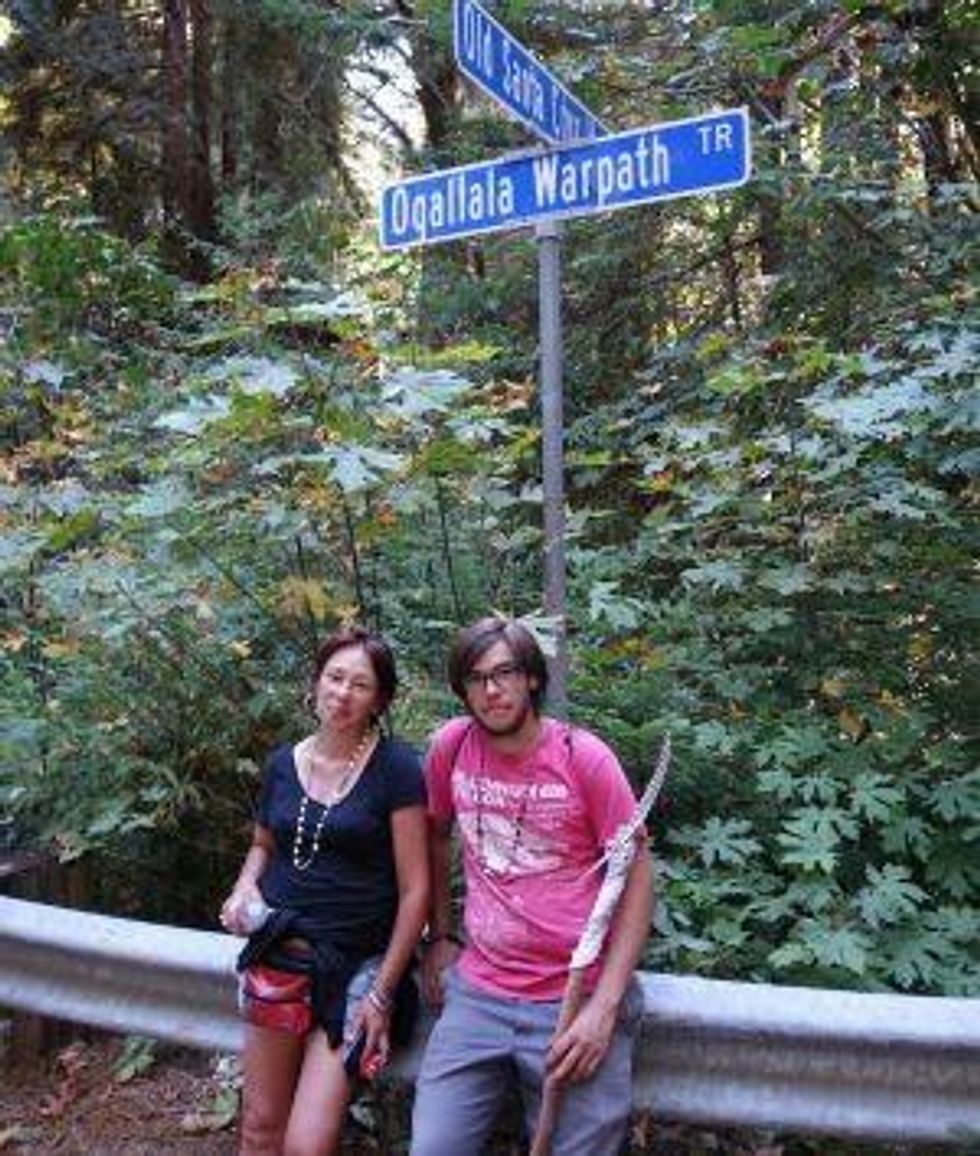
On Wednesday, the walkers arrived at Mission San Carlos in Carmel where a Day of Mourning protest was held.
Caroline and Kagen are not alone. Native Americans and their supporters across the nation, and world, have expressed outrage over the beatification of the Spanish-born Serra.
Numerous California Indian nations and Native American organizations have issued statements opposing the canonization and calling on the Pope to reverse it, though the Vatican has so far failed to issue a response.
In a column Wednesday, Simon Moya-Smith, a journalist and citizen of the Oglala Lakota Nation, quoted Pope Francis' own speech given in July to Indigenous populations in Bolivia.
"I say this to you with regret: Many grave sins were committed against the native people of America in the name of God," Francis said. "I humbly ask forgiveness, not only for the offense of the church herself, but also for crimes committed against the native peoples during the so-called conquest of America."
Moya-Smith then poses the question: Why, "in the face of such encouraging words," is Pope Francis set to canonize someone "documented as being an extreme and unapologetic abuser of the Indigenous peoples of the Pacific Coast"?
"The canonization of Serra is not complicated or complex. It's fairly simple. My ancestors were enslaved at this concentration camp created by Serra for his own ego, for the Spanish crown and for the Catholic Empire."
--Corrina Gould, Chochenyo Ohlone tribe
Citing scholars who documented Serra's abuse, Moya-Smith continues:
Serra would brutally beat and whip men, women and children in order to force obedience among the Indians. Castillo also writes that Serra celebrated the demise of Indian children, referring to their deaths as a "harvest."
That's not all. Castillo says that Indians who did not voluntarily enter Serra's missions were kidnapped and then held captive within the mission's parapets, where they were subjected to an "unforgiving regimen that would ultimately claim the lives of 62,000 Indians and devastate their civilizations, including the extinction of a number of small tribes."
"Unfortunately, though, this form of exaltation is nothing new," Moya-Smith adds. "Indeed, the celebration of aggressive Christian conquest by religious zealots is evident the world over, especially here in the United States."
Speaking to Democracy Now on Wednesday, Valentin Lopez, chair of the Amah Mutsun Tribal Band, also highlighted the brutal history of the mission system. "In total," Lopez said, "over 150,000 California Indians died under this system that Junipero Serra developed."
In a statement on Wednesday, Corrina Gould, member of the Chochenyo Ohlone tribe and co-founder Indian People Organizing for Change, minced no words when addressing Serra's legacy. "The canonization of Serra is not complicated or complex. It's fairly simple," Gould said. "My ancestors were enslaved at this concentration camp created by Serra for his own ego, for the Spanish crown and for the Catholic Empire. Serra didn't save us. We already had our own religion! In fact, we were the ones that were civilized and it was Serra that introduced us to Hell."
Caroline Ward-Holland and her son, Kagen Holland, wanted to address the controversial canonization of the 18th century missionary Junipero Serra in their own way.
Thus, while Pope Francis called for Serra's sainthood during a mass attended by thousands on Wednesday at a Washington D.C. basilica, the two descendents of the Tataviam tribe from Santa Clarita, California proceeded to march 650 miles from Sonoma to San Diego.
Along their "Walk for the Ancestors," as it is called, the pair plans to visit each of the state's 21 missions "to honor the Indigenous ancestors who suffered and perished in the Mission system and assert California Indian rejection of sainthood for Junipero Serra," who is credited with bringing Christianity to the region by imposing it on the Indigenous population.
Caroline and Kagen set out on September 7 and expect to walk through mid-November when they will conclude the pilgrimage at Mission San Diego de Alcala, the first mission founded in 1769 by Serra.
On Wednesday, the walkers arrived at Mission San Carlos in Carmel where a Day of Mourning protest was held.
Caroline and Kagen are not alone. Native Americans and their supporters across the nation, and world, have expressed outrage over the beatification of the Spanish-born Serra.
Numerous California Indian nations and Native American organizations have issued statements opposing the canonization and calling on the Pope to reverse it, though the Vatican has so far failed to issue a response.
In a column Wednesday, Simon Moya-Smith, a journalist and citizen of the Oglala Lakota Nation, quoted Pope Francis' own speech given in July to Indigenous populations in Bolivia.
"I say this to you with regret: Many grave sins were committed against the native people of America in the name of God," Francis said. "I humbly ask forgiveness, not only for the offense of the church herself, but also for crimes committed against the native peoples during the so-called conquest of America."
Moya-Smith then poses the question: Why, "in the face of such encouraging words," is Pope Francis set to canonize someone "documented as being an extreme and unapologetic abuser of the Indigenous peoples of the Pacific Coast"?
"The canonization of Serra is not complicated or complex. It's fairly simple. My ancestors were enslaved at this concentration camp created by Serra for his own ego, for the Spanish crown and for the Catholic Empire."
--Corrina Gould, Chochenyo Ohlone tribe
Citing scholars who documented Serra's abuse, Moya-Smith continues:
Serra would brutally beat and whip men, women and children in order to force obedience among the Indians. Castillo also writes that Serra celebrated the demise of Indian children, referring to their deaths as a "harvest."
That's not all. Castillo says that Indians who did not voluntarily enter Serra's missions were kidnapped and then held captive within the mission's parapets, where they were subjected to an "unforgiving regimen that would ultimately claim the lives of 62,000 Indians and devastate their civilizations, including the extinction of a number of small tribes."
"Unfortunately, though, this form of exaltation is nothing new," Moya-Smith adds. "Indeed, the celebration of aggressive Christian conquest by religious zealots is evident the world over, especially here in the United States."
Speaking to Democracy Now on Wednesday, Valentin Lopez, chair of the Amah Mutsun Tribal Band, also highlighted the brutal history of the mission system. "In total," Lopez said, "over 150,000 California Indians died under this system that Junipero Serra developed."
In a statement on Wednesday, Corrina Gould, member of the Chochenyo Ohlone tribe and co-founder Indian People Organizing for Change, minced no words when addressing Serra's legacy. "The canonization of Serra is not complicated or complex. It's fairly simple," Gould said. "My ancestors were enslaved at this concentration camp created by Serra for his own ego, for the Spanish crown and for the Catholic Empire. Serra didn't save us. We already had our own religion! In fact, we were the ones that were civilized and it was Serra that introduced us to Hell."
Caroline Ward-Holland and her son, Kagen Holland, wanted to address the controversial canonization of the 18th century missionary Junipero Serra in their own way.
Thus, while Pope Francis called for Serra's sainthood during a mass attended by thousands on Wednesday at a Washington D.C. basilica, the two descendents of the Tataviam tribe from Santa Clarita, California proceeded to march 650 miles from Sonoma to San Diego.
Along their "Walk for the Ancestors," as it is called, the pair plans to visit each of the state's 21 missions "to honor the Indigenous ancestors who suffered and perished in the Mission system and assert California Indian rejection of sainthood for Junipero Serra," who is credited with bringing Christianity to the region by imposing it on the Indigenous population.
Caroline and Kagen set out on September 7 and expect to walk through mid-November when they will conclude the pilgrimage at Mission San Diego de Alcala, the first mission founded in 1769 by Serra.
On Wednesday, the walkers arrived at Mission San Carlos in Carmel where a Day of Mourning protest was held.
Caroline and Kagen are not alone. Native Americans and their supporters across the nation, and world, have expressed outrage over the beatification of the Spanish-born Serra.
Numerous California Indian nations and Native American organizations have issued statements opposing the canonization and calling on the Pope to reverse it, though the Vatican has so far failed to issue a response.
In a column Wednesday, Simon Moya-Smith, a journalist and citizen of the Oglala Lakota Nation, quoted Pope Francis' own speech given in July to Indigenous populations in Bolivia.
"I say this to you with regret: Many grave sins were committed against the native people of America in the name of God," Francis said. "I humbly ask forgiveness, not only for the offense of the church herself, but also for crimes committed against the native peoples during the so-called conquest of America."
Moya-Smith then poses the question: Why, "in the face of such encouraging words," is Pope Francis set to canonize someone "documented as being an extreme and unapologetic abuser of the Indigenous peoples of the Pacific Coast"?
"The canonization of Serra is not complicated or complex. It's fairly simple. My ancestors were enslaved at this concentration camp created by Serra for his own ego, for the Spanish crown and for the Catholic Empire."
--Corrina Gould, Chochenyo Ohlone tribe
Citing scholars who documented Serra's abuse, Moya-Smith continues:
Serra would brutally beat and whip men, women and children in order to force obedience among the Indians. Castillo also writes that Serra celebrated the demise of Indian children, referring to their deaths as a "harvest."
That's not all. Castillo says that Indians who did not voluntarily enter Serra's missions were kidnapped and then held captive within the mission's parapets, where they were subjected to an "unforgiving regimen that would ultimately claim the lives of 62,000 Indians and devastate their civilizations, including the extinction of a number of small tribes."
"Unfortunately, though, this form of exaltation is nothing new," Moya-Smith adds. "Indeed, the celebration of aggressive Christian conquest by religious zealots is evident the world over, especially here in the United States."
Speaking to Democracy Now on Wednesday, Valentin Lopez, chair of the Amah Mutsun Tribal Band, also highlighted the brutal history of the mission system. "In total," Lopez said, "over 150,000 California Indians died under this system that Junipero Serra developed."
In a statement on Wednesday, Corrina Gould, member of the Chochenyo Ohlone tribe and co-founder Indian People Organizing for Change, minced no words when addressing Serra's legacy. "The canonization of Serra is not complicated or complex. It's fairly simple," Gould said. "My ancestors were enslaved at this concentration camp created by Serra for his own ego, for the Spanish crown and for the Catholic Empire. Serra didn't save us. We already had our own religion! In fact, we were the ones that were civilized and it was Serra that introduced us to Hell."